 Preview
 Send
Send Share
Share
 Details

 Download
 Similars
 X-Ray
X-Ray Diaporama
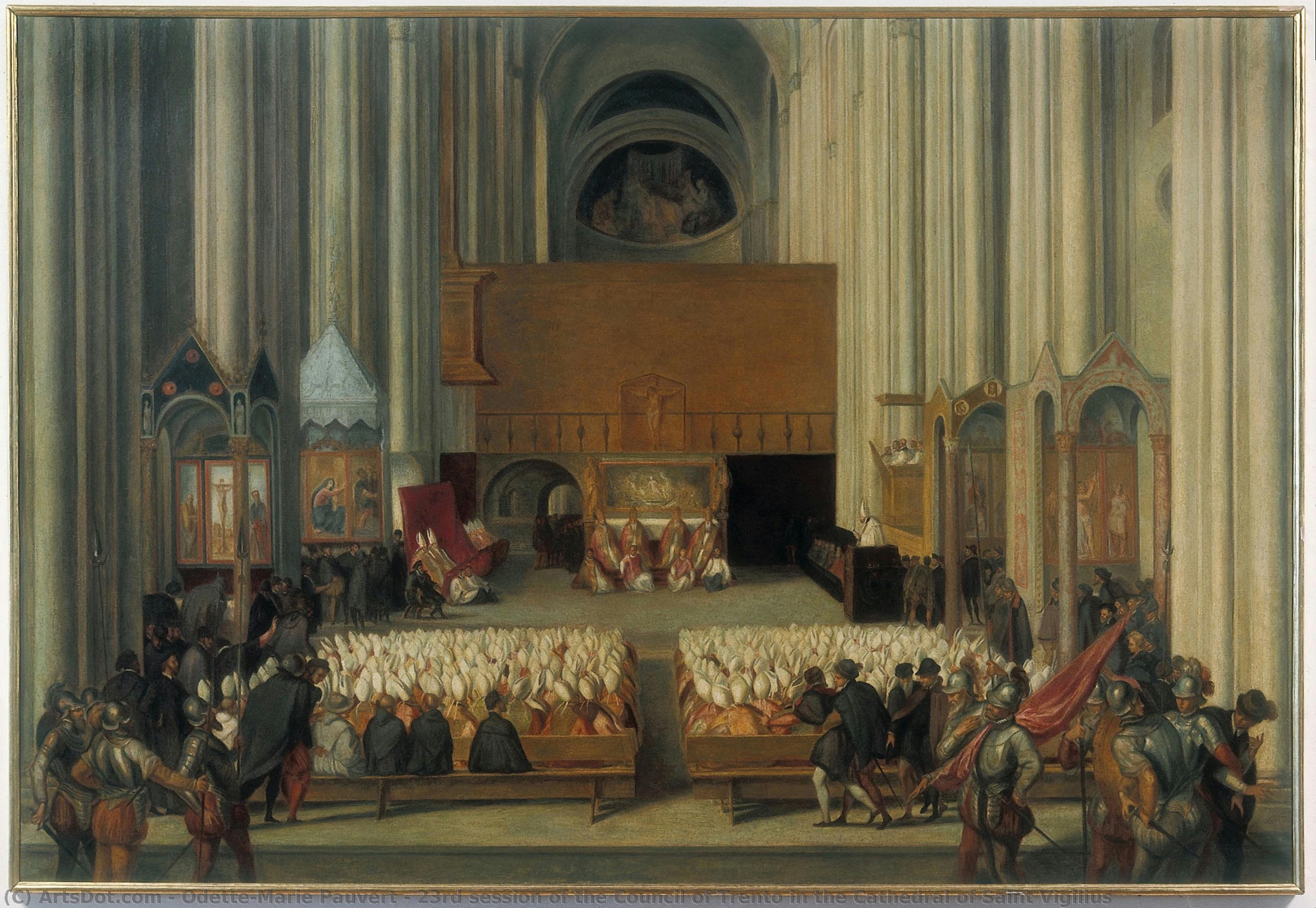
23rd session of the Council of Trento in the Cathedral of Saint Vigilius


 Read More
Hand Made Oil Reproduction
Hand-painted oil on canvas in your size and frame, made to order by our artists. ( Buy Print Buy Image)




































Pick from our preset sizes that match the artwork's original proportions.

You may enter your own dimensions to fit a specific frame or space. If your selected size does not match the original image's proportions, we will either crop the artwork or extend the painting with additional hand-painted elements. A digital mockup will be sent for your approval before production begins.
Please note that the on-screen preview does not reflect the actual cropping or extension. Only the mockup will accurately show the final composition.
While custom sizes are available, we recommend selecting a dimension from the predefined list to preserve the original proportions.
After order, ArtsDot.com team will email client for instructions and provide a mockup preview
Worldwide Delivery () in 3/4 weeks instead of standard 5 weeks. (6 September). No compromise on quality.

Free Worldwide Express Shipping

High-Quality Linen Canvas

Full Shipping Insurance

Customs Tax Refund Guarantee

True Color Matching Guarantee

100-Day Return Policy (Defects Only)

100% Money-Back Guarantee

Bulk Discount Offer
 Glass option is only available in size under 110 CM

23rd session of the Council of Trento in the Cathedral of Saint Vigilius
Reproduction Medium
Reproduction Size
-


Total Price
$ 263
Related Artworks








Artist Biography
Paul Gauguin: A Rebel’s Palette
Paul Gauguin, born Eugène Henri Paul Gauguin in 1848 amidst the tumultuous year of European revolutions, was a figure whose life and art defied convention. His journey from Parisian stockbroker to a revolutionary painter deeply influenced by Symbolism and Primitivism is a compelling narrative of artistic rebellion and a relentless pursuit of authentic expression. Initially drawn to Impressionism through his association with Camille Pissarro, Gauguin quickly outgrew the movement’s limitations, forging a distinctive style characterized by bold colors, simplified forms, and a profound exploration of human emotion and spiritual themes. His life was marked by wanderlust, culminating in extended periods spent in Tahiti and the Marquesas Islands, where he sought to escape Western civilization and tap into a more primal, elemental existence – an ideal that profoundly shaped his artistic vision.Early Life and Artistic Beginnings
Gauguin’s childhood was far from conventional; his family’s relocation to Peru at a young age instilled in him a sense of displacement and a fascination with exotic cultures. Returning to France, he received a formal education but found little satisfaction in the rigid structures of academic art. He initially worked as a stockbroker, a profession that provided financial stability but ultimately failed to ignite his creative spirit. It was through the encouragement of Camille Pissarro, a leading Impressionist, that Gauguin began to dedicate himself fully to painting. Pissarro’s mentorship exposed him to the techniques and philosophies of the movement, yet Gauguin quickly diverged from its emphasis on capturing fleeting moments of light and color, seeking instead to convey deeper psychological and spiritual truths. His early works reflected this shift, moving towards a more expressive and symbolic approach.Tahitian Visions: A New World
In 1893, Gauguin embarked on what would become his most transformative journey – a move to Tahiti, then a French colony in the South Pacific. This relocation was not merely a vacation but a deliberate attempt to establish a new life and artistic base, far removed from the constraints of European society. Tahiti became the subject of an extraordinary outpouring of creative energy, resulting in a series of paintings that captured the island’s lush landscapes, vibrant culture, and the lives of its indigenous people. These works—such as *Nafea fa tatoua* (When Will You Marry?) and *Te Fa'a Tahiti* (The Tahitian Women)—are characterized by their bold color palettes, flattened perspectives, and a sense of timelessness. However, his time in Tahiti was not without its challenges; Gauguin’s interactions with the local population were often fraught with misunderstandings and cultural clashes, contributing to a growing sense of isolation and disillusionment.Symbolism and Primitivism: A Radical Departure
Gauguin's artistic style evolved significantly during his time in Tahiti and beyond, drawing inspiration from Symbolist and Primitivist movements. He rejected the academic conventions of realism and naturalism, embracing instead a more subjective and expressive approach to art. He was deeply influenced by the works of Rembrandt, Vermeer, and Spanish Baroque masters, particularly their use of light, color, and composition to evoke emotion and atmosphere. Furthermore, he sought inspiration in non-Western cultures, particularly those of Africa and Oceania, which he viewed as embodying a more authentic and spiritual way of life. This fascination with “primitive” art led him to incorporate elements of tribal imagery and symbolism into his paintings, creating a visual language that was both exotic and deeply personal. His use of flattened perspective, simplified forms, and vibrant colors created a distinctive style that challenged the prevailing artistic norms of his time.Legacy and Influence
Paul Gauguin’s impact on 20th-century art is undeniable. He paved the way for Expressionism and Fauvism by rejecting traditional representational techniques in favor of subjective expression and emotional intensity. His bold use of color, simplified forms, and symbolic imagery profoundly influenced generations of artists, including Henri Matisse, Vincent van Gogh, and Pablo Picasso. Despite facing criticism during his lifetime for his unconventional style and provocative subject matter, Gauguin’s legacy has grown steadily over the years. Today, he is recognized as one of the most important and influential figures in modern art—a rebel who dared to challenge artistic conventions and forge a new path toward authentic expression. His paintings continue to captivate viewers with their raw emotion, vibrant colors, and timeless appeal, reminding us of the power of art to transcend cultural boundaries and explore the depths of the human experience.
odette-marie pauvert
1903 - 1966 , France
Quick Facts
- Artistic Movement Or Style:
- Post-Impressionism
- Symbolism
- Artists Or Movements Influenced By This Artist:
- Fauvism
- Expressionism
- Artists Who Influenced This Artist:
- Camille Pissarro
- Paul Cézanne
- Date Of Birth: July 7, 1848
- Date Of Death: May 8, 1903
- Full Name: Eugène Henri Paul Gauguin
- Nationality: French
- Notable Artworks:
- Vision of the Sermon
- Iahanna
- The Vision of Two Popess
- Place Of Birth: Paris, France