 Preview
 Send
Send Share
Share
 Details

 Download
 Similars
 X-Ray
X-Ray Diaporama
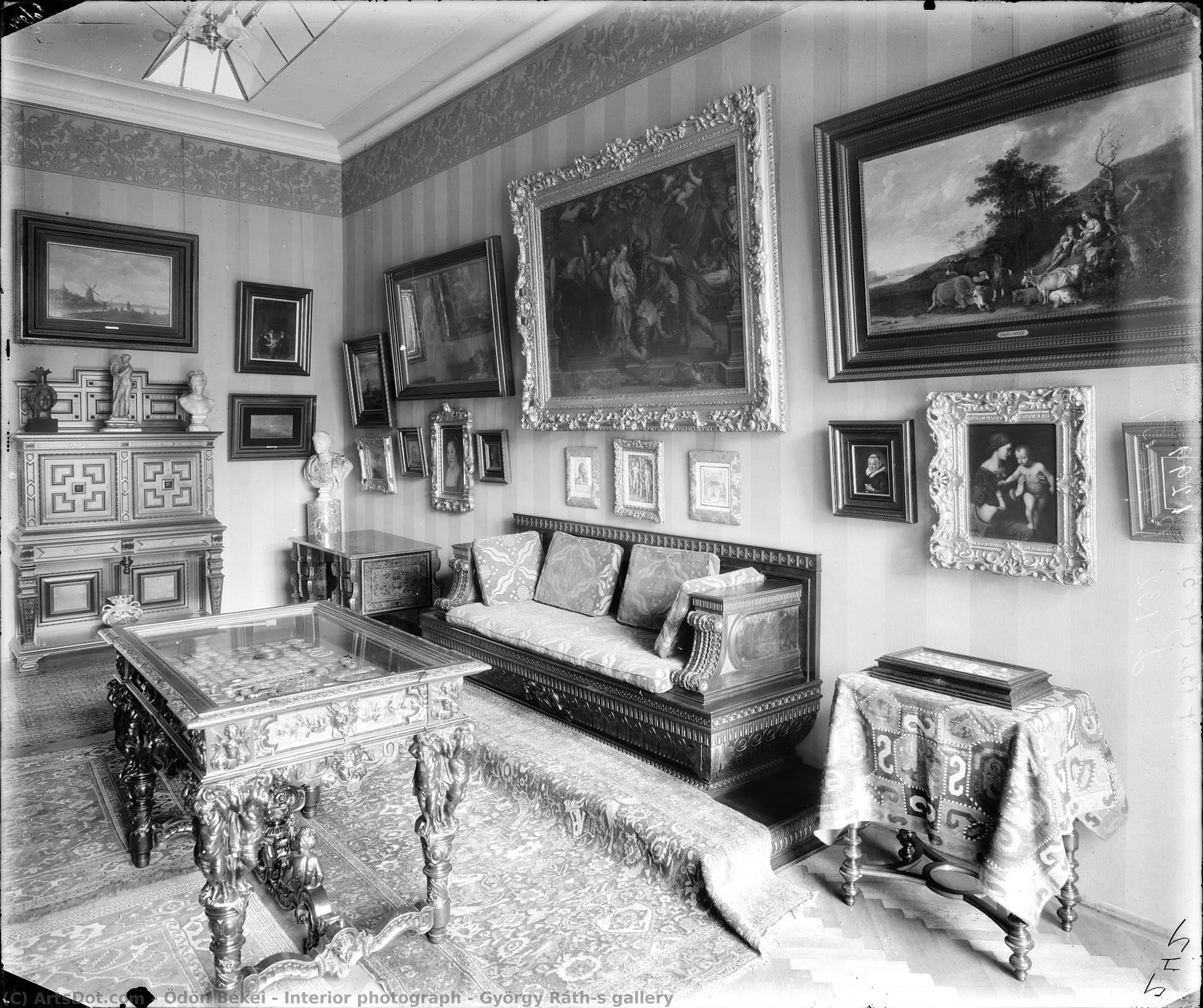
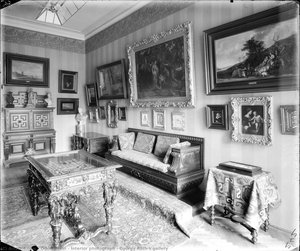
Interior photograph – György Ráth’s gallery
 1906
1906 26.0 x 32.0 cm
 Museum of Applied Arts
 Read More
Hand Made Oil Reproduction
Hand-painted oil on canvas in your size and frame, made to order by our artists. ( Buy Print Buy Image)




































Pick from our preset sizes that match the artwork's original proportions.

You may enter your own dimensions to fit a specific frame or space. If your selected size does not match the original image's proportions, we will either crop the artwork or extend the painting with additional hand-painted elements. A digital mockup will be sent for your approval before production begins.
Please note that the on-screen preview does not reflect the actual cropping or extension. Only the mockup will accurately show the final composition.
While custom sizes are available, we recommend selecting a dimension from the predefined list to preserve the original proportions.
After order, ArtsDot.com team will email client for instructions and provide a mockup preview
Worldwide Delivery () in 3/4 weeks instead of standard 5 weeks. (26 August). No compromise on quality.

Free Worldwide Express Shipping

High-Quality Linen Canvas

Full Shipping Insurance

Customs Tax Refund Guarantee

True Color Matching Guarantee

60-Day Return Policy (Defects Only)

100% Money-Back Guarantee

Bulk Discount Offer
 Glass option is only available in size under 110 CM

Interior photograph – György Ráth’s gallery
Reproduction Medium
Reproduction Size
-


Total Price
$ 263
Related Artworks





Artist Biography
Ödön Békei: Capturing the Soul of Early 20th Century Budapest
Ödön Békei (1876-1956) wasn’t a name widely recognized during his lifetime, yet his photographs offer an invaluable window into the vibrant and rapidly changing cityscape of early 20th century Budapest. A Hungarian photographer primarily known for his work in the pages of the influential newspaper Új Idők (New Times), Békei possessed a remarkable eye for detail and a subtle ability to capture not just appearances, but also the atmosphere and spirit of his subjects. His legacy rests largely on the extensive collection of his photographs housed at the György Ráth Gallery in Budapest, revealing a career dedicated to documenting the evolution of a city undergoing significant social, political, and economic transformation.
Born in Budapest, Békei’s early life was marked by a fascination with visual arts. He initially pursued studies in architecture but soon found himself drawn to photography as a means of observation and artistic expression. He began his professional career in 1896, establishing a studio on Váci Street – a central artery of the city at the time – and quickly gained recognition for his portraits and documentary work. His early photographs frequently featured prominent figures of Hungarian society: politicians, intellectuals, artists, and members of the burgeoning bourgeois class. These weren’t simply formal portraits; Békei skillfully used lighting and composition to reveal character and convey a sense of the subject's position within the social hierarchy.
Békei’s most significant contribution lies in his extensive coverage of Budapest for Új Idők, a newspaper known for its progressive stance and commitment to documenting contemporary life. He photographed everything from bustling marketplaces and crowded streets to grand public buildings and intimate domestic scenes. His images offer a remarkably detailed record of the city's architecture, fashion, social customs, and daily routines. Notably, he captured the construction of Budapest’s iconic infrastructure – bridges, tram lines, and new building projects – providing a visual chronicle of urban development. His work demonstrated an acute awareness of the interplay between tradition and modernity, reflecting the complex tensions inherent in a rapidly industrializing nation.
The Art of Documentary Photography
Békei’s photographic style was characterized by its meticulousness and realism. He employed a direct approach, often working on location with his subjects, which allowed him to capture candid moments and authentic expressions. He favored natural light whenever possible, utilizing it to create subtle gradations of tone and texture. His compositions were generally balanced and restrained, avoiding excessive ornamentation or manipulation. While he wasn’t an experimentalist in the way later photographers would be, Békei possessed a deep understanding of photographic technique – mastering exposure, focus, and darkroom processes to achieve his desired effects.
Crucially, Békei's work transcends mere documentation; it possesses a quiet beauty and emotional resonance. He wasn’t simply recording events; he was attempting to capture the essence of Budapest—its energy, its contradictions, and its spirit. His photographs invite viewers to step back in time and experience the city as it was lived by its inhabitants. The images are imbued with a sense of nostalgia, reflecting both the grandeur of the past and the anxieties of a society grappling with rapid change.
Influences and Context
Békei’s work can be understood within the broader context of European documentary photography at the turn of the 20th century. He was influenced by figures such as Alfred Stieglitz, who championed the artistic potential of photography, and Eugène Atget, a Parisian street photographer known for his evocative images of urban life. However, Békei’s work possesses a distinctly Hungarian sensibility, reflecting the unique cultural and historical circumstances of his country.
The political climate of Hungary during Békei's career was particularly significant. The late 19th and early 20th centuries witnessed periods of both reform and repression, with the Austro-Hungarian Empire struggling to maintain control over a diverse population. Békei’s photographs provide valuable insights into these turbulent times, documenting social unrest, political debates, and the everyday lives of ordinary people.
Legacy and Significance
Despite his relatively modest recognition during his lifetime, Ödön Békei's photographs have since been recognized as a crucial contribution to Hungarian art history. The György Ráth Gallery houses one of the most important collections of early 20th-century photography in Europe, ensuring that Békei’s work will continue to be studied and appreciated for generations to come.
His images offer a rare and intimate glimpse into Budapest at a pivotal moment in its history—a city on the cusp of modernity, grappling with tradition, and striving to define its own identity. Békei's legacy lies not only in his technical skill but also in his ability to capture the soul of a city through the lens of his camera.
ödön békei
1876 - 1956 , Hungary
Quick Facts
- Artistic Movement Or Style: Photography
- Artists Or Movements Influenced By This Artist: ['']
- Artists Who Influenced This Artist: ['']
- Date Of Birth: March 17, 1876
- Date Of Death: May 10, 1956
- Full Name: Ödön Békei
- Nationality: Hungarian
- Notable Artworks:
- L'Illustration cover
- Tóth Béla portrait
- Bajcsy-Zsilinszky street
- Király Színház
- Place Of Birth: Budapest, Hungary