 Preview
 Send
Send Share
Share
 Details

 Download
 Similars
 X-Ray
X-Ray Diaporama
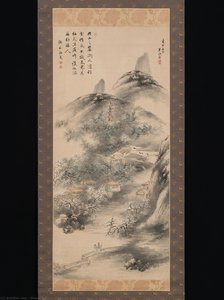
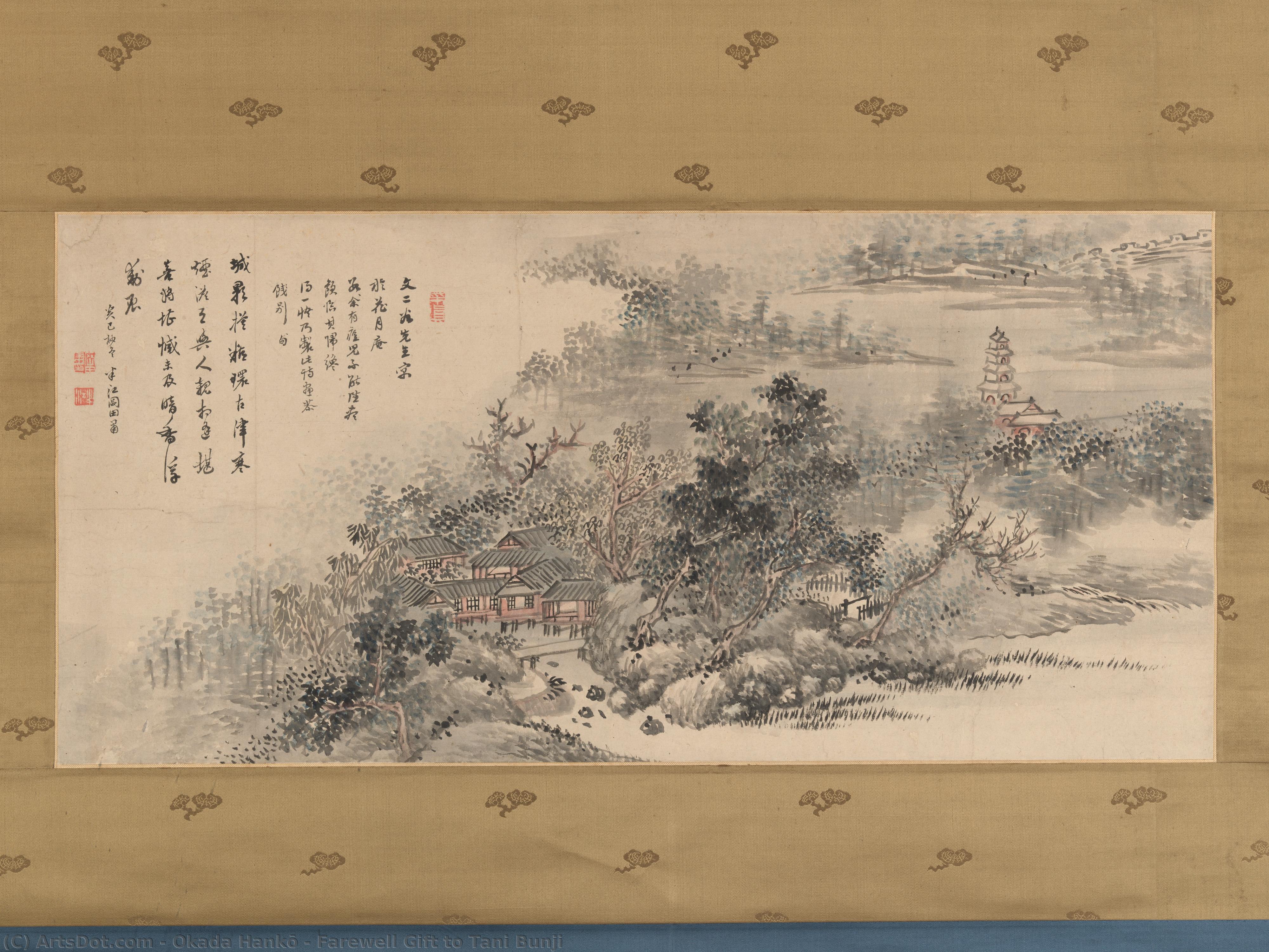
Farewell Gift to Tani Bunji
 1833
1833 30.0 x 64.0 cm
 Read More
Hand Made Oil Reproduction
Hand-painted oil on canvas in your size and frame, made to order by our artists. ( Buy Print Buy Image)




































Pick from our preset sizes that match the artwork's original proportions.

You may enter your own dimensions to fit a specific frame or space. If your selected size does not match the original image's proportions, we will either crop the artwork or extend the painting with additional hand-painted elements. A digital mockup will be sent for your approval before production begins.
Please note that the on-screen preview does not reflect the actual cropping or extension. Only the mockup will accurately show the final composition.
While custom sizes are available, we recommend selecting a dimension from the predefined list to preserve the original proportions.
After order, ArtsDot.com team will email client for instructions and provide a mockup preview
Worldwide Delivery () in 3/4 weeks instead of standard 5 weeks. (22 August). No compromise on quality.

Free Worldwide Express Shipping

High-Quality Linen Canvas

Full Shipping Insurance

Customs Tax Refund Guarantee

True Color Matching Guarantee

60-Day Return Policy (Defects Only)

100% Money-Back Guarantee

Bulk Discount Offer
 Glass option is only available in size under 110 CM

Farewell Gift to Tani Bunji
Reproduction Medium
Reproduction Size
-


Total Price
$ 263
Related Artworks









Artist Biography
The Quiet Brilliance of Okada Hankō
In the heart of Japan’s Edo period, amidst the bustling commerce and shifting social tides of Osaka, lived a painter who mastered the art of silence. Okada Hankō (1782–1846) was not merely an observer of the landscape, but a poet of the brush, a member of the third generation of Nanga painters who breathed new life into the literati tradition. While many artists of his era were bound by the rigid imitation of ancient Chinese handbooks, Hankō possessed a rare, unencumbered perspective. Born into a family that balanced the pragmatic world of rice merchantry with the refined pursuits of Confucian scholarship, he moved through life with a unique dual identity—a man of commerce and a man of the brush.
His artistic journey began in the intimate shadows of his father’s studio. As the son of Okada Beisanjin, a prominent individualist Nanga painter, Hankō was immersed in an environment where ink and calligraphy were as natural as breath. From a young age, he was exposed to a vibrant circle of poets, scholars, and artists, gaining access to a level of artistic education that few could claim. This early training went beyond simple technique; it instilled in him the Bunjinga spirit—the idea that painting should reflect the inner character and intellectual depth of the artist rather than just the external world.
A Mastery of Ink and Atmosphere
Hankō’s technical evolution is a testament to his profound connection with his materials. While he was a calligrapher of notable skill, capable of vigorous and commanding strokes, his paintings often revealed a much more delicate sensibility. He excelled in the use of ink wash, where subtle gradations of black and grey could evoke the weight of a mountain or the ephemeral nature of a morning mist. Unlike the earlier generations who relied heavily on monochrome compositions, Hankō utilized a sophisticated palette, introducing muted colors that added a layer of atmospheric depth to his landscapes.
One of his most evocative achievements can be seen in works such as Misty Dawn at the Seashore. In this piece, the viewer is transported to a seaside village where the world is caught in a moment of transition. Through masterful brushwork, he captures the way mist gradually clears from treetops and mountains, creating a sense of profound tranquility. His ability to balance complex compositions with a sense of lightness allowed him to transcend the traditional boundaries of the Nanga style, making his work feel both deeply rooted in tradition and strikingly personal.
Legacy and the Spirit of the Literati
The life of Okada Hankō was not without its tribulations. The later years of his life were marked by significant hardship, including the destruction of his home during a period of social revolt. These trials, however, did not diminish his spirit; instead, they seemed to deepen the emotional resonance of his work, leading him to rely on painting as both a spiritual refuge and a means of sustenance. This resilience is woven into the very fabric of his art, lending a certain gravity to his more contemplative landscapes.
Today, Hankō is remembered as a pivotal figure who helped bridge the gap between the classical Chinese influences of early Nanga and a uniquely Japanese expression of the literati ideal. His significance lies in his ability to harmonize the following elements:
- Technical Innovation: The integration of subtle color washes with traditional, vigorous ink brushwork.
- Cultural Synthesis: The blending of merchant-class access to global knowledge with the scholarly traditions of the samurai class.
- Emotional Depth: A capacity to capture the fleeting, atmospheric moments of nature—such as dawn and mist—that evoke a sense of eternal peace.
Through his delicate touch and profound understanding of space and light, Okada Hankō remains a master of the quiet landscape, inviting every viewer to step into the serene, misty worlds he so lovingly created.
okada hankō
1782 - 1846 , Japan
Quick Facts
- Artistic Movement Or Style: Nanga painting
- Artists Or Movements Influenced By This Artist: ['Chinese literati']
- Artists Who Influenced This Artist: ['Okada Beisanjin']
- Date Of Birth: Osaka, Japan (1782)
- Full Name: Okada Hankō
- Nationality: Japanese
- Notable Artworks:
- Letter Enclosing Flowers
- Misty Dawn at the Seashore
- Autumn Festival on a Mountain
- Place Of Birth: Osaka