

 Preview
 Send
Send Share
Share
 Details

 Download
 Similars
 X-Ray
X-Ray Diaporama
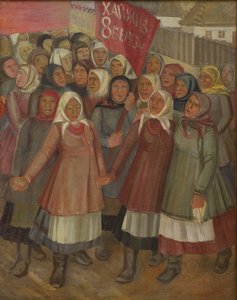
Long Live 8th of March!


 Read More
Purchase a high-resolution, enhanced digital image, far superior to the online preview.
Each file is meticulously prepared by our in-house specialists using advanced tools and expert manual retouching. We ensure every image has exceptional clarity, precise color accuracy, and fine detail.
The final file is delivered via email within 72 hours, optimized for immediate use in professional, editorial, and print environments. This is the same quality trusted by top-tier design studios, publishers, and galleries.
Digital Image
Download a high-resolution file for personal display, printing, and creative projects. ( Buy Print Buy Hand Made Painting)
Included in Every Digital Image Order
Expert Digital Delivery, Guaranteed
When you choose ArtsDot.com, you're not just getting an image - you're receiving a professionally enhanced digital artwork, crafted with precision and backed by a satisfaction guarantee. Here's everything that comes with your order, automatically:

Fast Email Delivery
Your high-resolution digital image file will be emailed to you within 72 hours of ordering - ready for immediate use.

AI-Enhanced Digital File
Your artwork is professionally optimized using advanced AI tools and manual editing, ensuring maximum detail, clarity, and color accuracy.

Free Lifetime Re-Delivery
Accidentally deleted or lost your file? No worries - we'll resend it to you anytime, free of charge.

No Import Fees - Ever
Enjoy your artwork instantly with zero customs, duties, or delivery fees - digital downloads are always tax-free.

Color Accuracy Guarantee
We ensure your digital image reflects the original colors as closely as possible using professional tools and color management.

60-Day Satisfaction Guarantee
If you're not satisfied with your digital image, we'll revise it or refund 100% within 60 days - no questions asked.

100% Money-Back Guarantee
Not satisfied? Get a full refund within 60 days of receiving your digital file - no questions asked.

Bulk Order Discounts
Buy 3 images, save 10% - Buy 5, save 15% - Buy 10+, save 20%. Great for creative projects, galleries, and agencies.
Collectible Description
A Symphony of Solidarity: The Visionary Power of Oksana Pavlenko
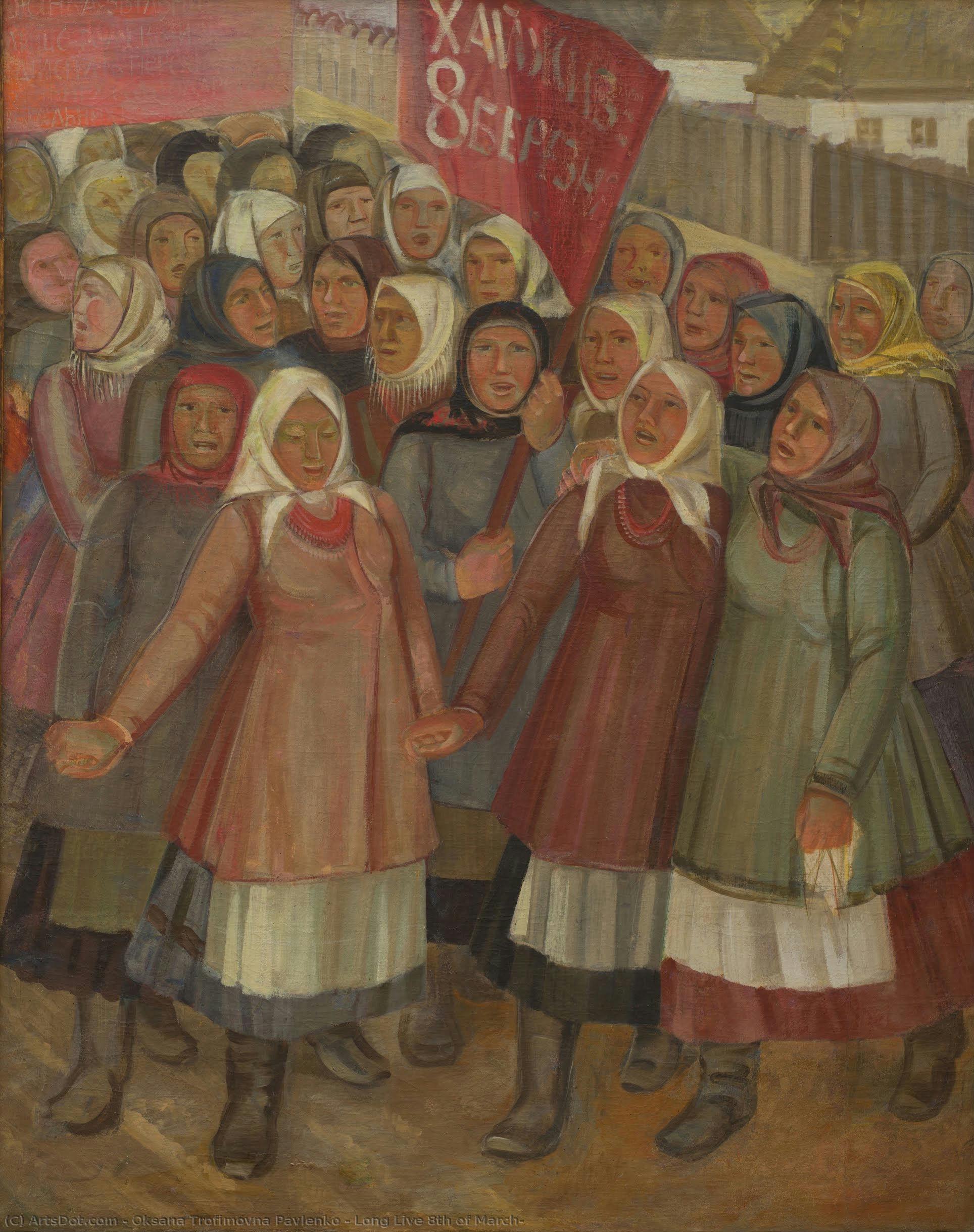
In the sweeping canvas of Long Live 8th of March!, created in 1931, Oksana Pavlenko captures a moment of profound historical resonance and artistic innovation. This masterpiece serves as both a political manifesto and a breathtaking display of the Boichukist school's unique aesthetic. The painting depicts a rhythmic, disciplined procession of women, marching forward with a shared purpose that transcends individual identity. As they move in unison, their figures create a powerful visual metaphor for the collective strength of a social movement fighting for fundamental rights. To gaze upon this work is to witness the intersection of personal struggle and global revolutionary fervor, making it an evocative centerpiece for any collection focused on the transformative power of art.
The technique employed by Pavlenko is a masterful blend of Byzantine tradition and early 20th-century modernism. Drawing from her training under Mykhailo Boichuk, she utilizes a flattened perspective and simplified, geometric forms that lend the scene a stage-like, monumental quality. The figures are rendered with a striking uniformity; their peasant clothing and repetitive postures emphasize the principle of the collective over the individual. This stylized approach, reminiscent of both folk art and the bold clarity of propaganda posters, allows the emotional weight of the subject to take center stage. The brushwork is smooth yet purposeful, using oil on canvas to create a texture that feels grounded in the earthiness of the Ukrainian landscape while reaching toward the heights of spiritual expression.
Color, Symbolism, and the Soul of the Movement
The color palette of this work is deeply intentional, dominated by warm, earthy browns and rich, commanding reds. These tones do more than just provide visual warmth; they symbolize the blood of struggle and the vitality of life itself. The strategic use of white and grey provides a necessary breath of light amidst the dense composition, guiding the viewer's eye through the rhythmic rows of the marching women. A single red flag emerges as a potent symbol of revolution and hope, acting as a focal point that anchors the movement’s momentum. Every shape—from the rectangular folds of fabric to the circular simplicity of faces—contributes to a sense of organized, unstoppable force.
Beyond its political surface, the painting carries a poignant, underlying melancholy. For Pavlenko, the era of revolution was a period of immense professional opportunity but also profound personal tragedy, marked by the loss of friends and colleagues. This duality—the triumph of the movement versus the sorrow of the individual—infuses the artwork with a haunting emotional depth. For collectors and interior designers, this piece offers more than mere decoration; it provides a sophisticated narrative of resilience. Whether placed in a contemporary gallery setting or a classic study, Long Live 8th of March! commands attention, inviting viewers to contemplate the enduring strength of the human spirit and the beautiful, heavy cost of progress.
Related Artworks







Artist Biography
John Everett Millais: A Pre-Raphaelite Pioneer of Light and Nature
Born in Southampton, England, on June 8th, 1829, John Everett Millais was a pivotal figure in the vibrant artistic landscape of Victorian Britain. His life, intertwined with intellectual currents and personal dramas, culminated in a body of work that remains both strikingly beautiful and profoundly influential. From his early days as a prodigious child prodigy to his later explorations of light and color, Millais’s journey reflects the evolving spirit of the Pre-Raphaelite Brotherhood and his own unique artistic vision.
Millais's upbringing within a comfortable middle-class family provided him with an unusual education. His mother, Maria del Carmen de Casal y Lastra, was a woman of considerable intellect and artistic sensibility, having been involved in the Cuban independence movement. This exposure to progressive ideas and a love for art from a young age shaped Millais’s approach to his craft. He began formal training at the Royal Academy Schools, where he quickly distinguished himself with technical skill and an early fascination with depicting nature realistically. However, it was his association with William Holman Hunt and Dante Gabriel Rossetti that truly ignited his artistic spirit, leading him to found the Pre-Raphaelite Brotherhood in 1848.
The Pre-Raphaelites sought to revive the aesthetics of the early Renaissance—particularly the works of artists before Raphael—rejecting what they perceived as the artificiality and academic conventions of contemporary art. Millais, alongside his fellow brotherhood members, championed a return to direct observation, meticulous detail, and a reverence for nature. Their paintings often featured idyllic scenes, biblical narratives, and literary subjects rendered with an unprecedented level of realism and emotional intensity. Early works like *Ophelia* (1845-46) and *Isabella* (1849-50) immediately established Millais as a leading figure within the group, showcasing his remarkable ability to capture the beauty and fragility of the natural world.
The Blossoming of Talent: Major Works and Artistic Development
Millais’s artistic development was marked by a gradual shift in style and subject matter. Initially focused on dramatic historical scenes and idealized portraits, he increasingly turned his attention to landscapes and botanical studies. *Christ in the House of His Parents* (1849-50), arguably his most famous work, exemplifies this transition. The painting’s meticulous detail—from the rough-hewn timbers of the carpenter's shop to the delicate folds of Christ’s garment—was initially met with criticism for its perceived lack of idealization, but it ultimately became a cornerstone of Pre-Raphaelite aesthetics.
However, Millais’s most celebrated achievement was undoubtedly *Ophelia* (1851-52). This iconic image of the tragic Shakespearean heroine drowning in a stream, surrounded by water lilies and wildflowers, captured the public's imagination. The painting’s luminous colors, delicate rendering of textures, and poignant portrayal of Ophelia’s demise cemented Millais’s reputation as one of the era’s foremost artists. Later works like *The Proclamation* (1854-56), depicting a scene from Chaucer’s *Canterbury Tales*, demonstrated his growing mastery of color and composition.
A Personal Life Intertwined with Art
Millais's personal life was as complex and fascinating as his art. His marriage to Effie Chalmers, the former wife of critic John Ruskin, in 1858 proved to be a turbulent one. The couple’s relationship was marked by scandal and ultimately ended in annulment, fueled by rumors of an affair between Millais and Ruskin's daughter. Despite these personal challenges, Millais continued to produce significant works throughout his career.
His marriage to Effie brought him into close contact with the influential intellectual circles of London, including Ruskin himself. While their relationship was fraught with difficulties, it also provided Millais with access to new ideas and perspectives. The influence of Ruskin’s theories on beauty and nature can be seen in Millais's later works, particularly his depictions of flowers and landscapes.
Legacy and Historical Significance
John Everett Millais died in London on August 13th, 1896, at the age of 67. His legacy as a Pre-Raphaelite painter is secure, and his work continues to be admired for its technical brilliance, emotional depth, and evocative portrayal of nature. Millais’s influence extended far beyond the confines of the Pre-Raphaelite Brotherhood, shaping the course of British art in the late 19th century.
His meticulous attention to detail, his innovative use of color, and his commitment to direct observation paved the way for subsequent generations of artists. Millais’s paintings remain a testament to the power of art to capture beauty, evoke emotion, and illuminate the human experience. He is remembered not only as a skilled painter but also as a visionary who helped to redefine the role of art in Victorian society.
oksana trofimovna pavlenko
1896 - 1991 , Ukraine
Quick Facts
- Artistic Movement Or Style: Pre-Raphaelite
- Artists Or Movements Influenced By This Artist: ['Fernand Léger']
- Artists Who Influenced This Artist:
- William Holman Hunt
- John Ruskin
- Date Of Birth: June 8, 1829
- Date Of Death: August 13, 1896
- Full Name: John Everett Millais
- Nationality: British
- Notable Artworks:
- Ophelia
- Christ in the House of His Parents
- Autumn Leaves
- Place Of Birth: Southampton, England

