

 Preview
 Send
Send Share
Share
 Details

 Download
 Similars
 X-Ray
X-Ray Diaporama
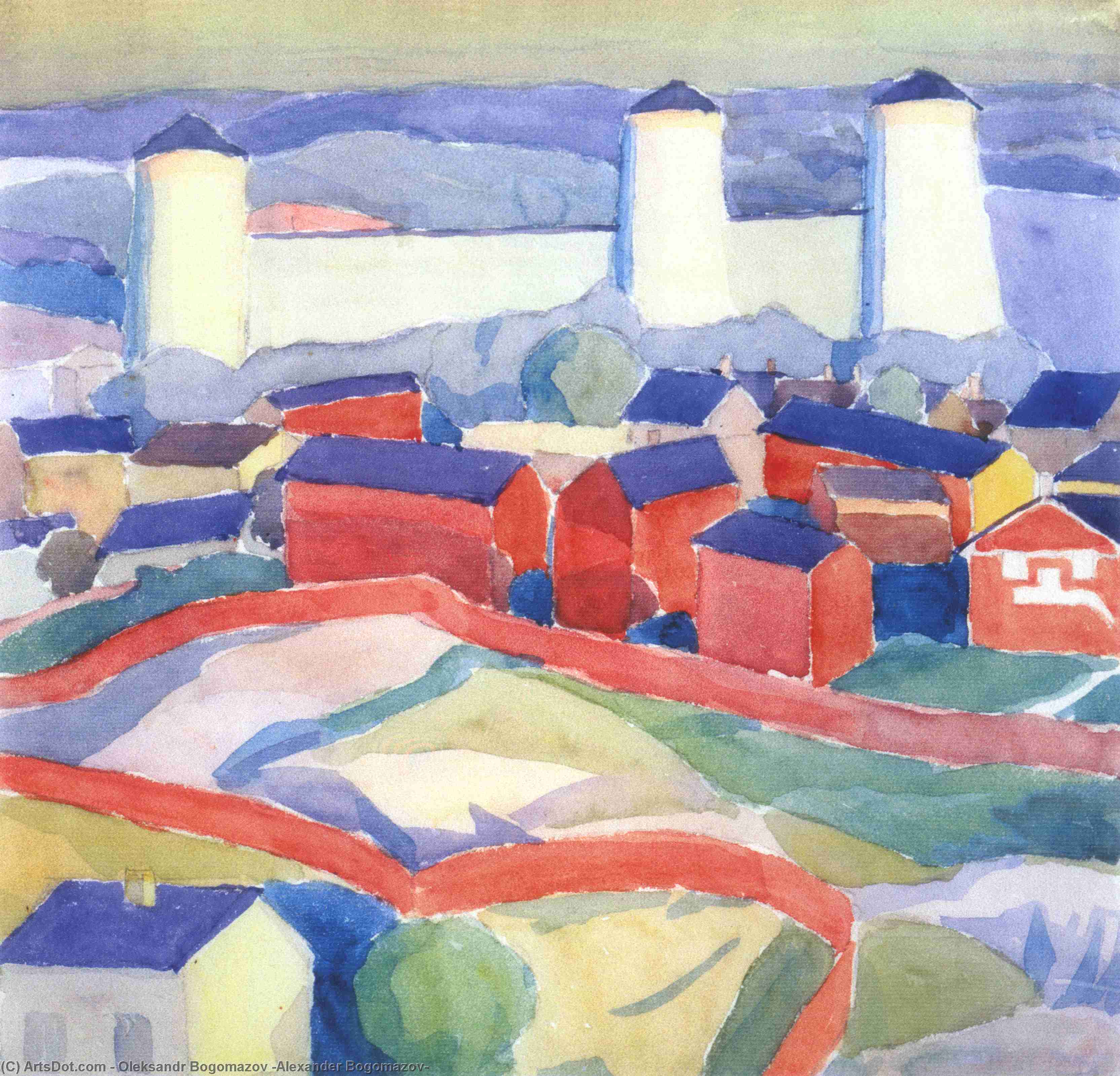
Landscape with red houses
 Watercolor
- WallArt
- Cubo-Futurism
 1911
1911- Modern
 32.0 x 30.0 cm
 Read More
Purchase a high-resolution, enhanced digital image, far superior to the online preview.
Each file is meticulously prepared by our in-house specialists using advanced tools and expert manual retouching. We ensure every image has exceptional clarity, precise color accuracy, and fine detail.
The final file is delivered via email within 72 hours, optimized for immediate use in professional, editorial, and print environments. This is the same quality trusted by top-tier design studios, publishers, and galleries.
Digital Image
Download a high-resolution file for personal display, printing, and creative projects. ( Buy Print Buy Hand Made Painting)
Included in Every Digital Image Order
Expert Digital Delivery, Guaranteed
When you choose ArtsDot.com, you're not just getting an image - you're receiving a professionally enhanced digital artwork, crafted with precision and backed by a satisfaction guarantee. Here's everything that comes with your order, automatically:

Fast Email Delivery
Your high-resolution digital image file will be emailed to you within 72 hours of ordering - ready for immediate use.

AI-Enhanced Digital File
Your artwork is professionally optimized using advanced AI tools and manual editing, ensuring maximum detail, clarity, and color accuracy.

Free Lifetime Re-Delivery
Accidentally deleted or lost your file? No worries - we'll resend it to you anytime, free of charge.

No Import Fees - Ever
Enjoy your artwork instantly with zero customs, duties, or delivery fees - digital downloads are always tax-free.

Color Accuracy Guarantee
We ensure your digital image reflects the original colors as closely as possible using professional tools and color management.

60-Day Satisfaction Guarantee
If you're not satisfied with your digital image, we'll revise it or refund 100% within 60 days - no questions asked.

100% Money-Back Guarantee
Not satisfied? Get a full refund within 60 days of receiving your digital file - no questions asked.

Bulk Order Discounts
Buy 3 images, save 10% - Buy 5, save 15% - Buy 10+, save 20%. Great for creative projects, galleries, and agencies.
A Vision of Early Modernity: The Vibrancy of Bogomazov’s Landscape
In the delicate dance of watercolor and light, Oleksandr Bogomazov captures a moment where the pastoral meets the industrial, frozen in time during the year 1911. Landscape with red houses is not merely a depiction of a hillside town; it is a rhythmic exploration of color and form that signals the dawn of the Ukrainian avant-garde. The composition draws the eye across a gentle slope dotted with striking crimson dwellings, their bold hues acting as anchors amidst a sea of soft, atmospheric washes. As the gaze wanders upward, the horizon is punctuated by the imposing silhouettes of three large towers—structures that hint at the encroaching pulse of industrial progress. This juxtaposition of the quaint, domestic warmth of the red houses against the looming, skeletal geometry of the distant power plants creates a profound tension, reflecting a world on the precipice of radical change.
The technique employed here showcases Bogomazov’s mastery over the fluid medium of watercolor. Unlike the heavy, structural impasto found in his later Cubo-Futurist works, this piece breathes with a translucent, ethereal quality. The artist utilizes the natural luminosity of the paper to suggest sunlight filtering through a hazy sky, allowing the colors to bleed and merge with a painterly grace. There is a rhythmic vitality in how the figures are scattered throughout the landscape; though small in scale, these tiny human presences imbue the scene with life and movement, suggesting a shared experience of tranquility. For the discerning collector or interior designer, this work offers a sophisticated balance of color theory and structural composition, making it an exquisite focal point for spaces that value both historical depth and aesthetic lightness.
The Soul of the Avant-Garde: Context and Emotional Resonance
To understand this painting is to understand the spirit of early 20th-century Kyiv. Bogomazov, a pioneer who bridged the gap between traditional landscape painting and the experimental fervor of Spectralism, uses this scene to experiment with how light and color can define space without the need for rigid outlines. The red houses serve as more than just architectural elements; they are emotional beacons, providing a sense of hearth and home against the vast, somewhat mysterious backdrop of the industrial towers. This interplay between the known—the village life—and the unknown—the rising mechanical giants—evokes a sense of nostalgia intertwined with anticipation.
For those seeking to adorn a curated collection or a contemporary living space, a high-quality reproduction of this masterpiece brings more than just decoration; it brings a conversation. The piece invites viewers to contemplate the evolution of the landscape and our place within it. Its palette is both soothing and stimulating, capable of complementing a wide array of interior decors, from minimalist modernism to classic European elegance. Owning a piece of Bogomazov’s legacy is an opportunity to possess a fragment of the Ukrainian avant-garde's most poetic era, a window into a time when the world was being reimagined through every brushstroke and color wash.
Related Artworks
Artist Biography
The Architect of Light: The Life and Vision of Oleksandr Bogomazov
In the turbulent dawn of the twentieth century, a period defined by the shattering of old empires and the birth of radical new ideologies, Oleksandr Konstantinovich Bogomazov emerged as a visionary architect of the canvas. Born in 1880 in Yampil, within the vibrant cultural landscape of what is now Ukraine, Bogomazov was far more than a mere painter; he was a profound theoretician and a pioneer of the avant-garde. His journey began not with the brush, but with the rigorous logic of mathematics and physics, studies undertaken at Kyiv Imperial University. This scientific foundation would later become the invisible scaffolding for his art, allowing him to dissect the physical world into its most fundamental energetic components.
The trajectory of Bogomavov’s soul was irrevocably altered by his time in Paris between 1907 and 1912. Immersed in the revolutionary atmosphere of the French capital, he encountered the fragmented geometries of Cubism and the kinetic energy of Futurism. These movements provided him with a new visual vocabulary, yet Bogomazov sought something deeper than mere stylistic imitation. He looked toward the work of contemporaries like Aleksandr Archipenko to understand how form could be deconstructed without losing its vital essence. His early works began to reflect this tension between the tangible object and the ephemeral movement, as he learned to translate the pulse of modern life into a language of intersecting planes and rhythmic lines.
The Spectralist Revolution and the Theory of Perception
As his career matured, Bogomazov moved beyond the structural constraints of Cubo-Futurism toward a more profound exploration known as Spectralism. This was not merely a stylistic shift but a philosophical pursuit. Influenced by the pioneering ideas of Mikhail Larionov and Wassily Kandinsky, Bogomavov sought to capture the very mechanics of sight itself. He became obsessed with the way light interacts with color to create the illusion of depth and emotion, aiming to paint the "spectrum" of human perception rather than the static objects that inhabit it.
His theoretical contributions were as significant as his visual ones. In 1914, he authored his seminal treatise, The Art of Painting and the Elements, a work that remains a cornerstone of modern art theory. Within its pages, he meticulously analyzed the complex relationship between four essential pillars:
- The Object: The physical reality being observed.
- The Artist: The creative force interpreting the world.
- The Picture: The two-dimensional plane where reality is transformed.
- The Spectator: The final participant who completes the cycle of perception.
Through this lens, Bogomazov viewed the canvas as a living organism, a site of energetic exchange where color and form collide to evoke a sensory experience that transcends the physical boundaries of the frame.
A Legacy Written in Color and Motion
The works of Bogomazov, from his dynamic Abstract Compositions to his more intimate portraits, serve as a testament to a life spent chasing the intangible. His canvases are often characterized by bold diagonals, vibrant hues, and a sense of rhythmic urgency that mirrors the rapid technological advancements of his era. Whether he was exploring the geometric fragmentation of a bridge or the spectral vibrations of a landscape, his hand always sought the underlying energy—the élan vital—that animates all existence.
Though his life was tragically short, ending in 1930 at the age of fifty, his impact on the Ukrainian and European avant-garde remains indelible. He stands as a bridge between the structured traditions of the past and the boundless abstractions of the future. Today, when we look upon his masterpieces, we do not merely see paint on canvas; we witness the profound struggle of an artist attempting to map the very light that allows us to see, leaving behind a legacy of brilliance that continues to illuminate the history of modern art.
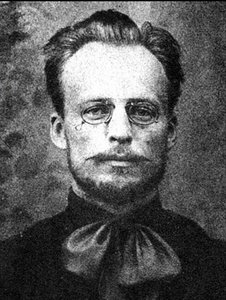
oleksandr bogomazov (alexander bogomazov)
1880 - 1930 , Ukraine
Quick Facts
- Artistic Movement Or Style: Cubo-Futurism & Spectralism
- Artists Or Movements Influenced By This Artist: Cubism
- Artists Who Influenced This Artist: Archipenko, Alexander
- Date Of Birth: 1880
- Full Name: Oleksandr Konstantinovich Bogomazov
- Nationality: Ukrainian
- Notable Artworks:
- Still life with fruits and vegetables
- Abstract Composition
- Portrait of the painter Burdanov
- Place Of Birth: Yampil, Ukraine

