 Preview
 Send
Send Share
Share
 Details

 Download
 Similars
 X-Ray
X-Ray Diaporama
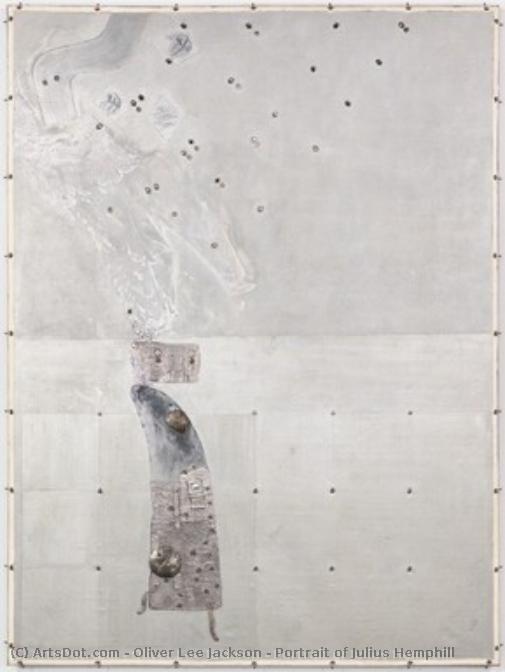
Portrait of Julius Hemphill
 1973
1973 274.0 x 213.0 cm
 Read More
Hand Made Oil Reproduction
Hand-painted oil on canvas in your size and frame, made to order by our artists. ( Buy Print Buy Image)




































Pick from our preset sizes that match the artwork's original proportions.

You may enter your own dimensions to fit a specific frame or space. If your selected size does not match the original image's proportions, we will either crop the artwork or extend the painting with additional hand-painted elements. A digital mockup will be sent for your approval before production begins.
Please note that the on-screen preview does not reflect the actual cropping or extension. Only the mockup will accurately show the final composition.
While custom sizes are available, we recommend selecting a dimension from the predefined list to preserve the original proportions.
After order, ArtsDot.com team will email client for instructions and provide a mockup preview
Worldwide Delivery () in 3/4 weeks instead of standard 5 weeks. (23 August). No compromise on quality.

Free Worldwide Express Shipping

High-Quality Linen Canvas

Full Shipping Insurance

Customs Tax Refund Guarantee

True Color Matching Guarantee

60-Day Return Policy (Defects Only)

100% Money-Back Guarantee

Bulk Discount Offer
 Glass option is only available in size under 110 CM

Portrait of Julius Hemphill
Reproduction Medium
Reproduction Size
-


Total Price
$ 263
Related Artworks
Artist Biography
A Legacy Forged in Witness and Vision
Oliver Lee Jackson’s artistic journey is a profound testament to the power of memory, identity, and the enduring struggle for justice. Born in 1935 in St. Louis, Missouri, into an African American family during the transformative era of the Civil Rights Movement, Jackson developed a sensibility that was both deeply personal and acutely global. His early years were steeped in the vibrant cultural ferment of St. Louis, where he found kinship within the burgeoning Black Arts Movement. Alongside figures like Julius Hemphill, Jackson began to cultivate an artistic language that would eventually bridge the gap between local struggles and the universal human condition. Through his rigorous academic training at Illinois Wesleyan University and the University of Iowa, he mastered the technical foundations of painting and sculpture, yet it was his lived experience that provided the soul for his work.The Resonance of History and the Sharpeville Series
The trajectory of Jackson’s career underwent a seismic shift in 1968, marked by the commencement of his seminal Sharpeville Series. Inspired by the harrowing massacre of Black protestors in South Africa, this body of work transformed his practice into a vehicle for profound social commentary. In these works, the weight of historical trauma meets the fluidity of expressionist form. Jackson does not merely depict events; he invokes the spirit of resistance and the heavy cost of apartheid. This period solidified his ability to weave complex cultural iconographies—drawing from both African traditions and European Modernism—into a cohesive, haunting narrative. His work became a site where the echoes of global struggles could be heard through the medium of paint and clay, creating a space for contemplation on the enduring impact of systemic violence.The Fluidity of Form: Between Abstraction and Figuration
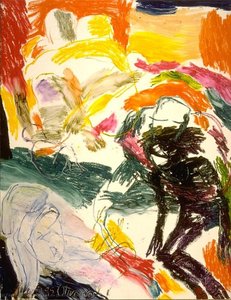
Throughout his expansive career, Jackson has remained a master of ambiguity, constantly exploring the tension between figuration and abstraction. His practice is characterized by a relentless pursuit of hybridity, where the boundaries of medium and meaning are perpetually blurred. Whether working on large-scale canvases that invite the viewer to approach from multiple orientations or creating intricate sculptures that utilize incising techniques, Jackson uses the human gesture as a direct, visual communicative tool. Influenced by the gestural energy of Willem de Kooning and Philip Guston, he incorporates elements like oil stick to create a deliberate, raw texture that mirrors the complexity of the human experience. As an educator at California State University, Sacramento, where he helped shape the Pan African Studies curriculum, Jackson’s influence extended far beyond the studio, fostering a legacy of intellectual rigor and artistic activism that continues to inspire generations of creators to confront the seen and unseen worlds.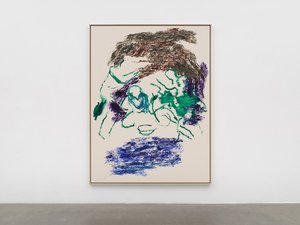
Oliver Lee Jackson
1935 - , United States of America
Quick Facts
- Artistic Movement Or Style: Expressionist Painting
- Artists Or Movements Influenced By This Artist:
- European Modernism
- African Art
- Artists Who Influenced This Artist: ['Julius Hemphill']
- Date Of Birth: 1935
- Full Name: Oliver Lee Jackson
- Nationality: American
- Notable Artworks:
- Sharpeville Series
- Untitled No. 8
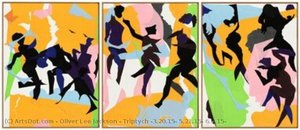
- Triptych (3.20.15, 5.21.15, 6.8.15)
- Place Of Birth: St. Louis, United States