 Preview
 Send
Send Share
Share
 Details

 Download
 Similars
 X-Ray
X-Ray Diaporama
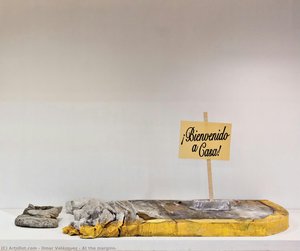
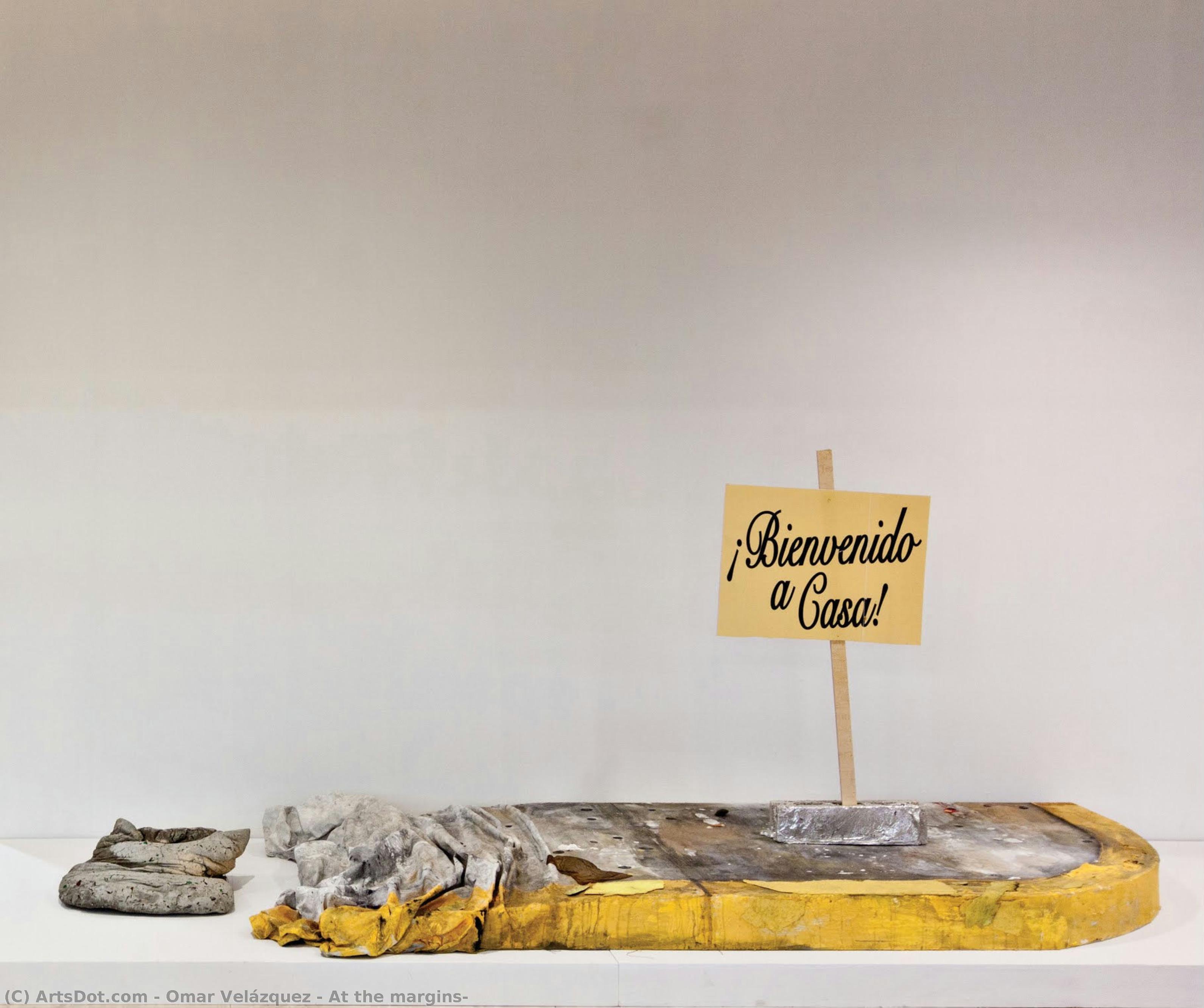
At the margins…
 2011
2011 10.0 x 274.0 cm
 Museo de Arte Contemporáneo de Puerto Rico
 Read More
Hand Made Oil Reproduction
Hand-painted oil on canvas in your size and frame, made to order by our artists. ( Buy Print Buy Image)




































Pick from our preset sizes that match the artwork's original proportions.

You may enter your own dimensions to fit a specific frame or space. If your selected size does not match the original image's proportions, we will either crop the artwork or extend the painting with additional hand-painted elements. A digital mockup will be sent for your approval before production begins.
Please note that the on-screen preview does not reflect the actual cropping or extension. Only the mockup will accurately show the final composition.
While custom sizes are available, we recommend selecting a dimension from the predefined list to preserve the original proportions.
After order, ArtsDot.com team will email client for instructions and provide a mockup preview
Worldwide Delivery () in 3/4 weeks instead of standard 5 weeks. (31 August). No compromise on quality.

Free Worldwide Express Shipping

High-Quality Linen Canvas

Full Shipping Insurance

Customs Tax Refund Guarantee

True Color Matching Guarantee

60-Day Return Policy (Defects Only)

100% Money-Back Guarantee

Bulk Discount Offer
 Glass option is only available in size under 110 CM

At the margins…
Reproduction Medium
Reproduction Size
-


Total Price
$ 263
Related Artworks




Artist Biography
A Shaping of Tropical Darkness: The World of Omar Velázquez
Omar Velázquez, born in 1984 in San Juan, Puerto Rico, is an artist whose work resonates with a profound sense of place—a place not merely geographically defined but deeply felt as a psychological and historical landscape. His canvases are not simply representations of the island’s vibrant flora or its people; they are excavations of memory, folklore, and the lingering echoes of colonialism. Velázquez's journey to becoming a prominent voice in contemporary art was anything but conventional. Initially drawn to music, specifically the saxophone, he found traditional instruction stifling, preferring instead to intuit melodies and rhythms by ear. This early inclination towards improvisation and intuitive expression would become a defining characteristic of his artistic practice.
A brief foray into architecture revealed another path blocked, leading him ultimately to the Humanities Department at the University of Puerto Rico with a concentration in engraving. It was here that Velázquez discovered a medium that allowed him to translate his internal world onto a tangible surface. He quickly excelled, mastering techniques that would later become integral to his distinctive style—a layering of textures and colors that evoke both depth and distance. His early work, notably the 2009 exhibition “Desde La Cuneta” at Galería Guatibirí in Río Piedras, confronted the harsh realities of street life in Puerto Rico, forcing viewers to acknowledge the marginalized and often-invisible members of society.
The Intersection of Music, Folklore, and Painting
Velázquez’s art is fundamentally interdisciplinary. He doesn't simply depict music; he embodies it—the rhythms, the textures, the emotional weight. This connection stems from his lifelong passion for punk and rock music, which provided a counterpoint to the more traditional musical forms of Puerto Rico. However, it was in exploring those very traditions – particularly the history of Indigenous Taíno music and string instruments – that Velázquez found a deeper resonance. His paintings often feature these instruments, not as mere objects but as vessels of cultural memory and resistance. He imbues them with a symbolic weight, representing a connection to a pre-colonial past that has been largely suppressed.
The influence of earlier Puerto Rican artists is palpable in Velázquez’s work. Francisco Oller y Cestero, known for his realist depictions of island life, provides a foundation in technique and subject matter. Carmelo Martell Luciano, a self-taught artist who created intricate sculptures from found objects, inspires Velázquez's own use of unconventional materials. And Rafael Ferrer, whose playful blurring of the lines between contemporary art and folk forms, encourages Velázquez to embrace experimentation and challenge conventional boundaries.
Psychological Space and Colonial Encounters
Velázquez’s paintings are not easily categorized. They resist simple interpretations, existing in a liminal space between figuration and abstraction. His scenes of colonial encounters are particularly compelling—often depicting figures suspended in ambiguous landscapes, their faces obscured or distorted. These works explore the complex power dynamics inherent in colonialism, but they do so without resorting to didacticism. Instead, Velázquez creates an atmosphere of unease and psychological tension, inviting viewers to confront their own complicity in historical narratives.
His use of acrylic and oil paint is deliberate, creating layers of distance between the viewer and the subject matter. This technique mirrors the emotional distance that often characterizes colonial relationships—a sense of detachment and objectification. Yet, within this distance, there is also a palpable sense of intimacy, as if Velázquez is attempting to excavate hidden emotions and suppressed memories.
Recognition and Current Practice
Velázquez’s work has garnered significant attention in recent years, with exhibitions at key galleries and museums including the Museum of Contemporary Art Chicago (MCA) and Corbett vs. Dempsey. His 2020 exhibition at MCA, “Shaping Tropical Darkness,” was a pivotal moment in his career, solidifying his reputation as a major voice in contemporary art. The show explored the complexities of Puerto Rican identity through a series of paintings and sculptures that challenged conventional notions of landscape and representation.
Currently represented by Corbett vs. Dempsey, Velázquez continues to live and work in Puerto Rico, drawing inspiration from the island’s rich cultural heritage and its ongoing struggles with colonialism and economic inequality. His recent works demonstrate an increasing focus on materiality—incorporating found objects, wood carvings, and other unconventional elements into his paintings and sculptures. He is not merely an artist; he is a storyteller, a historian, and a witness to the complexities of the human condition.
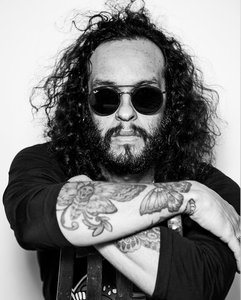
omar velázquez
1984 - , Puerto Rico
Quick Facts
- Artistic Movement Or Style: Contemporary Painting
- Artists Who Influenced This Artist:
- Francisco Oller y Cestero
- Carmelo Martell Luciano
- Rafael Ferrer
- Date Of Birth: 1984
- Full Name: Omar Velázquez
- Nationality: Puerto Rican
- Place Of Birth: San Juan, Puerto Rico