 Preview
 Send
Send Share
Share
 Details

 Download
 Similars
 X-Ray
X-Ray Diaporama
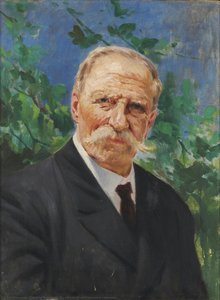
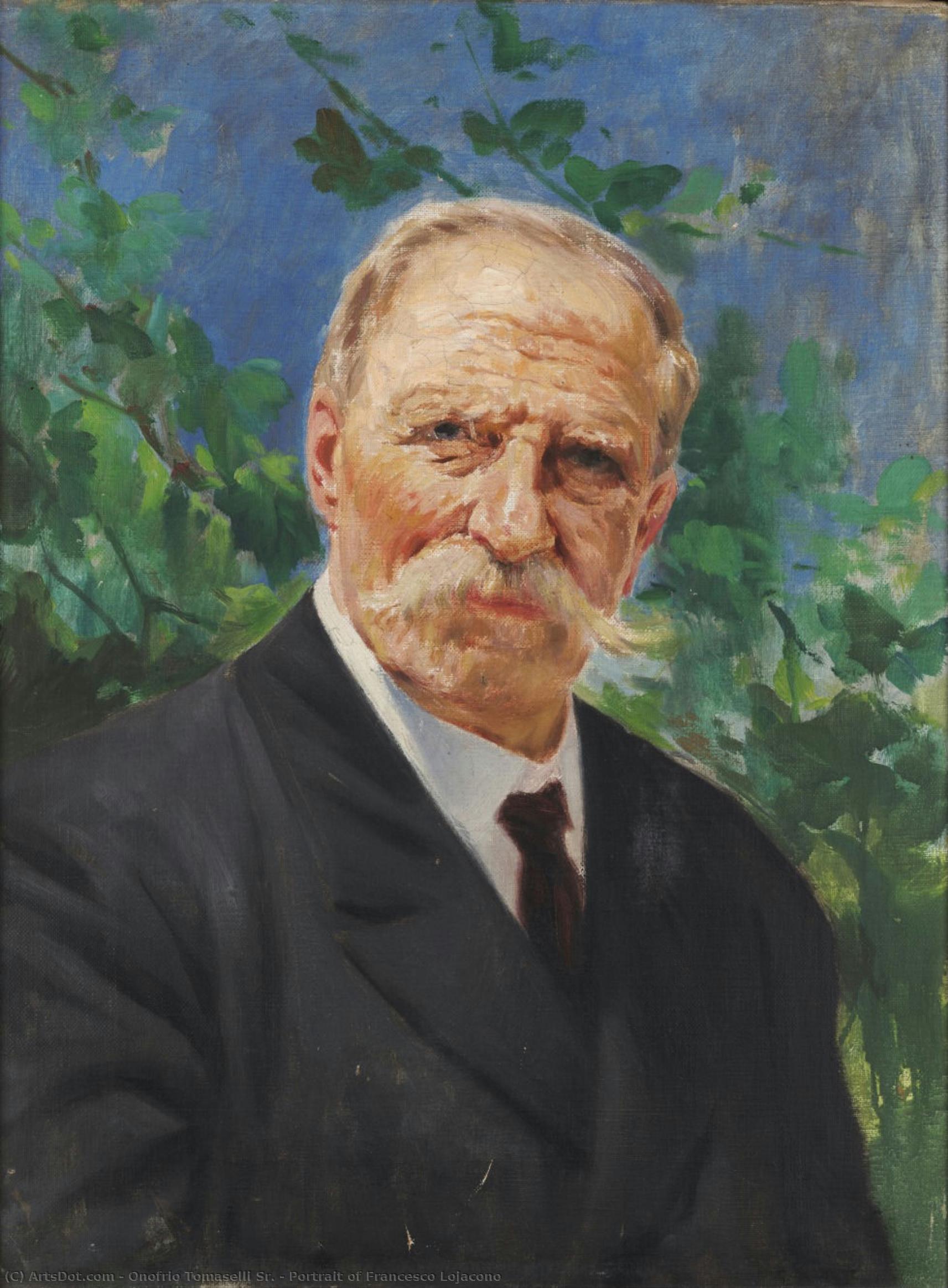
Portrait of Francesco Lojacono
 1930
1930 5.0 x 44.0 cm
 Read More
Hand Made Oil Reproduction
Hand-painted oil on canvas in your size and frame, made to order by our artists. ( Buy Print Buy Image)




































Pick from our preset sizes that match the artwork's original proportions.

You may enter your own dimensions to fit a specific frame or space. If your selected size does not match the original image's proportions, we will either crop the artwork or extend the painting with additional hand-painted elements. A digital mockup will be sent for your approval before production begins.
Please note that the on-screen preview does not reflect the actual cropping or extension. Only the mockup will accurately show the final composition.
While custom sizes are available, we recommend selecting a dimension from the predefined list to preserve the original proportions.
After order, ArtsDot.com team will email client for instructions and provide a mockup preview
Worldwide Delivery () in 3/4 weeks instead of standard 5 weeks. (25 August). No compromise on quality.

Free Worldwide Express Shipping

High-Quality Linen Canvas

Full Shipping Insurance

Customs Tax Refund Guarantee

True Color Matching Guarantee

60-Day Return Policy (Defects Only)

100% Money-Back Guarantee

Bulk Discount Offer
 Glass option is only available in size under 110 CM

Portrait of Francesco Lojacono
Reproduction Medium
Reproduction Size
-


Total Price
$ 263
Related Artworks







Artist Biography
Wassily Kandinsky: Pioneer of Abstraction
Wassily Wassilyevich Kandinsky, born December 4th (Old Style) 1866 in Moscow, Russia, and passing away on December 13th, 1944, in Neuilly-sur-Seine, France, stands as a monumental figure in the history of art. More than simply a painter, he was a theorist, an innovator, and arguably the first to systematically explore pure abstraction in Western painting. His journey from a young man studying law and economics to a revolutionary artist who dismantled traditional representation is a compelling narrative of intellectual awakening and profound artistic transformation. His legacy continues to inspire artists and shape our understanding of visual communication today.
Early Life and Influences
Kandinsky’s childhood was remarkably cosmopolitan, shaped by his family's travels throughout Europe – Venice, Rome, Florence, the Caucasus, and Crimea. This exposure to diverse cultures and artistic traditions instilled in him a deep appreciation for beauty and a sensitivity to color and form from an early age. He began formal art training at the Odessa Art School, followed by studies at the Imperial Academy of Arts in Moscow, where he initially focused on traditional academic painting techniques. However, his interest soon shifted towards music – specifically, the burgeoning field of atonality pioneered by Arnold Schoenberg. Kandinsky was deeply moved by this radical departure from harmonic conventions, recognizing a parallel between the emotional impact of musical dissonance and the potential for visual art to evoke non-representational feelings.
- Early Studies: Life drawing, sketching, anatomy – foundational skills honed through rigorous training.
- Musical Influence: Schoenberg’s atonal music profoundly impacted Kandinsky's artistic vision, leading him to seek ways to express emotion directly through form and color.
- Diverse Heritage: His family’s background—including connections to Russian nobility and a Mongolian princess—contributed to his unique perspective and openness to diverse cultural influences.
The Rise of Abstraction – From “Concerning the Spiritual in Art”
Kandinsky's pivotal moment arrived in 1911 with the publication of *Concerning the Spiritual in Art*. In this seminal text, he argued that art should transcend mere representation and instead communicate directly through color and form. He believed that these elements possessed an inherent spiritual power, capable of evoking emotions and conveying ideas independent of recognizable objects. This philosophy fueled his artistic experimentation, leading him to abandon traditional subject matter and explore increasingly abstract compositions. His 1911 painting, *Composition VII*, exemplifies this shift – a vibrant explosion of geometric shapes and colors that seems to pulse with an inner energy.
- “Concerning the Spiritual in Art” (1911): This text outlined Kandinsky’s core philosophy, advocating for art as a means of expressing spiritual truths through abstraction.
- Composition VII (1913): A landmark work demonstrating his move towards pure abstraction, characterized by dynamic color and geometric forms.
Key Periods and Artistic Developments
Kandinsky’s artistic journey spanned several distinct periods, each marked by evolving stylistic approaches. Initially influenced by the *Blaue Reiter* (The Blue Rider) group – a circle of Expressionist artists including Gabriele Münter – he explored lyrical abstraction, characterized by flowing lines and evocative colors. His time at the Bauhaus school in Germany from 1922 to 1933 saw him refine his geometric style, emphasizing primary forms (circle, square, triangle) and primary colors. Following the rise of Nazism, Kandinsky relocated to France, where he continued to develop his mature abstract style, often incorporating elements of Constructivism and exploring the relationship between color and sound.
- Blaue Reiter Period: Characterized by lyrical abstraction, flowing lines, and evocative colors.
- Bauhaus Years (1922-1933): Focused on geometric abstraction, emphasizing primary forms and colors.
- French Period: Continued exploration of abstract form and color, influenced by Constructivism and a fascination with musical harmony.
Legacy and Significance
Wassily Kandinsky’s impact on 20th-century art is immeasurable. He is widely considered one of the pioneers of abstract painting, paving the way for countless artists who followed in his footsteps. His theoretical writings provided a framework for understanding abstraction as a legitimate artistic language, and his innovative compositions continue to captivate viewers with their emotional intensity and formal dynamism. Beyond his individual achievements, Kandinsky’s work helped to fundamentally alter our perception of art, demonstrating its potential to transcend representation and communicate directly with the viewer's soul. His influence can be seen in movements ranging from Abstract Expressionism to Minimalism, solidifying his place as a truly revolutionary figure in the history of art.
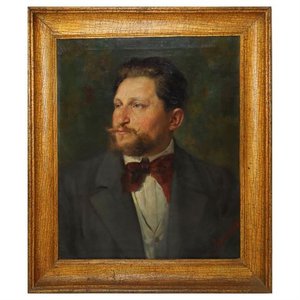
onofrio tomaselli sr.
1866 - 1956 , Italy
Quick Facts
- Artistic Movement Or Style:
- Abstraction
- Blaue Reiter
- Bauhaus
- Artists Or Movements Influenced By This Artist:
- Herbert Bayer
- Sonia Delaunay
- Artists Who Influenced This Artist:
- Anton Ažbe
- Gabriele Münter
- Date Of Birth: 1866-12-04 (Moscow)
- Date Of Death: 1944-12-13 (Neuilly-sur-Seine)
- Full Name: Wassily Wassilyevich Kandinsky
- Nationality: Russian, French
- Notable Artworks:
- Composition V
- Picture with an Archer
- Improvisation
- Place Of Birth: Moscow, Russia