 Preview
 Send
Send Share
Share
 Details

 Download
 Similars
 X-Ray
X-Ray Diaporama
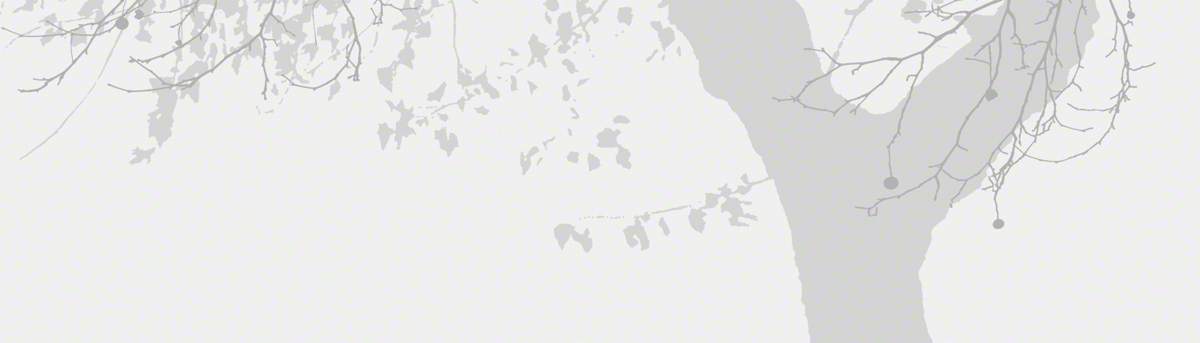
Then and Now (Royal London Hospital) (panel 4 of 9)
 2009
2009 120.0 x 3100.0 cm
 Royal London Hospital
 Read More
Giclée / Art Print
Museum-quality giclée or canvas print with fast production and flexible finish options. ( Buy Hand Made Painting Buy Image)




































Pick from our preset sizes that match the artwork's original proportions.

You may enter your own dimensions to fit a specific frame or space. If your selected size does not match the original image's proportions, we will either crop the artwork or extend the image with a mirrored or solid-fill edge. A digital mockup will be sent for your approval before production begins.
Please note that the on-screen preview does not reflect the actual cropping or extension. Only the mockup will accurately show the final composition.
While custom sizes are available, we recommend selecting a dimension from the predefined list to preserve the original proportions.
Worldwide Delivery () in 2 weeks instead of standard 4/5 weeks. (29 August)

Free Worldwide Express Shipping

High-Quality Linen Canvas

Full Shipping Insurance

Customs Tax Refund Guarantee

True Color Matching Guarantee

60-Day Return Policy (Defects Only)

100% Money-Back Guarantee

Bulk Discount Offer
 Glass option is only available in size under 110 CM

Then and Now (Royal London Hospital) (panel 4 of 9)
Giclée / Art Print
Reproduction Size
-


Total Price
$ 63
Related Artworks

Artist Biography
Oona Culley: Architect of Decay and Memory
Oona Culley’s work stands as a poignant meditation on time, memory, and the layered histories embedded within decaying urban spaces. Emerging from the British art scene in the early 2000s, she quickly distinguished herself not through grand narratives or overt political statements, but through an intensely personal and meticulously observed approach to documenting forgotten corners of Britain’s industrial past. Her signature “Then & Now” panels – large-scale, often monochrome paintings juxtaposing historical photographs with contemporary depictions of the same locations – are more than just architectural studies; they're haunting elegies for a vanishing world, imbued with a profound sense of loss and an unsettling beauty.
Born in 1975, Culley’s artistic journey began with a formal education at the Royal College of Art in London. However, she deliberately eschewed traditional academic training, preferring to develop her unique visual language through independent research and extensive fieldwork. This hands-on approach is evident in the sheer depth of her investigations – each panel represents months, sometimes years, of dedicated observation, sketching, and photographic documentation. Her initial focus centered on abandoned hospitals, particularly St Bartholomew’s Hospital in London, a site rich with both medical history and social decay. This early work established a core thematic concern: the intersection of human experience, institutional power, and the relentless passage of time.
The “Then & Now” Technique – A Dialogue Across Time
Culley’s distinctive technique is central to the evocative power of her panels. She begins with meticulously sourced historical photographs, often dating back to the late 19th and early 20th centuries. These images, frequently faded and grainy, offer glimpses into a bygone era – bustling hospital wards, operating theaters filled with gleaming instruments, and corridors echoing with the voices of patients and staff. Crucially, Culley doesn’t simply replicate these photographs; she uses them as a springboard for her own creative response.
Her contemporary paintings are not direct copies but rather interpretations – layered washes of acrylic paint, often incorporating subtle glazing techniques to create an illusion of depth and atmosphere. The color palettes are typically muted and melancholic, dominated by greys, blues, and browns, mirroring the weathered surfaces of the buildings she depicts. The key element is the deliberate blurring of the lines between past and present. Culley doesn’t attempt to perfectly recreate the historical scene; instead, she captures a sense of its *ghost*, suggesting what was once there while simultaneously acknowledging its absence. The use of shadow and silhouette becomes paramount, creating an almost spectral quality that emphasizes the ephemeral nature of memory.
Expanding the Scope – Airports, Hospitals, and Beyond
While St Bartholomew’s Hospital remains a cornerstone of Culley's oeuvre, her investigations have steadily broadened over time. She has documented abandoned mental hospitals like the Royal London Hospital (the subject of her most celebrated “Then & Now” series), as well as airports such as Heathrow Terminal 5 and Brussels Airport. This shift reflects a growing interest in the architecture of modernity – the grand, often impersonal spaces designed to facilitate movement and commerce – and their subsequent decline or abandonment. Culley’s work extends beyond mere documentation; she explores the psychological impact of these environments on human experience, examining how they shape our perceptions of space, time, and identity.
Her recent projects have also incorporated elements of botanical illustration, drawing parallels between the decaying architecture and the natural world – specifically, the processes of growth, decay, and regeneration. The delicate tracery of branches and leaves in her paintings subtly echoes the intricate patterns of architectural ornamentation, suggesting a deeper connection between the built environment and the rhythms of life.
Legacy and Influence
Oona Culley’s work has garnered significant critical acclaim, earning her recognition as one of Britain's most compelling contemporary artists. Her panels are exhibited internationally, and her meticulous research and evocative imagery have inspired a new generation of artists interested in exploring themes of memory, loss, and the hidden histories of urban spaces. Culley’s influence extends beyond the purely visual; she has demonstrated the power of slow, sustained observation as a means of engaging with history and creating art that is both deeply personal and universally resonant. Her work serves as a potent reminder of the importance of preserving our collective memory – not through grand monuments or celebratory narratives, but through the quiet contemplation of forgotten places.

oona culley
1975 -
Quick Facts
- Artistic Movement Or Style: Documentary photography
- Artists Or Movements Influenced By This Artist:
- Precisionism
- Documentary photography
- Artists Who Influenced This Artist: ['Charles Sheeler Jr.']
- Date Of Birth: 1975
- Full Name: Oona Culley
- Nationality: British
- Notable Artworks:
- Then & Now (Royal London)
- St Bartholomew’s Hospital
- Place Of Birth: London, UK