 Preview
 Send
Send Share
Share
 Details

 Download
 Similars
 X-Ray
X-Ray Diaporama
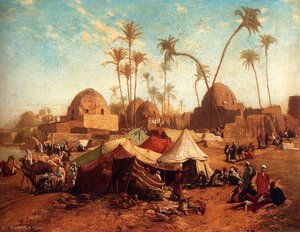
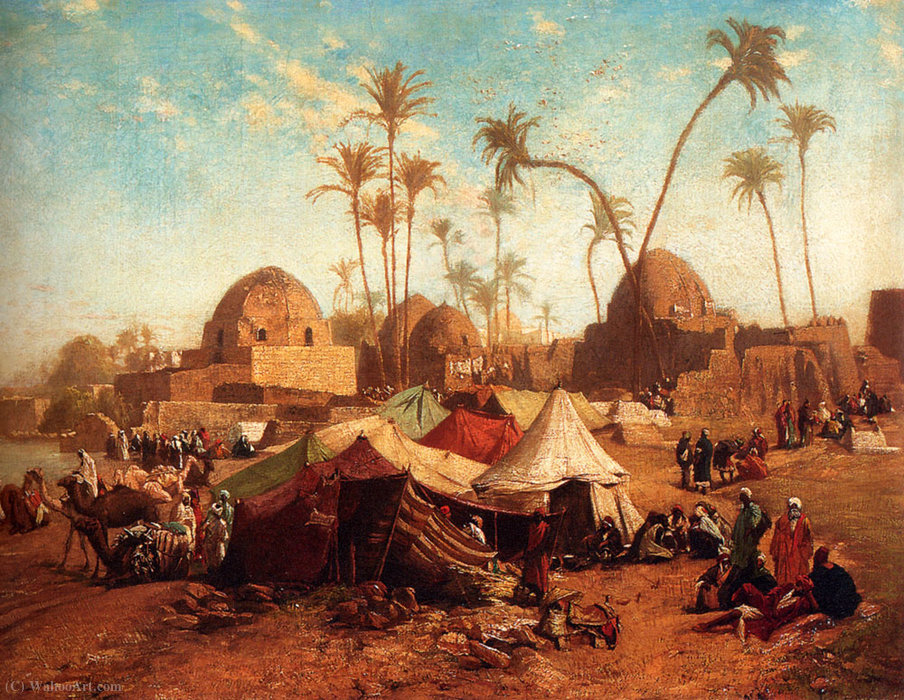
Gentz karl wilhelm bedouincamp
 Read More
Giclée / Art Print
Museum-quality giclée or canvas print with fast production and flexible finish options. ( Buy Hand Made Painting Buy Image)




































Pick from our preset sizes that match the artwork's original proportions.

You may enter your own dimensions to fit a specific frame or space. If your selected size does not match the original image's proportions, we will either crop the artwork or extend the image with a mirrored or solid-fill edge. A digital mockup will be sent for your approval before production begins.
Please note that the on-screen preview does not reflect the actual cropping or extension. Only the mockup will accurately show the final composition.
While custom sizes are available, we recommend selecting a dimension from the predefined list to preserve the original proportions.
Worldwide Delivery () in 2 weeks instead of standard 4/5 weeks. (27 August)

Free Worldwide Express Shipping

High-Quality Linen Canvas

Full Shipping Insurance

Customs Tax Refund Guarantee

True Color Matching Guarantee

60-Day Return Policy (Defects Only)

100% Money-Back Guarantee

Bulk Discount Offer
 Glass option is only available in size under 110 CM

Gentz karl wilhelm bedouincamp
Giclée / Art Print
Reproduction Size
-


Total Price
$ 63
Related Artworks




Artist Biography
The Radiant Legacy of Orazio Gentileschi
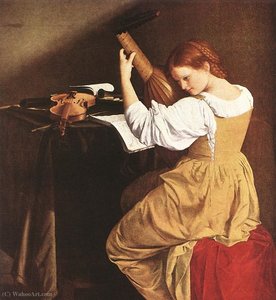
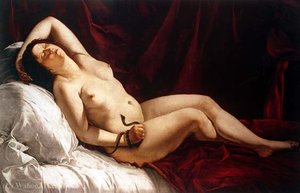
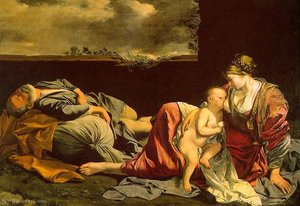
In the grand, sweeping tapestry of the Italian Baroque, few threads shimmer with as much nuanced elegance as those woven by Orazio Gentileschi. Born into a family of artisans as Orazio Lomi, his journey from the artistic cradles of Tuscany and Pisa to the royal courts of Europe is a testament to a talent that refused to be confined by borders or styles. While history often casts a long shadow through the fame of his daughter, Artemisia, Orazio stands as a monumental figure in his own right—a painter who possessed the rare ability to marry the dramatic tension of Caravaggism with a refined, courtly grace that spoke to the highest echelons of European nobility.
His early years were steeped in the rich traditions of the late Renaissance. Moving to Rome around 1576, he adopted the name Gentileschi from a maternal uncle, a gesture that signaled the beginning of his ascent within the Roman art scene. His formative training, which some accounts suggest involved an apprenticeship under the Venetian master Jacopo Tintoretto, instilled in him a profound appreciation for the theatricality of light and the expressive power of movement. This Venetian influence, characterized by a certain luminous fluidity, would later serve as a vital counterpoint to the starker, more aggressive realism he encountered upon meeting the revolutionary Caravaggio.
A Synthesis of Light and Grace
The true genius of Gentileschi lies in his remarkable stylistic evolution. In his early Roman period, one can observe the heavy, dramatic chiaroscuro—the intense interplay of shadow and light—that defined the Caravaggesque movement. Yet, unlike the raw and often gritty depictions found in the works of his contemporaries, Orazio began to soften these edges. He possessed a unique sensibility for color and texture, moving away from harsh darkness toward a more luminous, silvery palette that breathed life into his subjects. His work became a sophisticated bridge between the muscular energy of the Baroque and a more delicate, international elegance.
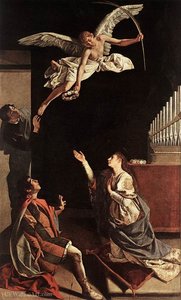
This mastery is perhaps most evident in his treatment of fabric and flesh. To gaze upon his canvases is to witness a painter obsessed with the tactile reality of the world; the heavy sheen of silk, the soft glow of skin, and the intricate folds of drapery are rendered with an almost poetic precision. His compositions, such as the serene Saint Cecilia and an Angel, demonstrate how he could utilize light not merely to create drama, but to evoke a sense of divine tranquility and spiritual grace. He did not simply paint scenes; he orchestrated atmospheres where the sacred and the sensual met in perfect harmony.
An International Journey and Enduring Influence
Gentileschi’s career was as much a geographical odyssey as an artistic one. His reputation as a master of refinement allowed him to traverse the great cultural hubs of his age, finding patronage in Genoa, Ancona, and Paris. Each city left its mark on his evolving hand, yet he maintained a consistent thread of sophistication that made him indispensable to the monarchs of the era. The pinnacle of his professional journey arrived in 1626, when he moved to London to serve as a court painter for King Charles I. In the English court, alongside luminaries like Anthony van Dyck, Orazio helped introduce the transformative power of Italian Baroque aesthetics to a new audience.
Though his life eventually concluded in 1639, the historical significance of Orazio Gentileschi remains undiminished. He was more than just a follower of Caravaggio; he was an innovator who refined the language of realism into something much more lyrical and aristocratic. His ability to balance the visceral emotion of the Baroque with a polished, Mannerist elegance ensured that his work would resonate far beyond the walls of the Roman studios where he first began. Today, his masterpieces continue to captivate, offering a window into an era where light was used not just to reveal form, but to illuminate the very soul of the human experience.
orazio gentleschi
1563 - 1639
Quick Facts
- Artistic Movement Or Style: Baroque Painting
- Artists Or Movements Influenced By This Artist: ['Mannerist Art']
- Artists Who Influenced This Artist: ['Caravaggio']
- Date Of Birth: 1563
- Date Of Death: 1639
- Full Name: Orazio Gentileschi
- Nationality: Italian
- Notable Artworks:
- Saint Cecilia and an Angel
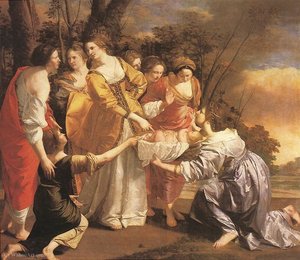
- Finding of Moses
- Place Of Birth: Florence