

 Preview
 Send
Send Share
Share
 Details

 Download
 Similars
 X-Ray
X-Ray Diaporama
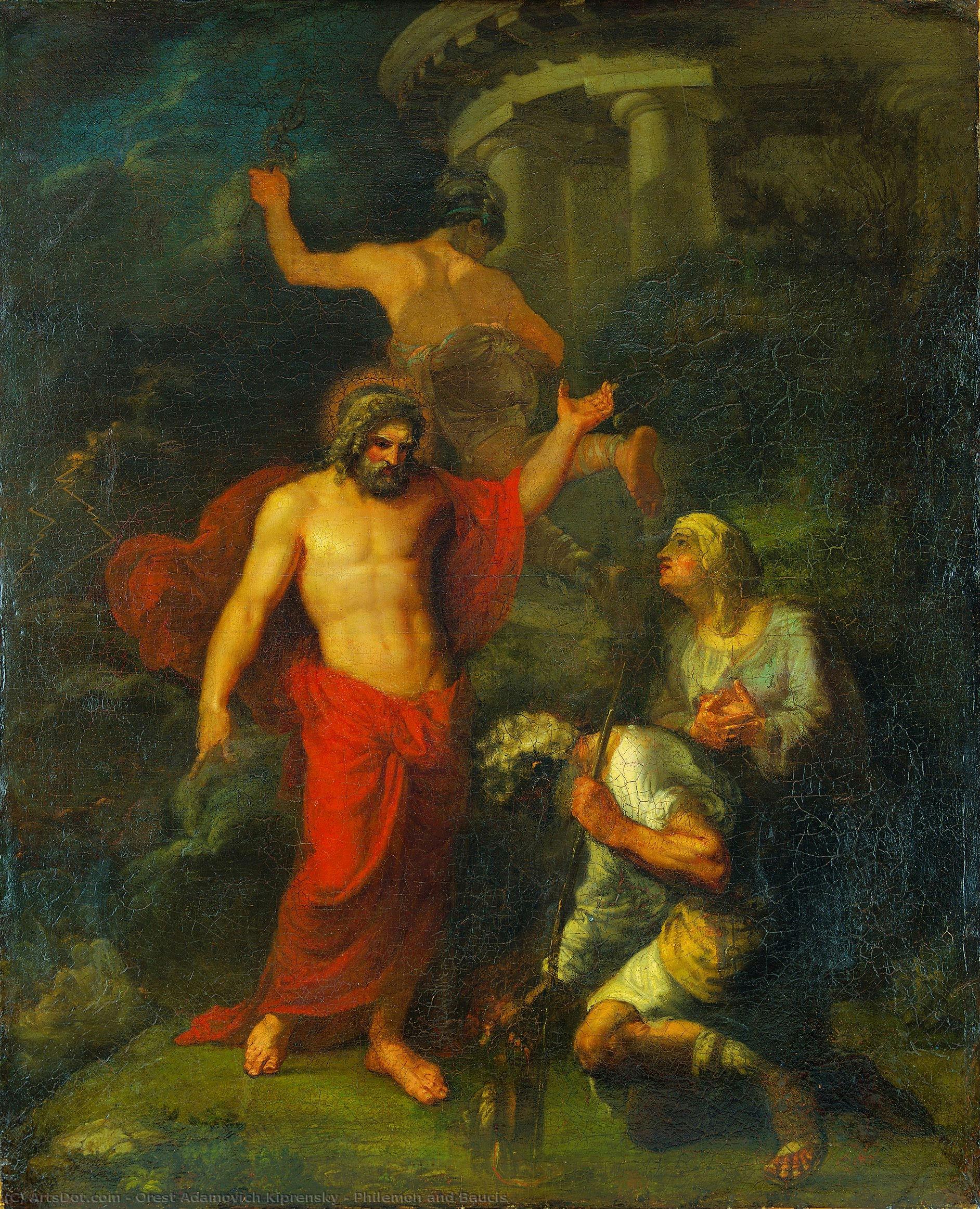
Philemon and Baucis
 Oil On Canvas
- WallArt
- Romanticism
 1802
1802- 19th Century
 124.0 x 101.0 cm
 The Art Museum RIGA BOURSE
 Read More
Purchase a high-resolution, enhanced digital image, far superior to the online preview.
Each file is meticulously prepared by our in-house specialists using advanced tools and expert manual retouching. We ensure every image has exceptional clarity, precise color accuracy, and fine detail.
The final file is delivered via email within 72 hours, optimized for immediate use in professional, editorial, and print environments. This is the same quality trusted by top-tier design studios, publishers, and galleries.
Digital Image
Download a high-resolution file for personal display, printing, and creative projects. ( Buy Print Buy Hand Made Painting)
Included in Every Digital Image Order
Expert Digital Delivery, Guaranteed
When you choose ArtsDot.com, you're not just getting an image - you're receiving a professionally enhanced digital artwork, crafted with precision and backed by a satisfaction guarantee. Here's everything that comes with your order, automatically:

Fast Email Delivery
Your high-resolution digital image file will be emailed to you within 72 hours of ordering - ready for immediate use.

AI-Enhanced Digital File
Your artwork is professionally optimized using advanced AI tools and manual editing, ensuring maximum detail, clarity, and color accuracy.

Free Lifetime Re-Delivery
Accidentally deleted or lost your file? No worries - we'll resend it to you anytime, free of charge.

No Import Fees - Ever
Enjoy your artwork instantly with zero customs, duties, or delivery fees - digital downloads are always tax-free.

Color Accuracy Guarantee
We ensure your digital image reflects the original colors as closely as possible using professional tools and color management.

60-Day Satisfaction Guarantee
If you're not satisfied with your digital image, we'll revise it or refund 100% within 60 days - no questions asked.

100% Money-Back Guarantee
Not satisfied? Get a full refund within 60 days of receiving your digital file - no questions asked.

Bulk Order Discounts
Buy 3 images, save 10% - Buy 5, save 15% - Buy 10+, save 20%. Great for creative projects, galleries, and agencies.
Collectible Description
A Divine Encounter in Russian Romanticism
In the luminous depths of Orest Adamovich Kiprensky’s 1802 masterpiece, Philemon and Baucis, we are transported to a moment where the mortal and the divine intersect. This captivating work, a cornerstone of Russian Romanticism, breathes life into the ancient Greek myth of hospitality and devotion. The painting captures the poignant scene of the elderly couple, Philemon and Baucis, as they encounter Jupiter and Mercury disguised as weary travelers. Through Kiprensky’s masterful brushwork, the canvas transcends mere illustration, becoming a profound meditation on kindness, humility, and the unexpected presence of the sacred within the everyday.
The composition is anchored by the tender presence of the protagonists. Philemon, draped in a rich, emotive red robe, and Baucis, clad in pristine white, stand with arms raised in a gesture that oscillates between celebratory offering and reverent awe. The artist utilizes a delicate interplay of light and shadow to pull the viewer into their intimate world. Notice how the soft glow illuminates the textures of their garments, suggesting a warmth that mirrors the legendary hospitality of the pair. This light does more than reveal form; it sanctifies the scene, casting a celestial aura over the humble cottage setting.
Symbolism and the Art of the Narrative
Beyond the central figures, Kiprensky weaves a complex tapestry of symbolic elements that enrich the narrative depth of the piece. The presence of birds—one drifting near the upper periphery and another nestled toward the center—serves as a subtle nod to the fleeting nature of divine visitation and the harmony of the natural world. A simple bowl rests upon a surface, an unassuming vessel that holds the weight of the entire myth: it is the instrument of their shared sacrifice and the symbol of their selfless generosity to strangers.
The surrounding figures, partially obscured or integrated into the background, suggest a larger community witnessing this miraculous event, adding a layer of social texture to the mythological drama. For the discerning collector or interior designer, this painting offers more than just aesthetic beauty; it provides a focal point of storytelling. The way Kiprensky balances the grandeur of the gods with the earthy reality of the peasants creates an emotional resonance that is both intellectually stimulating and visually soothing. It is a piece that invites long periods of contemplation, making it an ideal centerpiece for a space dedicated to culture and reflection.
A Legacy of Mastery for the Modern Collector
The history of this painting is as intriguing as its subject matter. Long thought to be the work of an unknown hand, the eventual discovery of Kiprensky’s signature during restoration added a layer of academic triumph to its legacy. As a premier figure of the Russian Romantic movement, Kiprensky’s ability to infuse historical and mythological subjects with psychological depth is unparalleled. His training at the Imperial Academy of Arts allowed him to master the technical precision required for such complex compositions, while his innate sensitivity allows the emotional heartbeat of the myth to pulse through every stroke.
Owning a high-quality reproduction of Philemon and Baucis allows one to bring this era of profound artistry into a contemporary setting. Whether placed in a sophisticated study, a grand salon, or a curated gallery wall, the painting serves as an enduring testament to the virtues of compassion and grace. It is an investment in a piece of history that continues to inspire awe, offering a timeless elegance that complements both classical and modern interior aesthetics.
Related Artworks

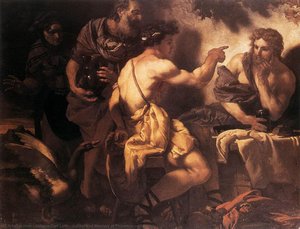
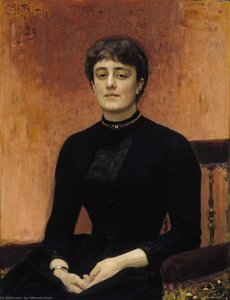
Artist Biography
Orest Adamovich Kiprensky: Life & Legacy
Early Life and Education (1782-1803)
- Birth and Origins: Orest Adamovich Kiprensky was born on March 24, 1782, in the village of Koporye near Saint Petersburg, Russia. His birth was unconventional; he was an illegitimate son of landowner Alexey Dyakonov. His surname, derived from Kypris (a Greek name for the goddess of love), reflects this origin.
- Early Upbringing: Kiprensky was raised in the family of Adam Shvalber, a serf. Remarkably, he was freed from serfdom at birth and later received assistance from his father to enter a boarding school at the Imperial Academy of Arts in Saint Petersburg in 1788, at just six years old.
- Academic Training: He diligently studied at both the boarding school and the academy itself until 1803. Three additional years were spent as a pensioner fulfilling requirements for the major gold medal. His dedication culminated in winning first prize for his historical painting, Prince Dmitri Donskoi after the Battle of Kulikovo (1805), which paved the way for further artistic study abroad.
European Travels and Artistic Development (1804-1828)
- Early Success: Even before his graduation, Kiprensky achieved recognition with his 1804 portrait of Adam Shvalber, his foster father. The painting was so admired that members of the Naples Academy of Arts initially mistook it for a work by Rubens or Van Dyck!
- Years Abroad: Following his prize and early acclaim, Kiprensky traveled extensively throughout Europe, residing in Moscow (1809), Tver (1811), Saint Petersburg (1812), and notably Rome and Naples from 1816 to 1822.
- Personal Life & Italy: In Italy, he formed a deep attachment to Anne Maria Falcucci (Mariucci). He purchased her freedom from her family and employed her as his ward. Upon leaving Italy initially, he secured her placement in a Roman Catholic convent. Later, he would return for her.
Mature Period & Notable Works (1822-1836)
- Return to Russia and Italy: Kiprensky returned to Italy in 1828 after receiving news of Mariucci’s whereabouts. He found her, transferred to another convent, and eventually married her in 1836, necessitating his conversion from Russian Orthodoxy to Roman Catholicism.
- Portraiture Mastery: Kiprensky became a leading portraitist of his time, capturing the likenesses of prominent figures. His most famous work is arguably the Portrait of Alexander Pushkin (1827), which famously prompted the poet to remark, “The mirror flatters me.” Other notable portraits include those of Count Sergey Uvarov, Vasily Zhukovsky, and Konstantin Batyushkov.
- Historical Paintings: Alongside portraiture, Kiprensky continued to create historical paintings, demonstrating his versatility and skill.
Influences & Artistic Style
- Influences: Kiprensky’s style was influenced by the works of European masters like Rubens and Van Dyck (as evidenced by the initial misattribution of his portrait of Shvalber), as well as contemporary trends in Romanticism.
- Artistic Characteristics: His portraits are characterized by their psychological depth, expressive brushwork, and a keen attention to detail. He skillfully captured not only physical resemblance but also the inner character and emotions of his subjects. His historical paintings often displayed dramatic compositions and vibrant colors.
Legacy & Historical Significance
- Death and Burial: Sadly, Kiprensky died of pneumonia in Rome later in 1836, shortly after his marriage. He is buried in the church of Sant'Andrea delle Fratte.
- Impact on Russian Art: Orest Kiprensky played a crucial role in establishing portraiture as a significant genre within Russian art. His work bridged the gap between Neoclassicism and Romanticism, influencing subsequent generations of Russian artists. He remains celebrated for his ability to capture the spirit of his time and the individuality of his subjects.
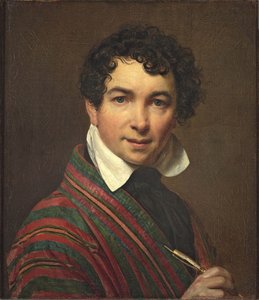
Orest Adamovich Kiprensky
1782 - 1836 , Russia
Quick Facts
- Birth Date: March 24, 1782
- Birth Place: Koporye, Russia
- Death Date: 1836
- Movement: Romanticism
- Name: Orest Adamovich Kiprensky
- Nationality: Russian
- Notable Works:
- Portrait of Alexander Pushkin
- Portrait of Adam Shvalber
- Prince Dmitri Donskoi after the Battle of Kulikovo

