 Preview
 Send
Send Share
Share
 Details

 Download
 Similars
 X-Ray
X-Ray Diaporama
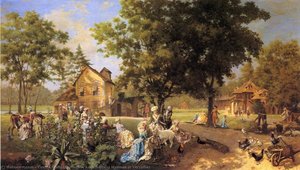
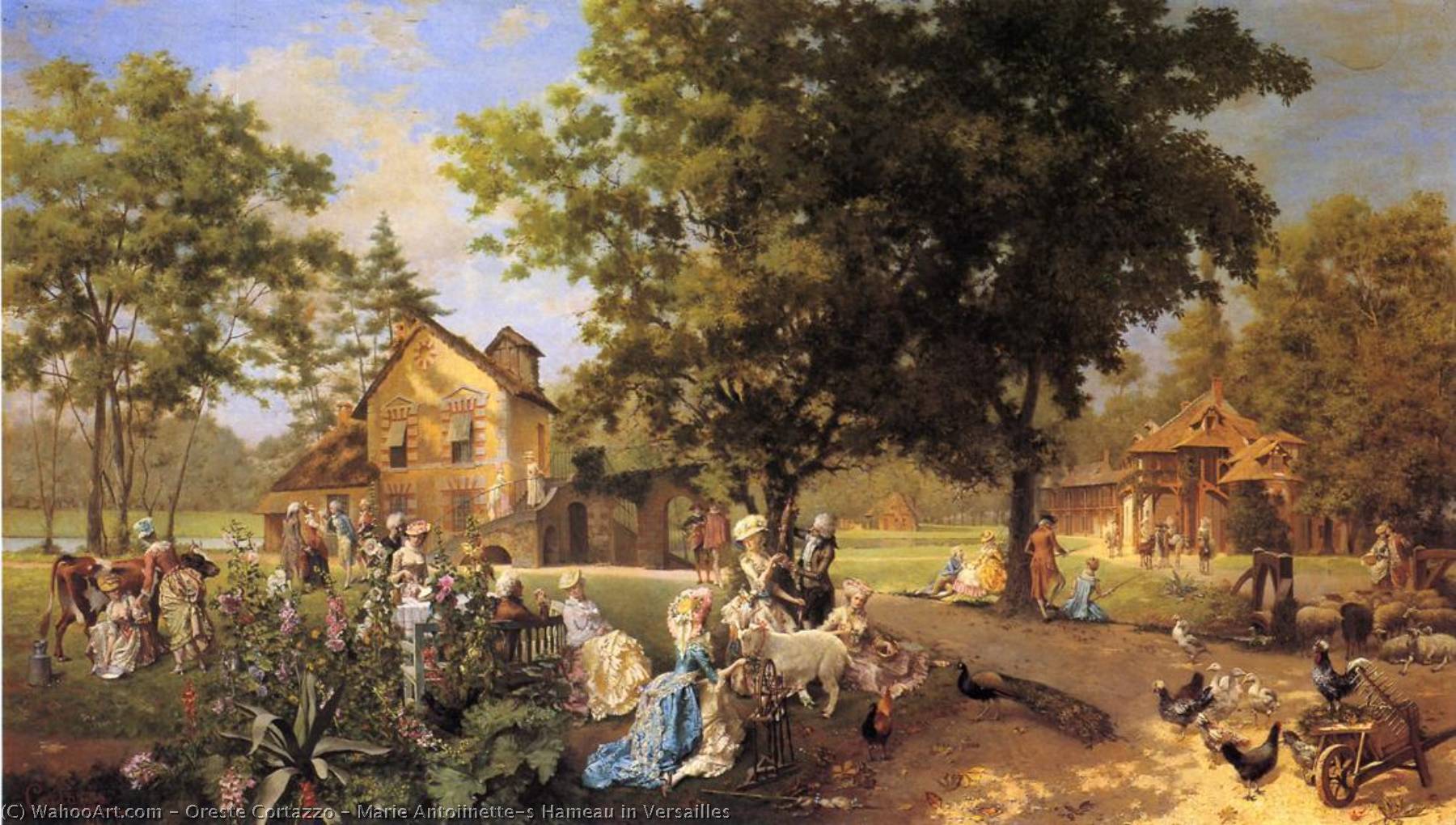
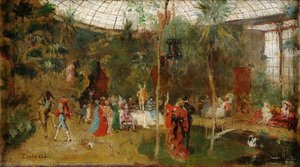
Marie Antoiinette's Hameau in Versailles
 Read More
Giclée / Art Print
Museum-quality giclée or canvas print with fast production and flexible finish options. ( Buy Hand Made Painting Buy Image)




































Pick from our preset sizes that match the artwork's original proportions.

You may enter your own dimensions to fit a specific frame or space. If your selected size does not match the original image's proportions, we will either crop the artwork or extend the image with a mirrored or solid-fill edge. A digital mockup will be sent for your approval before production begins.
Please note that the on-screen preview does not reflect the actual cropping or extension. Only the mockup will accurately show the final composition.
While custom sizes are available, we recommend selecting a dimension from the predefined list to preserve the original proportions.
Worldwide Delivery () in 2 weeks instead of standard 4/5 weeks. (29 August)

Free Worldwide Express Shipping

High-Quality Linen Canvas

Full Shipping Insurance

Customs Tax Refund Guarantee

True Color Matching Guarantee

60-Day Return Policy (Defects Only)

100% Money-Back Guarantee

Bulk Discount Offer
 Glass option is only available in size under 110 CM

Marie Antoiinette's Hameau in Versailles
Giclée / Art Print
Reproduction Size
-


Total Price
$ 63
Related Artworks







Artist Biography
The Tapestry of Tradition and Exoticism: The Life of Oreste Cortazzo
In the vibrant, shifting landscape of late nineteenth-century European art, few figures embody the delicate tension between classical heritage and modern curiosity as gracefully as Oreste Cortazzo. Born in 1836 in Ceraso, within the sun-drenched Salerno Province of Italy, Cortazzo’s artistic soul was nurtured from its earliest moments by the hand of his father, Michele. This formative apprenticeship was more than mere technical training; it was an immersion into a lineage of beauty. Through Michele, a painter who held the masterful techniques of Titian in high regard, the young Oreste inherited a profound respect for tonal harmony, color theory, and the enduring elegance of the Venetian tradition.
The trajectory of Cortazzo’s life took a transformative turn in 1858 when he encountered the renowned painter Léon Bonnat in Rome. This meeting served as the catalyst for a journey that would lead him from the classical roots of Italy to the beating heart of the Parisian art world. Following Bonnat to Paris in 1860, Cortazzo entered a studio that functioned as a crucible of academic rigor. As he navigated the bustling streets and intellectual salons of France, he found himself positioned at a fascinating crossroads of history, caught between the established doctrines of Academicism and the burgeoning, light-drenched revolution of the Impressionists.
A Synthesis of Styles: From Portraiture to Japonisme
Cortazzo’s early professional years were defined by a meticulous command of genre and portraiture. Catering to an affluent, bourgeois clientele, he produced works that captured the quiet dignity and social nuances of his era. His commissions for Goupil & Cie allowed him to refine a style that was both commercially successful and artistically disciplined. Yet, beneath this academic foundation lay a restless, searching spirit. As the late nineteenth century embraced the allure of the "exotic," Cortazzo found himself deeply moved by the aesthetic principles of Japanese art.
This fascination with Japonisme breathed new life into his compositions. In seminal works such as “Japanese Fantasy” and “Japanese Woman,” one can observe a subtle but profound departure from traditional European depth. He began to experiment with the bold use of color and the captivating, flattened perspectives characteristic of Japanese prints, creating a unique visual language that retained his academic precision while embracing a modern, decorative sensibility. This period of his career represents a masterful bridge between the old world and the new, where the weight of tradition met the lightness of an Eastern-inspired vision.
The Illustrative Legacy and Romantic Landscapes
Beyond the canvas, Cortazzo’s artistry found a profound resonance in the realm of graphic arts and literature. He possessed a rare ability to translate the psychological depth of written words into evocative imagery, earning him distinction as an illustrator for some of the most celebrated authors of his time. His meticulous illustrations for the works of Honoré de Balzac—including titles such as La Rabouilleuse and Un début dans la vie—demonstrated a capacity to capture nuanced emotional landscapes with striking detail. Furthermore, his contribution to the lavish 1890 London edition of Romeo and Juliet solidified his reputation as a storyteller of the highest order.
As his career matured, Cortazzo’s gaze shifted once more, finding inspiration in the sweeping, emotive vistas of the English Romantics. This late-career evolution saw him producing numerous landscapes that traded the structured intimacy of genre scenes for a more atmospheric and sublime approach to nature. His achievements were recognized on the grandest stages of the art world, including:
- Regular participation in the Paris Salon from 1870 to 1885, establishing his presence among the European elite.
- Exhibition at the Exposition Universelle (1878), showcasing his versatility to a global audience.
- Honorable mention and medal at the Exposition Universelle (1889), a testament to his enduring technical mastery.
- International recognition through exhibitions in Glasgow, marking him as a truly cosmopolitan artist.
When Oreste Cortazzo passed away in Paris, he left behind a legacy that transcends simple classification. He was an artist who refused to be confined by the boundaries of a single movement, instead choosing to weave together the threads of Italian tradition, French academicism, Japanese aesthetics, and English Romanticism into a singular, luminous tapestry of art history.
oreste cortazzo
1836 - 1910
Quick Facts
- Artistic Movement Or Style: Academic Art; Romantic Landscapes; Japanese Influence
- Artists Or Movements Influenced By This Artist: Léon Bonnat
- Artists Who Influenced This Artist: Titian
- Date Of Birth: April 26, 1836
- Full Name: Oreste Cortazzo
- Nationality: Italian-French
- Notable Artworks:
- Japanese Fantasy
- Japanese Woman
- Place Of Birth: Rome, Italy