 Preview
 Send
Send Share
Share
 Details

 Download
 Similars
 X-Ray
X-Ray Diaporama
The Card
 1909
1909 77.0 x 57.0 cm
 Read More
Giclée / Art Print
Museum-quality giclée or canvas print with fast production and flexible finish options. ( Buy Hand Made Painting Buy Image)




































Pick from our preset sizes that match the artwork's original proportions.

You may enter your own dimensions to fit a specific frame or space. If your selected size does not match the original image's proportions, we will either crop the artwork or extend the image with a mirrored or solid-fill edge. A digital mockup will be sent for your approval before production begins.
Please note that the on-screen preview does not reflect the actual cropping or extension. Only the mockup will accurately show the final composition.
While custom sizes are available, we recommend selecting a dimension from the predefined list to preserve the original proportions.
Worldwide Delivery () in 2 weeks instead of standard 4/5 weeks. (18 August)

Free Worldwide Express Shipping

High-Quality Linen Canvas

Full Shipping Insurance

Customs Tax Refund Guarantee

True Color Matching Guarantee

60-Day Return Policy (Defects Only)

100% Money-Back Guarantee

Bulk Discount Offer
 Glass option is only available in size under 110 CM

The Card
Giclée / Art Print
Reproduction Size
-


Total Price
$ 63
Collectible Description
Artist Background
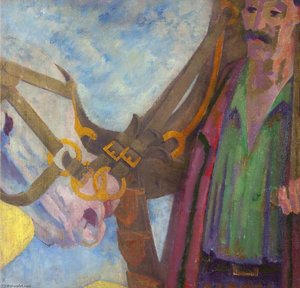
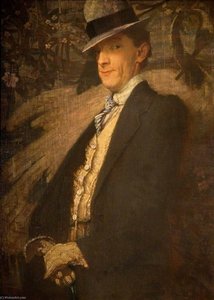
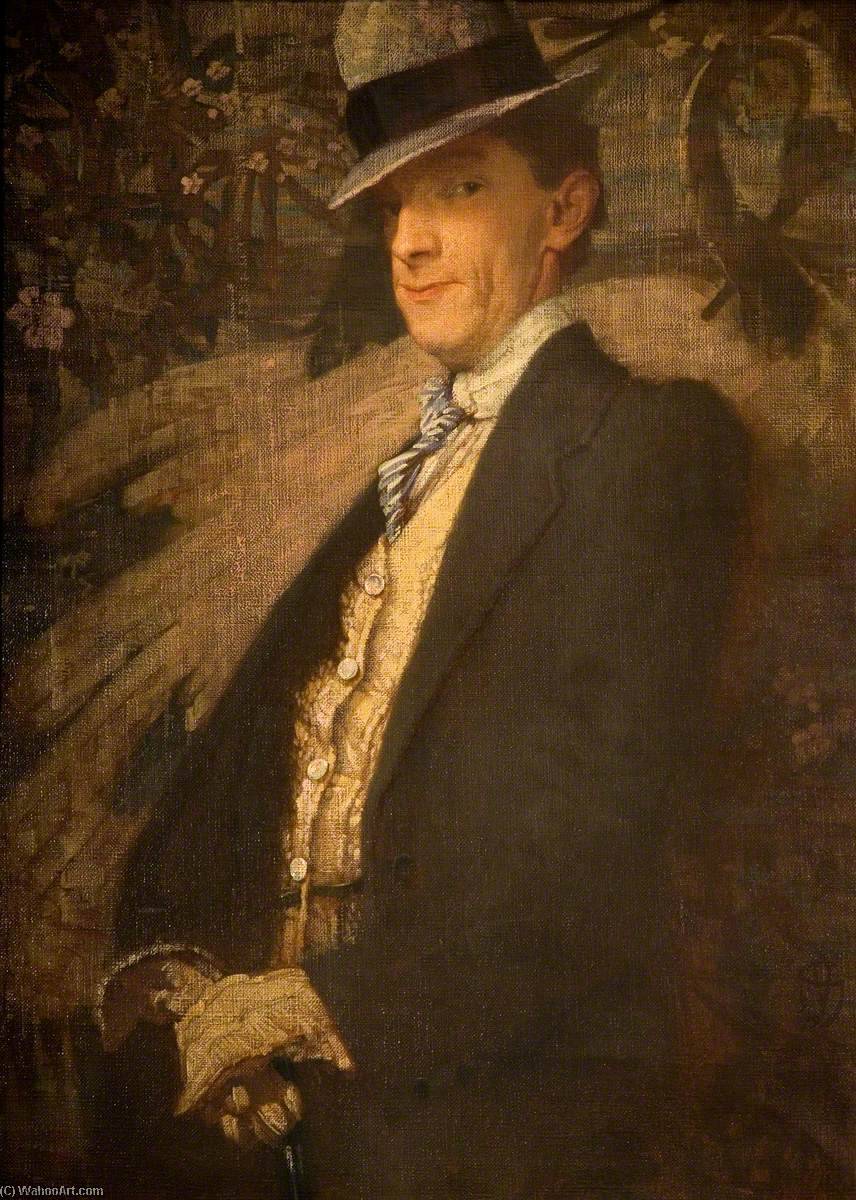
Orlando Greenwood was a talented artist who created The Card during a time when art was evolving rapidly. His work is characterized by his use of bold colors and attention to detail, as seen in this painting. The subject of the painting appears to be a man of high social status, dressed in a suit with a tie and a hat.Style and Technique
The style of The Card is reminiscent of other artists from the same period, such as Oskar Kokoschka, who created Veronica in 1909. This painting can be found at the Museum of Fine Arts in Budapest, Hungary. The use of oil on canvas and the attention to detail in The Card are also similar to the works of other artists, such as Jozef Majkut, a Slovak academic painter.- Oil on Canvas: The painting is created using oil on canvas, which was a popular medium during the early 20th century.
- Attention to Detail: The artist's attention to detail is evident in the subject's clothing and the background of the painting.
- Bold Colors: The use of bold colors adds depth and interest to the painting, making it a captivating piece of art.
For more information on Orlando Greenwood and his paintings, visit /en/art/show/art-aquplj-en/
Related Artworks

Artist Biography
Orlando Greenwood: A Painter of Rural England’s Soul
Orlando Greenwood (1892 – 1989) remains a quietly significant figure in British realist painting, a master of capturing the weathered beauty and poignant simplicity of rural life. Born in Nelson, Lancashire, his artistic journey began not within formal art academies but amidst the industrial landscape of his childhood—a stark contrast to the luminous landscapes he would later become renowned for. Greenwood’s early years were spent working in his uncle's cotton mill, an experience that instilled a deep appreciation for honest labor and the rhythms of everyday existence – themes that would permeate much of his work. This grounding in the realities of rural life profoundly shaped his artistic vision, informing a style characterized by meticulous detail, subtle color palettes, and a profound empathy for his subjects.Early Influences and Artistic Development
Greenwood’s formal art training commenced at Goldsmiths' College School of Art in London, where he honed his skills in drawing and painting. However, it was the influence of Impressionism, particularly Monet’s masterful use of light and color, that truly ignited his artistic passion. He embraced the Impressionist philosophy of capturing fleeting moments and atmospheric effects, translating this approach to the familiar landscapes of his native Lancashire. Crucially, Greenwood wasn't merely replicating what he saw; he was imbuing his paintings with a sense of memory and emotion, drawing upon personal experiences and observations. His early works demonstrate a deliberate shift away from purely representational art, favoring instead a more subjective interpretation of the world around him. The impact of this period is evident in his later work, where light and shadow are used to evoke mood and atmosphere rather than simply depict form.The “Card” and the Rise to Recognition
Greenwood’s breakthrough piece, "The Card," painted around 1930, exemplifies his distinctive style and thematic concerns. The painting depicts a solitary figure seated at a table, contemplating a playing card – a seemingly simple subject that belies a deeper layer of meaning. Many interpret the image as representing the loneliness and quiet contemplation inherent in rural life, or perhaps the weight of responsibility borne by those who toiled in the fields. This work garnered critical attention and established Greenwood’s reputation as an artist capable of conveying complex emotions through deceptively straightforward imagery. Following "The Card," he continued to produce a series of evocative landscapes, often featuring farmhouses, fields, and livestock – scenes that resonated with viewers' sense of nostalgia for a disappearing way of life.Technique and Style: A Master of Detail
Greenwood’s artistic technique was characterized by an extraordinary level of detail and precision. He employed a meticulous approach to rendering textures—the rough bark of trees, the weathered surfaces of farm buildings, the folds of clothing – creating paintings that possess a remarkable tactile quality. His color palette was generally subdued, favoring earthy tones and muted greens and browns, reflecting the natural hues of his subjects. However, he skillfully used subtle variations in tone and shade to create depth and atmosphere, particularly in his depictions of light filtering through trees or casting shadows across fields. He wasn’t interested in dramatic contrasts; instead, he favored a nuanced approach that allowed him to capture the quiet beauty of the English countryside with remarkable subtlety.Legacy and Historical Significance
Orlando Greenwood's work is often overlooked compared to some of his contemporaries, yet it holds significant historical value. He represents a vital link between British realism and Impressionism, capturing a specific moment in time—the decline of rural England and the changing social landscape of the 20th century. His paintings offer a poignant glimpse into the lives of ordinary people who worked the land, reflecting both their hardships and their resilience. His influence can be seen in later generations of British artists who continued to explore themes of rural life and social commentary. Today, Greenwood’s work is held in several collections, including the Red Rose Collections at Lancashire County Council, ensuring that his quietly powerful paintings continue to resonate with audiences seeking a deeper understanding of British art and culture. His legacy lies not in grand pronouncements or revolutionary techniques, but in the quiet dignity and enduring beauty of his depictions of rural England’s soul.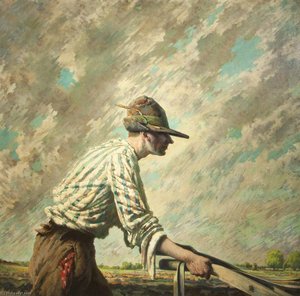
orlando greenwood
1892 - 1989
Quick Facts
- Artistic Movement Or Style: Rural Landscape Painting
- Artists Or Movements Influenced By This Artist: ['Post-Impressionism']
- Artists Who Influenced This Artist: ['Monet']
- Date Of Birth: 1892
- Date Of Death: 1989
- Full Name: Orlando Greenwood
- Nationality: British
- Notable Artworks:
- The Card
- Pendle
- Place Of Birth: WahooArt, USA