

 Send
Send Share
Share
 Details

 Download
 Similars
 Diaporama
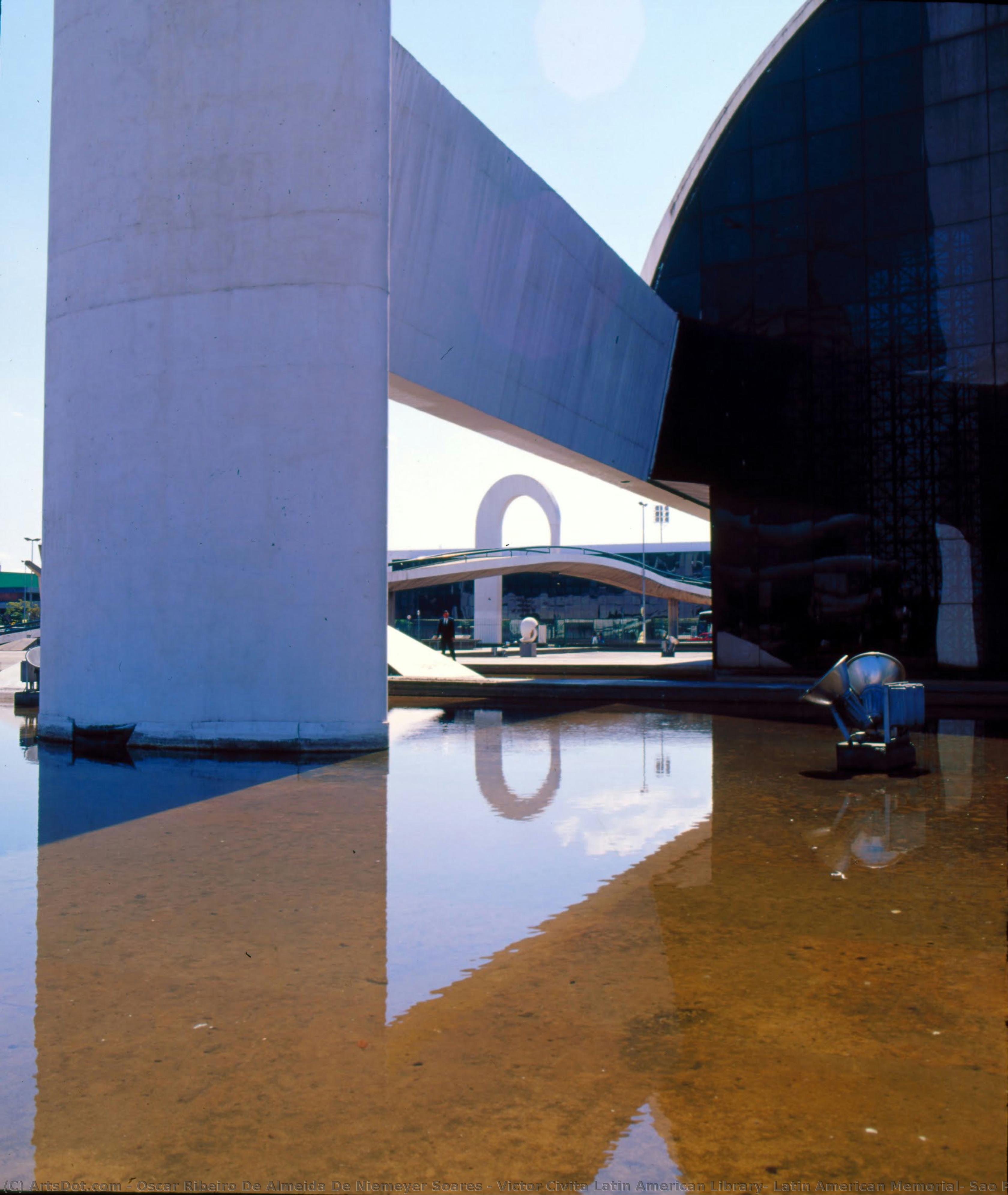
Victor Civita Latin American Library, Latin American Memorial, Sao Paulo: the suspended footbridge
 Black and White Photography
- Photo
- Modern Architecture
 2002
2002- Modern
 Royal Institute of British Architects
 Read More
Purchase a high-resolution, enhanced digital image, far superior to the online preview.
Each file is meticulously prepared by our in-house specialists using advanced tools and expert manual retouching. We ensure every image has exceptional clarity, precise color accuracy, and fine detail.
The final file is delivered via email within 72 hours, optimized for immediate use in professional, editorial, and print environments. This is the same quality trusted by top-tier design studios, publishers, and galleries.
Digital Image
Download a high-resolution file for personal display, printing, and creative projects. ( Buy Print Buy Hand Made Painting)
Included in Every Digital Image Order
Expert Digital Delivery, Guaranteed
When you choose ArtsDot.com, you're not just getting an image - you're receiving a professionally enhanced digital artwork, crafted with precision and backed by a satisfaction guarantee. Here's everything that comes with your order, automatically:

Fast Email Delivery
Your high-resolution digital image file will be emailed to you within 72 hours of ordering - ready for immediate use.

AI-Enhanced Digital File
Your artwork is professionally optimized using advanced AI tools and manual editing, ensuring maximum detail, clarity, and color accuracy.

Free Lifetime Re-Delivery
Accidentally deleted or lost your file? No worries - we'll resend it to you anytime, free of charge.

No Import Fees - Ever
Enjoy your artwork instantly with zero customs, duties, or delivery fees - digital downloads are always tax-free.

Color Accuracy Guarantee
We ensure your digital image reflects the original colors as closely as possible using professional tools and color management.

60-Day Satisfaction Guarantee
If you're not satisfied with your digital image, we'll revise it or refund 100% within 60 days - no questions asked.

100% Money-Back Guarantee
Not satisfied? Get a full refund within 60 days of receiving your digital file - no questions asked.

Bulk Order Discounts
Buy 3 images, save 10% - Buy 5, save 15% - Buy 10+, save 20%. Great for creative projects, galleries, and agencies.
A Symphony of Concrete and Light
In the heart of São Paulo, where the pulse of Brazil meets the profound stillness of architectural thought, lies a structure that transcends the mere utility of a library. The Victor Civita Latin American Library, a cornerstone of the Latin America Memorial, is not simply a repository for knowledge but a poetic manifestation of Oscar Niemeyer’s visionary genius. Captured in this evocative black and white photograph, the suspended footbridge serves as a gateway between worlds, inviting the observer to traverse the boundary between the physical structure and its ethereal reflection. The image presents a masterclass in modernist minimalism, where the heavy, industrial weight of reinforced concrete is transformed into something remarkably weightless and lyrical.
The photograph captures a moment of quiet dynamism, utilizing the stark contrast of monochrome tones to emphasize the interplay of light and shadow. As the eye follows the sweeping, geometric lines of the bridge, it encounters the serene expanse of a reflecting pool below. This water feature acts as a liquid mirror, duplicating the architectural grandeur and integrating the human element into the landscape. The presence of scattered figures within the reflection breathes life into the composition; they are not merely spectators but essential components of the memorial’s narrative, illustrating how Niemeyer’s design fosters a communal space for contemplation and cultural engagement.
The Poetry of Modernist Form
To understand this piece is to understand the soul of Brazilian modernism. Oscar Niemeyer, often celebrated as the architect of curves, rejected the rigid, clinical functionalism that dominated much of the 20th century. Instead, he drew inspiration from the organic rhythms of his homeland—the sinuous mountains and the flowing contours of the Brazilian landscape. In this architectural marvel, we see his signature technique: the use of advanced concrete casting to create undulating forms that mimic nature itself. The bridge, though constructed of formidable material, possesses a grace that feels almost biological, a testament to the artist's ability to turn stone-like substances into poetry.
For the collector or the interior designer, this image offers more than just a visual record; it provides a profound sense of structural harmony. The composition relies on a sophisticated balance of angularity and fluidity. The sharp edges of the plaza’s infrastructure are softened by the reflective surface of the water and the organic movement of the people captured in the frame. This tension between the static and the transient creates an emotional resonance that is both grounding and uplifting. It is a piece that speaks to the enduring strength of cultural identity and the beauty found in the dialogue between man-made structures and the natural world.
A Legacy for the Modern Interior
Integrating a reproduction of such a monumental work into a curated space allows one to bring the spirit of architectural transcendence into the home or gallery. The monochromatic palette makes it an exceptionally versatile choice for sophisticated interiors, pairing elegantly with contemporary minimalist decor, mid-century modern furniture, or even more classical settings where a touch of structural drama is desired. It serves as a focal point that invites conversation about history, urbanism, and the pursuit of unity across Latin American borders.
Owning this depiction of Niemeyer’s work is an homage to the idea that architecture can be a vehicle for emotion. It captures the essence of the Latin America Memorial—a monument not just to a region, but to the shared human aspiration for intellectual exchange and cultural harmony. Whether viewed as a study in geometric precision or a romanticized vision of urban life, this photograph remains an eternal tribute to the power of design to shape our collective consciousness.
Related Artworks
![[hercule Florence] — Oscar Pereira Da Silva, Academic Portraiture](/media/artworks/images-thumb/6e/59/6e59d1f45a12e06cc4a46aa211b8e19f.jpg)
Artist Biography
The Architect of Curves: The Life and Legacy of Oscar Niemeyer
In the grand tapestry of twentieth-century modernism, few names resonate with as much poetic grace as Oscar Ribeiro Almeida de Niemeyer Soares. Born in Rio de Janeiro in 1907, Niemeyer did not merely build structures; he sculpted the very air around them. While his contemporaries often focused on the rigid, functionalist geometry of the International Style, Niemeyer sought a different muse. He found inspiration in the undulating rhythms of the Brazilian landscape, the sinuous curves of the mountains, and the flowing lines of the women of his homeland. This profound connection to organic form allowed him to transcend the coldness of concrete, transforming heavy industrial materials into something that felt weightless, lyrical, and deeply human.
His journey began within the halls of the Escola Nacional de Belas Artes at the Federal University of Rio de Janeiro. After honing his craft as a draftsman and working within his father's typography house, Niemeyer’s trajectory was irrevocably altered through his association with Lúcio Costa. Together, they embarked on the monumental task of designing the Palácio Gustavo Capanema, a project that would serve as a cornerstone for modern Brazilian architecture. It was during this formative era that Niemeyer began to master the language of reinforced concrete, learning how to push the limits of structural engineering to achieve the daring, sweeping spans that would become his signature.
A Vision Carved in Concrete
The true metamorphosis of Niemeyer’s style occurred as he moved toward large-scale urban planning and civic monuments. His work in Pampulha, a suburb of Belo Horizonte, stands as a testament to his ability to marry avant-garde design with spiritual resonance. The Church of Saint Francis of Assisi, with its iconic undulating rooflines, remains one of the most breathtaking examples of how architecture can evoke emotion through shape alone. This period marked his ascent into the global spotlight, proving that modernism could be both radical and deeply rooted in local identity.
As his career progressed, Niemeyer became the primary architect of a new nation's identity. His involvement in the construction of Brasília—the planned capital of Brazil—was perhaps his most ambitious undertaking. In this "city of the future," he realized a dream of monumentalism, creating landmarks such as:
- The National Congress of Brazil: A masterpiece of balanced geometry and symbolic power.
- The Cathedral of Brasília: A soaring, hyperboloid structure that invites light to dance through its glass panes.
- Palácio da Alvorada: An elegant residence defined by its slender, sculptural columns.
- The Supreme Federal Court: A testament to the strength and transparency of democratic institutions.
Beyond the borders of Brazil, his influence reached the very heart of global diplomacy through his collaboration on the United Nations headquarters in New York, working alongside legends like Le Corbusier.
An Enduring Monument to Modernity
The later years of Niemeyer’s life were characterized by a continued refusal to settle into the comforts of the past. Even as he entered his twilight decades, he continued to innovate, producing works that felt remarkably contemporary. The Niterói Contemporary Art Museum, appearing like a futuristic saucer perched atop a cliff, remains one of the most visually arresting structures in the world. It serves as a perfect metaphor for his entire body of work: a bold, unexpected intervention in the landscape that commands attention through sheer aesthetic audacity.
In 1988, the architectural community bestowed upon him the Pritzker Architecture Prize, the highest honor in the field, recognizing a career that spanned seventy-eight years and approximately six hundred projects. When he passed away in Rio de Janeiro in 2012, he left behind more than just buildings; he left a visual vocabulary of movement and grace. His legacy lives on in every curve of concrete that defies gravity, reminding us that even the most solid structures can possess the soul of a poem.
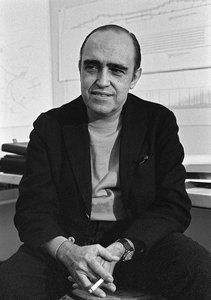
oscar ribeiro de almeida de niemeyer soares
1907 - 2012 , Brazil
Quick Facts
- Artistic Movement Or Style: Modern architecture
- Artists Or Movements Influenced By This Artist: ['Reinforced concrete']
- Artists Who Influenced This Artist: ['Le Corbusier']
- Date Of Birth: December 15, 1907
- Date Of Death: December 5, 2012
- Full Name: Oscar Ribeiro de Almeida Niemeyer Soares Filho
- Nationality: Brazilian
- Notable Artworks:
- Brasília Cathedral
- Niterói Contemporary Art Museum
- Copan Building
- Place Of Birth: Rio de Janeiro, Brazil

