 Preview
 Send
Send Share
Share
 Details

 Download
 Similars
 X-Ray
X-Ray Diaporama
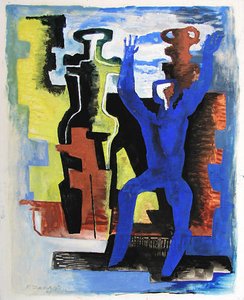
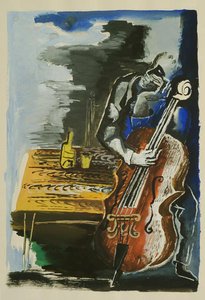
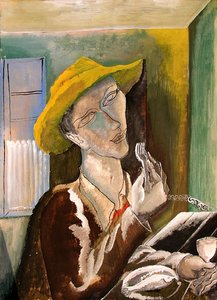
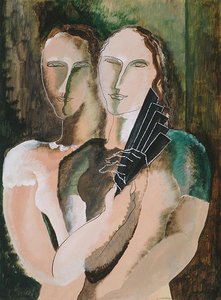
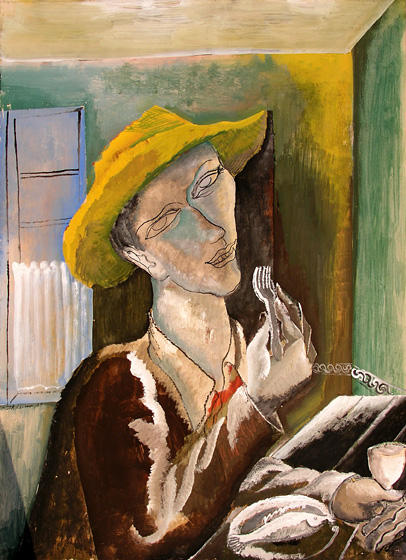
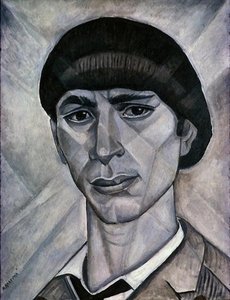
Man with the Yellow Hat


 Read More
Hand Made Oil Reproduction
Hand-painted oil on canvas in your size and frame, made to order by our artists. ( Buy Print Buy Image)




































Pick from our preset sizes that match the artwork's original proportions.

You may enter your own dimensions to fit a specific frame or space. If your selected size does not match the original image's proportions, we will either crop the artwork or extend the painting with additional hand-painted elements. A digital mockup will be sent for your approval before production begins.
Please note that the on-screen preview does not reflect the actual cropping or extension. Only the mockup will accurately show the final composition.
While custom sizes are available, we recommend selecting a dimension from the predefined list to preserve the original proportions.
After order, ArtsDot.com team will email client for instructions and provide a mockup preview
Worldwide Delivery () in 3/4 weeks instead of standard 5 weeks. (17 August). No compromise on quality.

Free Worldwide Express Shipping

High-Quality Linen Canvas

Full Shipping Insurance

Customs Tax Refund Guarantee

True Color Matching Guarantee

60-Day Return Policy (Defects Only)

100% Money-Back Guarantee

Bulk Discount Offer
 Glass option is only available in size under 110 CM

Man with the Yellow Hat
Reproduction Medium
Reproduction Size
-


Total Price
$ 263
Related Artworks
Artist Biography
Ossip Zadkine: A Life Bridging Russian Roots and French Modernism
Ossip Zadkine (1890-1967), born Yossel Aronovich Tsadkin in Vitebsk, Belarus, was a pivotal figure in 20th-century art, primarily recognized as a sculptor but also accomplished as a painter and lithographer. His artistic journey spanned continents and movements, reflecting the turbulent times he lived through. Born into a Jewish family—his father was Jewish and his mother claimed Scottish ancestry—Zadkine’s early life was marked by a large family (five siblings) and exposure to diverse cultural influences within the Russian Empire.
Early Life and Artistic Development
Zadkine's formal artistic training began in London before he settled in Paris in 1910, a city that would become his lifelong home. He briefly attended the École des Beaux-Arts but quickly gravitated towards more avant-garde circles. A significant period was spent at "La Ruche," an artists’ cooperative fostering experimentation and collaboration. Initially, Zadkine embraced Cubism from 1914 to 1925, demonstrating a clear understanding of its principles in his early works. However, he soon began to forge his own distinct style, drawing inspiration from African and Greek art—a departure that set him apart from the strictures of purely geometric abstraction.
- Early Influences: Russian folk art, European modernism, African sculpture, Greek antiquity
- Key Period: Cubist phase (1914-1925) – characterized by fragmented forms and multiple perspectives.
- French Citizenship: Obtained in 1921, solidifying his commitment to France.
Major Works and Artistic Themes
Zadkine’s oeuvre is marked by a profound exploration of human emotion, loss, and resilience. His sculptures often convey a sense of vulnerability and strength simultaneously. While he experimented with various materials, bronze became a signature medium for his later works.
- The Destroyed City (1951-1953): Arguably Zadkine’s most famous work, this powerful sculpture serves as a memorial to the devastation of Rotterdam during World War II. It depicts a solitary figure, symbolizing humanity stripped bare by conflict and loss.
- Venus (1920): A significant example of his early style, showcasing a blend of classical influences with modernist abstraction.
- Portraits: Zadkine created numerous portraits throughout his career, including several of the American artist Carol Janeway during his time in exile in New York City during World War II. These works demonstrate his skill in capturing individual character and emotion.
World War Experiences and Later Years
Zadkine’s life was deeply impacted by both World Wars. He served as a stretcher-bearer in the French Army during World War I, experiencing firsthand the horrors of combat. During World War II, he sought refuge in the United States from 1942 to 1945. This period resulted in a series of portraits and further refined his artistic vision. After the war, Zadkine returned to France and continued to create significant works, including the aforementioned The Destroyed City. He also spent time in Les Arques, where he carved a monumental Christ on the Cross and Pietà for the local church.
Legacy and Historical Significance
Ossip Zadkine’s contribution to modern sculpture is undeniable. His ability to synthesize diverse influences—Cubism, African art, Greek antiquity—into a uniquely personal style established him as a significant figure in 20th-century art. His work transcends purely formal concerns, engaging with profound themes of human suffering and the enduring spirit of humanity. The Musée Zadkine in Paris, housed in his former home and studio, and another in Les Arques, preserve and showcase his extensive body of work, ensuring that his legacy continues to inspire future generations. His friendship with Henry Miller, who immortalized him as "Borowski" in Tropic of Cancer, further cemented his place within the cultural landscape of the era.
Ossip Zadkine
1890 - 1967 , Belarus
Quick Facts
- Artistic Movement Or Style: Cubism, Modernism
- Artists Who Influenced This Artist:
- African art
- Greek art
- Date Of Birth: January 28, 1888
- Date Of Death: 1967
- Full Name: Ossip Zadkine
- Nationality: Russian-French
- Notable Artworks:
- The Destroyed City
- Maternité
- Femme au Violon
- Venus
- Lotophage
- Oorpheus
- Place Of Birth: Vitebsk, Belarus