


 Preview
 Send
Send Share
Share
 Details

 Download
 Similars
 X-Ray
X-Ray Diaporama
Ernest Rutherford, Lord Rutherford of Nelson (1871–1937), Cavendish Professor (1919–1937)
 Oil On Canvas
- WallArt
- Contemporary Realism
 1932
1932- Modern
 151.0 x 100.0 cm
 Cavendish Laboratory
 Read More
Purchase a high-resolution, enhanced digital image, far superior to the online preview.
Each file is meticulously prepared by our in-house specialists using advanced tools and expert manual retouching. We ensure every image has exceptional clarity, precise color accuracy, and fine detail.
The final file is delivered via email within 72 hours, optimized for immediate use in professional, editorial, and print environments. This is the same quality trusted by top-tier design studios, publishers, and galleries.
Digital Image
Download a high-resolution file for personal display, printing, and creative projects. ( Buy Print Buy Hand Made Painting)
Included in Every Digital Image Order
Expert Digital Delivery, Guaranteed
When you choose ArtsDot.com, you're not just getting an image - you're receiving a professionally enhanced digital artwork, crafted with precision and backed by a satisfaction guarantee. Here's everything that comes with your order, automatically:

Fast Email Delivery
Your high-resolution digital image file will be emailed to you within 72 hours of ordering - ready for immediate use.

AI-Enhanced Digital File
Your artwork is professionally optimized using advanced AI tools and manual editing, ensuring maximum detail, clarity, and color accuracy.

Free Lifetime Re-Delivery
Accidentally deleted or lost your file? No worries - we'll resend it to you anytime, free of charge.

No Import Fees - Ever
Enjoy your artwork instantly with zero customs, duties, or delivery fees - digital downloads are always tax-free.

Color Accuracy Guarantee
We ensure your digital image reflects the original colors as closely as possible using professional tools and color management.

60-Day Satisfaction Guarantee
If you're not satisfied with your digital image, we'll revise it or refund 100% within 60 days - no questions asked.

100% Money-Back Guarantee
Not satisfied? Get a full refund within 60 days of receiving your digital file - no questions asked.

Bulk Order Discounts
Buy 3 images, save 10% - Buy 5, save 15% - Buy 10+, save 20%. Great for creative projects, galleries, and agencies.
A Vision of Scientific Eminence
In this masterful oil portrait from 1932, Sir Oswald Birley captures more than just a likeness; he preserves the very essence of intellectual triumph. The subject, Ernest Rutherford, Lord Rutherford of Nelson, stands as a monumental figure of the twentieth century, rendered with a dignity that transcends the mere physical form. As the Cavendish Professor, Rutherford was a titan of physics, and Birley utilizes a traditional studio portrait style to communicate this profound legacy. The composition is thoughtfully centered, yet possesses a subtle, organic balance that prevents the formal arrangement from feeling static. Through a masterful use of directional lighting originating from the upper left, the artist sculptility carves the subject out of a dark, indistinct background, casting deep shadows that lend a sense of volume and gravitas to the figure's face and heavy, draped robes.
The technical execution of this piece speaks to the height of nineteenth-century portraiture traditions adapted for a modern era. Birley employs a rich, layered technique with oil paints on canvas, allowing for a palpable texture that invites the eye to wander across the surface. One can almost feel the weight of the academic fabric through the visible, deliberate brushstrokes that define the folds of the robe. This tactile quality is contrasted beautifully by the smoother, more precise rendering of the scientific apparatus scattered within the frame. The color palette is a sophisticated study in restraint, dominated by somber tones of charcoal, deep brown, and black, which are punctuated only by the subtle, warm glints of gold and red reflecting off the glassware and instruments. This careful orchestration of color ensures that the viewer's focus remains anchored on the subject’s contemplative expression.
The Intersection of Knowledge and Artistry
Beyond the technical brilliance lies a profound symbolic narrative. The painting serves as a bridge between the human spirit and the empirical world. By integrating scientific equipment into a formal portrait, Birley elevates the tools of research to the status of sacred relics, suggesting that Rutherford’s intellect is inseparable from his physical environment. The geometric shapes of the glassware provide a sharp, intellectual contrast to the organic, rounded forms of the subject's face and torso, mirroring the relationship between the messy reality of human life and the precise laws of physics being uncovered. There is an undeniable emotional weight to the work; it evokes a sense of quiet contemplation and the heavy responsibility of discovery.
For the discerning collector or interior designer, this reproduction offers a centerpiece of unparalleled character. It is a piece that commands respect in any setting, whether gracing a private library, a sophisticated study, or a contemporary gallery space. The artwork does not merely decorate a wall; it provides an atmosphere of wisdom and historical continuity. To possess such a work is to invite the spirit of the scientific revolution into one's home, offering a timeless reminder of the beauty found in the pursuit of truth and the enduring power of human achievement.
Related Artworks
Artist Biography
The Distinguished Legacy of Sir Oswald Birley
Sir Oswald Hornby Joseph Birley stands as a monumental figure in the history of British portraiture, an artist whose brush captured the very essence of an era defined by transition and grandeur. Born on March 31st, 1880, to a lineage steeped in military significance—his father, Hugh Francis Birley, was a man of notable historical weight—Birley’s early life was shaped by the disciplined traditions of the British upper class. His formative years at Harrow School and Trinity College, Cambridge, provided more than just an elite education; they instilled in him a profound appreciation for classical scholarship and a meticulous eye for detail that would later become the hallmark of his artistic mastery. This intellectual foundation allowed him to approach portraiture not merely as a technical exercise, but as a deep psychological exploration of his subjects.
The trajectory of Birley’s life was irrevocably altered by the onset of the Great War. Serving with distinction in the Royal Fusiliers and later within the Intelligence Corps, he demonstrated a bravery that earned him the Military Cross in 1919. This period of intense conflict and service brought a unique depth to his character, infusing his later work with a profound understanding of human resilience, leadership, and the weight of responsibility. The shadows of war and the gravity of wartime intelligence likely contributed to the subtle, soulful realism found in his depictions of the world's most influential figures, allowing him to look beyond the surface of fame to find the humanity beneath.
A Master of Royal and Global Portraiture
Birley’s ascent to the pinnacle of the art world was cemented through his extraordinary relationship with the British Monarchy. Securing the patronage of King George V and Queen Mary, he became the preeminent chronicler of the Edwardian and interwar periods. His style, characterized by an exquisite command of light, subtle tonal gradations, and a meticulous attention to texture, allowed him to render the regalia of royalty with breathtaking accuracy while maintaining an intimate connection to the sitter's spirit. He did not merely paint crowns and ermine; he painted the dignity and the burden of sovereignty.
Beyond the palace walls, Birley’s reach was truly global, as his talent attracted the most significant leaders of the 20th century. His portfolio serves as a visual record of history, featuring iconic likenesses of figures such as:
- Winston Churchill, capturing the resolute spirit of British leadership.
- Mahatma Gandhi, portraying the profound simplicity and strength of the Indian independence movement.
- Members of the British Royal Family, documenting the continuity of tradition through changing decades.
His ability to pivot between the opulent settings of the aristocracy and the stark, powerful presence of political revolutionaries demonstrates a versatile genius. Through his work, the textures of silk and velvet are balanced against the raw, psychological intensity of his subjects' gazes, creating a body of work that is as much about character as it is about composition.
Artistic Technique and Historical Significance
The enduring significance of Sir Oswald Birley lies in his ability to bridge the gap between traditional academic portraiture and a more modern, psychological realism. While his technique remained rooted in the classical traditions of fine detail and formal elegance, his focus on the inner life of his subjects predated much of the emotive depth seen in later portraitists. He possessed a rare ability to use light not just to define form, but to suggest mood and historical weight. Every stroke was deliberate, contributing to an atmosphere of permanence and remembrance.
As we look back upon his life and work, Birley remains more than just a painter of the elite; he was a historian of the human face. His portraits serve as windows into a vanished world, preserving the likenesses of those who shaped the modern age. Through his mastery of the medium, Sir Oswald Birley ensured that the dignity, the struggle, and the triumphs of his subjects would remain etched in the collective memory of the art world forever.
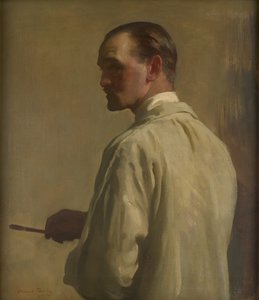
oswald hornby joseph birley
1880 - 1952
Quick Facts
- Artistic Movement Or Style: Portrait Painting
- Artists Or Movements Influenced By This Artist: ['Lancashire Family']
- Artists Who Influenced This Artist: ['Hugh Hornby Birley']
- Date Of Birth: March 31, 1880
- Date Of Death: May 6, 1952
- Full Name: Oswald Hornby Joseph Birley
- Nationality: English
- Notable Artworks:
- King George V Portrait
- Queen Mary Portrait
- Gandhi Portrait
- Churchill Portrait
- Place Of Birth: New Zealand

