

 Preview
 Send
Send Share
Share
 Details

 Download
 Similars
 X-Ray
X-Ray Diaporama
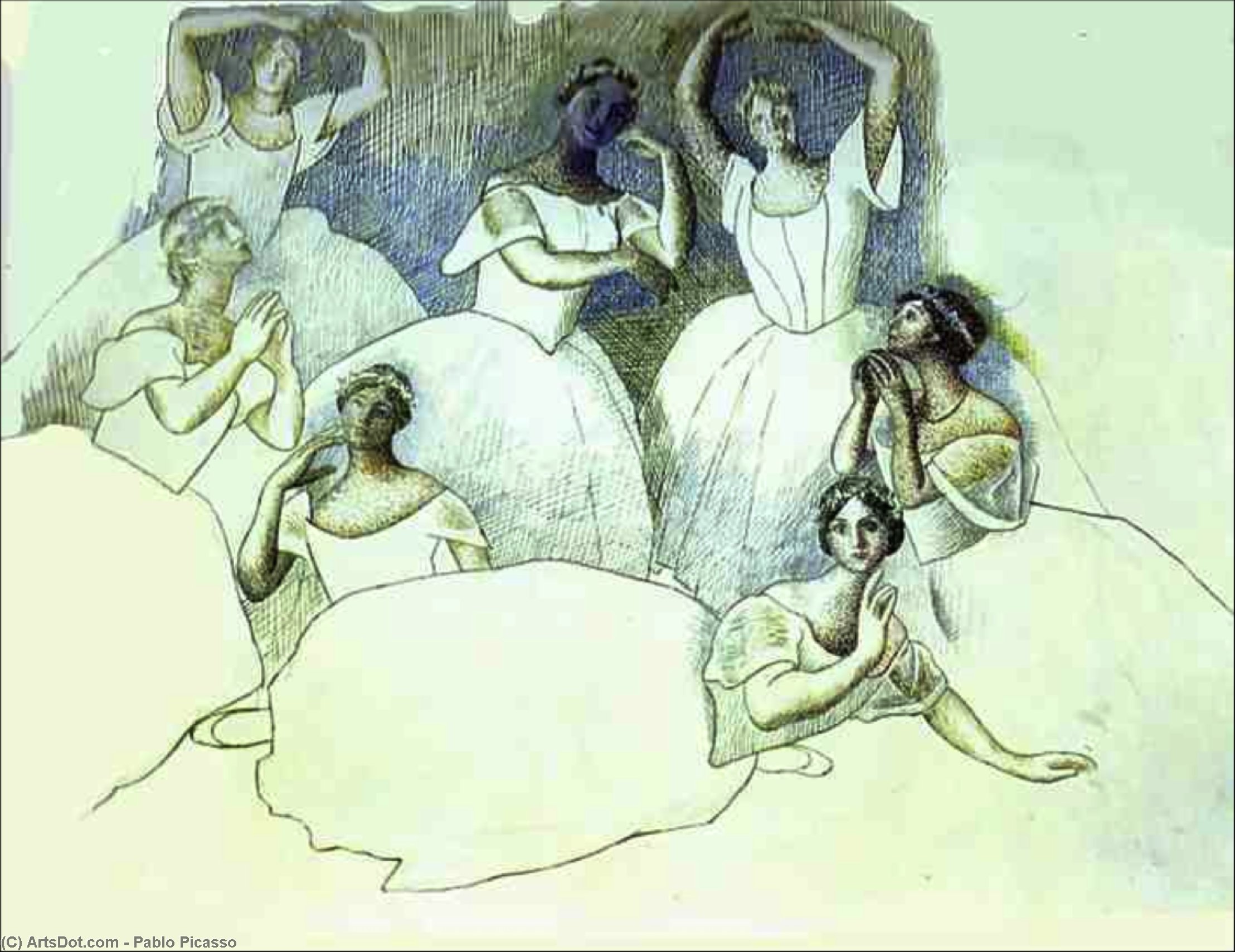
Group of Dancers. Olga Kokhlova is Lying in the Foreground


 Read More
Purchase a high-resolution, enhanced digital image, far superior to the online preview.
Each file is meticulously prepared by our in-house specialists using advanced tools and expert manual retouching. We ensure every image has exceptional clarity, precise color accuracy, and fine detail.
The final file is delivered via email within 72 hours, optimized for immediate use in professional, editorial, and print environments. This is the same quality trusted by top-tier design studios, publishers, and galleries.
Digital Image
Download a high-resolution file for personal display, printing, and creative projects. ( Buy Print Buy Hand Made Painting)
Included in Every Digital Image Order
Expert Digital Delivery, Guaranteed
When you choose ArtsDot.com, you're not just getting an image - you're receiving a professionally enhanced digital artwork, crafted with precision and backed by a satisfaction guarantee. Here's everything that comes with your order, automatically:

Fast Email Delivery
Your high-resolution digital image file will be emailed to you within 72 hours of ordering - ready for immediate use.

AI-Enhanced Digital File
Your artwork is professionally optimized using advanced AI tools and manual editing, ensuring maximum detail, clarity, and color accuracy.

Free Lifetime Re-Delivery
Accidentally deleted or lost your file? No worries - we'll resend it to you anytime, free of charge.

No Import Fees - Ever
Enjoy your artwork instantly with zero customs, duties, or delivery fees - digital downloads are always tax-free.

Color Accuracy Guarantee
We ensure your digital image reflects the original colors as closely as possible using professional tools and color management.

60-Day Satisfaction Guarantee
If you're not satisfied with your digital image, we'll revise it or refund 100% within 60 days - no questions asked.

100% Money-Back Guarantee
Not satisfied? Get a full refund within 60 days of receiving your digital file - no questions asked.

Bulk Order Discounts
Buy 3 images, save 10% - Buy 5, save 15% - Buy 10+, save 20%. Great for creative projects, galleries, and agencies.
A Fragmented Dance of Emotion: Exploring Picasso’s “Group of Dancers”
Pablo Picasso's "Group of Dancers," completed in 1925, stands as a cornerstone of Cubism and an enduring testament to the artist’s ability to distill complex emotion into geometric abstraction. More than just a depiction of figures engaged in movement, this painting delves into themes of intimacy, vulnerability, and the elusive nature of human connection—elements that continue to resonate powerfully with audiences today. Created during Picasso's analytical cubist phase, it represents a radical departure from traditional artistic conventions, prioritizing intellectual exploration over mere visual representation.The Anatomy of Cubism: Breaking Down Reality
At its core, Cubism challenged the established notion of perspective and dimensionality. Picasso’s approach wasn’t to portray objects as they appear to the eye but rather to dissect them into multiple viewpoints simultaneously. In “Group of Dancers,” this is brilliantly achieved through fractured planes and overlapping geometric shapes—primarily cubes and cylinders—that reconstruct the figures from various angles. The muted palette – predominantly ochre, brown, and gray – reinforces this sense of fragmentation and contributes to an atmosphere of quiet contemplation. Notice how Picasso meticulously analyzes each dancer’s form, revealing hidden contours and emphasizing their interconnectedness within the composition. This technique wasn't merely stylistic; it was a deliberate attempt to capture the essence of perception itself.Olga Kokhlova: A Portrait Within the Landscape
The central figure, Olga Kokhlova—Picasso’s muse and first wife—lies prominently in the foreground, bathed in soft light. Her posture exudes vulnerability and repose, juxtaposed against the dynamic movement of the other dancers. This deliberate placement underscores Picasso's fascination with portraying figures within a broader context, suggesting that individual experience is inseparable from its surroundings. The inclusion of Olga Kokhlova isn’t simply biographical; it symbolizes the artist’s exploration of relationships and the complexities of human emotion—themes recurrent throughout his oeuvre. Her presence anchors the painting, grounding the fragmented forms in a palpable sense of stillness.Symbolism Beyond Geometry: Layers of Meaning
While the geometric abstraction dominates the visual surface, “Group of Dancers” is laden with symbolic significance. The dancers themselves represent not just physical movement but also social interaction and unspoken communication. Their postures convey subtle nuances of emotion—relaxation, conversation, perhaps even tenderness—reflecting Picasso’s preoccupation with capturing psychological states through artistic form. Furthermore, the muted colors contribute to a mood of melancholy and introspection, hinting at underlying anxieties about mortality and the passage of time – emotions deeply rooted in Picasso's personal life experiences.A Legacy Enduring Through Reproduction
ArtsDot.com offers meticulously crafted oil painting reproductions of “Group of Dancers,” allowing art enthusiasts to experience Picasso’s groundbreaking vision firsthand. Explore more of Picasso’s captivating Cubist masterpieces at ArtsDot.com’s Pablo Picasso Art Collection and delve deeper into the artist's influence on modern art through Wikipedia’s page on Pablo Picasso. This remarkable artwork continues to inspire artists and collectors alike, cementing Picasso’s place as one of history’s most transformative figures.Related Artworks
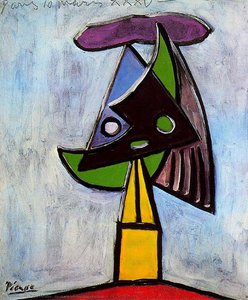
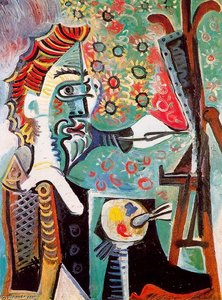
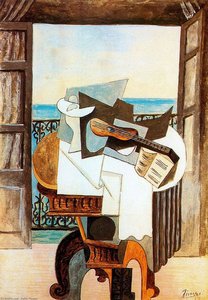
Artist Biography
The Enduring Legacy of Pablo Picasso
Pablo Ruiz y Picasso, a name synonymous with artistic revolution, was born in Málaga, Spain, on October 25, 1881. His very existence seemed destined for creative expression; legend has it his first uttered words were “piz, piz,” an attempt to say ‘pencil’. This early inclination was nurtured by his father, José Ruiz y Blasco, a painter and art teacher who provided young Pablo with foundational training. However, the student quickly surpassed the instructor, demonstrating a remarkable aptitude for naturalistic depiction that hinted at the prodigious talent within. The family’s subsequent moves – first to A Coruña, then Barcelona – were punctuated by personal tragedy, notably the loss of Picasso's sister, experiences which would subtly infuse his later work with themes of melancholy and mortality. Even during formal studies at the School of Fine Arts in Barcelona and a brief stint at the Royal Academy of San Fernando in Madrid, Picasso chafed against rigid academic constraints, preferring instead to immerse himself in the works of masters like Velázquez and Goya, forging his own path toward artistic innovation.
From Melancholy Blues to Rose-Tinted Hues
The early years of the 20th century witnessed the emergence of two distinct periods in Picasso’s oeuvre: the Blue Period (roughly 1901-1904) and the Rose Period (1904-1906). The Blue Period, born from personal hardship and a keen awareness of social suffering, is characterized by paintings steeped in somber shades of blue and blue-green. These works are populated by marginalized figures – beggars, the blind, prostitutes – rendered with a haunting empathy that speaks to themes of isolation and despair. La Vie (1903) and The Old Guitarist (1903-1904) stand as poignant examples of this emotionally charged phase. A shift in Picasso’s personal life, coupled with a move to Paris, heralded the arrival of the Rose Period. The palette warmed considerably, embracing pinks, oranges, and reds, reflecting a more optimistic outlook. This period saw a fascination with circus performers – harlequins, acrobats, and family troupes – figures who embodied both fragility and resilience. Family of Saltimbanques (1905) beautifully encapsulates this transition, hinting at the stylistic explorations that lay ahead.
The Shattering of Perspective: Cubism and Beyond
The year 1907 marked a pivotal moment in art history with the creation of Les Demoiselles d'Avignon. Influenced by Iberian sculpture and African masks, this groundbreaking painting shattered traditional notions of perspective and representation. It was a radical departure, a deliberate rejection of centuries-old conventions that paved the way for Cubism. Working in close collaboration with Georges Braque, Picasso co-founded this revolutionary movement, fundamentally altering how artists perceived and depicted reality. Analytical Cubism (1909-1912) involved the fragmentation of objects into geometric shapes, rendered in muted colors, as if dissecting form itself. This evolved into Synthetic Cubism (1912-1919), which incorporated collage elements – newspaper clippings, fabric scraps – adding texture and new layers of visual complexity. Picasso wasn’t content to simply represent the world; he sought to deconstruct it and reconstruct it on his own terms.
A Restless Experimenter: Neoclassicism, Surrealism, and War
The 1920s saw Picasso briefly explore Neoclassical styles, creating monumental figures that echoed classical forms while retaining a distinctly modern sensibility. Simultaneously, he engaged with the burgeoning Surrealist movement, though never fully aligning himself with its principles. His work during this period blended earlier stylistic influences with surreal imagery and distorted perspectives, demonstrating his relentless experimentation. The horrors of the Spanish Civil War profoundly impacted Picasso, culminating in the creation of Guernica (1937), a visceral and emotionally devastating response to the bombing of Guernica. This monumental work became an enduring symbol of the atrocities of war, solidifying Picasso’s role as not just an artist but also a powerful voice for peace and social justice. Throughout the 1950s and 60s, he continued to push boundaries, exploring ceramics, sculpture, and printmaking with unwavering curiosity and skill. His marriage to Jacqueline Roque in 1961 brought a new dimension to his personal life and artistic expression.
An Immeasurable Impact
Pablo Picasso died on April 8, 1973, in Mougins, France, leaving behind an astonishing body of work – estimated at over 50,000 pieces – that continues to captivate and inspire. His artistic development was shaped by a diverse range of influences, from Spanish masters like Velázquez and Goya to Iberian sculpture, African art, and the vibrant color palettes of Henri Matisse. His impact on 20th-century art is immeasurable. He co-founded Cubism, pioneered collage and constructed sculpture, and consistently challenged artistic conventions. Picasso’s relentless experimentation redefined modern art, leaving an indelible mark on generations of artists and solidifying his position as one of the most important and influential figures in history. His legacy extends beyond the canvas, resonating in countless aspects of contemporary culture and reminding us of the transformative power of artistic vision.
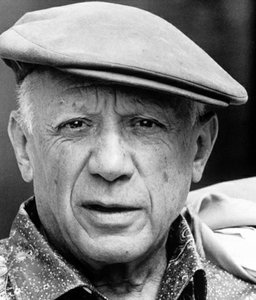
Pablo Picasso
1881 - 1973 , Spain
Quick Facts
- Artistic Movement Or Style: Cubism, Surrealism
- Artists Or Movements Influenced By This Artist:
- Cubism
- Modern art
- Artists Who Influenced This Artist:
- Velázquez
- Goya
- Matisse
- Date Of Birth: October 25, 1881
- Date Of Death: April 8, 1973
- Full Name: Pablo Diego José Ruiz Picasso
- Nationality: Spanish
- Notable Artworks:
- Les Demoiselles d'Avignon
- Guernica
- The Old Guitarist
- La Vie
- Family of Saltimbanques
- Place Of Birth: Malaga, Spain

