

 Preview
 Send
Send Share
Share
 Details

 Download
 Similars
 X-Ray
X-Ray Diaporama
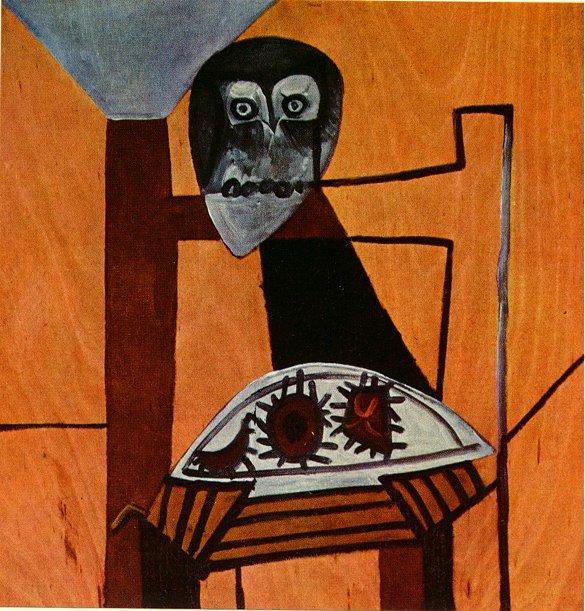
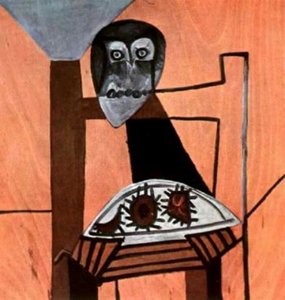
Owl on a chair and sea urchins
 Oil On Canvas
- WallArt
- Cubism
 1946
1946- Modern
 8.0 x 76.0 cm
 Read More
Purchase a high-resolution, enhanced digital image, far superior to the online preview.
Each file is meticulously prepared by our in-house specialists using advanced tools and expert manual retouching. We ensure every image has exceptional clarity, precise color accuracy, and fine detail.
The final file is delivered via email within 72 hours, optimized for immediate use in professional, editorial, and print environments. This is the same quality trusted by top-tier design studios, publishers, and galleries.
Digital Image
Download a high-resolution file for personal display, printing, and creative projects. ( Buy Print Buy Hand Made Painting)
Included in Every Digital Image Order
Expert Digital Delivery, Guaranteed
When you choose ArtsDot.com, you're not just getting an image - you're receiving a professionally enhanced digital artwork, crafted with precision and backed by a satisfaction guarantee. Here's everything that comes with your order, automatically:

Fast Email Delivery
Your high-resolution digital image file will be emailed to you within 72 hours of ordering - ready for immediate use.

AI-Enhanced Digital File
Your artwork is professionally optimized using advanced AI tools and manual editing, ensuring maximum detail, clarity, and color accuracy.

Free Lifetime Re-Delivery
Accidentally deleted or lost your file? No worries - we'll resend it to you anytime, free of charge.

No Import Fees - Ever
Enjoy your artwork instantly with zero customs, duties, or delivery fees - digital downloads are always tax-free.

Color Accuracy Guarantee
We ensure your digital image reflects the original colors as closely as possible using professional tools and color management.

60-Day Satisfaction Guarantee
If you're not satisfied with your digital image, we'll revise it or refund 100% within 60 days - no questions asked.

100% Money-Back Guarantee
Not satisfied? Get a full refund within 60 days of receiving your digital file - no questions asked.

Bulk Order Discounts
Buy 3 images, save 10% - Buy 5, save 15% - Buy 10+, save 20%. Great for creative projects, galleries, and agencies.
Collectible Description
A Surreal Still Life: Decoding Picasso’s ‘Owl on a Chair and Sea Urchins’
Pablo Picasso's 1946 work, *Owl on a Chair and Sea Urchins*, is far more than a simple depiction of its title. It’s a compelling distillation of the artist’s lifelong exploration of form, symbolism, and emotional resonance, executed with a deceptive simplicity that belies its depth. Measuring just 8 x 76 cm, this oil on canvas piece offers an intimate yet powerfully evocative experience for the viewer.Subject Matter & Composition
The painting presents a fragmented scene, characteristic of Picasso’s post-war style. A dark, almost spectral figure dominates the left side, seated upon a chair. An owl – a recurring motif in Picasso's work representing wisdom but also often foreboding – perches prominently near this figure, seemingly engaged in observation or interaction. The inclusion of sea urchins introduces an unexpected marine element, grounding the composition with organic texture and hinting at hidden dangers. Additional birds flit around the periphery, adding to the dreamlike quality. The chair itself acts as a central anchor, providing a sense of domesticity juxtaposed against the surreal elements.Style & Technique: A Naïve Embrace
This work is firmly rooted in Picasso’s exploration of *Naïve Art* (also known as Primitivism). This wasn't an attempt to replicate childlike art, but rather a conscious adoption of its directness, simplicity, and rejection of traditional perspective. The flattened planes, bold outlines, and limited color palette – primarily black and white – contribute to this effect. Picasso masterfully employs line to define shapes and create a sense of dynamism despite the static subject matter. The technique is deceptively simple; the smooth application of oil paint suggests a deliberate control beneath the apparent spontaneity.Historical Context: Post-War Reflections
Created in 1946, immediately following the devastation of World War II, *Owl on a Chair and Sea Urchins* can be interpreted as a reflection of the anxieties and uncertainties of the time. The fragmented forms and unsettling imagery resonate with the psychological impact of war. Picasso’s turn towards Naïve Art during this period may have been a deliberate attempt to find solace in simplicity and a return to fundamental artistic principles, offering a visual respite from the complexities of the modern world.Symbolism & Interpretation
The symbolism within the painting is rich and open to interpretation. The owl, traditionally associated with wisdom and knowledge, can also represent death or the unseen. The sea urchins, beautiful yet protected by sharp spines, symbolize hidden dangers and vulnerability. The seated figure remains enigmatic – a presence that feels both human and spectral. Is it a portrait? A self-portrait? Or simply a symbolic representation of humanity itself? These ambiguities are central to the painting’s enduring power.Emotional Impact & Legacy
*Owl on a Chair and Sea Urchins* evokes a sense of quiet unease. It's not overtly disturbing, but rather subtly unsettling – a dreamlike vision that lingers in the mind long after viewing. The painting’s enduring appeal lies in its ability to tap into universal themes of mortality, vulnerability, and the search for meaning.Picasso’s Broader Oeuvre
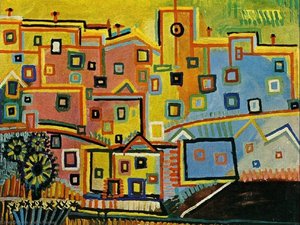
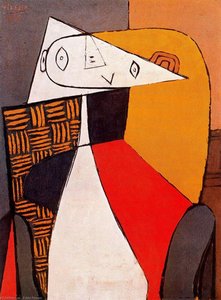
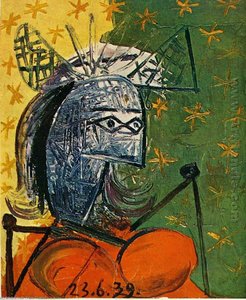
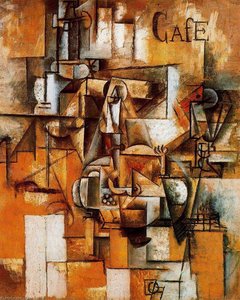
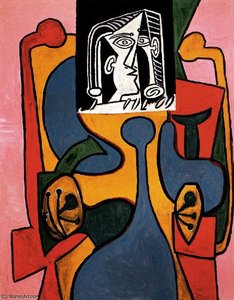
This work exists within a larger body of Picasso's explorations of Naïve Art. Consider also his pieces *Female Bust* and *Faun’s Head*, which demonstrate a similar blending of primitivist aesthetics with modernist techniques. Works like *A Lamp* and *Paternity* further showcase Picasso’s versatility in capturing everyday subjects through this unique lens. These paintings, alongside *Owl on a Chair and Sea Urchins*, solidify Picasso's position as a pivotal figure in 20th-century art, constantly pushing boundaries and challenging conventional artistic norms.Related Artworks
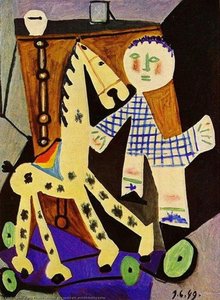
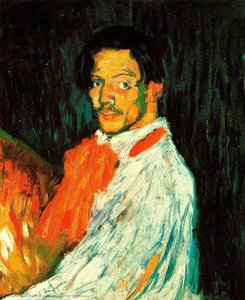
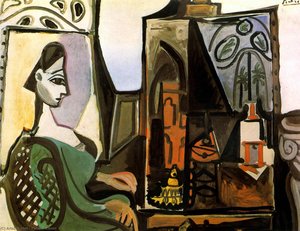
Artist Biography
The Enduring Legacy of Pablo Picasso
Pablo Ruiz y Picasso, a name synonymous with artistic revolution, was born in Málaga, Spain, on October 25, 1881. His very existence seemed destined for creative expression; legend has it his first uttered words were “piz, piz,” an attempt to say ‘pencil’. This early inclination was nurtured by his father, José Ruiz y Blasco, a painter and art teacher who provided young Pablo with foundational training. However, the student quickly surpassed the instructor, demonstrating a remarkable aptitude for naturalistic depiction that hinted at the prodigious talent within. The family’s subsequent moves – first to A Coruña, then Barcelona – were punctuated by personal tragedy, notably the loss of Picasso's sister, experiences which would subtly infuse his later work with themes of melancholy and mortality. Even during formal studies at the School of Fine Arts in Barcelona and a brief stint at the Royal Academy of San Fernando in Madrid, Picasso chafed against rigid academic constraints, preferring instead to immerse himself in the works of masters like Velázquez and Goya, forging his own path toward artistic innovation.
From Melancholy Blues to Rose-Tinted Hues
The early years of the 20th century witnessed the emergence of two distinct periods in Picasso’s oeuvre: the Blue Period (roughly 1901-1904) and the Rose Period (1904-1906). The Blue Period, born from personal hardship and a keen awareness of social suffering, is characterized by paintings steeped in somber shades of blue and blue-green. These works are populated by marginalized figures – beggars, the blind, prostitutes – rendered with a haunting empathy that speaks to themes of isolation and despair. La Vie (1903) and The Old Guitarist (1903-1904) stand as poignant examples of this emotionally charged phase. A shift in Picasso’s personal life, coupled with a move to Paris, heralded the arrival of the Rose Period. The palette warmed considerably, embracing pinks, oranges, and reds, reflecting a more optimistic outlook. This period saw a fascination with circus performers – harlequins, acrobats, and family troupes – figures who embodied both fragility and resilience. Family of Saltimbanques (1905) beautifully encapsulates this transition, hinting at the stylistic explorations that lay ahead.
The Shattering of Perspective: Cubism and Beyond
The year 1907 marked a pivotal moment in art history with the creation of Les Demoiselles d'Avignon. Influenced by Iberian sculpture and African masks, this groundbreaking painting shattered traditional notions of perspective and representation. It was a radical departure, a deliberate rejection of centuries-old conventions that paved the way for Cubism. Working in close collaboration with Georges Braque, Picasso co-founded this revolutionary movement, fundamentally altering how artists perceived and depicted reality. Analytical Cubism (1909-1912) involved the fragmentation of objects into geometric shapes, rendered in muted colors, as if dissecting form itself. This evolved into Synthetic Cubism (1912-1919), which incorporated collage elements – newspaper clippings, fabric scraps – adding texture and new layers of visual complexity. Picasso wasn’t content to simply represent the world; he sought to deconstruct it and reconstruct it on his own terms.
A Restless Experimenter: Neoclassicism, Surrealism, and War
The 1920s saw Picasso briefly explore Neoclassical styles, creating monumental figures that echoed classical forms while retaining a distinctly modern sensibility. Simultaneously, he engaged with the burgeoning Surrealist movement, though never fully aligning himself with its principles. His work during this period blended earlier stylistic influences with surreal imagery and distorted perspectives, demonstrating his relentless experimentation. The horrors of the Spanish Civil War profoundly impacted Picasso, culminating in the creation of Guernica (1937), a visceral and emotionally devastating response to the bombing of Guernica. This monumental work became an enduring symbol of the atrocities of war, solidifying Picasso’s role as not just an artist but also a powerful voice for peace and social justice. Throughout the 1950s and 60s, he continued to push boundaries, exploring ceramics, sculpture, and printmaking with unwavering curiosity and skill. His marriage to Jacqueline Roque in 1961 brought a new dimension to his personal life and artistic expression.
An Immeasurable Impact
Pablo Picasso died on April 8, 1973, in Mougins, France, leaving behind an astonishing body of work – estimated at over 50,000 pieces – that continues to captivate and inspire. His artistic development was shaped by a diverse range of influences, from Spanish masters like Velázquez and Goya to Iberian sculpture, African art, and the vibrant color palettes of Henri Matisse. His impact on 20th-century art is immeasurable. He co-founded Cubism, pioneered collage and constructed sculpture, and consistently challenged artistic conventions. Picasso’s relentless experimentation redefined modern art, leaving an indelible mark on generations of artists and solidifying his position as one of the most important and influential figures in history. His legacy extends beyond the canvas, resonating in countless aspects of contemporary culture and reminding us of the transformative power of artistic vision.
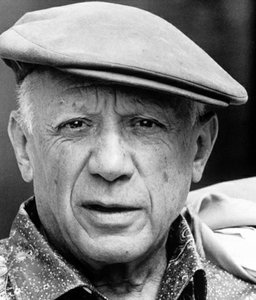
Pablo Picasso
1881 - 1973 , Spain
Quick Facts
- Artistic Movement Or Style: Cubism, Surrealism
- Artists Or Movements Influenced By This Artist:
- Cubism
- Modern art
- Artists Who Influenced This Artist:
- Velázquez
- Goya
- Matisse
- Date Of Birth: October 25, 1881
- Date Of Death: April 8, 1973
- Full Name: Pablo Diego José Ruiz Picasso
- Nationality: Spanish
- Notable Artworks:
- Les Demoiselles d'Avignon
- Guernica
- The Old Guitarist
- La Vie
- Family of Saltimbanques
- Place Of Birth: Malaga, Spain

