 Preview
 Send
Send Share
Share
 Details

 Download
 Similars
 X-Ray
X-Ray Diaporama
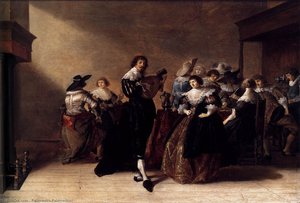
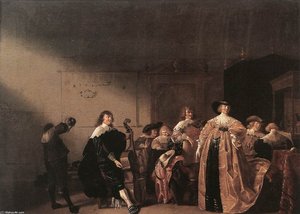
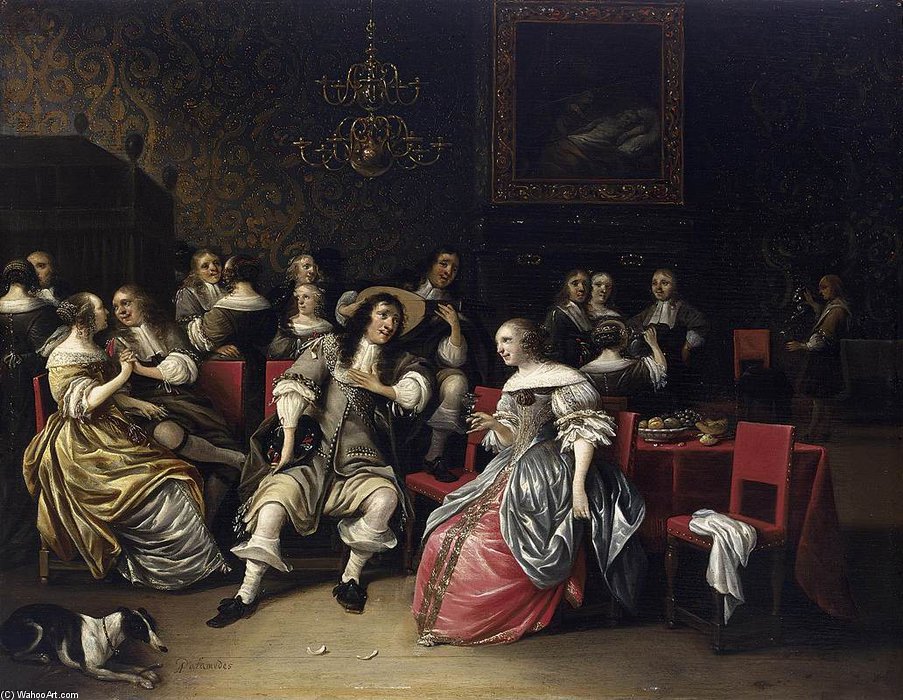
Musical Company
 Read More
Hand Made Oil Reproduction
Hand-painted oil on canvas in your size and frame, made to order by our artists. ( Buy Print Buy Image)




































Pick from our preset sizes that match the artwork's original proportions.

You may enter your own dimensions to fit a specific frame or space. If your selected size does not match the original image's proportions, we will either crop the artwork or extend the painting with additional hand-painted elements. A digital mockup will be sent for your approval before production begins.
Please note that the on-screen preview does not reflect the actual cropping or extension. Only the mockup will accurately show the final composition.
While custom sizes are available, we recommend selecting a dimension from the predefined list to preserve the original proportions.
After order, ArtsDot.com team will email client for instructions and provide a mockup preview
Worldwide Delivery () in 3/4 weeks instead of standard 5 weeks. (21 August). No compromise on quality.

Free Worldwide Express Shipping

High-Quality Linen Canvas

Full Shipping Insurance

Customs Tax Refund Guarantee

True Color Matching Guarantee

60-Day Return Policy (Defects Only)

100% Money-Back Guarantee

Bulk Discount Offer
 Glass option is only available in size under 110 CM

Musical Company
Reproduction Medium
Reproduction Size
-


Total Price
$ 263
Related Artworks






Artist Biography
A Baroque Vision of Warfare: The Life and Legacy of Palamedes Palamedesz
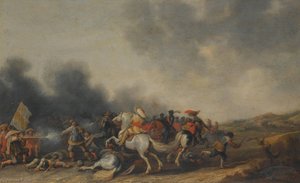
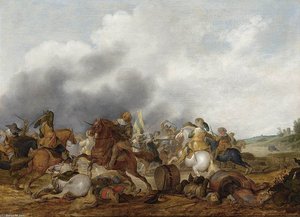
Palamedes Palamedesz stands as a poignant testament to the fervor and artistic innovation that characterized the Dutch Golden Age. Though his life was tragically brief, spanning from his early years in the United Kingdom to his untimely death in Delft in 1638, he carved out a distinctive niche within the Baroque movement. While often overshadowed by the monumental fame of contemporaries like Rembrandt or Vermeer, and even by his more celebrated brother, the portraitist Anthonie Palamedesz, Palamedes possessed a raw, visceral energy that set his work apart. His canvases were not merely static images but were living, breathing narratives of conflict, infused with a dramatic chiarosc/scuro that captured the very soul of military engagement. The origins of Palamedesz’s artistry are rooted in a profound appreciation for craftsmanship inherited from his family. Born into a lineage of skilled artisans, his father, Palamedes Willemsz. Stevens, was a master sculptor and gem cutter who served the court of King James I. This early exposure to the meticulous manipulation of precious materials likely instilled in the young artist an unwavering commitment to detail and texture. Though his journey took him from the rugged landscapes of Leith and London to the artistic heart of Delft, his creative spirit remained focused on a singular, powerful subject: the chaos and grandeur of the battlefield.Mastery Through Observation and Influence
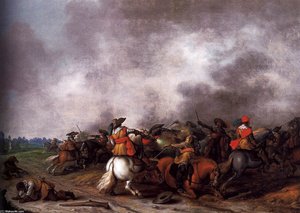
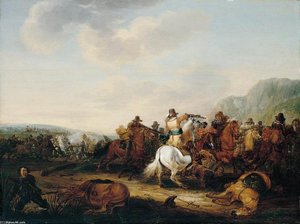
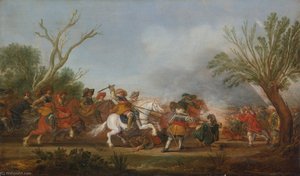
Palamedesz’s development as a painter is a remarkable story of innate talent meeting disciplined observation. Eschewing the traditional path of formal academy training, he adopted a more primal approach to learning, famously declaring his philosophy was “to begin from the beginning.” This dedication to foundational principles led him to master the art of imitation, specifically through the meticulous copying of the works of Esaias van de Velde. By studying Van de Velde’s dynamic cavalry charges and complex military maneuvers, Palamedesz absorbed the essential elements of movement and tension that would become the hallmarks of his own style. His technique was characterized by a masterful command of light and shadow, using deep tones to heighten the psychological complexity of his scenes. In his depictions of cavalry battles and military encampments, one can observe:- A vibrant palette dominated by striking reds and yellows that punctuate the smoke of combat.
- The realistic rendering of heavy armor, weaponry, and the muscular tension of war horses.
- A sense of atmospheric depth created through layered shadows and swirling battlefield dust.
- An ability to capture both the grand scale of an army in motion and the intimate, harrowing moments of individual soldiers.
Historical Significance and Artistic Impact
The historical significance of Palamedes Palamedesz lies in his ability to transform the genre of battle painting from mere documentation into high drama. His works were celebrated enough to be featured in prestigious anthologies such as Cornelis de Bie’s Het Gulden Cabinet, marking him as a recognized voice within the Dutch artistic canon. He did not merely paint war; he painted the psychological weight of it—the exhaustion of the encampment, the sudden terror of a charge, and the grim reality of the aftermath. Even today, his legacy persists through the enduring power of his compositions. His ability to blend the technical precision of the Dutch tradition with the emotional intensity of the Baroque era ensures that his work remains a vital subject of study for those captivated by the Golden Age. Palamedesz reminds us that true mastery often arises from a deep respect for the masters of the past, combined with an unyielding courage to capture the most turbulent aspects of the human experience on canvas.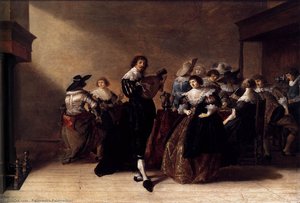
Palamedes Palamedesz
1607 - 1638 , United Kingdom
Quick Facts
- Artistic Movement Or Style: Baroque
- Artists Who Influenced This Artist: ['Esaias van de Velde']
- Date Of Birth: London, United Kingdom (1607)
- Date Of Death: Delft (1638)
- Full Name: Palamedes Palamedesz
- Nationality: Dutch
- Notable Artworks:
- Brothel Scene
- Cavalry Battle
- Place Of Birth: London