 Preview
 Send
Send Share
Share
 Details

 Download
 Similars
 X-Ray
X-Ray Diaporama
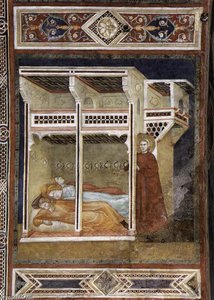
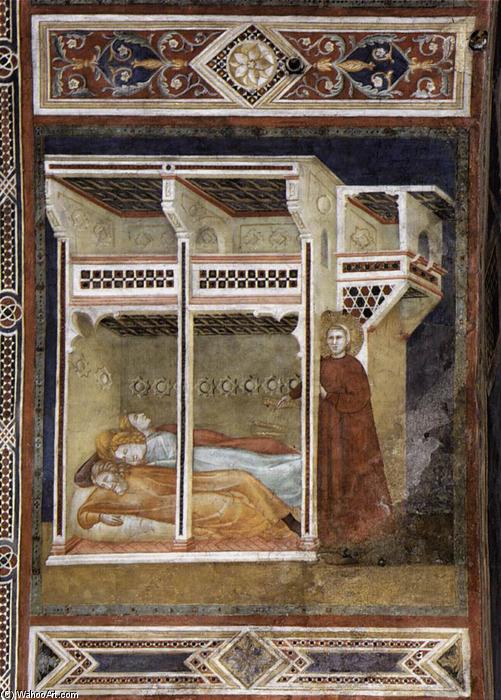
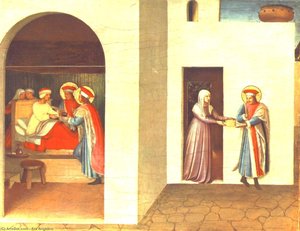
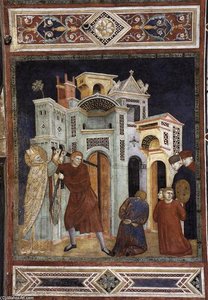
St Nicholas Throwing the Gold Bars to Three Poor Girls

 Read More
Giclée / Art Print
Museum-quality giclée or canvas print with fast production and flexible finish options. ( Buy Hand Made Painting Buy Image)




































Pick from our preset sizes that match the artwork's original proportions.

You may enter your own dimensions to fit a specific frame or space. If your selected size does not match the original image's proportions, we will either crop the artwork or extend the image with a mirrored or solid-fill edge. A digital mockup will be sent for your approval before production begins.
Please note that the on-screen preview does not reflect the actual cropping or extension. Only the mockup will accurately show the final composition.
While custom sizes are available, we recommend selecting a dimension from the predefined list to preserve the original proportions.
Worldwide Delivery () in 2 weeks instead of standard 4/5 weeks. (28 August)

Free Worldwide Express Shipping

High-Quality Linen Canvas

Full Shipping Insurance

Customs Tax Refund Guarantee

True Color Matching Guarantee

60-Day Return Policy (Defects Only)

100% Money-Back Guarantee

Bulk Discount Offer
 Glass option is only available in size under 110 CM

St Nicholas Throwing the Gold Bars to Three Poor Girls
Giclée / Art Print
Reproduction Size
-


Total Price
$ 63
Related Artworks
![Legend Of St Francis - [03] - Dream Of The Palace — Giotto Di Bondone, Gothic](/media/artworks/images-thumb/47/85/4785472aa265f95fe6962555859f4ab5.jpg)
Artist Biography
The Spirit of the Trecento: The Legacy of Palmerino di Guido
In the golden twilight of the thirteenth century, as the Italian peninsula began to stir with a new visual language, the name Palmerino di Guido emerged from the shadows of history to leave an indelible mark on the frescoes of Assisi. While often overshadowed by the monumental presence of Giotto, Palmerino represents a vital link in the evolution of Italian painting, embodying the transition from the rigid Byzantine traditions toward a more emotive and narrative-driven art. His life, though shrouded in the mists of the early 1300s, is etched into the very walls of the Basilica of San Francesco, where his brushwork continues to whisper stories of faith, charity, and divine intervention to all who wander through its hallowed halls.
The traces of Palmerino’s existence are found not in grand written chronicles, but in the subtle textures of stone and pigment. Historical records suggest a painter deeply connected to the Sienese school, with references to a Palmerino pictor de Senis active in Assisi as early as 1299. This connection to Siena is crucial, as it implies an artistic lineage steeped in the lyrical elegance and decorative richness that characterized Sienese masters. As a collaborator and disciple of the legendary Giotto, Palmerino was positioned at the epicenter of a stylistic revolution. He breathed the same air as the master who had taught the world how to grant weight and volume to the human form, yet Palmerino infused this newfound structural realism with a distinctively tender, narrative grace.
Mastery of Narrative: The St. Nicholas Cycle
The true brilliance of Palmerino di Guido is most vibrantly realized in his celebrated frescoes within the Chapel of Saint Nicholas in the Lower Church of San Francesco. Here, the artist transcends mere decoration to become a storyteller of the highest order. His work on the life of Saint Nicholas serves as a profound exploration of Christian virtue, rendered with a clarity that speaks directly to the soul. Through these frescoes, we witness a master capable of balancing the monumental with the intimate.
In his depictions of the saint, Palmerino employs a technique that balances the emerging interest in three-dimensional space with the symbolic power of the medieval era. His compositions are notable for several key themes:
- St. Nicholas Throwing the Gold Bars to Three Poor Girls: A scene of profound tenderness where the artist captures the movement of generosity, using light and gesture to emphasize the transformative power of charity.
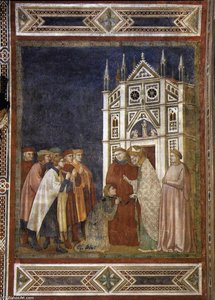
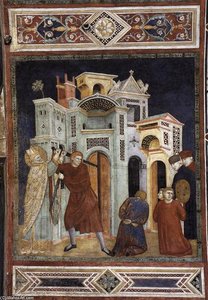
- St. Nicholas Saving Three Innocents from Decapitation: A moment of high drama and tension, demonstrating Palmerino's ability to command the viewer's emotional response through urgent composition and expressive figures.
- St. Nicholas Forgiving the Consul: A study in moral authority and grace, where the artist utilizes the architectural elements of the fresco to frame a narrative of reconciliation and mercy.
These works are not merely illustrations of hagiography; they are windows into a world where the divine intersects with the human struggle. The way Palmerino modulates color—favoring a palette that feels both earthy and ethereal—allows the spiritual weight of the scenes to settle heavily upon the viewer, much like the very frescoes themselves.
Historical Significance and Artistic Resonance
The historical importance of Palmerino di Guido lies in his role as a bridge. He stood at the crossroads of the Trecento, helping to carry the torch of Giotto’s naturalism into a new era of localized expression. While he may not have redefined the laws of perspective with the radical fervor of later Renaissance masters, his ability to synthesize the decorative beauty of the Sienese tradition with the structural innovations of the Florentine school created a unique aesthetic harmony. He was an artist who understood that for a painting to be truly great, it must do more than occupy space; it must inhabit the hearts of the faithful.
Today, as we look upon the weathered surfaces of his frescoes in Assisi, we see more than just ancient pigment. We see the fingerprints of an artist who helped shape the visual identity of a burgeoning Italy. Palmerino di Guido remains a vital figure for any student of art history, reminding us that the progress of art is not always found in sudden leaps, but in the steady, beautiful, and deeply human work of those who labor to bring sacred stories to life.
palmerino di guido
Italy
Quick Facts
- Artistic Movement Or Style: Renaissance Art
- Artists Or Movements Influenced By This Artist: ['Baroque']
- Artists Who Influenced This Artist:
- Caravaggio
- Reni
- Date Of Death: Living
- Full Name: Palmerino di Guido
- Nationality: Italian
- Notable Artworks:
- St. Nicholas Scenes
- Bolognese Paintings
- Place Of Birth: Florence, Italy