 Preview
 Send
Send Share
Share
 Details

 Download
 Similars
 X-Ray
X-Ray Diaporama
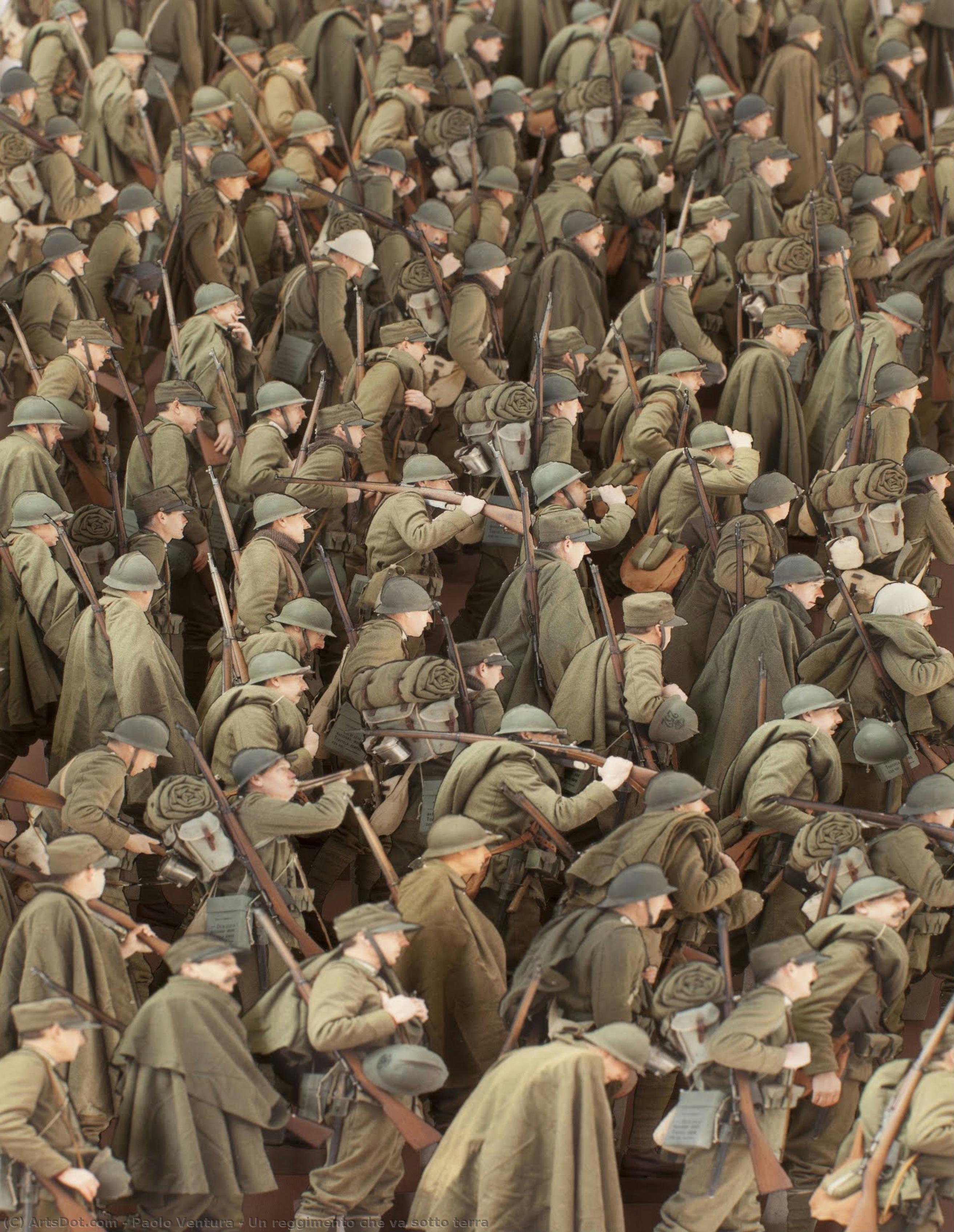
Un reggimento che va sotto terra
 2014
2014 112.0 x 120.0 cm
 Read More
Giclée / Art Print
Museum-quality giclée or canvas print with fast production and flexible finish options. ( Buy Hand Made Painting Buy Image)




































Pick from our preset sizes that match the artwork's original proportions.

You may enter your own dimensions to fit a specific frame or space. If your selected size does not match the original image's proportions, we will either crop the artwork or extend the image with a mirrored or solid-fill edge. A digital mockup will be sent for your approval before production begins.
Please note that the on-screen preview does not reflect the actual cropping or extension. Only the mockup will accurately show the final composition.
While custom sizes are available, we recommend selecting a dimension from the predefined list to preserve the original proportions.
Worldwide Delivery () in 2 weeks instead of standard 4/5 weeks. (26 August)

Free Worldwide Express Shipping

High-Quality Linen Canvas

Full Shipping Insurance

Customs Tax Refund Guarantee

True Color Matching Guarantee

60-Day Return Policy (Defects Only)

100% Money-Back Guarantee

Bulk Discount Offer
 Glass option is only available in size under 110 CM

Un reggimento che va sotto terra
Giclée / Art Print
Reproduction Size
-


Total Price
$ 63
Related Artworks








Artist Biography
Robert Rauschenberg: A Life in Flux and Fusion
Born Milton Ernest Rauschenberg in Port Arthur, Texas, on October 22, 1925, Robert Rauschenberg’s artistic journey was one of constant experimentation and a deliberate blurring of boundaries. His early life, shaped by a fundamentalist Christian upbringing and a strong connection to his family—particularly his sister Janet—provided a grounding that would later inform his exploration of personal narratives and the complexities of American culture. Rauschenberg's initial studies at the University of Texas at Austin were interrupted by World War II, where he served as an aviation mechanic, an experience that profoundly impacted his perspective on materiality and the relationship between object and image.
Returning to art school in 1947, Rauschenberg quickly gravitated towards a radical approach, rejecting traditional notions of painting. He enrolled at the Black Mountain College, a haven for experimental arts education, where he encountered figures like Josef Albers and Buckminster Fuller, whose ideas about perception and systems would significantly influence his work. It was during this period that he began to develop his signature “Combine” paintings – large-scale works that integrated disparate elements: fabric, photographs, found objects, paint—often assembled directly onto a canvas. These weren’t simply collages; they were complex dialogues between the visual and the tactile, challenging the established hierarchy of art forms.
The Rise of the Combine
Rauschenberg's "Combines" emerged in the mid-1950s as a direct response to the prevailing dominance of Abstract Expressionism. He sought to dismantle the idea of the autonomous painting, arguing that art could exist within and interact with the everyday world. Works like *Monogram* (1955), featuring a tire and a dictionary page juxtaposed on canvas, exemplify this approach. The seemingly incongruous pairing forces the viewer to consider the inherent relationships between objects, language, and meaning. This period also saw the development of his “Canyon” series (1959), monumental paintings based on photographs of James Canyon in Zion National Park, which he then painted with a deliberate lack of perspective, creating an unsettling and dreamlike landscape.
The influence of Dada and Surrealism is palpable in Rauschenberg’s early work, particularly his use of chance operations and the incorporation of unexpected elements. However, unlike the nihilistic spirit of Dada, Rauschenberg's approach was ultimately optimistic, seeking to reveal new possibilities within existing materials and systems. He famously employed a “Rube Goldberg” machine-like process for creating some of his Combines, using pulleys, levers, and other mechanical devices to arrange objects in unpredictable ways – a technique he termed "automatic painting."
Autobiography and Printmaking
In 1968, Rauschenberg created *Autobiography*, a monumental print that stands as perhaps the most ambitious statement of his artistic philosophy. Printed on three sheets of paper using a billboard press – an industrial printing method typically used for advertising – the work is a sprawling montage of images drawn from his personal life and experiences: photographs, X-rays, maps, snippets of text, and found objects like an umbrella and a wheel. The print’s sheer scale—over sixteen feet tall—mirrors the breadth of Rauschenberg's own life and artistic output. The project was commissioned by Marion Javits, wife of Senator Jacob Javits, reflecting a growing engagement with public art and social commentary.
Throughout the 1970s and beyond, Rauschenberg continued to explore printmaking as a medium, producing a vast body of works that demonstrated his mastery of color theory, texture, and composition. His prints often incorporated elements of collage and assemblage, echoing the principles of his Combines but adapted to the limitations and possibilities of the printing process. He also experimented with papermaking, creating delicate and intricate sheets that explored the materiality of paper itself.
Legacy and Influence
Robert Rauschenberg’s impact on contemporary art is undeniable. He fundamentally challenged traditional notions of painting and sculpture, demonstrating the potential for art to engage with everyday life and incorporate diverse materials. His work paved the way for subsequent generations of artists who embraced assemblage, collage, and mixed media. Rauschenberg's willingness to experiment, his embrace of chance operations, and his commitment to blurring boundaries have left an enduring legacy that continues to inspire artists today.
He received numerous accolades throughout his career, including the National Medal of Arts in 1993 and the Turner Prize in 1986. Rauschenberg died on May 12, 2008, leaving behind a vast and complex body of work that continues to be celebrated for its originality, innovation, and profound engagement with the human experience. His influence can be seen in the work of countless artists who have followed in his footsteps, demonstrating the lasting power of his vision.
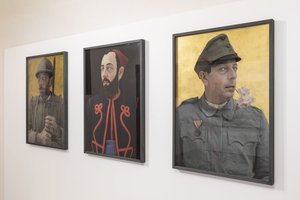
paolo ventura
1968 - , Italy
Quick Facts
- Artistic Movement Or Style:
- Assemblage
- Neo-Dada
- Pop Art
- Abstract Expressionism
- Artists Or Movements Influenced By This Artist:
- Andy Warhol
- Pop Art Movement
- Artists Who Influenced This Artist:
- Picasso
- Pollock
- Jasper Johns
- Date Of Birth: October 22, 1925
- Date Of Death: May 12, 2008
- Full Name: Robert Rauschenberg
- Nationality: American
- Notable Artworks:
- Monogram
- Canyon
- Rauschenberg Prints
- Autobiography
- Place Of Birth: Port Arthur, Texas