 Preview
 Send
Send Share
Share
 Details

 Download
 Similars
 X-Ray
X-Ray Diaporama
Votive Portrait of Doge Sebastiano Venier
 Oil On Canvas
- WallArt
- High Renaissance
 1581
1581 285.0 x 565.0 cm
 Palazzo Ducale
 Read More
Giclée / Art Print
Museum-quality giclée or canvas print with fast production and flexible finish options. ( Buy Hand Made Painting Buy Image)




P118B $10

P118H $10

P118W $10

P438Z $10

P508JH $12

P508YH $12

P805H $10

P805Z $10

P919BZ $10

P919G $10

P919XJ $10

P959ZH $10

P968JZ $12

W106C $8

W218G $10

W218JH $8

W218Y $10

W307PJ $10

W316G $10

W316PJ $8

W316Y $10

W398PJ $8

W4111J $10

W500HY $15

W500JH $15

W692G $12

W849H $8

W940BG $15

W953PJ $8




Pick from our preset sizes that match the artwork's original proportions.

You may enter your own dimensions to fit a specific frame or space. If your selected size does not match the original image's proportions, we will either crop the artwork or extend the image with a mirrored or solid-fill edge. A digital mockup will be sent for your approval before production begins.
Please note that the on-screen preview does not reflect the actual cropping or extension. Only the mockup will accurately show the final composition.
While custom sizes are available, we recommend selecting a dimension from the predefined list to preserve the original proportions.
Worldwide Delivery () in 2 weeks instead of standard 4/5 weeks. (5 September)

Free Worldwide Express Shipping

High-Quality Linen Canvas

Full Shipping Insurance

Customs Tax Refund Guarantee

True Color Matching Guarantee

60-Day Return Policy (Defects Only)

100% Money-Back Guarantee

Bulk Discount Offer
 Glass option is only available in size under 110 CM

Votive Portrait of Doge Sebastiano Venier
Giclée / Art Print
Reproduction Size
-


Total Price
$ 63
A Portrait of Power and Faith: Paolo Veronese’s Votive Portrait of Doge Sebastiano Venier
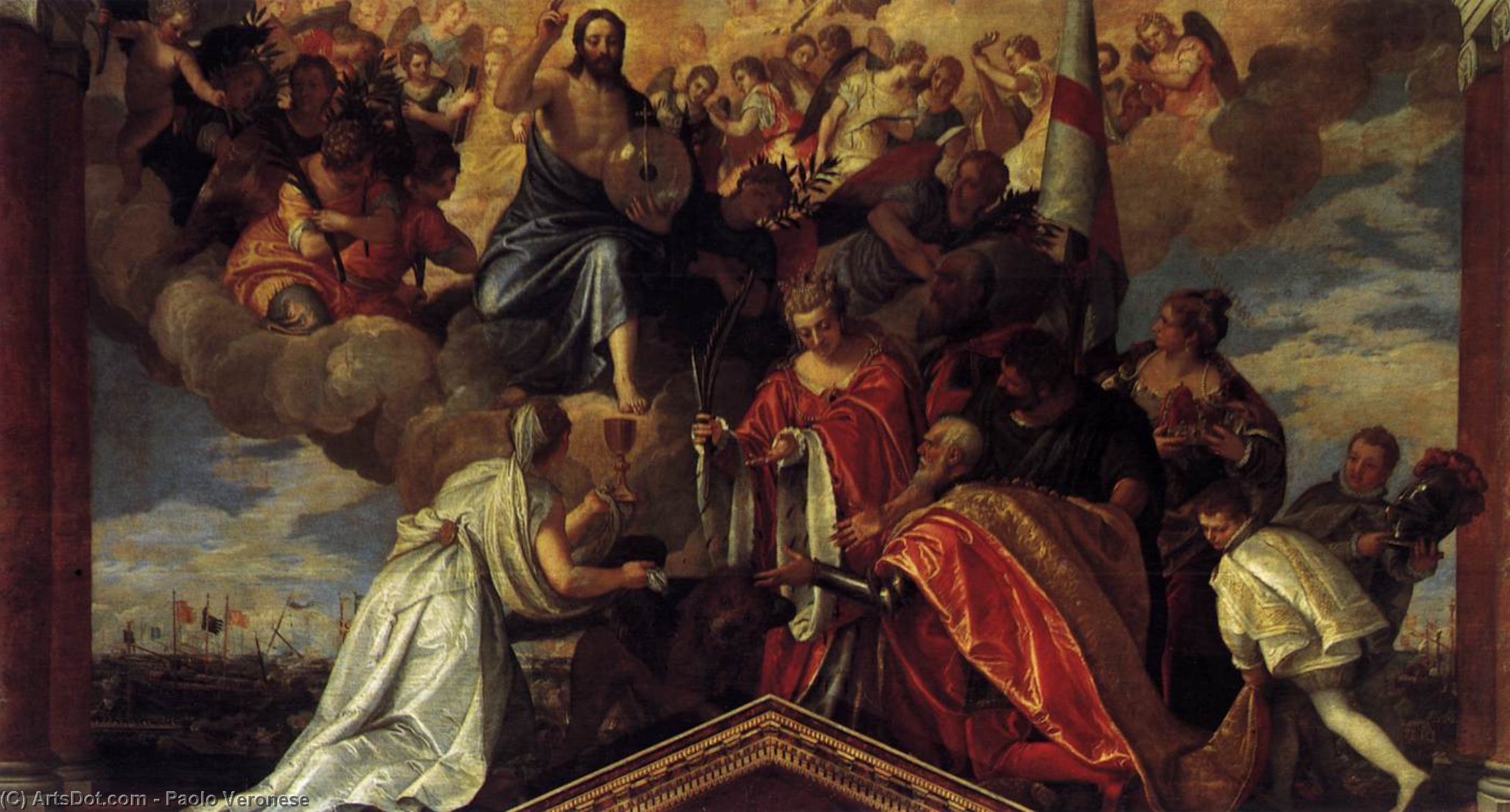
Paolo Veronese's “Votive Portrait of Doge Sebastiano Venier,” painted in 1581, is more than just a likeness; it’s a meticulously crafted tableau vivant—a vibrant snapshot of Venetian power, religious devotion, and the opulent grandeur of the late Renaissance. This monumental work, measuring an impressive 285 x 565 cm, resides within the Sala del Collegio at the Palazzo Ducale in Venice, originally intended as a commemorative tribute to the Doge himself. Veronese’s genius lies not merely in his technical skill but in his ability to weave together historical figures, allegorical symbols, and a palpable sense of theatrical spectacle—transforming a simple portrait into a complex narrative brimming with meaning. The painting immediately captivates with its sheer scale and lavish detail, transporting the viewer to a world of shimmering fabrics, intricate architecture, and divine presence.A Masterclass in Mannerist Composition
Veronese’s style firmly anchors this piece within the Mannerist movement, a period characterized by an embrace of elegance, complexity, and illusionistic space. Departing from the idealized forms of High Renaissance art, Mannerism favored elongated figures, dramatic poses, and a heightened sense of theatricality. Here, Veronese masterfully employs these techniques to create a dynamic composition that draws the eye across the canvas. The pyramidal structure, a hallmark of Renaissance painting, is subtly manipulated—the Doge’s figure anchors the base, while ascending towards Christ at the apex, creating an irresistible upward trajectory. Linear perspective is skillfully employed, though with a deliberate flattening effect characteristic of Mannerism, contributing to the overall sense of heightened drama and spatial ambiguity. The use of color is particularly noteworthy – Veronese's palette explodes with rich reds, blues, and golds, reflecting the wealth and prestige of Venice at the time.The Doge’s Homage: Symbolism and Historical Context
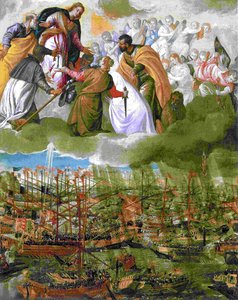
At the heart of the painting stands Doge Sebastiano Venier, depicted in a posture of profound humility before Christ. The inclusion of this specific portrait within the Sala del Collegio was a deliberate act of civic piety—a votive offering to commemorate Venier's leadership during the pivotal Battle of Lepanto in 1571, where the Venetian fleet decisively defeated the Ottoman Empire. The scene is layered with symbolism: the Doge’s outstretched hand signifies supplication and gratitude; the surrounding figures represent various saints and allegorical personifications—Faith, Justice, and Victory—all attesting to Venice's divine favor. The distant cityscape, faintly visible through a hazy atmosphere, subtly references Venice itself, reinforcing the painting’s connection to its patron and its city’s enduring legacy. The inclusion of elements like the naval battle in the background further emphasizes Venice’s maritime power and strategic importance.A Window into Venetian Splendor
Beyond its religious and historical significance, “Votive Portrait of Doge Sebastiano Venier” offers a remarkable glimpse into the material culture and artistic sensibilities of 16th-century Venice. Veronese's meticulous attention to detail—the intricate embroidery on the Doge’s robes, the shimmering fabrics adorning the figures, the elaborate architectural details—reflects the city’s status as a center of trade, wealth, and artistic innovation. The painting is not simply a portrait; it’s a meticulously constructed stage set, capturing the splendor and ambition of Venice at its zenith. The use of oil paint on canvas allows for layering and blending, creating textures that mimic the richness of velvet and silk, while the impasto technique adds depth and dimension to the drapery and cloud formations.An Enduring Legacy: Reproductions and Inspiration
Today, “Votive Portrait of Doge Sebastiano Venier” remains one of Veronese’s most celebrated masterpieces, admired for its scale, complexity, and sheer visual impact. High-quality reproductions offer a remarkable opportunity to experience the painting's grandeur in your own space, bringing a touch of Venetian Renaissance splendor into any setting. Whether you are an art enthusiast, a collector seeking a statement piece, or simply someone drawn to the beauty and artistry of the past, this monumental work continues to inspire awe and wonder. It stands as a testament to Veronese’s unparalleled skill and his ability to transform history, faith, and power into a timeless masterpiece.Related Artworks
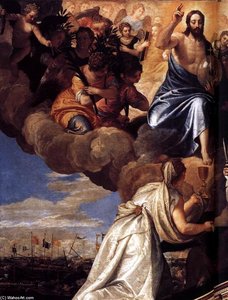
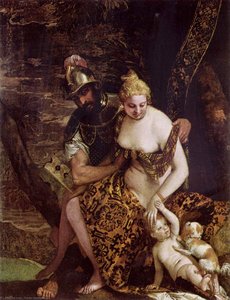
Artist Biography
A Venetian Visionary: The Life and Art of Paolo Veronese
Paolo Caliari, known to the world as Paolo Veronese, emerged from the vibrant artistic landscape of 16th-century Venice as a master of color, composition, and opulent spectacle. Born in Verona in 1528, the son of a stonecutter, his early life was steeped in the visual richness of his surroundings – the classical architecture, sculpted forms, and burgeoning humanist ideals that characterized the region. His initial training under Antonio Badile and Giovanni Francesco Caroto laid a foundation in traditional techniques, but it was his move to Venice in the 1550s that truly ignited his artistic genius. The city itself became his muse, its bustling marketplaces, grand palazzi, and shimmering waterways informing the scale and drama of his work. He quickly absorbed the influences of established Venetian masters like Titian, whose mastery of color profoundly impacted Veronese’s palette, yet he forged a distinct style characterized by an unparalleled sense of theatricality and grandeur.The Painter of Feasts and Grand Narratives
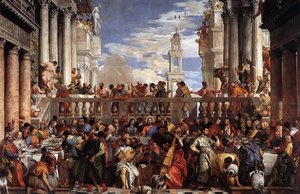
Veronese's reputation rests upon his monumental paintings, particularly those depicting lavish feasts and biblical scenes transformed into dazzling displays of Venetian life. The Wedding at Cana, completed in 1563 for the Benedictine monastery of San Giorgio Maggiore, stands as a testament to his skill. This colossal canvas isn’t merely an illustration of the miracle; it's a vibrant panorama of 16th-century society, teeming with elegantly dressed figures, musicians, and architectural details rendered with breathtaking precision. The painting is not just about what happened at Cana but *how* it would have looked if it had occurred in Venice during Veronese’s time. Similarly, The Feast in the House of Levi, originally titled The Last Supper, caused controversy with the Inquisition due to its inclusion of contemporary figures and a seemingly irreverent atmosphere. Veronese defended his artistic license, asserting that painters were entitled to the same creative freedom as poets and jesters – a bold statement reflecting his belief in art’s power to interpret and reimagine sacred narratives. These works weren't simply religious depictions; they were celebrations of life, wealth, and the splendor of Venice itself. He wasn’t interested in austere spirituality but rather in capturing the joy and abundance of existence.Influences and Artistic Development
While Titian’s influence on Veronese’s colorism is undeniable, his artistic development was a complex interplay of various influences. The architectural precision he brought to his compositions owes much to the classical tradition prevalent in Verona during his formative years, particularly the work of architects like Michele Sanmicheli. He also absorbed elements from Central Italian masters such as Raphael and Parmigianino, evident in the graceful lines and harmonious arrangements within his paintings. However, Veronese didn’t simply imitate these influences; he synthesized them into a uniquely Venetian style characterized by its dramatic use of light, vibrant color palettes, and meticulous attention to detail. He excelled at creating illusions of space and depth, employing perspective techniques to draw viewers into the heart of his elaborate scenes. His mastery of oil painting allowed him to achieve an unparalleled luminosity and richness of texture. He also ran a large workshop, with contributions from his brother Benedetto and sons Gabriele and Carlo, ensuring that his style continued to flourish even after his death in 1588.Legacy and Historical Significance
Paolo Veronese’s impact extends far beyond the realm of Renaissance art. His work has resonated through centuries, inspiring artists across various disciplines. His dramatic compositions and vibrant color schemes have been cited as influences on everything from Baroque painting to modern cinema – even finding echoes in the visual aesthetics of Spaghetti Westerns. He was part of the “great trio” of Venetian painters—alongside Titian and Tintoretto—each contributing uniquely to the city’s artistic legacy, yet Veronese often stands apart for his sheer exuberance and celebration of earthly pleasures. His paintings continue to captivate audiences with their grandeur and spectacle, offering a glimpse into the opulent world of 16th-century Venice.- He redefined historical painting by imbuing it with contemporary life.
- His use of color remains influential for artists today.
- His work embodies the spirit of Renaissance humanism and celebration of earthly beauty.
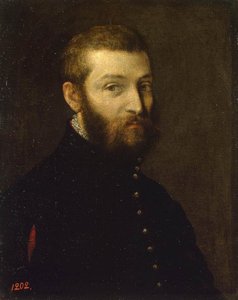
Paolo Veronese
1528 - 1588 , Italy
Quick Facts
- Artistic Movement Or Style: Renaissance, Mannerism
- Artists Or Movements Influenced By This Artist:
- Rubens
- Watteau
- Artists Who Influenced This Artist: ['Titian']
- Date Of Birth: 1528
- Date Of Death: 1588
- Full Name: Paolo Veronese
- Nationality: Italian
- Notable Artworks:
- The Wedding at Cana
- Feast in the House of Levi
- Other Names: Paolo Caliari
- Place Of Birth: Verona, Italy
Related Articles
Paolo Veronese: A Renaissance Master of Color, Composition, and Venetian Splendor
Explore the vibrant world of Paolo Veronese, a Renaissance master renowned for his opulent compositions, masterful use of color, and dramatic Venetian scenes. Discover key artworks & legacy.

Jacopo Tintoretto's Masterpieces: 25 Paintings That Define Venetian Drama | ArtsDot
Explore 25 breathtaking masterpieces by Jacopo Tintoretto, the Venetian master of drama and light. Discover the stories behind iconic Renaissance paintings & find museum-quality art reproductions to elevate your home decor on ArtsDot.com.
Jacopo Palma il Giovane: A Venetian Master's Poetic Evolution
Explore the captivating world of Jacopo Palma il Giovane, a pivotal Venetian Renaissance master. Discover his unique style, influenced by Titian & Tintoretto, and learn about key works perfect for discerning collectors.

The Golden Light of Innovation: Exploring the Venetian Renaissance Art Movement (1430–1580)
Explore the Golden Age of Venetian art (1430–1580). Discover Giorgione, Titian & Tintoretto's techniques, the 'colorito' revolution, and lasting influence. Expert insights for collectors & enthusiasts.
Vittore Carpaccio: Venetian Renaissance Narrative & the Poetics of Detail
Explore the captivating world of Vittore Carpaccio, a master storyteller of the Venetian Renaissance. Discover his intricate details, narrative cycles like 'The Legend of St. Ursula,' and unique artistic style.