 Preview
 Send
Send Share
Share
 Details

 Download
 Similars
 X-Ray
X-Ray Diaporama
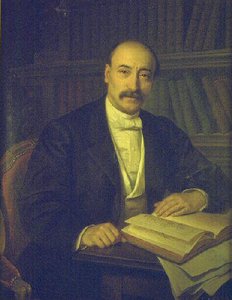
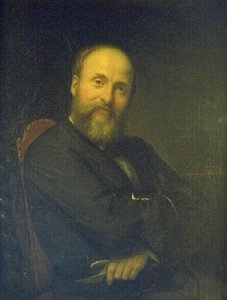
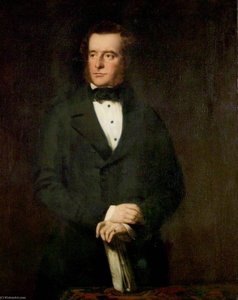
Portrait du docteur Léon Marchand
 Read More
Giclée / Art Print
Museum-quality giclée or canvas print with fast production and flexible finish options. ( Buy Hand Made Painting Buy Image)




































Pick from our preset sizes that match the artwork's original proportions.

You may enter your own dimensions to fit a specific frame or space. If your selected size does not match the original image's proportions, we will either crop the artwork or extend the image with a mirrored or solid-fill edge. A digital mockup will be sent for your approval before production begins.
Please note that the on-screen preview does not reflect the actual cropping or extension. Only the mockup will accurately show the final composition.
While custom sizes are available, we recommend selecting a dimension from the predefined list to preserve the original proportions.
Worldwide Delivery () in 2 weeks instead of standard 4/5 weeks. (23 August)

Free Worldwide Express Shipping

High-Quality Linen Canvas

Full Shipping Insurance

Customs Tax Refund Guarantee

True Color Matching Guarantee

60-Day Return Policy (Defects Only)

100% Money-Back Guarantee

Bulk Discount Offer
 Glass option is only available in size under 110 CM

Portrait du docteur Léon Marchand
Giclée / Art Print
Reproduction Size
-


Total Price
$ 63
Related Artworks









Artist Biography
Papin Jean Adolphe: A Neoclassical Master of Portraiture
Papin Jean Adolphe (1800-1880) stands as a significant, yet often understated, figure in 19th-century French portraiture. Born into a family with a history of artistic endeavor – his father, Jean Pascal Adolphe Papin, was also a painter – he inherited not just an artistic lineage but a deep understanding of the classical traditions that would shape his distinctive style. While perhaps less celebrated than contemporaries like Gérôme or Ingres, Adolphe’s work reveals a meticulous attention to detail, a refined elegance, and a subtle psychological depth that secures his place as a master of neoclassical portraiture.
Adolphe's early artistic training remains somewhat obscured by historical records. It is believed he initially studied under his father, absorbing the foundational principles of observation and composition. However, he later sought further instruction in Paris, immersing himself within the academic circles that dominated French art at the time. This exposure to the established norms – a commitment to anatomical accuracy, idealized forms, and a reverence for classical antiquity – profoundly influenced his artistic development. His work reflects this influence most clearly in his choice of subjects: often wealthy bourgeois families, distinguished gentlemen, and portraits of prominent figures within Parisian society.
The Language of Form and Gesture
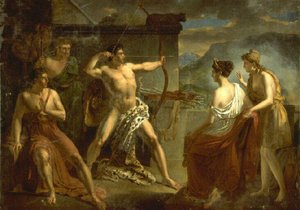
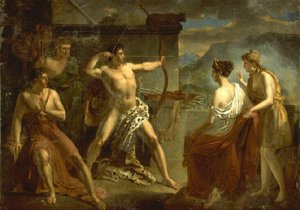
Adolphe’s paintings are characterized by a remarkable control over form and gesture. He possessed an exceptional ability to capture the nuances of human expression – a fleeting smile, a thoughtful gaze, or a subtle hint of melancholy – through precise modeling of the face and hands. His figures rarely appear static; instead, they are imbued with a sense of movement and vitality, conveyed through carefully rendered drapery, relaxed postures, and subtly shifting weight distribution. This dynamism is particularly evident in works like “Scythès tendant l’arc de son père,” where the subject's pose suggests both strength and vulnerability.
His technique was rigorously disciplined, reflecting a deep understanding of oil painting materials and methods. Adolphe favored a smooth, polished surface achieved through meticulous layering of glazes – a hallmark of academic portraiture. He paid particular attention to lighting, utilizing chiaroscuro techniques to create dramatic contrasts between light and shadow, which further accentuated the three-dimensionality of his subjects and added depth to the compositions. The use of color was restrained yet sophisticated, relying on subtle tonal variations to convey mood and atmosphere.
Notable Works and Influences
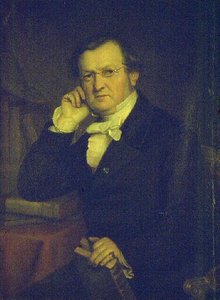
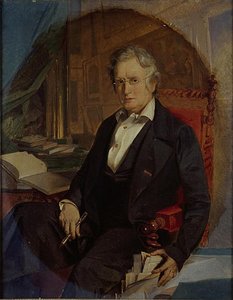
Among Adolphe’s most celebrated works are “Portrait de Lacour” and “Portrait de Pierre Lacour fils.” “Portrait de Lacour,” a study in dignified aging, showcases his mastery of capturing the subtle signs of time on the face – wrinkles, lines around the eyes, and a slightly furrowed brow – all rendered with remarkable sensitivity. The portrait exudes an air of quiet contemplation and understated wisdom. “Portrait de Pierre Lacour fils” similarly demonstrates his ability to portray a man of status and refinement, conveying both his outward appearance and inner character.
While firmly rooted in the neoclassical tradition, Adolphe’s work also reveals subtle influences from other artistic movements. The influence of Orientalist painting is noticeable in some of his compositions, particularly in the use of exotic backgrounds and dramatic lighting effects. Furthermore, there are hints of Romanticism in his portrayal of emotion and psychological depth, albeit filtered through a classically informed lens. Jean-Léon Gérôme, a contemporary artist known for his historical paintings and orientalist scenes, served as an important reference point for Adolphe’s approach to composition and dramatic effect.
Legacy and Historical Significance
Papin Jean Adolphe's contribution to French portraiture lies not in revolutionary innovation but in the consistent execution of a refined and elegant style. He was a diligent practitioner of the academic tradition, upholding its standards of technical skill and artistic decorum. His portraits offer a valuable glimpse into the social and cultural landscape of 19th-century France, capturing the aspirations, values, and anxieties of the bourgeois elite.
Despite not achieving widespread fame during his lifetime, Adolphe’s work has been steadily recognized for its quality and artistic merit in recent decades. His paintings are now housed in several prominent museums, including the Musée des Beaux-Arts de Bordeaux, where “Scythès tendant l'arc de son père” resides as a testament to his skill and vision. Adolphe’s legacy endures as a reminder of the enduring appeal of neoclassical portraiture – a genre that continues to captivate viewers with its ability to reveal the beauty and complexity of the human form.
Quick Facts
- Artistic Movement Or Style: Neoclassical Portraiture
- Artists Or Movements Influenced By This Artist: ['Neoclassical Painting']
- Artists Who Influenced This Artist: ['Jean-Léon Gérôme']
- Date Of Death: 1880
- Full Name: Jean-Adolphe Papin
- Nationality: French
- Notable Artworks:
- Scythès tendant l'arc de son père
- Portrait de Lacour
- Portrait de Pierre Lacour fils
- Place Of Birth: Bordeaux, France