

 Preview
 Send
Send Share
Share
 Details

 Download
 Similars
 X-Ray
X-Ray Diaporama
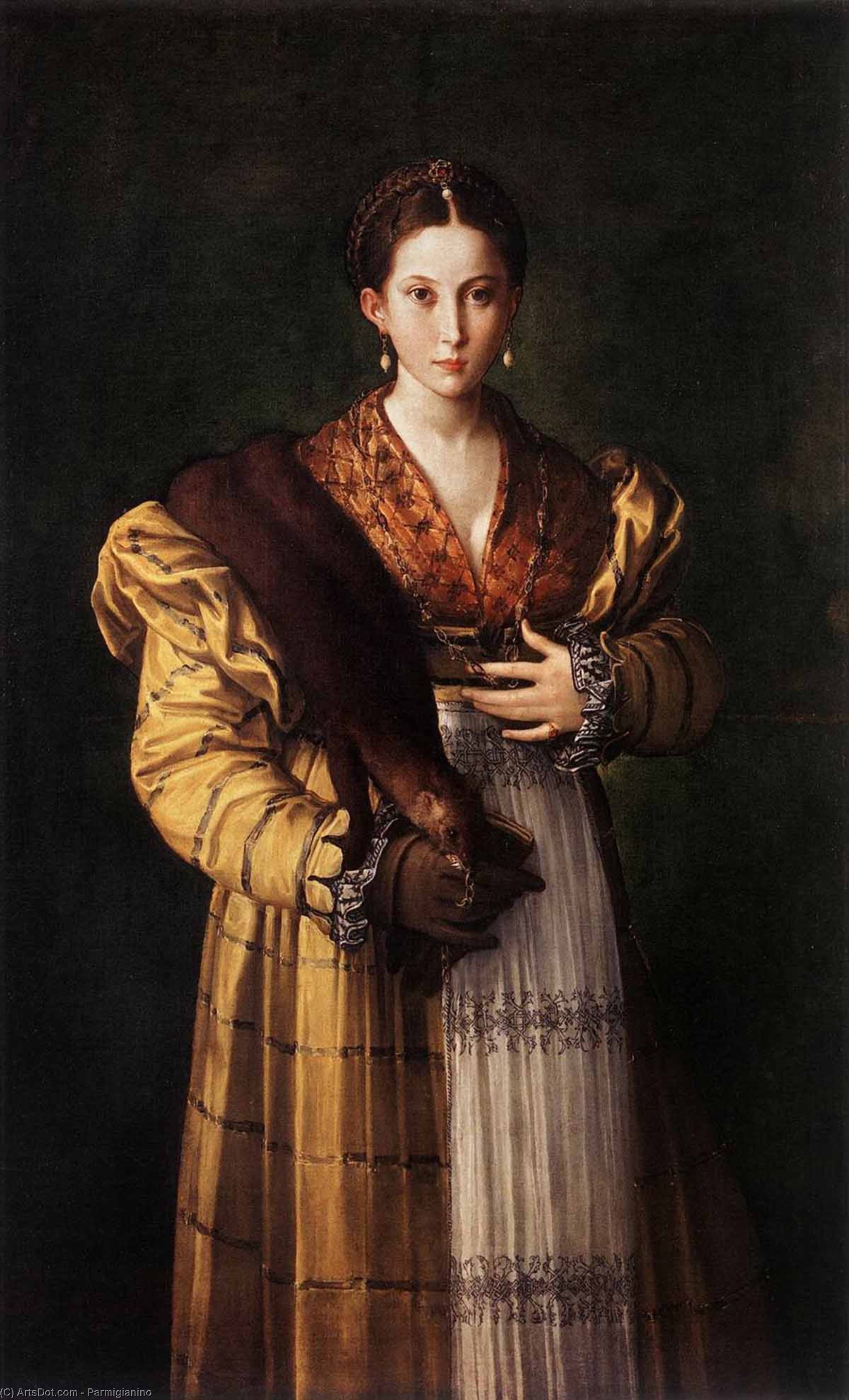
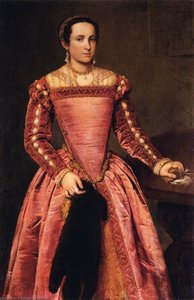
Portrait of a Young Lady
 Oil On Canvas
- WallArt
- Mannerism
 1535
1535 139.0 x 88.0 cm
 Museo Nazionale di Capodimonte
 Read More
Purchase a high-resolution, enhanced digital image, far superior to the online preview.
Each file is meticulously prepared by our in-house specialists using advanced tools and expert manual retouching. We ensure every image has exceptional clarity, precise color accuracy, and fine detail.
The final file is delivered via email within 72 hours, optimized for immediate use in professional, editorial, and print environments. This is the same quality trusted by top-tier design studios, publishers, and galleries.
Digital Image
Download a high-resolution file for personal display, printing, and creative projects. ( Buy Print Buy Hand Made Painting)
Included in Every Digital Image Order
Expert Digital Delivery, Guaranteed
When you choose ArtsDot.com, you're not just getting an image - you're receiving a professionally enhanced digital artwork, crafted with precision and backed by a satisfaction guarantee. Here's everything that comes with your order, automatically:

Fast Email Delivery
Your high-resolution digital image file will be emailed to you within 72 hours of ordering - ready for immediate use.

AI-Enhanced Digital File
Your artwork is professionally optimized using advanced AI tools and manual editing, ensuring maximum detail, clarity, and color accuracy.

Free Lifetime Re-Delivery
Accidentally deleted or lost your file? No worries - we'll resend it to you anytime, free of charge.

No Import Fees - Ever
Enjoy your artwork instantly with zero customs, duties, or delivery fees - digital downloads are always tax-free.

Color Accuracy Guarantee
We ensure your digital image reflects the original colors as closely as possible using professional tools and color management.

60-Day Satisfaction Guarantee
If you're not satisfied with your digital image, we'll revise it or refund 100% within 60 days - no questions asked.

100% Money-Back Guarantee
Not satisfied? Get a full refund within 60 days of receiving your digital file - no questions asked.

Bulk Order Discounts
Buy 3 images, save 10% - Buy 5, save 15% - Buy 10+, save 20%. Great for creative projects, galleries, and agencies.
Collectible Description
Portrait of a Young Lady – A Renaissance Enigma
The year is 1537, and within the walls of a modest Parma studio, Parmigianino, already a name whispered with both admiration and intrigue, meticulously captures the essence of a young woman. This isn’t merely a portrait; it's a carefully constructed tableau vivant, a window into the burgeoning world of Mannerism – an artistic movement that prized elegance, refinement, and a subtle distortion of reality over the straightforward realism of the High Renaissance. “Portrait of a Young Lady,” often referred to as “Antea” after a Roman courtesan who has become inextricably linked with the painting’s identity (though this connection remains debated by scholars), is a study in controlled beauty and veiled emotion, demanding close observation and inviting endless interpretation.
The composition immediately draws the eye. The subject, positioned in a three-quarter pose – a revolutionary departure from the prevalent profile views of the time – exudes an almost unnerving serenity. Her gaze, direct and unwavering, establishes an immediate connection with the viewer, while her delicately arched eyebrows and subtly parted lips hint at a quiet intelligence and perhaps even a touch of melancholy. The lighting is masterfully employed; a dramatic chiaroscuro effect sculpts her features, emphasizing the delicate curve of her cheekbone, the gentle slope of her nose, and the luminous quality of her eyes. The dark background serves not as mere absence, but as a deliberate device to heighten the subject’s presence, creating an aura of intimacy and drawing attention solely to her captivating form.
A Dance of Fabrics and Forms – The Language of Mannerism
Parmigianino's skill lies not just in his ability to capture likeness, but in his masterful manipulation of texture and form. The painting is a testament to the meticulous techniques characteristic of Renaissance oil painting. He employs layering and glazing to achieve an astonishing level of detail – from the intricate folds of the golden robe, shimmering with reflected light, to the delicate lace adorning her underdress. The fabric itself seems to flow and drape with an almost impossible grace, demonstrating his deep understanding of anatomy and drapery. Notice how he uses subtle shifts in tone and value to create a sense of volume and depth, giving each garment a tangible weight and texture.
Crucially, this is not a portrait rooted in strict realism. Parmigianino’s signature Mannerist style manifests through elongated proportions – the subject's neck appears unusually slender, her fingers are delicately attenuated – and a subtle distortion of perspective. These deliberate deviations from convention create an atmosphere of heightened elegance and psychological complexity. The overall effect is one of refined sensuality, a hallmark of the period that sought to explore the inner lives and emotions of its subjects rather than simply documenting their outward appearance.
Symbolism and Intrigue – Unraveling the Layers
Beyond the immediate beauty of the portrait lies a rich tapestry of symbolism. The golden robe, with its puffed sleeves and intricate detailing, speaks to wealth and status, reflecting the subject’s noble lineage. The presence of the small dog nestled at her feet is another significant detail – a symbol of loyalty, fidelity, and aristocratic privilege in Renaissance Italy. However, the true meaning behind the painting remains shrouded in mystery. The identification with Antea, the Roman courtesan, has fueled speculation for centuries, but definitive proof remains elusive.
Some scholars suggest that the subject may have been a young bride-to-be, represented by the white apron (the zinale) worn over her dress – a traditional garment signifying purity and innocence. Others propose she was a servant or even Parmigianino’s own daughter, adding another layer of intrigue to this enigmatic portrait. Regardless of her true identity, “Portrait of a Young Lady” stands as a powerful testament to the artist's skill and his ability to imbue a single image with layers of meaning and emotional resonance.
A Timeless Masterpiece – Reproduction and Beyond
“Portrait of a Young Lady” is more than just a painting; it’s an enduring symbol of Renaissance beauty, elegance, and artistic innovation. Reproductions offer a remarkable opportunity to bring this captivating work into your home or office, allowing you to appreciate its intricate details and profound emotional depth. When selecting a reproduction, consider the quality of materials and printing techniques – a faithful rendering will capture the subtle nuances of light, shadow, and texture that define Parmigianino’s masterpiece. Whether displayed as a statement piece in a grand salon or a quiet focal point in a smaller space, this portrait continues to captivate and inspire, reminding us of the enduring power of art to transcend time and connect with our deepest emotions.
Related Artworks


Artist Biography
A Refined Sensibility: The Life and Art of Parmigianino
Girolamo Francesco Maria Mazzola, known to history as Parmigianino – “the little one from Parma” – emerged during the High Renaissance, yet swiftly became a defining figure of the burgeoning Mannerist style. Born in Parma on January 11, 1503, his early life was marked by familial loss; his father, Filippo Mazzola, died when Girolamo was just two years old. Raised by his uncles, Michele and Pier Ilario, both modestly skilled artists themselves, the young Parmigianino received his initial artistic training within this familial circle. This foundation, however, proved merely a springboard for an exceptional talent that would soon eclipse even his mentors. By the astonishing age of eighteen, he had already completed the Bardi Altarpiece, a work demonstrating a maturity and sophistication far beyond his years, signaling the arrival of a truly remarkable artist.Florence, Rome, and the Shaping of a Mannerist Vision
Parmigianino’s artistic journey led him to Florence around 1524, where he absorbed the influence of masters like Raphael and Leonardo da Vinci, though he quickly began to forge his own distinct path. He presented Pope Clement VII with three paintings, including a striking self-portrait in a convex mirror – a testament to his technical skill and burgeoning self-awareness. This act secured commissions in Rome, but the city’s artistic landscape was soon disrupted by the tumultuous Sack of 1527. Forced to flee, Parmigianino sought refuge in Bologna, where he painted one of his most celebrated works, the *Holy Family*. It was during this period that his signature style truly crystallized: elongated forms, graceful poses, and a refined sensuality became hallmarks of his art. He wasn’t merely depicting reality; he was reimagining it through a lens of elegance and idealized beauty. This departure from the High Renaissance's emphasis on naturalism marked him as a key innovator of Mannerism, an artistic movement characterized by its artificiality, sophistication, and deliberate distortion of classical forms.Masterpieces of Elongation and Grace
Parmigianino’s legacy rests upon a relatively small but profoundly influential body of work. The *Madonna with the Long Neck* (1534) remains perhaps his most iconic creation. Its unsettling yet captivating composition, featuring figures with elongated necks and limbs, challenges conventional notions of beauty and proportion. This deliberate distortion isn't simply stylistic; it conveys a sense of spiritual yearning and otherworldly grace. Similarly, *Vision of Saint Jerome* (1527), completed during his time in Rome, showcases his mastery of anatomy and perspective, while simultaneously embracing the Mannerist penchant for dramatic compositions and emotional intensity. Beyond these celebrated paintings, Parmigianino’s drawings reveal an extraordinary level of skill and sensitivity. His studies of figures, drapery, and architectural elements demonstrate a meticulous attention to detail and a profound understanding of form. Even his lesser-known works, such as *Bow-Carving Amor*, display the same refined sensibility and technical virtuosity that define his oeuvre.A Legacy Interrupted: Parmigianino’s Final Years
Tragically, Parmigianino's promising career was cut short by his untimely death in Casalmaggiore in 1540 at the age of thirty-seven. The circumstances surrounding his demise remain somewhat mysterious; some accounts suggest he succumbed to a fever, while others hint at complications from a fall. Despite his brief life, Parmigianino left an indelible mark on Italian Renaissance art. He stands as one of the most important representatives of Mannerism, influencing generations of artists with his elegant style and innovative approach to form and composition. His work continues to captivate viewers today, offering a glimpse into a world where beauty is not merely observed but actively created – a testament to the enduring power of artistic vision. The frescoes he left unfinished in Parma and Fontanellato serve as poignant reminders of what might have been, yet even in their incomplete state, they reveal the brilliance of a master whose legacy continues to resonate through the centuries.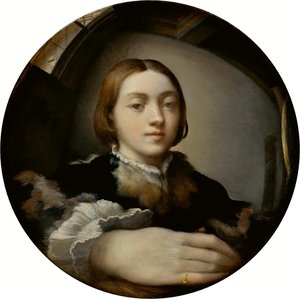
Parmigianino
1503 - 1540 , Italy
Quick Facts
- Artistic Movement Or Style: Mannerism
- Artists Or Movements Influenced By This Artist: ['Italian Renaissance art']
- Artists Who Influenced This Artist:
- Correggio
- Raphael
- Date Of Birth: January 11, 1503
- Date Of Death: 1540
- Full Name: Girolamo Francesco Maria Mazzola
- Nationality: Italian
- Notable Artworks:
- Madonna with the Long Neck
- Vision of Saint Jerome
- Self-Portrait in a Convex Mirror
- Holy Family
- The Circumcision
- Bow-carving Amor
- Place Of Birth: Parma, Italy

