

 Preview
 Send
Send Share
Share
 Details

 Download
 Similars
 X-Ray
X-Ray Diaporama
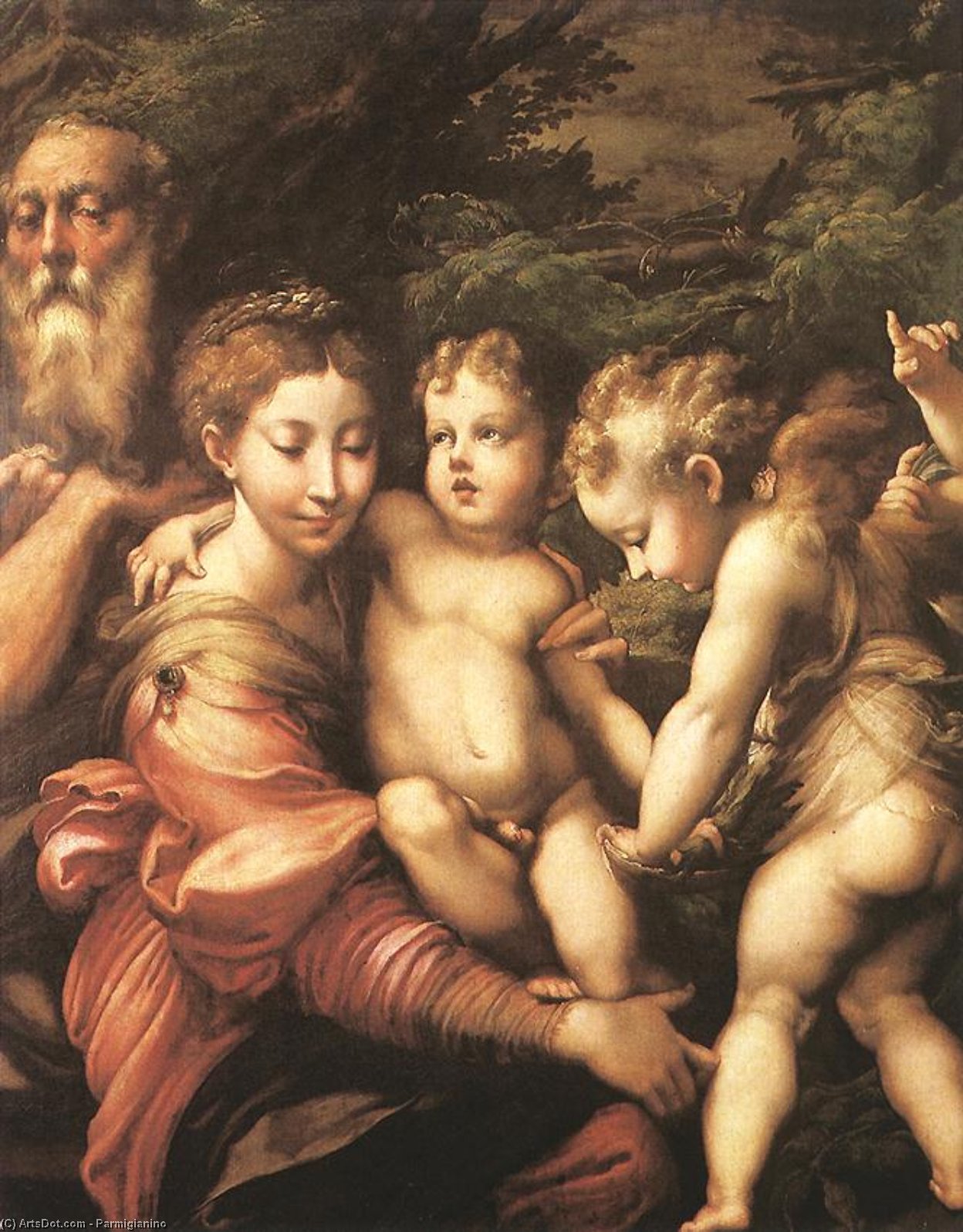
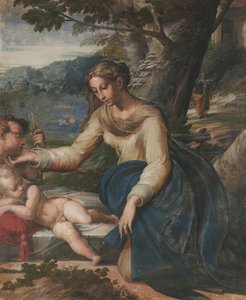
Rest on the Flight to Egypt
 Oil On Canvas
- WallArt
- mannerist style
 1524
1524 110.0 x 89.0 cm
 Museo del Prado
 Read More
Purchase a high-resolution, enhanced digital image, far superior to the online preview.
Each file is meticulously prepared by our in-house specialists using advanced tools and expert manual retouching. We ensure every image has exceptional clarity, precise color accuracy, and fine detail.
The final file is delivered via email within 72 hours, optimized for immediate use in professional, editorial, and print environments. This is the same quality trusted by top-tier design studios, publishers, and galleries.
Digital Image
Download a high-resolution file for personal display, printing, and creative projects. ( Buy Print Buy Hand Made Painting)
Included in Every Digital Image Order
Expert Digital Delivery, Guaranteed
When you choose ArtsDot.com, you're not just getting an image - you're receiving a professionally enhanced digital artwork, crafted with precision and backed by a satisfaction guarantee. Here's everything that comes with your order, automatically:

Fast Email Delivery
Your high-resolution digital image file will be emailed to you within 72 hours of ordering - ready for immediate use.

AI-Enhanced Digital File
Your artwork is professionally optimized using advanced AI tools and manual editing, ensuring maximum detail, clarity, and color accuracy.

Free Lifetime Re-Delivery
Accidentally deleted or lost your file? No worries - we'll resend it to you anytime, free of charge.

No Import Fees - Ever
Enjoy your artwork instantly with zero customs, duties, or delivery fees - digital downloads are always tax-free.

Color Accuracy Guarantee
We ensure your digital image reflects the original colors as closely as possible using professional tools and color management.

60-Day Satisfaction Guarantee
If you're not satisfied with your digital image, we'll revise it or refund 100% within 60 days - no questions asked.

100% Money-Back Guarantee
Not satisfied? Get a full refund within 60 days of receiving your digital file - no questions asked.

Bulk Order Discounts
Buy 3 images, save 10% - Buy 5, save 15% - Buy 10+, save 20%. Great for creative projects, galleries, and agencies.
Collectible Description
Parmigianino’s Delicate Reverie: Exploring “Rest on the Flight to Egypt”
The Florentine Mannerist painter Girolamo Francesco Maria Mazzola, known universally as Parmigianino (“the little one from Parma”), stands apart from his contemporaries not merely for stylistic innovation but for an almost unsettling preoccupation with beauty—a beauty that defies convention and invites contemplation. His masterpiece, “Rest on the Flight to Egypt,” completed in 1523-1524, resides within The Courtauld Collection in London, offering a window into the artist’s singular vision of Renaissance ideals. This painting transcends mere depiction; it embodies an emotional resonance that continues to captivate audiences centuries later.A Style Defined by Refinement and Illusion
Parmigianino's stylistic signature is instantly recognizable: a deliberate rejection of linear perspective and anatomical accuracy in favor of idealized forms and subtle distortions. Unlike the monumental grandeur favored by Raphael or Michelangelo, Parmigianino’s compositions prioritize grace and elegance—a characteristic that aligns perfectly with the prevailing aesthetic sensibilities of his time. The painting employs sfumato – a technique perfected by Leonardo da Vinci – to create hazy gradations of color and form, blurring boundaries between figure and background and fostering an atmosphere of serene stillness. This masterful manipulation of light and shadow contributes significantly to the artwork’s ethereal quality.Historical Context: Renaissance Ideals Under Scrutiny
“Rest on the Flight to Egypt” emerged during a period of intellectual ferment within Florence—a city grappling with questions of faith, morality, and artistic representation. The humanist movement had championed classical ideals of beauty and proportion, yet Parmigianino subtly challenged these conventions by presenting an image that prioritizes psychological depth over literal realism. The subject matter itself – Mary cradling Jesus amidst a tranquil forest scene – reflects the enduring fascination with biblical narratives and their symbolic significance within Christian iconography. However, Parmigianino’s approach diverges from traditional depictions; he eschews dramatic gestures and poses for a posture of quiet repose—a deliberate gesture that speaks to the artist's profound understanding of human emotion.Symbolism: Layers of Meaning Beyond Appearance
The painting is replete with symbolic references that enrich its narrative complexity. The forest setting represents Paradise Lost, hinting at the Virgin Mary’s sorrowful contemplation of Herod’s persecution of infants—a poignant reminder of the suffering endured by Jesus's lineage. The positioning of Mary and Jesus—particularly Jesus’s slight inclination toward his mother—suggests a profound intimacy and spiritual connection. Furthermore, Parmigianino’s masterful use of color – predominantly muted greens and blues – reinforces the painting’s contemplative mood and evokes feelings of tranquility and serenity.Emotional Impact: A Portrait of Inner Grace
Ultimately, “Rest on the Flight to Egypt” succeeds in conveying a powerful emotional experience—one that transcends mere visual pleasure. The artist captures not just what is seen but what is felt—a palpable sense of vulnerability, compassion, and unwavering faith. It’s this profound psychological insight that distinguishes Parmigianino's work from its rivals and secures its place as one of the most enduring images of Renaissance beauty. Viewing this artwork inspires a quiet appreciation for elegance, subtlety, and the transformative power of art to communicate universal human emotions.Related Artworks

Artist Biography
A Refined Sensibility: The Life and Art of Parmigianino
Girolamo Francesco Maria Mazzola, known to history as Parmigianino – “the little one from Parma” – emerged during the High Renaissance, yet swiftly became a defining figure of the burgeoning Mannerist style. Born in Parma on January 11, 1503, his early life was marked by familial loss; his father, Filippo Mazzola, died when Girolamo was just two years old. Raised by his uncles, Michele and Pier Ilario, both modestly skilled artists themselves, the young Parmigianino received his initial artistic training within this familial circle. This foundation, however, proved merely a springboard for an exceptional talent that would soon eclipse even his mentors. By the astonishing age of eighteen, he had already completed the Bardi Altarpiece, a work demonstrating a maturity and sophistication far beyond his years, signaling the arrival of a truly remarkable artist.Florence, Rome, and the Shaping of a Mannerist Vision
Parmigianino’s artistic journey led him to Florence around 1524, where he absorbed the influence of masters like Raphael and Leonardo da Vinci, though he quickly began to forge his own distinct path. He presented Pope Clement VII with three paintings, including a striking self-portrait in a convex mirror – a testament to his technical skill and burgeoning self-awareness. This act secured commissions in Rome, but the city’s artistic landscape was soon disrupted by the tumultuous Sack of 1527. Forced to flee, Parmigianino sought refuge in Bologna, where he painted one of his most celebrated works, the *Holy Family*. It was during this period that his signature style truly crystallized: elongated forms, graceful poses, and a refined sensuality became hallmarks of his art. He wasn’t merely depicting reality; he was reimagining it through a lens of elegance and idealized beauty. This departure from the High Renaissance's emphasis on naturalism marked him as a key innovator of Mannerism, an artistic movement characterized by its artificiality, sophistication, and deliberate distortion of classical forms.Masterpieces of Elongation and Grace
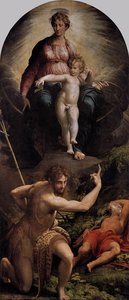
Parmigianino’s legacy rests upon a relatively small but profoundly influential body of work. The *Madonna with the Long Neck* (1534) remains perhaps his most iconic creation. Its unsettling yet captivating composition, featuring figures with elongated necks and limbs, challenges conventional notions of beauty and proportion. This deliberate distortion isn't simply stylistic; it conveys a sense of spiritual yearning and otherworldly grace. Similarly, *Vision of Saint Jerome* (1527), completed during his time in Rome, showcases his mastery of anatomy and perspective, while simultaneously embracing the Mannerist penchant for dramatic compositions and emotional intensity. Beyond these celebrated paintings, Parmigianino’s drawings reveal an extraordinary level of skill and sensitivity. His studies of figures, drapery, and architectural elements demonstrate a meticulous attention to detail and a profound understanding of form. Even his lesser-known works, such as *Bow-Carving Amor*, display the same refined sensibility and technical virtuosity that define his oeuvre.A Legacy Interrupted: Parmigianino’s Final Years
Tragically, Parmigianino's promising career was cut short by his untimely death in Casalmaggiore in 1540 at the age of thirty-seven. The circumstances surrounding his demise remain somewhat mysterious; some accounts suggest he succumbed to a fever, while others hint at complications from a fall. Despite his brief life, Parmigianino left an indelible mark on Italian Renaissance art. He stands as one of the most important representatives of Mannerism, influencing generations of artists with his elegant style and innovative approach to form and composition. His work continues to captivate viewers today, offering a glimpse into a world where beauty is not merely observed but actively created – a testament to the enduring power of artistic vision. The frescoes he left unfinished in Parma and Fontanellato serve as poignant reminders of what might have been, yet even in their incomplete state, they reveal the brilliance of a master whose legacy continues to resonate through the centuries.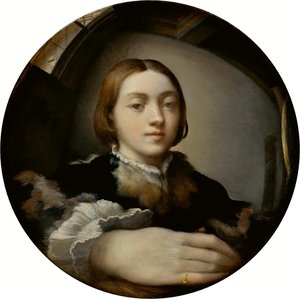
Parmigianino
1503 - 1540 , Italy
Quick Facts
- Artistic Movement Or Style: Mannerism
- Artists Or Movements Influenced By This Artist: ['Italian Renaissance art']
- Artists Who Influenced This Artist:
- Correggio
- Raphael
- Date Of Birth: January 11, 1503
- Date Of Death: 1540
- Full Name: Girolamo Francesco Maria Mazzola
- Nationality: Italian
- Notable Artworks:
- Madonna with the Long Neck
- Vision of Saint Jerome
- Self-Portrait in a Convex Mirror
- Holy Family
- The Circumcision
- Bow-carving Amor
- Place Of Birth: Parma, Italy

