 Preview
 Send
Send Share
Share
 Details

 Download
 Similars
 X-Ray
X-Ray Diaporama
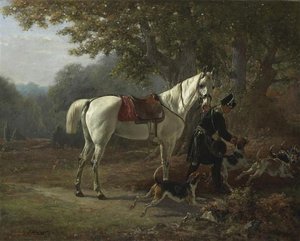
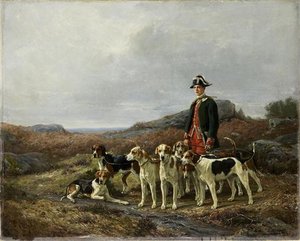
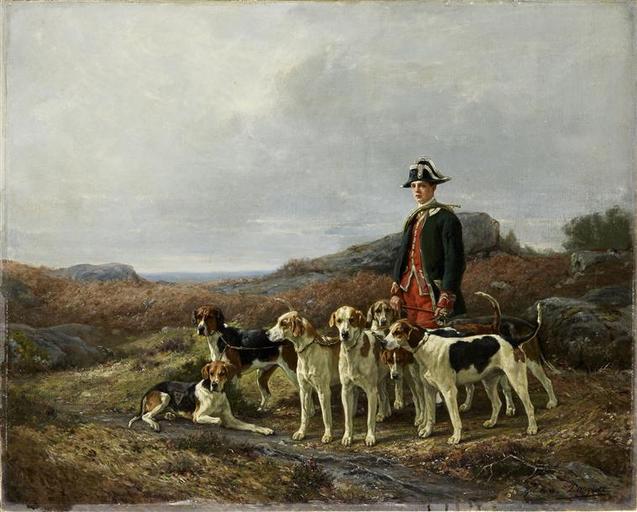
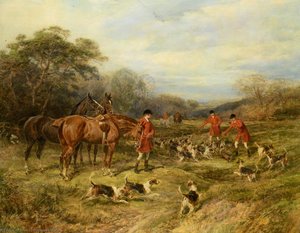
RELAIS DE CHIENS DE LA VENERIE IMPERIALE
 Read More
Hand Made Oil Reproduction
Hand-painted oil on canvas in your size and frame, made to order by our artists. ( Buy Print Buy Image)




































Pick from our preset sizes that match the artwork's original proportions.

You may enter your own dimensions to fit a specific frame or space. If your selected size does not match the original image's proportions, we will either crop the artwork or extend the painting with additional hand-painted elements. A digital mockup will be sent for your approval before production begins.
Please note that the on-screen preview does not reflect the actual cropping or extension. Only the mockup will accurately show the final composition.
While custom sizes are available, we recommend selecting a dimension from the predefined list to preserve the original proportions.
After order, ArtsDot.com team will email client for instructions and provide a mockup preview
Worldwide Delivery () in 3/4 weeks instead of standard 5 weeks. (29 August). No compromise on quality.

Free Worldwide Express Shipping

High-Quality Linen Canvas

Full Shipping Insurance

Customs Tax Refund Guarantee

True Color Matching Guarantee

60-Day Return Policy (Defects Only)

100% Money-Back Guarantee

Bulk Discount Offer
 Glass option is only available in size under 110 CM

RELAIS DE CHIENS DE LA VENERIE IMPERIALE
Reproduction Medium
Reproduction Size
-


Total Price
$ 263
Related Artworks







Artist Biography
The Synthesis of Tradition and Light: The Life of Charles Gustave Parquet
In the vibrant tapestry of nineteenth-century French art, few figures embody the delicate tension between academic rigor and modern innovation as gracefully as Charles Gustave Parquet. Born in 1846, a period of profound transformation in France, Parquet emerged from a background of privilege that allowed him to immerse himself in the highest echelons of artistic training. His journey began within the hallowed halls of the École Supérieure des Beaux-Arts, where he studied under the formidable Gustave Boulanger. From Boulanger, Parquet inherited a profound respect for the monumental and the classical, learning to command the dramatic compositions and idealized figures that defined the era's history painting. This foundational period instilled in him a meticulous attention to detail and a reverence for anatomical precision that would remain a hallmark of his technique throughout his long career.
However, the rigid boundaries of academicism could not forever contain Parquet’s burgeoning artistic spirit. As the winds of change swept through Paris, bringing with them the revolutionary light and atmosphere of the Impressionist movement, Parquet found himself profoundly moved by the works of masters like Claude Monet and Pierre-Auguste Renoir. He began a deliberate departure from the didactic, polished surfaces of his training, instead embracing looser brushstrokes and an obsession with the fleeting qualities of natural light. This evolution was not a rejection of his past, but rather a sophisticated synthesis; he managed to marry the structural integrity of the classical tradition with the ephemeral, sensory beauty of Impressionism, creating a style that felt both timeless and strikingly modern.
Equestrian Elegance and Parisian Splendor
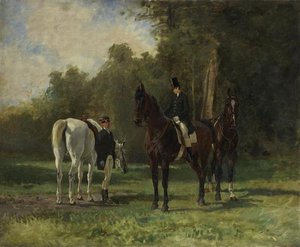
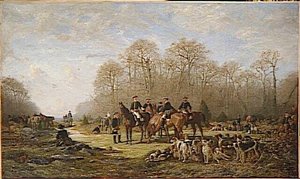
The heart of Parquet’s oeuvre lies in his fascination with the dynamism of French life, particularly through the lens of the aristocracy and the grandeur of the hunt. He became a celebrated painter of vénerie impériale—the imperial hunting traditions—capturing the rhythmic energy of hounds, horses, and riders with an unparalleled sense of movement. His canvases often serve as windows into a vanished world of elegance and ritual, where the nobility of the subject matter is matched by the nobility of his execution. Whether depicting a spirited hunt or a quiet moment in a stable, Parquet possessed a unique ability to imbue his animal subjects with character and dignity.
Beyond the hunting field, Parquet’s work frequently turned toward the pulse of Parisian existence and the intimacy of portraiture. His paintings are characterized by:
- Vibrant Color Palettes: A masterful use of nuanced tonal gradations that capture the dappled sunlight of a landscape or the rich textures of aristocratic attire.
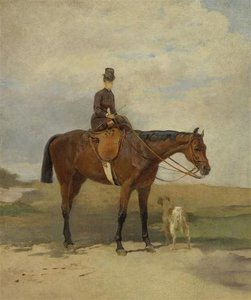
- Equestrian Mastery: An exceptional command over the anatomy and motion of horses, making him a premier chronicler of equestrian portraiture.
- Atmospheric Depth: The ability to use light not merely as illumination, but as a structural element that defines space and mood.
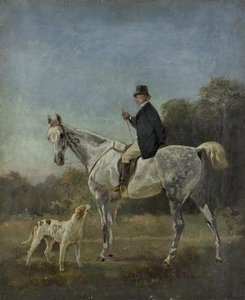
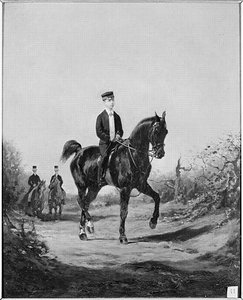
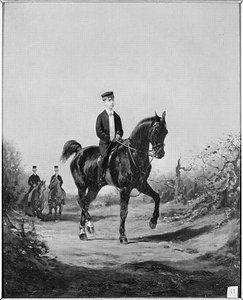
Notable works such as Le Prince Impérial à cheval demonstrate this stylistic alchemy, presenting a regal figure within a landscape that feels alive with the breathing atmosphere of the French countryside. His ability to navigate between the grand scale of history painting and the delicate intimacy of watercolor and pen drawings allowed him to maintain a presence in the prestigious Paris Salons from 1857 well into the late 1890s.
A Lasting Legacy in the French Canon
Charles Gustave Parquet passed away in Paris in 1930, leaving behind a legacy that serves as a vital bridge between two eras of art history. He was an artist who understood that progress does not require the destruction of tradition, but rather its refinement. By integrating the structural discipline of the Beaux-Arts with the emotive freedom of Impressionism, he contributed to a more complex and layered understanding of French identity during the 19th century. Today, his works, often preserved in esteemed collections such as the Château de Compiègne, continue to enchant viewers with their ability to evoke the splendor, movement, and light of a transformative age in European art.
Quick Facts
- Artistic Movement Or Style: Impressionism
- Artists Or Movements Influenced By This Artist: ['Symbolism']
- Artists Who Influenced This Artist: ['Gustave Caillebotte']
- Full Name: Charles Gustave Parquet
- Nationality: French
- Notable Artworks:
- Un Rendez-vous de la Vénerie de l’Empereur
- Le Prince impérial à cheval
- Place Of Birth: Paris, France