

 Preview
 Send
Send Share
Share
 Details

 Download
 Similars
 X-Ray
X-Ray Diaporama
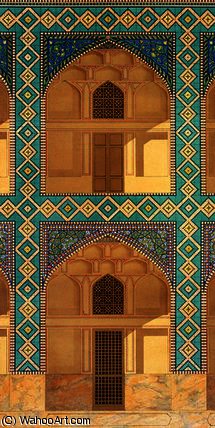
Detail of the Courtyard Arcades

 Read More
Purchase a high-resolution, enhanced digital image, far superior to the online preview.
Each file is meticulously prepared by our in-house specialists using advanced tools and expert manual retouching. We ensure every image has exceptional clarity, precise color accuracy, and fine detail.
The final file is delivered via email within 72 hours, optimized for immediate use in professional, editorial, and print environments. This is the same quality trusted by top-tier design studios, publishers, and galleries.
Digital Image
Download a high-resolution file for personal display, printing, and creative projects. ( Buy Print Buy Hand Made Painting)
Included in Every Digital Image Order
Expert Digital Delivery, Guaranteed
When you choose ArtsDot.com, you're not just getting an image - you're receiving a professionally enhanced digital artwork, crafted with precision and backed by a satisfaction guarantee. Here's everything that comes with your order, automatically:

Fast Email Delivery
Your high-resolution digital image file will be emailed to you within 72 hours of ordering - ready for immediate use.

AI-Enhanced Digital File
Your artwork is professionally optimized using advanced AI tools and manual editing, ensuring maximum detail, clarity, and color accuracy.

Free Lifetime Re-Delivery
Accidentally deleted or lost your file? No worries - we'll resend it to you anytime, free of charge.

No Import Fees - Ever
Enjoy your artwork instantly with zero customs, duties, or delivery fees - digital downloads are always tax-free.

Color Accuracy Guarantee
We ensure your digital image reflects the original colors as closely as possible using professional tools and color management.

60-Day Satisfaction Guarantee
If you're not satisfied with your digital image, we'll revise it or refund 100% within 60 days - no questions asked.

100% Money-Back Guarantee
Not satisfied? Get a full refund within 60 days of receiving your digital file - no questions asked.

Bulk Order Discounts
Buy 3 images, save 10% - Buy 5, save 15% - Buy 10+, save 20%. Great for creative projects, galleries, and agencies.
Related Artworks

Artist Biography
The Architect of Shadows and Stone
In the grand tapestry of nineteenth-century architectural history, few names evoke the romantic allure of discovery quite like Pascal Xavier Coste. Born in the vibrant maritime city of Marseille in 1787, the son of a prominent joiner, Coste possessed an innate sensitivity to structure and form that would eventually lead him far beyond the shores of France. His early training under the esteemed architect Michel-Robert Penchaud provided him with a rigorous classical foundation, yet it was his thirst for the unknown that truly defined his legacy. When he arrived in Paris in 1814 to study at the prestigious École des Beaux-Arts, he entered a world of intellectual ferment, where a chance encounter with the geographer Edme-François Jomard would forever alter the trajectory of his life and art.
This pivotal connection introduced Coste to the ambitious Muhammad Ali Pasha, the viceroy of Egypt, who recognized in the young Frenchman a rare talent capable of blending engineering precision with artistic grace. Arriving in Cairo in 1817, Coste did not merely serve as an architect for the state; he became a silent chronicler of a vanishing world. Tasked with monumental projects such as the construction of canals and the fortification of defenses, he found himself amidst the breathtaking grandeur of Islamic monuments. His time in Egypt was a period of profound immersion, where the interplay of light upon sandstone and the intricate geometry of minarets became the primary language of his sketches.
A Journey Through the Orient
The true genius of Coste lay in his ability to translate the ephemeral beauty of Eastern architecture into permanent, scholarly records. Upon returning to France in 1825, he brought with him a treasure trove of drawings that captured the soul of Cairo. His published work, most notably Architecture arabe, ou Monuments du Kaire, stands as a monumental achievement in Orientalist documentation. These were not merely technical blueprints but evocative studies that breathed life into the ruins and mosques of the Nile, offering European audiences an unprecedented glimpse into the architectural splendor of the Islamic world.
Coste’s wanderlust was never satiated by the sands of Egypt alone. His subsequent expeditions were equally transformative, particularly his travels through the Qajar Empire in Persia alongside the painter Eugène Flandin. Together, they traversed the rugged landscapes of Iran, documenting the majestic ruins of Persepolis, Pasargadae, and Isfahan. Through his meticulous line work, the ancient majesty of Persian civilization was resurrected for the modern eye. His ability to capture the weight of history within a single architectural detail—the curve of an arch or the texture of a carved relief—cemented his reputation as a premier observer of the Orient.
Legacy in Stone and Ink
As his career matured, Coste’s influence returned to his beloved Marseille. His appointment as the chief architect of the city in 1844 allowed him to leave an indelible mark on the French urban landscape. From the stately Palais de la Bourse to various sacred spaces like the Église Saint-Lazare, his work reflected a sophisticated command of classical principles infused with the worldly perspective gained from his travels. He became a bridge between the rigorous traditions of the Beaux-Arts and the burgeoning fascination with global architectural heritage.
Ultimately, the significance of Pascal Xavier Coste transcends the mere construction of buildings. He was an explorer of form, a man who used the architect's pen to map the cultural intersections of the nineteenth century. His vast collection of drawings, now preserved in institutions like the Bibliothèque de Marseille, serves as a vital historical archive. Through his eyes, we do not just see stone and mortar; we witness the enduring dialogue between different civilizations, captured with a precision that remains as captivating today as it was during his lifetime.

Pascal Xavier Coste
1787 - 1879 , France
Quick Facts
- Artistic Movement Or Style: Orientalism Art
- Artists Or Movements Influenced By This Artist: ['Louis-Philippe I']
- Artists Who Influenced This Artist: ['Shaan Penchaud']
- Date Of Birth: 1787 Marseille, France.
- Date Of Death: 1879
- Full Name: Pascal Xavier Coste
- Nationality: French
- Notable Artworks:
- Pavilion Of The Eight Paradises, In Isfahan
- Detail of the Courtyard Arcades
- Palais de la Bourse – Marseille, France.
- Place Of Birth: Marseille, France.

