 Preview
 Send
Send Share
Share
 Details

 Download
 Similars
 X-Ray
X-Ray Diaporama
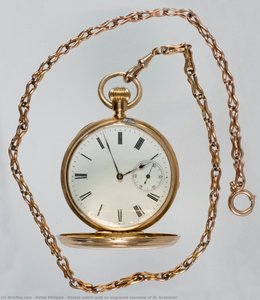
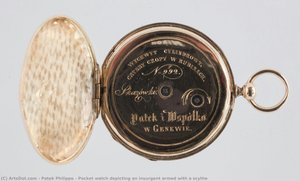
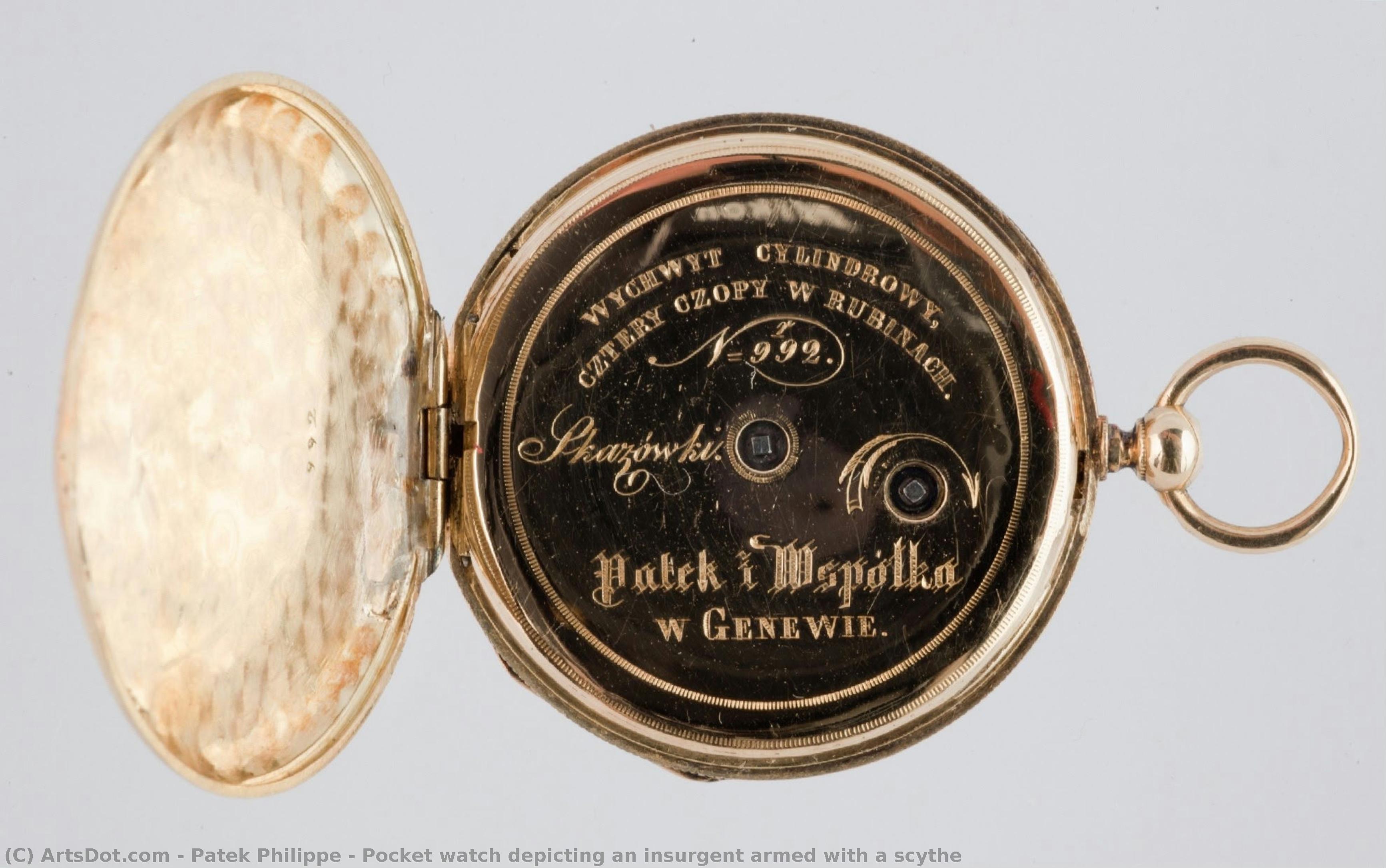
Pocket watch depicting an insurgent armed with a scythe


 Read More
Hand Made Oil Reproduction
Hand-painted oil on canvas in your size and frame, made to order by our artists. ( Buy Print Buy Image)




































Pick from our preset sizes that match the artwork's original proportions.

You may enter your own dimensions to fit a specific frame or space. If your selected size does not match the original image's proportions, we will either crop the artwork or extend the painting with additional hand-painted elements. A digital mockup will be sent for your approval before production begins.
Please note that the on-screen preview does not reflect the actual cropping or extension. Only the mockup will accurately show the final composition.
While custom sizes are available, we recommend selecting a dimension from the predefined list to preserve the original proportions.
After order, ArtsDot.com team will email client for instructions and provide a mockup preview
Worldwide Delivery () in 3/4 weeks instead of standard 5 weeks. (25 August). No compromise on quality.

Free Worldwide Express Shipping

High-Quality Linen Canvas

Full Shipping Insurance

Customs Tax Refund Guarantee

True Color Matching Guarantee

60-Day Return Policy (Defects Only)

100% Money-Back Guarantee

Bulk Discount Offer
 Glass option is only available in size under 110 CM

Pocket watch depicting an insurgent armed with a scythe
Reproduction Medium
Reproduction Size
-


Total Price
$ 263
Artwork Description
Related Artworks





Artist Biography
Patek Philippe: A Legacy Forged in Time and Art
The name Patek Philippe resonates with a singular blend of precision, artistry, and enduring legacy – a testament to over 175 years of Swiss watchmaking excellence. More than simply a manufacturer, Patek Philippe represents a lineage of innovation, meticulous craftsmanship, and a profound respect for horological tradition. Born in the heart of Geneva in 1839, the company’s origins are intertwined with two visionary men: Antoni Patek, a Polish immigrant with a keen eye for detail, and Adrien Philippe, a brilliant French inventor renowned for his ingenious escapement mechanisms. Their collaboration marked the genesis of what would become one of the world's most revered names in luxury timekeeping.
Early life and career laid the foundation for Patek’s distinctive approach. Antoni Patek, initially involved in trade and later recognizing the burgeoning potential of watchmaking, sought out Adrien Philippe’s expertise. Philippe’s innovative escapement designs – particularly the “Pallet-Wheel” escapement – dramatically improved accuracy and reliability, a crucial step forward in the evolution of mechanical watches. The partnership formally established as Patek & Cie. in 1845, quickly gained recognition for producing exquisitely crafted pocket watches, often adorned with intricate engravings and enamel work. These early pieces weren’t merely functional instruments; they were miniature works of art, reflecting a commitment to both technical mastery and aesthetic beauty.
The Artistic Soul: Beyond the Movement
While Patek Philippe is undeniably celebrated for its groundbreaking watchmaking techniques – innovations like the perpetual calendar, minute repeater, and tourbillon are testaments to their relentless pursuit of perfection – it’s crucial to acknowledge the artist within the company's history. Antoni Patek himself possessed a remarkable talent for painting, creating evocative landscapes and portraits that showcased his artistic sensibility. These paintings, often depicting scenes from Polish folklore or historical events, reveal a deep connection between art and craftsmanship—a parallel dedication to detail, precision, and emotional resonance.
Notable works such as “Tree of Hope” and “Ditch at Place de la Concorde,” displayed in the Musée départemental Maurice Denis in France, offer glimpses into Patek’s artistic vision. These paintings demonstrate a mastery of color, composition, and subject matter, suggesting an underlying philosophy that informed his approach to watchmaking – a desire to capture beauty, complexity, and enduring value. The influence of these artistic pursuits is subtly woven throughout the company's history, shaping its aesthetic standards and reinforcing its commitment to creating objects of exceptional beauty alongside unparalleled functionality.
A Family Legacy: Stern Ownership and Independent Craftsmanship
Following Antoni Patek’s death in 1877, his sons continued the family business. The company evolved into Patek Philippe & Cie., eventually becoming part of the Stern family's holdings in 1932. This transition marked a pivotal moment, preserving the company’s independent spirit while benefiting from the financial stability and strategic guidance of the Sterns. The Stern family has maintained this independence for nearly a century, a remarkable feat in the increasingly consolidated world of luxury goods.
The Patek Philippe Museum, established in Geneva in 1983, stands as a testament to this legacy. More than just a repository of historical timepieces, it’s a living laboratory where visitors can witness the intricate processes involved in watchmaking – from the creation of individual components to the assembly of complex movements. The museum also houses a vast library dedicated to horological history and research, ensuring that the art of watchmaking continues to be nurtured for generations to come.
Innovation and Enduring Influence
Throughout its history, Patek Philippe has consistently pushed the boundaries of watchmaking innovation. The company’s commitment to pushing technical limits is exemplified by the Henry Graves Supercomplication (no. 198.385), a truly astonishing timepiece that incorporated an unprecedented 24 complications – including astronomical calculations and a celestial map of New York City as seen from Graves's apartment. This masterpiece, sold for a record-breaking sum in 1999, remains the most complicated mechanical watch ever created.
Today, Patek Philippe continues to uphold its reputation for excellence, producing watches that are both technically sophisticated and aesthetically refined. The brand’s enduring influence is evident not only in the high regard it commands among collectors but also in its role as a benchmark for luxury watchmaking worldwide. Patek Philippe's commitment to quality, innovation, and artistic expression ensures that its legacy will continue to inspire and captivate for centuries to come.
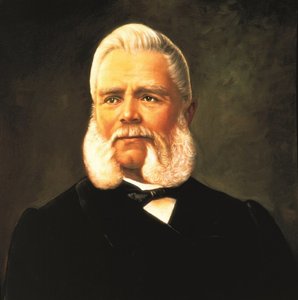
patek philippe
1839 - 1894 , Switzerland
Quick Facts
- Artistic Movement Or Style: Luxury watchmaking & painting
- Artists Or Movements Influenced By This Artist: [None]
- Artists Who Influenced This Artist: [None]
- Date Of Birth: 1839
- Date Of Death: 1894
- Full Name: Patek Philippe
- Nationality: Swiss
- Notable Artworks:
- Tree of Hope
- Ditch at Place de la Conc
- Place Of Birth: Geneva, Switzerland