 Preview
 Send
Send Share
Share
 Details

 Download
 Similars
 X-Ray
X-Ray Diaporama
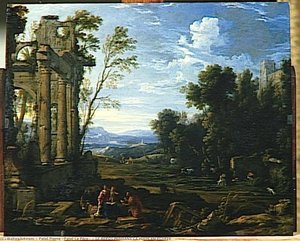
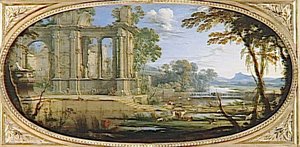
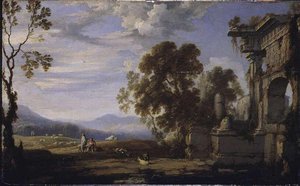
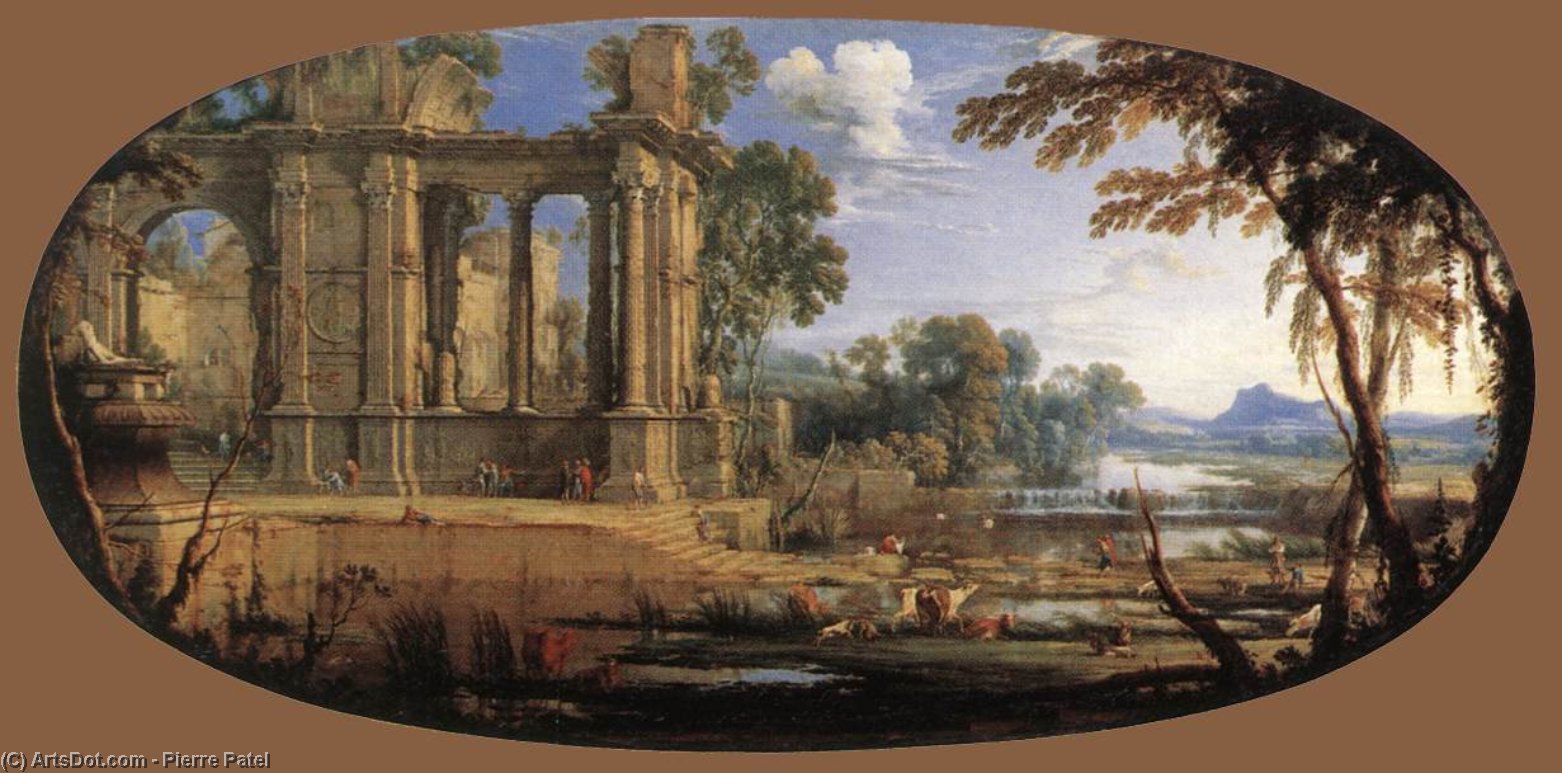
Landscape with Ruins
 Oil On Canvas
- WallArt
- Baroque
 1646
1646- Early Modern
 73.0 x 150.0 cm
 The Louvre
 Read More
Hand Made Oil Reproduction
Hand-painted oil on canvas in your size and frame, made to order by our artists. ( Buy Print Buy Image)




P118B $10

P118H $10

P118W $10

P438Z $10

P508JH $12

P508YH $12

P805H $10

P805Z $10

P919BZ $10

P919G $10

P919XJ $10

P959ZH $10

P968JZ $12

W106C $8

W218G $10

W218JH $8

W218Y $10

W307PJ $10

W316G $10

W316PJ $8

W316Y $10

W398PJ $8

W4111J $10

W500HY $15

W500JH $15

W692G $12

W849H $8

W940BG $15

W953PJ $8




Pick from our preset sizes that match the artwork's original proportions.

You may enter your own dimensions to fit a specific frame or space. If your selected size does not match the original image's proportions, we will either crop the artwork or extend the painting with additional hand-painted elements. A digital mockup will be sent for your approval before production begins.
Please note that the on-screen preview does not reflect the actual cropping or extension. Only the mockup will accurately show the final composition.
While custom sizes are available, we recommend selecting a dimension from the predefined list to preserve the original proportions.
After order, ArtsDot.com team will email client for instructions and provide a mockup preview
Worldwide Delivery () in 3/4 weeks instead of standard 5 weeks. (17 August). No compromise on quality.

Free Worldwide Express Shipping

High-Quality Linen Canvas

Full Shipping Insurance

Customs Tax Refund Guarantee

True Color Matching Guarantee

60-Day Return Policy (Defects Only)

100% Money-Back Guarantee

Bulk Discount Offer
 Glass option is only available in size under 110 CM

Landscape with Ruins
Reproduction Medium
Reproduction Size
-


Total Price
$ 263
Artwork Description
A Timeless Encounter with Antiquity
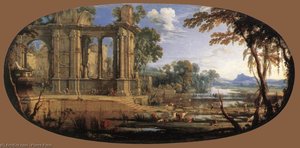
In the heart of Pierre Patel’s 1646 masterpiece, Landscape with Ruins, time seems to decelerate, inviting the viewer into a world where the grandeur of the past and the persistence of nature exist in a delicate, eternal dance. This breathtaking oil on canvas, currently preserved within the hallowed halls of the Musée du Sobie in Paris, serves as a profound meditation on the passage of eras. At its center, the skeletal remains of ancient stone columns and majestic arches rise from the earth, their weathered surfaces telling tales of a forgotten civilization. These ruins are not merely static structures; they are living witnesses to history, partially reclaimed by creeping vegetation and lush greenery, suggesting a poignant cycle of human ambition and natural reclamation.
The composition is a masterclass in classical balance, utilizing a sophisticated perspective that draws the eye through a layered landscape toward a distant, hazy mountain range. Patel employs a technique reminiscent of the Baroque period, where the dramatic interplay of light and shadow—chiaroscuro—creates a palpable sense of depth and atmosphere. The sunlight filters through a partly cloudy sky, casting soft glows upon the figures scattered throughout the scene. These small, industrious figures, engaged in their daily rhythms near a reflective body of water, provide a vital human element that grounds the epic scale of the ruins, offering a sense of scale and a touch of pastoral tranquility to an otherwise monumental setting.
The Harmony of Earth and Ether
Color plays a pivotal role in establishing the emotional resonance of this work. Patel utilizes a sophisticated palette dominated by rich, earthy tones—ochres, deep browns, and muted terracottas—which are harmoniously balanced by the refreshing blues of the sky and the vibrant, life-affirming greens of the foliage. This chromatic equilibrium creates an atmosphere of profound serenity, making the painting an ideal centerpiece for spaces designed for contemplation and calm. The texture of the paint itself, rendered with meticulous detail, allows the viewer to almost feel the roughness of the ancient stone and the softness of the surrounding meadows.
For the discerning collector or interior designer, Landscape with Ruins offers more than just aesthetic beauty; it offers a narrative of resilience and continuity. The painting evokes a sense of "memento mori"—a reminder of the transience of life—yet it does so without melancholy, instead celebrating the enduring beauty of the natural world. Whether placed in a grand library, a sophisticated salon, or a contemporary living space, a high-quality reproduction of this work brings with it an aura of historical prestige and a window into the soul of the 17th century. It is an invitation to pause, to breathe, and to reconnect with the timeless elegance of the classical tradition.
Related Artworks
Artist Biography
Pierre Patel (1605 – 1676): The Poet of Roman Campagna
The name Pierre Patel, a figure often overshadowed by the titans of 17th-century French art, nevertheless holds a unique and quietly compelling place in the history of landscape painting. Born in Picardy around 1605, Patel wasn’t a painter who stormed onto the scene with dramatic innovation; rather, he cultivated a deeply considered style, meticulously building upon the foundations laid by his predecessors while imbuing them with a distinctly personal vision. His legacy isn't one of revolutionary techniques, but of a profound understanding of light, atmosphere, and the evocative power of classical ruins – a fascination that would define his artistic output for over four decades.
Patel’s early life remains somewhat shrouded in mystery, though he was admitted to the Guild of Saint-Germain-des-Prés in 1633 and subsequently joined the Académie de Saint-Luc in 1635. These affiliations marked his formal entry into the Parisian art world, a hub already brimming with talent and influence. Crucially, Patel’s artistic development was profoundly shaped by his exposure to the work of Claude Lorrain, whose idealized landscapes – characterized by their balanced compositions, serene atmospheres, and elegant treatment of classical motifs – exerted a powerful pull on young artists. However, Patel didn't simply mimic Claude; he absorbed the master’s principles and then subtly, yet significantly, transformed them into something uniquely his own.
The Influence of Rome and the Italian Landscape
Patel’s artistic journey took him to Italy, a pivotal moment that fundamentally altered his perspective. He spent several years in Rome, immersing himself in the grandeur of the Roman ruins – the Colosseum, the Forum, the Pantheon – and absorbing the spirit of the Italian landscape. These experiences ignited within him an enduring passion for depicting these ancient sites, transforming them into evocative settings imbued with a sense of melancholy beauty and timelessness. Unlike many of his contemporaries who sought to replicate the Italian scene directly, Patel approached it through the lens of memory and imagination, creating landscapes that were both faithful to their subject matter and deeply personal in their expression.
This fascination with Roman ruins is perhaps most evident in his series of paintings depicting the Campagna Romana – the fertile plains surrounding Rome. These works are not mere topographical representations; they’re carefully constructed narratives, populated by solitary figures contemplating the remnants of a lost civilization. The use of light and shadow is particularly masterful, creating an atmosphere of profound stillness and introspection. Patel's compositions often feature dramatic diagonals, drawing the eye towards distant ruins while simultaneously emphasizing the vastness and solitude of the landscape.
Technique and Style
Patel’s technique was characterized by a meticulous attention to detail and a remarkable ability to capture the subtle nuances of light and atmosphere. He employed a refined palette, favoring muted earth tones – ochres, browns, greens – that evoked the weathered surfaces of stone and the hazy quality of distant landscapes. His brushwork was smooth and controlled, creating a sense of depth and perspective through careful layering of paint. While influenced by Claude’s balanced compositions, Patel introduced a greater degree of dynamism into his paintings, utilizing diagonal lines and asymmetrical arrangements to create a more engaging visual experience.
A key element of Patel's style was his masterful use of atmospheric perspective – the technique of rendering distant objects as paler and less distinct than those in the foreground. This created a powerful illusion of depth and distance, drawing the viewer’s eye into the heart of the landscape. His paintings are not simply representations of scenery; they are carefully constructed illusions that invite contemplation and reflection.
Legacy and Historical Significance
Despite often being overshadowed by more flamboyant contemporaries, Pierre Patel's contribution to French landscape painting is significant. He represents a crucial link between the idealized landscapes of Claude Lorrain and the emerging trends in 18th-century art. His meticulous attention to detail, his profound understanding of light and atmosphere, and his enduring fascination with classical ruins established him as a leading figure in the development of French landscape painting during the mid-17th century.
Patel’s influence extended far beyond his own lifetime. His paintings served as models for subsequent generations of artists, particularly those interested in depicting classical subjects and landscapes. The meticulous detail and atmospheric perspective that characterized his work would continue to inspire painters well into the 18th and 19th centuries. Today, Patel's works are treasured for their quiet beauty, their evocative atmosphere, and their enduring testament to the power of art to transport us to another time and place – a timeless echo of the Roman Campagna.
patel pierre (patel le père)
1605 - 1676
Quick Facts
- Artistic Movement Or Style: Classical & Italianate
- Artists Or Movements Influenced By This Artist: ['Early 19th-century landscape artists']
- Artists Who Influenced This Artist: ['Claude Lorrain']
- Date Of Birth: 1605
- Date Of Death: 1676
- Full Name: Pierre Patel (Patel le Père)
- Nationality: French
- Notable Artworks:
- Roman Campagna scenes
- Ruins in art
- Italianate landscapes
- Place Of Birth: Picardy, France
Related Articles

Renoir's Masterpieces: Explore 25 Iconic Paintings & Bring Art Home | ArtsDot
Explore 25 iconic Pierre-Auguste Renoir paintings! Discover the stories behind Impressionist masterpieces like 'Dance at Le Moulin de la Galette' & 'Luncheon of the Boating Party'. Find museum-quality art reproductions and elevate your home decor with ArtsDot.com.

Beyond the Horizon: 10 Landscape Masterpieces for Your Home Decor
Journey through 10 breathtaking landscape paintings by Monet, Van Gogh & more! Explore iconic artworks, artistic techniques & find inspiration for your home decor. Museum-quality reproductions at ArtsDot.com. Discover all masterpieces on ArtsDot.com

Romantic Landscapes: 10 Masterpieces for Your Home | ArtsDot
Journey through 10 Romantic landscape masterpieces by Friedrich, Turner & Cole. Explore emotional art, sublime nature scenes & iconic 19th-century paintings. Find museum-quality reproductions for your home at ArtsDot.com – discover the full collection online!

Evocations of Place: A Historical Journey Through Landscape Art
Explore the rich history of landscape art with ArtsDot. Discover renowned artists, movements like Impressionism & Romanticism, and expert guidance for collecting timeless pieces. Find your perfect serene escape today!

John Constable's Masterpieces: Explore 25 Iconic Landscapes for Your Home
Journey through John Constable's 25 most celebrated landscapes. Explore Romanticism, Dedham Vale & his masterful use of light in iconic paintings like 'Hay Wain'. Find museum-quality art reproductions and elevate your home decor on ArtsDot.com.