 Preview
 Send
Send Share
Share
 Details

 Download
 Similars
 X-Ray
X-Ray Diaporama
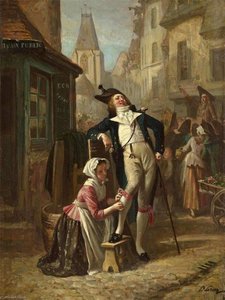
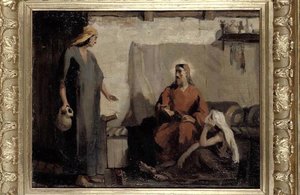
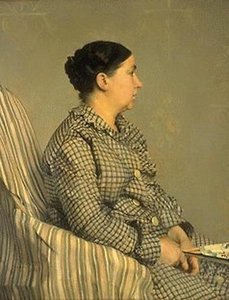
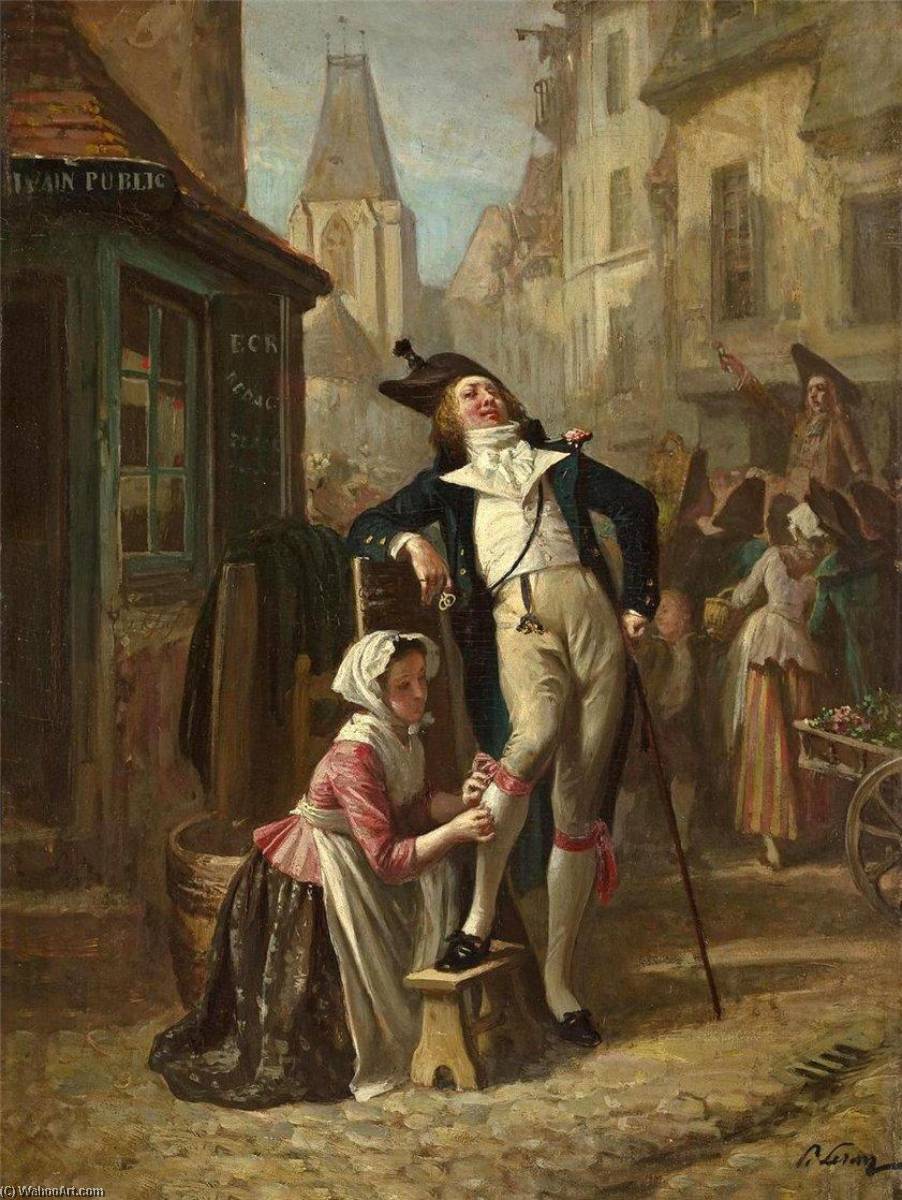
Mending the stocking
 Read More
Hand Made Oil Reproduction
Hand-painted oil on canvas in your size and frame, made to order by our artists. ( Buy Print Buy Image)




































Pick from our preset sizes that match the artwork's original proportions.

You may enter your own dimensions to fit a specific frame or space. If your selected size does not match the original image's proportions, we will either crop the artwork or extend the painting with additional hand-painted elements. A digital mockup will be sent for your approval before production begins.
Please note that the on-screen preview does not reflect the actual cropping or extension. Only the mockup will accurately show the final composition.
While custom sizes are available, we recommend selecting a dimension from the predefined list to preserve the original proportions.
After order, ArtsDot.com team will email client for instructions and provide a mockup preview
Worldwide Delivery () in 3/4 weeks instead of standard 5 weeks. (21 August). No compromise on quality.

Free Worldwide Express Shipping

High-Quality Linen Canvas

Full Shipping Insurance

Customs Tax Refund Guarantee

True Color Matching Guarantee

60-Day Return Policy (Defects Only)

100% Money-Back Guarantee

Bulk Discount Offer
 Glass option is only available in size under 110 CM

Mending the stocking
Reproduction Medium
Reproduction Size
-


Total Price
$ 263
Related Artworks









Artist Biography
Walter Richard Sickert: A Shadowy Figure of London’s Modernist Scene
Walter Richard Sickert, born in Germany in 1860 and tragically passing away in 1942, remains a compellingly enigmatic figure within the annals of British art. More than simply an artist, he was a keen observer of urban life, a master of capturing fleeting moments, and a pivotal influence on the development of modern British painting. His career unfolded against a backdrop of rapid social change – the rise of industrialization, the burgeoning metropolis of London, and the seismic shifts occurring within the art world itself. Sickert’s work isn't easily categorized; he resisted neat labels, preferring to navigate between Impressionism, Post-Impressionism, and ultimately, a uniquely personal style that anticipated many aspects of 20th-century modernism.Early Life and Influences – A European Education
Sickert’s early life was marked by movement and exposure to diverse artistic influences. Born in Germany, he spent his formative years traveling extensively throughout Europe, absorbing the styles of artists working across various movements. This itinerant upbringing instilled in him a cosmopolitan perspective and a deep appreciation for different cultural traditions. He studied at the Academy of Arts in Berlin, but found himself increasingly dissatisfied with the rigid academic approach. Crucially, he later moved to Paris, immersing himself in the vibrant artistic scene of the late 1880s and early 1890s. Here, he encountered the Impressionists – Monet, Renoir, Degas – whose emphasis on capturing light and atmosphere profoundly impacted his own work. However, Sickert wasn’t merely a follower; he developed a distinctive approach, often prioritizing observation over idealized representation. His time in Paris also exposed him to the darker undercurrents of urban life, a theme that would become increasingly prominent in his later paintings.The Camden Town Group and London’s Urban Landscape
Returning to England in 1894, Sickert became a central figure in the burgeoning Camden Town Group – a collective of artists who sought to capture the gritty reality of London's East End. This group, comprised of figures like Walter Russell, Vanessa Bell, and Duncan Grant, rejected the prevailing academic standards and embraced a more direct, often unflinching portrayal of urban life. Sickert’s paintings of London’s streets, pubs, and theaters are particularly notable for their atmospheric quality and their ability to evoke a sense of immediacy and authenticity. He eschewed grand vistas in favor of intimate scenes – a crowded pub, a dimly lit music hall, a solitary figure hurrying through the rain-slicked streets. His use of loose brushwork and muted colors created a palpable sense of mood and atmosphere, reflecting the city’s energy and its underlying melancholy.Technique and Subject Matter: Shadows and Portraits
Sickert's artistic technique was characterized by a deliberate ambiguity and a fascination with the interplay of light and shadow. He often worked from photographs – newspaper cuttings, theatrical posters, and even his own sketches – using them as starting points for his paintings rather than aiming for photographic realism. This approach allowed him to manipulate perspective and create unsettlingly distorted images. His subjects were equally diverse: portraits of Londoners—often marginalized figures like prostitutes, street musicians, and dockworkers—became a recurring motif. He was particularly interested in capturing the psychological states of his subjects, conveying their loneliness, vulnerability, and resilience through subtle gestures and expressions. His portraits are not idealized representations but rather insightful glimpses into the lives of ordinary people. He also produced striking scenes of London’s nightlife – music halls, theaters, and gambling dens—often imbued with a sense of intrigue and danger.Legacy and Historical Significance
Walter Richard Sickert's influence on British art is considerable, though often understated. He paved the way for subsequent generations of artists who sought to explore the complexities of modern urban life. His willingness to challenge conventional artistic norms and his unflinching portrayal of London’s underbelly established a precedent for a more direct and emotionally resonant approach to painting. Despite persistent rumors linking him to the Jack the Ripper murders – a theory largely dismissed by historians – Sickert remains a fascinating and complex figure, whose shadowy paintings continue to captivate and intrigue viewers today. His work stands as a testament to his keen observation skills, his artistic versatility, and his enduring contribution to the development of modern British art. His legacy lies not just in the individual works he created but also in the spirit of experimentation and social commentary that he embodied.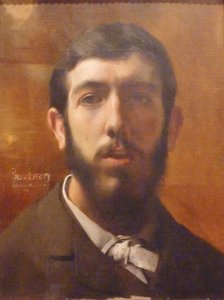
paul alexandre alfred leroy
1860 - 1942
Quick Facts
- Artistic Movement Or Style: British Impressionism
- Artists Or Movements Influenced By This Artist: ['Post-Impressionism']
- Artists Who Influenced This Artist: ['Impressionists']
- Date Of Birth: May 31, 1860
- Date Of Death: January 22, 1942
- Full Name: Walter Richard Sickert
- Nationality: British
- Notable Artworks:
- Brighton Pierrots
- London Group
- Camden Town Group
- Place Of Birth: Berlin, Germany