 Preview
 Send
Send Share
Share
 Details

 Download
 Similars
 X-Ray
X-Ray Diaporama
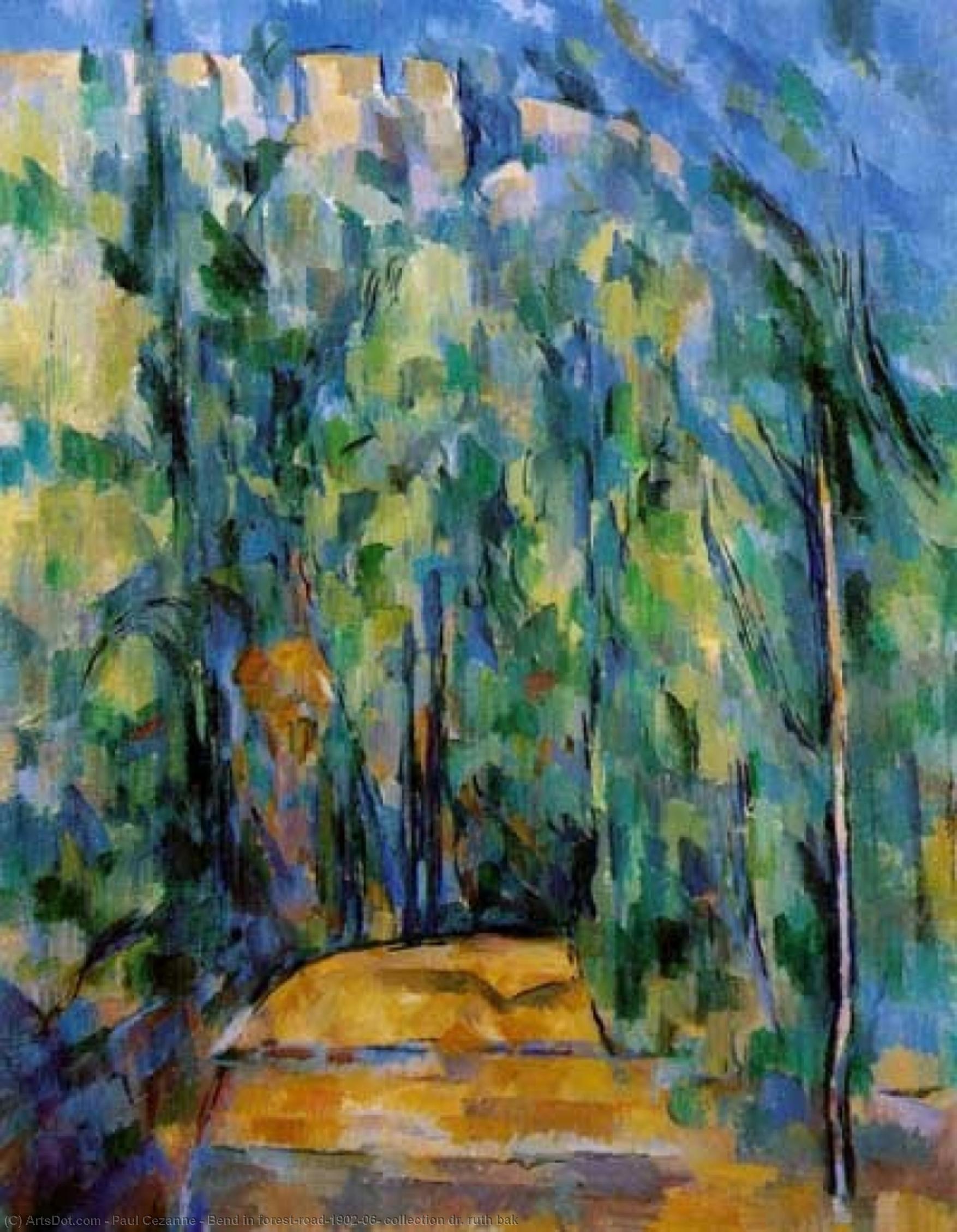
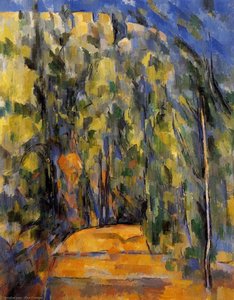
Bend in forest-road,1902-06, collection dr. ruth bak

 Read More
Hand Made Oil Reproduction
Hand-painted oil on canvas in your size and frame, made to order by our artists. ( Buy Print Buy Image)




































Pick from our preset sizes that match the artwork's original proportions.

You may enter your own dimensions to fit a specific frame or space. If your selected size does not match the original image's proportions, we will either crop the artwork or extend the painting with additional hand-painted elements. A digital mockup will be sent for your approval before production begins.
Please note that the on-screen preview does not reflect the actual cropping or extension. Only the mockup will accurately show the final composition.
While custom sizes are available, we recommend selecting a dimension from the predefined list to preserve the original proportions.
After order, ArtsDot.com team will email client for instructions and provide a mockup preview
Worldwide Delivery () in 3/4 weeks instead of standard 5 weeks. (16 August). No compromise on quality.

Free Worldwide Express Shipping

High-Quality Linen Canvas

Full Shipping Insurance

Customs Tax Refund Guarantee

True Color Matching Guarantee

60-Day Return Policy (Defects Only)

100% Money-Back Guarantee

Bulk Discount Offer
 Glass option is only available in size under 110 CM

Bend in forest-road,1902-06, collection dr. ruth bak
Reproduction Medium
Reproduction Size
-


Total Price
$ 263
Artwork Description
Bend in forest-road,1902-06, collection dr. ruth bak
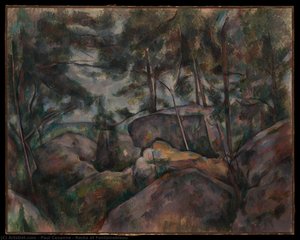
Paul Cézanne’s Bend in forest-road stands as a cornerstone of Post-Impressionism, marking a decisive break from the fleeting impressions favored by its predecessors and establishing a new visual language that profoundly influenced subsequent artistic movements. Created between 1902 and 1906 during Cézanne’s prolific period in Provence, this painting resides within the esteemed collection of Dr. Ruth Bak and exemplifies his unwavering dedication to exploring fundamental geometric forms and capturing atmospheric depth—concepts that would become central to Cubism.Characteristics of Post-Impressionism
Post-Impressionism wasn't merely a stylistic continuation; it was an intellectual rebellion against Impressionism’s preoccupation with optical sensations. Artists like Cézanne, Gauguin, and Seurat interrogated the very nature of perception, rejecting the illusionistic techniques championed by Monet and Renoir in favor of simplified shapes and expressive color palettes. Cézanne's approach—characterized by distortion, exaggeration, and a deliberate flattening of perspective—aimed to represent not what the eye sees but what the mind perceives as essential to the subject matter. As eloquently summarized in this art movement introduction, it prioritized structural integrity over photographic realism.Cézanne’s distinctive style is immediately apparent in Millstone and Cistern Under Trees, where he meticulously renders the contours of objects—a technique known as “contour drawing”—to convey their underlying structure. This method is equally present in Bend in forest-road, where Cézanne employs bold brushstrokes and vibrant hues—primarily greens accented by yellows and blues—to imbue the scene with palpable atmosphere.
Key Features of the Painting
The composition of Bend in forest-road is strikingly deliberate. The winding road snakes through a grove of trees—approximately thirteen visible specimens—creating an illusion of depth that transcends conventional linear perspective. Cézanne’s masterful use of cylindrical shapes—evident in the trunks of the trees—reinforces this structural element, grounding the painting in geometric precision. Furthermore, the interplay between light and shadow sculpts the forms, generating a sense of volume and dynamism that captures the essence of the natural world. The color scheme contributes significantly to the mood, conveying tranquility and serenity through its harmonious blend of greens and complementary hues.As a handmade oil painting reproduction, Bend in forest-road allows viewers to appreciate Cézanne’s groundbreaking vision—a testament to his unwavering commitment to redefining artistic representation.
Historical Context and Significance
Cézanne's work emerged during a period of intense intellectual ferment, fueled by advancements in science and philosophy. The burgeoning interest in geological theories challenged traditional notions of space and time, prompting artists to reconsider how they could depict reality beyond mere visual appearance. Cézanne’s exploration of form and color anticipated the radical innovations of Cubism—a movement spearheaded by Picasso and Braque—which dismantled perspectival illusion altogether, presenting multiple viewpoints simultaneously on a single canvas. Cézanne's influence extended far beyond Cubism, shaping the aesthetic sensibilities of subsequent generations of artists and cementing his legacy as one of the most important figures in modern art.For more information on Paul Cézanne and his artwork, visit this page.
Related Artworks
Artist Biography
A Revolutionary Vision: The Life and Art of Paul Cézanne
Paul Cézanne, born in Aix-en-Provence in 1839, stands as a monumental figure bridging the gap between the fleeting impressions of Impressionism and the fragmented forms of Cubism. His journey was not one of immediate acclaim; rather, it was a slow burn of artistic exploration, marked by periods of self-doubt and critical dismissal, ultimately culminating in a legacy that would irrevocably alter the course of modern art. Born to a prosperous family – his father initially a hatmaker who later became a banker – Cézanne enjoyed a financial security unusual for aspiring artists, allowing him the freedom to dedicate himself to his passion without the immediate pressures of commercial success. Though initially steered towards a legal career by his father’s ambitions, the pull of artistic expression proved too strong, and he eventually abandoned law to pursue painting, a decision that would define his life. Early influences included the Romanticism prevalent in his youth and the Barbizon school's dedication to landscape, but it was through encounters with artists like Paul Gauguin and Georges Seurat, and their innovative approaches to color and form, that Cézanne began to forge his own distinct path.From Darkness to Structure: The Evolution of a Style
Cézanne’s early work often reflected the dramatic, emotionally charged themes characteristic of Romantic painting – dark palettes and expressive brushwork dominating his canvases. However, this initial phase was merely a stepping stone towards a far more analytical and groundbreaking approach. Dissatisfied with simply capturing fleeting impressions of light, as favored by the Impressionists, Cézanne embarked on a quest to understand and represent the underlying structure of objects themselves. He sought not just *what* he saw, but *how* he perceived the fundamental forms that constituted reality. This led him to break down natural shapes into their geometric equivalents – cones, cylinders, spheres – anticipating the Cubist revolution decades before it materialized. His technique became characterized by small, repetitive brushstrokes, meticulously layered to build up complex fields of color and texture, creating a sense of solidity and depth previously unseen in painting. He wasn’t interested in illusionistic space; instead, he often presented objects from multiple viewpoints simultaneously, challenging traditional notions of perspective and forcing the viewer to actively engage with the constructed nature of his compositions. This deliberate distortion wasn't arbitrary but rather an attempt to convey a more complete understanding of form, representing not just a single moment in time but a synthesis of perception.Landscapes, Still Lifes, and the Human Form: Key Works and Recurring Motifs
Cézanne’s oeuvre is remarkably diverse, encompassing landscapes, still lifes, portraits, and depictions of bathers, yet all are unified by his unique approach to form and color. The Pond at Jas de Bouffan, painted in 1880, exemplifies his landscape work, showcasing his ability to capture the essence of nature through a careful arrangement of shapes and tones. Portrait of Émile Zola, created in 1866, reveals his developing style and offers a compelling glimpse into the intellectual intensity of his close friend and fellow writer. His still lifes, such as those featuring apples and other fruit, are not merely representations of objects but rather explorations of volume, light, and spatial relationships. The Mont Sainte-Victoire series became an obsession for Cézanne, a recurring motif that allowed him to relentlessly investigate form and perspective over decades. These paintings aren’t simply depictions of a mountain; they are studies in how we perceive depth, volume, and the interplay of light and shadow. Finally, his series of Bathers, depicting nude figures in idyllic landscapes, represent a profound exploration of the human form and its connection to nature, often imbued with a sense of timelessness and quiet contemplation.A Legacy Forged in Innovation: Cézanne’s Influence on Modern Art
Paul Cézanne's impact on subsequent generations of artists is immeasurable. He is widely regarded as the “father of modern art” for his groundbreaking contributions to pictorial language, paving the way for many of the major artistic movements of the 20th century. Pablo Picasso and Georges Braque were deeply indebted to Cézanne’s emphasis on geometric forms and multiple perspectives, which became central tenets of Cubism. His bold use of color also inspired the Fauvist movement, led by artists like Henri Matisse, who embraced vibrant, non-naturalistic hues. Even Surrealist artists found resonance in Cézanne’s exploration of subjective perception and psychological depth. Beyond specific movements, Cézanne's insistence on the artist's personal vision and his rejection of traditional academic constraints liberated generations of painters to explore new forms of expression. He challenged the very definition of representation, shifting the focus from mimicking reality to constructing a visual experience based on underlying structure and subjective perception. His death in 1906 marked not an end but a beginning – the dawn of a new era in art history, one profoundly shaped by his revolutionary vision.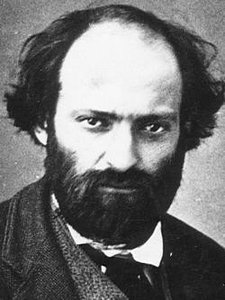
Paul Cézanne
1839 - 1906 , France
Quick Facts
- Artistic Movement Or Style: Post-Impressionism
- Artists Or Movements Influenced By This Artist:
- Cubism
- Fauvism
- Surrealism
- Artists Who Influenced This Artist:
- Romanticism
- Barbizon school
- Paul Gauguin
- Georges Seurat
- Date Of Birth: 1839-01-19
- Date Of Death: 1906-10-22
- Full Name: Paul Cézanne
- Nationality: French
- Notable Artworks:
- The Pond at Jas de Bouffan
- Portrait of Émile Zola
- Forest
- Mont Sainte-Victoire series
- The Bathers
- Place Of Birth: Aix-en-Provence, France
Related Articles

Cézanne's Masterpieces: 25 Iconic Artworks to Transform Your Space
Journey through 25 iconic artworks by Paul Cézanne – a master of Impressionism and Post-Impressionism. Explore his landscapes, still lifes, and the stories behind these timeless masterpieces. Discover museum-quality reproductions & curated decor at ArtsDot.com.
Impressionistic Landscapes: 10 Masterpieces That Changed Art & Decor
Journey into the heart of Impressionism! Explore 10 masterpieces by Monet, Renoir & Degas that revolutionized landscape art. Discover their stories, techniques & find museum-quality reproductions to elevate your home decor on ArtsDot.com.
Paul Klee's Masterpieces: Explore 25 Iconic Paintings & Prints | ArtsDot
Journey through Paul Klee's 25 most iconic paintings & prints. Explore his abstract style, Bauhaus influence, and vibrant color palettes. Find museum-quality art reproductions & decor ideas at ArtsDot.com. Discover all masterpieces online.
Beyond Impressionism: Exploring the Emotional Depth of Post-Impressionist Painting
Explore the profound emotional depth & innovative techniques of Post-Impressionism with ArtsDot. Discover Cézanne, Van Gogh, Gauguin & more – and their lasting impact on modern art.
Beyond Impressionism: Exploring Emotional Depth & Formal Innovation in Post-Impressionist Art
Explore the profound emotional depth & formal innovations of Post-Impressionism with our expert guide. Discover Cézanne, Van Gogh, Gauguin & more. Learn about art history, collecting, and investing in this pivotal movement.