 Preview
 Send
Send Share
Share
 Details

 Download
 Similars
 X-Ray
X-Ray Diaporama
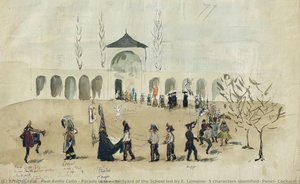
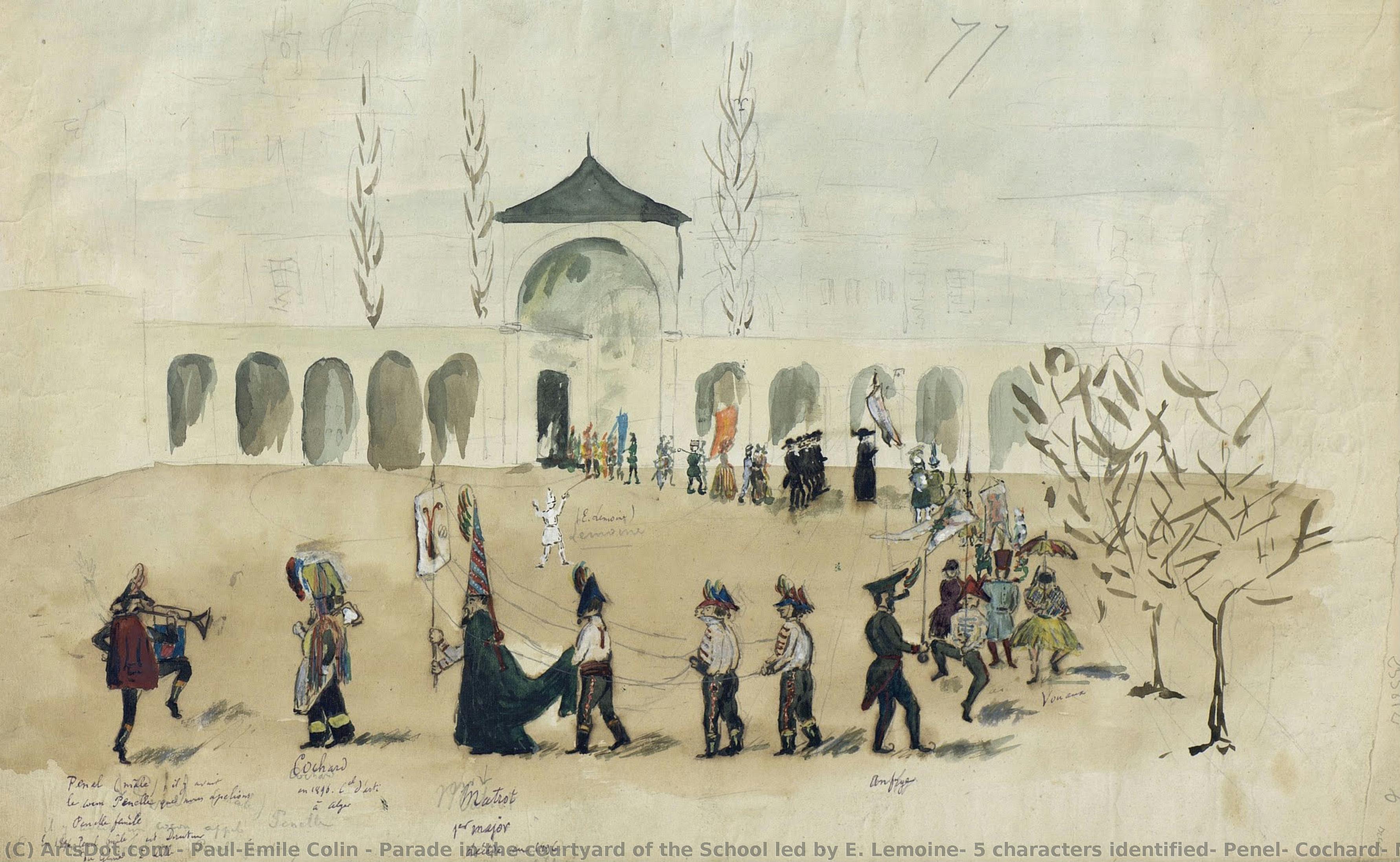
Parade in the courtyard of the School led by E. Lemoine: 5 characters identified, Penel, Cochard, Matrot, Anfrye, Vouaux

 Read More
Hand Made Oil Reproduction
Hand-painted oil on canvas in your size and frame, made to order by our artists. ( Buy Print Buy Image)




































Pick from our preset sizes that match the artwork's original proportions.

You may enter your own dimensions to fit a specific frame or space. If your selected size does not match the original image's proportions, we will either crop the artwork or extend the painting with additional hand-painted elements. A digital mockup will be sent for your approval before production begins.
Please note that the on-screen preview does not reflect the actual cropping or extension. Only the mockup will accurately show the final composition.
While custom sizes are available, we recommend selecting a dimension from the predefined list to preserve the original proportions.
After order, ArtsDot.com team will email client for instructions and provide a mockup preview
Worldwide Delivery () in 3/4 weeks instead of standard 5 weeks. (27 August). No compromise on quality.

Free Worldwide Express Shipping

High-Quality Linen Canvas

Full Shipping Insurance

Customs Tax Refund Guarantee

True Color Matching Guarantee

60-Day Return Policy (Defects Only)

100% Money-Back Guarantee

Bulk Discount Offer
 Glass option is only available in size under 110 CM

Parade in the courtyard of the School led by E. Lemoine: 5 characters identified, Penel, Cochard, Matrot, Anfrye, Vouaux
Reproduction Medium
Reproduction Size
-


Total Price
$ 263
Related Artworks









Artist Biography
A Life Dedicated to the French Landscape and Historical Echoes
Paul-Émile Colin, a name perhaps less celebrated than some of his contemporaries, nevertheless occupies a significant place in the pantheon of late 19th and early 20th century French art. Born on August 16, 1867, in Lunéville, France, Colin’s journey to becoming a respected painter and engraver was one marked by an initial pursuit of medicine that ultimately yielded to the compelling call of artistic expression. He began his academic path studying medicine in Nancy, but Paris beckoned – not for further medical training, but as a center of artistic learning. In 1887, he relocated to the capital, enrolling at the prestigious École des Beaux-Arts de Paris, a crucible where generations of French masters honed their skills. This shift wasn’t merely a change in discipline; it was a fundamental reorientation of his life's purpose.From Academic Training to a Personal Vision
Colin’s artistic development wasn’t characterized by radical breaks with tradition, but rather a gradual refinement of academic principles into a distinctly personal style. The École des Beaux-Arts provided him with a solid foundation in draftsmanship and composition, skills that would prove invaluable throughout his career. However, he quickly gravitated towards landscape painting, finding inspiration in the natural beauty of the French countryside. He wasn’t interested in grand historical narratives or allegorical scenes; instead, Colin sought to capture the subtle nuances of light and atmosphere, the quiet dignity of rural life, and the enduring presence of France's architectural heritage. His early works demonstrate a careful observation of nature, rendered with meticulous detail and a restrained palette. He wasn’t striving for dramatic effect but rather for an authentic representation of the world around him – a world imbued with a sense of tranquility and timelessness.The Etchings: Preserving Monuments in Silverpoint
While Colin is recognized as a painter, his contributions to engraving are equally noteworthy. He became particularly renowned for his etchings of historical monuments throughout France. This wasn’t simply an exercise in technical skill; it was an act of preservation. In the late 19th century, many of these structures were threatened by neglect or modernization. Colin's detailed and evocative etchings served as a visual record, capturing their architectural splendor before they succumbed to the ravages of time. He approached these works with the same sensitivity he brought to his landscapes, emphasizing not just the physical structure but also the historical weight and cultural significance of each site. These etchings are often characterized by a delicate interplay of light and shadow, creating an almost photographic realism that belies their handcrafted nature. He masterfully used the medium to convey texture, depth, and atmosphere, transforming stone and mortar into tangible forms on paper.Recognition and Legacy
Throughout his career, Paul-Émile Colin exhibited regularly in Paris salons and galleries, gradually gaining recognition for his quiet yet compelling work. His paintings and etchings found their way into the collections of several museums, most notably the Musée d’Orsay, a testament to his enduring artistic merit. Although he didn't achieve widespread fame during his lifetime, his works continue to be appreciated today for their technical skill, atmospheric sensitivity, and historical importance. Colin died on October 28, 1949, in Bourg-la-Reine, France, leaving behind a body of work that offers a poignant glimpse into the French landscape and architectural heritage of his time. His art serves as a reminder of the beauty that can be found in the everyday, and the importance of preserving our cultural past for future generations.Influences and Artistic Context
Colin’s work reflects the influence of several key artistic movements prevalent during his lifetime. The Barbizon school, with its emphasis on plein air painting and realistic depictions of nature, undoubtedly played a role in shaping his landscape style. He also drew inspiration from the etchings of artists like Charles-François Daubigny and Jean-Baptiste Camille Corot, masters of atmospheric perspective and tonal nuance. However, Colin wasn’t simply imitating these predecessors; he synthesized their techniques with his own unique sensibility, creating works that are both grounded in tradition and distinctly personal. He operated within a broader context of 19th-century French Realism, seeking to represent the world as it was – without idealization or romantic embellishment.- Barbizon School influence on plein air painting.
- Etching techniques inspired by Daubigny and Corot.
- Alignment with 19th-century French Realism principles.
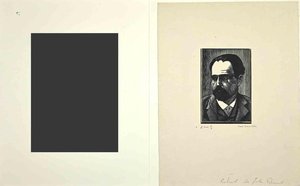
paul-émile colin
1867 - 1949 , France
Quick Facts
- Artistic Movement Or Style: Landscape painting, Etching
- Date Of Birth: August 16, 1867
- Date Of Death: October 28, 1949
- Full Name: Paul-Émile Colin
- Nationality: French
- Place Of Birth: Lunéville, France