

 Preview
 Send
Send Share
Share
 Details

 Download
 Similars
 X-Ray
X-Ray Diaporama
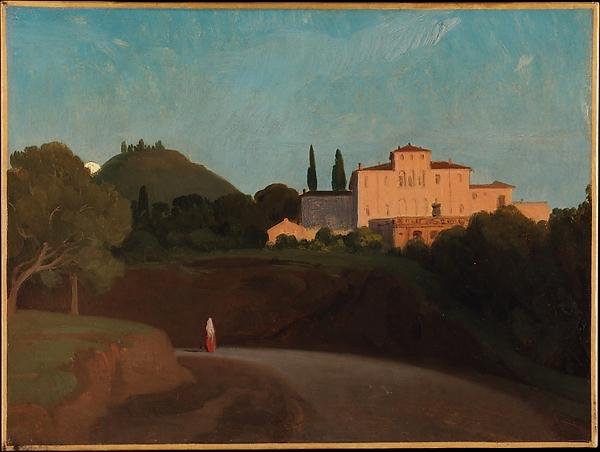
View of the Villa Torlonia, Frascati, at Dusk
 1834
1834 23.0 x 30.0 cm
 Read More
Purchase a high-resolution, enhanced digital image, far superior to the online preview.
Each file is meticulously prepared by our in-house specialists using advanced tools and expert manual retouching. We ensure every image has exceptional clarity, precise color accuracy, and fine detail.
The final file is delivered via email within 72 hours, optimized for immediate use in professional, editorial, and print environments. This is the same quality trusted by top-tier design studios, publishers, and galleries.
Digital Image
Download a high-resolution file for personal display, printing, and creative projects. ( Buy Print Buy Hand Made Painting)
Included in Every Digital Image Order
Expert Digital Delivery, Guaranteed
When you choose ArtsDot.com, you're not just getting an image - you're receiving a professionally enhanced digital artwork, crafted with precision and backed by a satisfaction guarantee. Here's everything that comes with your order, automatically:

Fast Email Delivery
Your high-resolution digital image file will be emailed to you within 72 hours of ordering - ready for immediate use.

AI-Enhanced Digital File
Your artwork is professionally optimized using advanced AI tools and manual editing, ensuring maximum detail, clarity, and color accuracy.

Free Lifetime Re-Delivery
Accidentally deleted or lost your file? No worries - we'll resend it to you anytime, free of charge.

No Import Fees - Ever
Enjoy your artwork instantly with zero customs, duties, or delivery fees - digital downloads are always tax-free.

Color Accuracy Guarantee
We ensure your digital image reflects the original colors as closely as possible using professional tools and color management.

60-Day Satisfaction Guarantee
If you're not satisfied with your digital image, we'll revise it or refund 100% within 60 days - no questions asked.

100% Money-Back Guarantee
Not satisfied? Get a full refund within 60 days of receiving your digital file - no questions asked.

Bulk Order Discounts
Buy 3 images, save 10% - Buy 5, save 15% - Buy 10+, save 20%. Great for creative projects, galleries, and agencies.
Related Artworks









Artist Biography
The Quiet Elegance of Paul Flandrin
In the grand, sweeping narrative of nineteenth-century French art, certain names resonate with thunderous fame, while others provide the essential, delicate textures that give the era its depth. Paul Jean Flandrin belongs to that second, more intimate category. Born in Lyon on May 28, 1811, he emerged from a family deeply rooted in the visual arts, the younger brother of the celebrated painters Auguste and Hippolyte Flandrin. While his siblings often commanded the spotlight of the Parisian salons, Paul carved out a legacy defined by a profound engagement with the spirit of his time, acting as a vital bridge between the structured discipline of Neoclassicism and the emotive, burgeoning naturalism that would soon transform the landscape genre.
Flandrin’s artistic journey was one of disciplined observation and self-driven exploration. His early training was shaped by the masters of Lyon, including the landscape and animal painter Antoine Duclaux and the sculptor Jean-François Legendre-Héral. This dual exposure to the organic grandeur of nature and the structural precision of sculpture provided him with a unique technical foundation. Seeking further refinement, he moved to Paris to study at the École des Beaux-Arts, eventually entering the prestigious studio of Dominique Ingres. Under the tutelage of Ingres, Flandrin absorbed the uncompromising pursuit of idealized form and meticulous accuracy—principles that would remain a cornerstone of his aesthetic even as his subject matter began to breathe with a more naturalistic vitality.
A Roman Odyssey and the Art of Landscape
The trajectory of Flandrin’s career was marked by a resilient spirit. Though he twice faced the heartbreak of failing to secure the prestigious Prix de Rome, he refused to let academic rejection stifle his ambition. Instead, he undertook a self-funded pilgrimage to Italy, joining his brother Hippolyte in Rome. This period proved transformative. Immersed in the Roman landscape tradition, Paul began to specialize in works that captured the light and atmosphere of the Italian countryside with a quiet, soulful intensity. It was during these years that he truly found his voice, moving beyond mere imitation to create landscapes that felt both classically composed and emotionally resonant.
His time in Rome also fostered a beautiful artistic synergy with his brother. Paul became a sought-after collaborator, frequently providing the lush, atmospheric landscape backgrounds for Hippolyte’s more prominent history paintings. This partnership allowed him to contribute to some of the most significant works of the era, weaving his naturalistic touch into the fabric of larger, more dramatic narratives. His ability to render the subtle shifts of dusk, the ruggedness of mountains, and the serene stillness of a villa at twilight—as seen in works like View of the Villa Torlonia, Frascati, at Dusk—demonstrates a mastery of light that transcends simple topography.
Legacy and Historical Significance
As the nineteenth century progressed, Flandrin’s work stood as a testament to the evolution of French painting. He did not merely cling to the past; rather, he utilized the technical rigor of the Neoclassical tradition to explore the nuanced beauty of the natural world. His contributions are characterized by:
- Technical Precision: A lifelong commitment to the disciplined observation learned from the Ingres school.
- Atmospheric Depth: An ability to capture the ephemeral qualities of light and weather, bridging the gap between classical structure and Romantic emotion.
- Collaborative Spirit: Playing a crucial role in the completion of major historical works through his landscape expertise.
- Naturalistic Transition: Serving as a pivotal figure in moving landscape art toward a more authentic, nature-focused representation.
Though he passed away in Paris in 1902, leaving behind a body of work that speaks of meticulous care and profound sensitivity, Paul Flandrin’s influence lingers. He remains an essential figure for those seeking to understand the subtle shifts in the French artistic consciousness—a painter who found greatness not in the loud declarations of history, but in the quiet, enduring beauty of the earth itself.
paul flandrin
1811 - 1902
Quick Facts
- Artistic Movement Or Style: Classical Landscape
- Artists Or Movements Influenced By This Artist: ['Édouard Bertin']
- Artists Who Influenced This Artist:
- Antoine Duclaux
- Jean-François Legendre-Héral
- Dominique Ingres
- Date Of Birth: May 28, 1811
- Date Of Death: March 8, 1902
- Full Name: Paul Jean Flandrin
- Nationality: French
- Notable Artworks:
- View of Orange with Mont Ventoux
- Grand Manan Island
- Solitude
- Place Of Birth: Lyon, France

