 Preview
 Send
Send Share
Share
 Details

 Download
 Similars
 X-Ray
X-Ray Diaporama
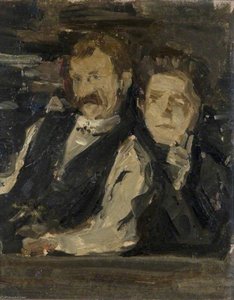
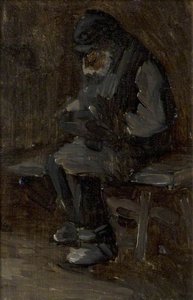
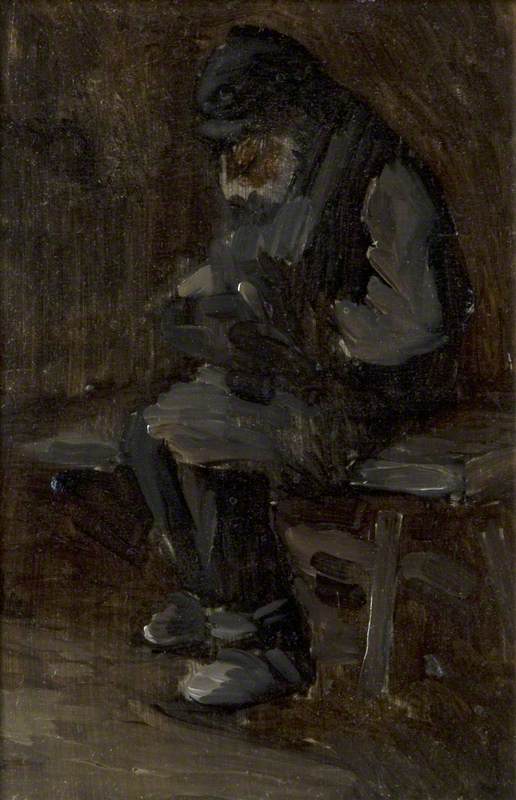
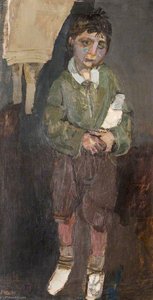
My Friend Michael Mangan
 1912
1912 16.0 x 11.0 cm
 Read More
Hand Made Oil Reproduction
Hand-painted oil on canvas in your size and frame, made to order by our artists. ( Buy Print Buy Image)




































Pick from our preset sizes that match the artwork's original proportions.

You may enter your own dimensions to fit a specific frame or space. If your selected size does not match the original image's proportions, we will either crop the artwork or extend the painting with additional hand-painted elements. A digital mockup will be sent for your approval before production begins.
Please note that the on-screen preview does not reflect the actual cropping or extension. Only the mockup will accurately show the final composition.
While custom sizes are available, we recommend selecting a dimension from the predefined list to preserve the original proportions.
After order, ArtsDot.com team will email client for instructions and provide a mockup preview
Worldwide Delivery () in 3/4 weeks instead of standard 5 weeks. (20 August). No compromise on quality.

Free Worldwide Express Shipping

High-Quality Linen Canvas

Full Shipping Insurance

Customs Tax Refund Guarantee

True Color Matching Guarantee

60-Day Return Policy (Defects Only)

100% Money-Back Guarantee

Bulk Discount Offer
 Glass option is only available in size under 110 CM

My Friend Michael Mangan
Reproduction Medium
Reproduction Size
-


Total Price
$ 263
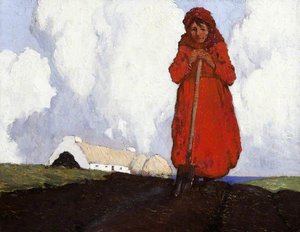
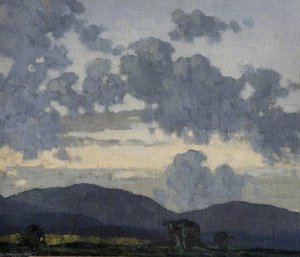
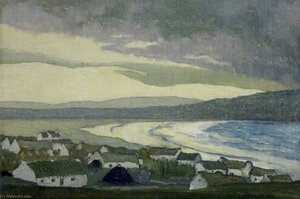
Related Artworks
Artist Biography
Paul Henry: The Soul of the Irish Landscape
Paul Henry (1877 – 1958) stands as one of Ireland’s most enduring figures in landscape painting, a painter who captured the ethereal beauty and rugged spirit of the West of Ireland with an uncompromising vision that cemented his place within the broader context of Post-Impressionism. Born at 61 University Road, Belfast, he descended from a family steeped in Presbyterian tradition – Robert Mitchell Henry, his father, was a Baptist minister – shaping his formative years amidst intellectual and spiritual discourse. From early artistic inclinations nurtured during his studies at Methodist College Belfast to the rigorous training at the Royal Belfast Academical Institution and subsequently at Paris’s Académie Julian and Whistler's studio, Henry pursued an education dedicated to honing his craft. His marriage to Grace Henry in 1903 solidified a creative partnership that would continue throughout their lives, fostering mutual inspiration and collaborative exploration of artistic ideas. Returning to Ireland in 1910 after completing his Parisian studies, Henry established himself on Achill Island, where he immersed himself in the distinctive atmospheric conditions – the interplay of light and mist – characteristic of this region. This period proved pivotal in developing his signature style: a spare, emotionally resonant approach that prioritized tonal harmony over detailed representation. It was here that he perfected his ability to distill the essence of the landscape onto canvas, prioritizing mood and feeling above photographic accuracy. Henry’s artistic journey coincided with the burgeoning Irish Modernist movement, where he found kinship with fellow artists who sought to redefine visual expression. He founded the Society of Dublin Painters in 1920, a collective that championed experimentation and challenged conventional aesthetic norms. His designs for railway posters – notably “Connemara Landscape” – achieved considerable commercial success and became emblematic of Ireland’s artistic identity during the interwar years. Despite personal difficulties including a separation from Grace Henry and later his marriage to Mabel Young, Henry remained a dominant force in Irish art throughout the 1920s and 30s, influencing generations of artists with his unwavering dedication to capturing the sublime qualities of the natural world. Henry’s artistic output is notable for its stylistic consistency—a deliberate rejection of flamboyant techniques—yet it encompasses an impressive range of subjects and moods. His paintings convey a profound connection to the Irish landscape, imbued with a palpable sense of melancholy and contemplation. The influence of Cézanne and Van Gogh is evident in his use of flattened planes and expressive brushstrokes, mirroring their exploration of form and color as vehicles for conveying emotion. However, Henry’s artistic vision transcends mere stylistic imitation; it represents an authentic distillation of Irish sensibility—a quiet reverence for the grandeur and fragility of nature. A commemorative exhibition at Trinity College Dublin in 1973 and a major retrospective at the National Gallery of Ireland in 2004 served as testament to Henry's enduring legacy, securing his place among Ireland’s artistic luminaries. Furthermore, an appearance on BBC’s Antiques Roadshow in 2006 garnered considerable attention, valuing one of his paintings at approximately £40,000 - £60,000 and highlighting the continuing appreciation for Henry's work within the art market. His enduring impact extends beyond individual artworks; he remains a symbol of Irish artistic integrity and a champion of a contemplative aesthetic that continues to inspire artists today.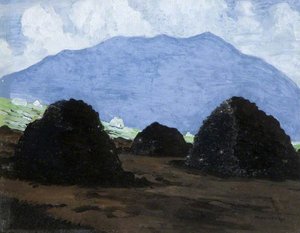
paul henry
1877 - 1958
Quick Facts
- Artistic Movement Or Style: Post-Impressionism
- Artists Or Movements Influenced By This Artist: ['Lee Krasner']
- Artists Who Influenced This Artist: ['Paul Sérusier']
- Date Of Birth: 1877
- Date Of Death: 1958
- Full Name: Paul Henry
- Nationality: Irish
- Notable Artworks:
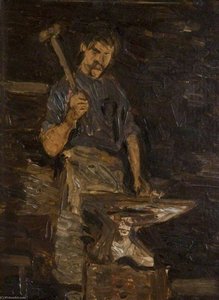
- The Blacksmith
- Swan's Beak
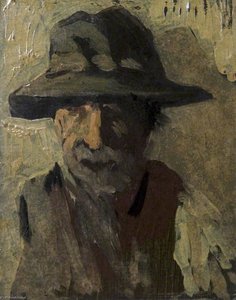
- A Man of the Hills
- Place Of Birth: Belfast, Ireland