

 Preview
 Send
Send Share
Share
 Details

 Download
 Similars
 X-Ray
X-Ray Diaporama
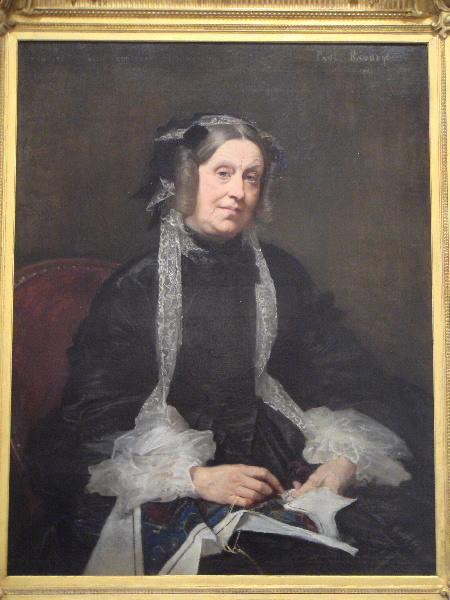
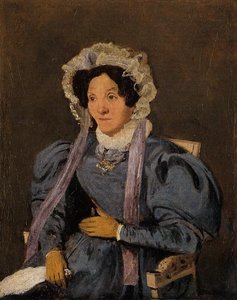
Portrait de Mme Renouard (mère de Mme Chevreuse)

 Read More
Purchase a high-resolution, enhanced digital image, far superior to the online preview.
Each file is meticulously prepared by our in-house specialists using advanced tools and expert manual retouching. We ensure every image has exceptional clarity, precise color accuracy, and fine detail.
The final file is delivered via email within 72 hours, optimized for immediate use in professional, editorial, and print environments. This is the same quality trusted by top-tier design studios, publishers, and galleries.
Digital Image
Download a high-resolution file for personal display, printing, and creative projects. ( Buy Print Buy Hand Made Painting)
Included in Every Digital Image Order
Expert Digital Delivery, Guaranteed
When you choose ArtsDot.com, you're not just getting an image - you're receiving a professionally enhanced digital artwork, crafted with precision and backed by a satisfaction guarantee. Here's everything that comes with your order, automatically:

Fast Email Delivery
Your high-resolution digital image file will be emailed to you within 72 hours of ordering - ready for immediate use.

AI-Enhanced Digital File
Your artwork is professionally optimized using advanced AI tools and manual editing, ensuring maximum detail, clarity, and color accuracy.

Free Lifetime Re-Delivery
Accidentally deleted or lost your file? No worries - we'll resend it to you anytime, free of charge.

No Import Fees - Ever
Enjoy your artwork instantly with zero customs, duties, or delivery fees - digital downloads are always tax-free.

Color Accuracy Guarantee
We ensure your digital image reflects the original colors as closely as possible using professional tools and color management.

60-Day Satisfaction Guarantee
If you're not satisfied with your digital image, we'll revise it or refund 100% within 60 days - no questions asked.

100% Money-Back Guarantee
Not satisfied? Get a full refund within 60 days of receiving your digital file - no questions asked.

Bulk Order Discounts
Buy 3 images, save 10% - Buy 5, save 15% - Buy 10+, save 20%. Great for creative projects, galleries, and agencies.
Related Artworks
Artist Biography
A Life Etched in Elegance: The World of Paul-Jacques-Aimé Baudry
Born November 7, 1828, in the quiet town of La Roche-sur-Yon within France’s Vendée department, Paul-Jacques-Aimé Baudry emerged from humble beginnings. His father, a clog maker, provided a practical upbringing, yet the family recognized and nurtured the budding artistic talent within their son. This early support proved crucial, allowing young Paul to pursue his passion despite societal expectations. He received initial training locally before embarking on a journey to Paris in 1845, a pivotal moment that would define his career. Enrolling at the prestigious École des Beaux-Arts under the tutelage of Michel Martin Drolling, Baudry immersed himself in the rigorous academic traditions of the time. This foundational education instilled within him a dedication to technical skill and classical ideals—principles that would remain central to his artistic practice throughout his life. A defining achievement arrived in 1850 when he was awarded the coveted Prix de Rome for *Zenobia Found by Shepherds on the Banks of the Araxes*. This prestigious prize granted him a scholarship to study at the French Academy in Rome, an experience that would profoundly shape his aesthetic sensibilities and artistic direction.Italian Reverie and the Shaping of a Style
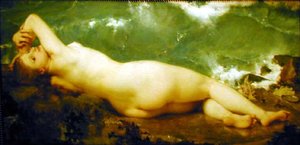
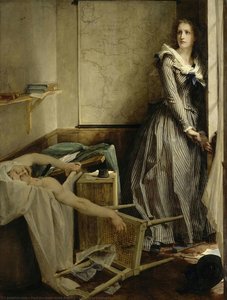
Rome became Baudry’s crucible, a place where he absorbed the grandeur of Renaissance and Baroque art. He meticulously studied the masters—Titian, Veronese, and particularly Correggio—allowing their influence to permeate his own artistic vision. The grace and sensuousness characteristic of Correggio's work resonated deeply with Baudry, manifesting in the delicate forms and luminous colors that would become hallmarks of his style. This Italian sojourn wasn’t merely about imitation; it was a process of assimilation and refinement. He synthesized classical principles with his own innate talent, forging an aesthetic language uniquely his own. Upon returning to Paris, Baudry began exhibiting regularly at the Salon, quickly gaining recognition for his mythological and fanciful subjects. Early works like *The Pearl and the Wave* (1862) showcased his developing style—a blend of academic precision and romantic imagination. While he briefly explored historical painting with pieces such as *Charlotte Corday after the Murder of Marat* (1861), Baudry found himself drawn more consistently to mythological narratives and portraiture, areas where he could fully express his artistic strengths.Portraits, Murals, and a Legacy in Decoration
Baudry’s talent extended beyond the canvas; he proved adept at capturing the likenesses of prominent figures, creating portraits of individuals like François Guizot and Charles Garnier that revealed not only physical resemblance but also character and intellect. However, it was his monumental mural decorations that truly cemented his reputation as a leading artist of the Second Empire and early Third Republic. Commissions poured in for prestigious locations throughout Paris—the Court of Cassation, the Château de Chantilly, private residences like the Hôtel Fould and Hôtel Paiva. But it was the Opera Garnier that provided Baudry with his most significant opportunity. For ten years, he dedicated himself to adorning the foyer with over thirty paintings depicting scenes of dancing and music. These murals are considered his masterpiece—a breathtaking display of artistic skill, imaginative composition, and vibrant color. They transformed the space into a celebration of art itself, establishing Baudry as a master of decorative painting.Recognition and Enduring Influence
The acclaim Baudry received was not merely popular; it was institutionalized with his election as a member of the Académie des Beaux-Arts, succeeding Jean-Victor Schnetz. This honor solidified his position within the French art establishment and acknowledged his significant contributions to the artistic landscape. He continued to work prolifically until his death in Paris on January 17, 1886. A poignant tribute was erected in Père Lachaise Cemetery by colleagues Dubois and Mercié, with architectural elements contributed by his brother—a testament to the respect and admiration he commanded within the art world. While later overshadowed by the revolutionary movements of Impressionism and beyond, Baudry’s work remains vital for understanding the artistic context of 19th-century France. He represents a bridge between traditional academic art and emerging modern styles, embodying the elegance, technical mastery, and narrative ambition that defined his era. His murals at the Opera Garnier continue to inspire awe and admiration, serving as a lasting testament to his skill and vision—a vibrant echo of an artist who etched his name into the heart of Parisian artistic heritage.A Lasting Impression
- Academic Precision: Baudry’s work exemplifies the rigorous training and technical proficiency characteristic of academic painting.
- Classical Themes: His subjects often drew inspiration from mythology, history, and portraiture, reflecting a deep engagement with classical ideals.
- Decorative Grandeur: His mural decorations, particularly those at the Opera Garnier, showcase his ability to create immersive and visually stunning environments.
- Italian Influence: The impact of Renaissance and Baroque masters, especially Correggio, is evident in his graceful forms and luminous colors.
- Historical Context: Baudry’s career unfolded during a period of significant artistic transition, bridging the gap between traditional academic art and emerging modern styles.
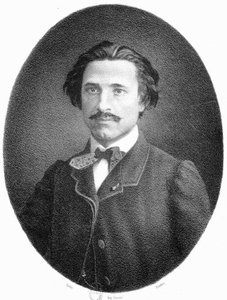
Paul-Jacques-Aimé Baudry
1828 - 1886 , France
Quick Facts
- Artistic Movement Or Style: Academic painting
- Artists Who Influenced This Artist:
- Titian
- Veronese
- Correggio
- Date Of Birth: November 7, 1828
- Date Of Death: 1886
- Full Name: Paul-Jacques-Aimé Baudry
- Nationality: French
- Notable Artworks:
- Zenobia Found...
- The Pearl and the Wave
- Charlotte Corday...
- Place Of Birth: La Roche-sur-Yon, France

