

 Preview
 Send
Send Share
Share
 Details

 Download
 Similars
 X-Ray
X-Ray Diaporama
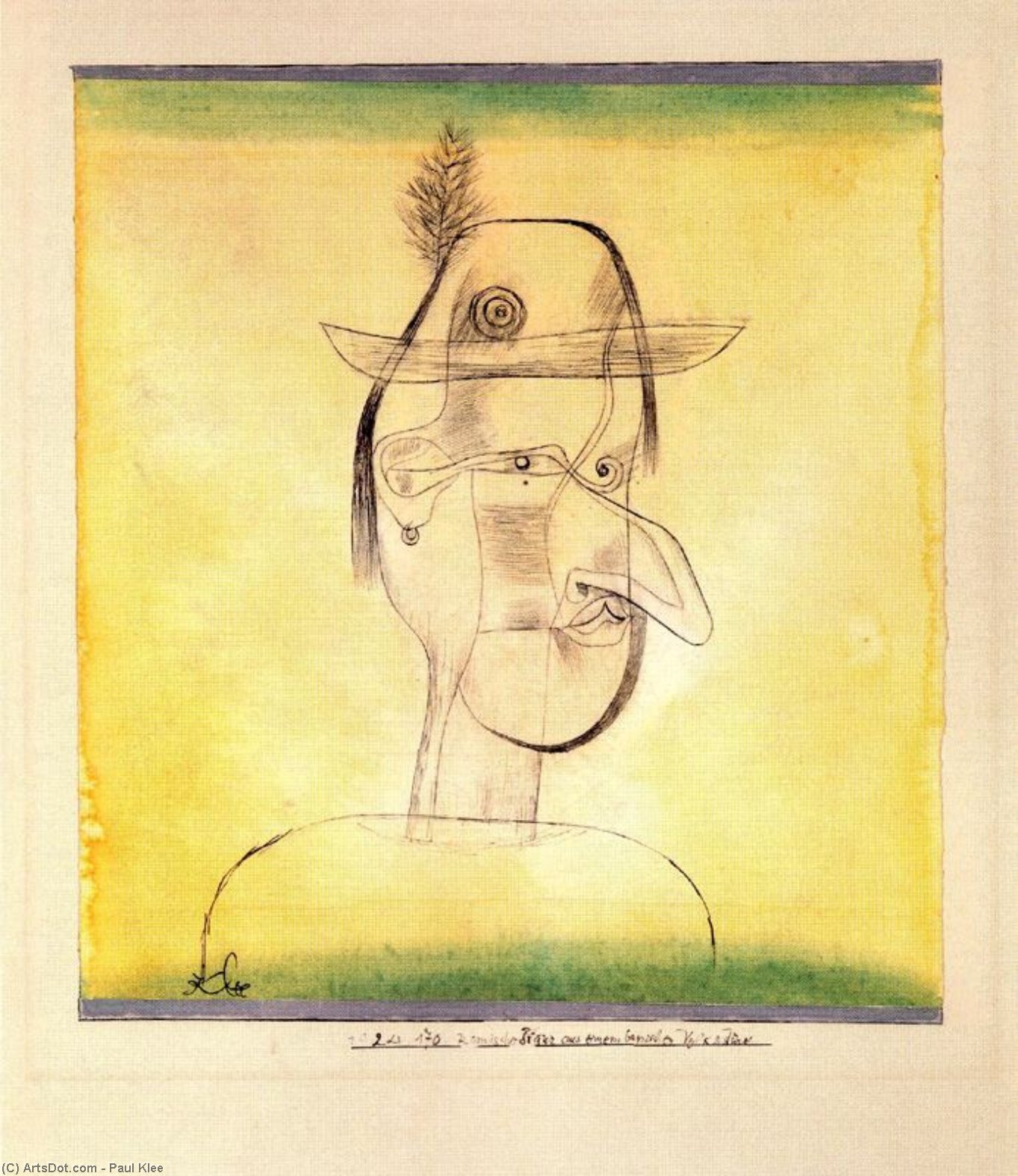
Comic Character from a Bavarian Folk Play


 Read More
Purchase a high-resolution, enhanced digital image, far superior to the online preview.
Each file is meticulously prepared by our in-house specialists using advanced tools and expert manual retouching. We ensure every image has exceptional clarity, precise color accuracy, and fine detail.
The final file is delivered via email within 72 hours, optimized for immediate use in professional, editorial, and print environments. This is the same quality trusted by top-tier design studios, publishers, and galleries.
Digital Image
Download a high-resolution file for personal display, printing, and creative projects. ( Buy Print Buy Hand Made Painting)
Included in Every Digital Image Order
Expert Digital Delivery, Guaranteed
When you choose ArtsDot.com, you're not just getting an image - you're receiving a professionally enhanced digital artwork, crafted with precision and backed by a satisfaction guarantee. Here's everything that comes with your order, automatically:

Fast Email Delivery
Your high-resolution digital image file will be emailed to you within 72 hours of ordering - ready for immediate use.

AI-Enhanced Digital File
Your artwork is professionally optimized using advanced AI tools and manual editing, ensuring maximum detail, clarity, and color accuracy.

Free Lifetime Re-Delivery
Accidentally deleted or lost your file? No worries - we'll resend it to you anytime, free of charge.

No Import Fees - Ever
Enjoy your artwork instantly with zero customs, duties, or delivery fees - digital downloads are always tax-free.

Color Accuracy Guarantee
We ensure your digital image reflects the original colors as closely as possible using professional tools and color management.

60-Day Satisfaction Guarantee
If you're not satisfied with your digital image, we'll revise it or refund 100% within 60 days - no questions asked.

100% Money-Back Guarantee
Not satisfied? Get a full refund within 60 days of receiving your digital file - no questions asked.

Bulk Order Discounts
Buy 3 images, save 10% - Buy 5, save 15% - Buy 10+, save 20%. Great for creative projects, galleries, and agencies.
Collectible Description
A Glimpse into Bavarian Folklore: Paul Klee’s ‘Comic Character’
This captivating pencil drawing by Swiss-German artist Paul Klee offers a fascinating window into his exploration of character and narrative. Created sometime before his death in 1940, the work depicts a stylized portrait – a figure seemingly plucked from the vibrant world of Bavarian folk plays. The piece is titled ‘A Portrait of Mr. A. P.’, adding an intriguing layer of specificity to this otherwise enigmatic representation.Stylistic Nuances and Artistic Technique
Klee’s masterful draftsmanship is immediately apparent in the expressive linework that defines the figure. He employs a dynamic interplay of hatching and cross-hatching, building up texture and shading with meticulous precision. The style leans towards caricature – particularly evident in the dramatically elongated nose – yet it's tempered by elements of Expressionism, conveying an underlying emotional intensity. While seemingly simple, the composition is carefully balanced, centering the figure and maximizing its impact. The limited color palette, dominated by yellows and greens as a wash in the background, adds to the work’s slightly unsettling yet whimsical quality. The flatness of the representation, with minimal perspective, emphasizes the symbolic nature of the image rather than realistic depiction.Historical Context & Klee's Artistic Journey
Paul Klee (1879-1940) was a pivotal figure in modern art, deeply influenced by movements like Expressionism, Cubism, and Surrealism. He spent time teaching at the Bauhaus school alongside Wassily Kandinsky, further solidifying his position as a leading artistic innovator. Klee’s unique approach stemmed from a profound understanding of color theory – documented in his influential “Paul Klee Notebooks” – and a lifelong fascination with music, which informed his sense of rhythm and composition. This work reflects his broader interest in folklore and the power of storytelling, themes that frequently appeared throughout his career. The reference to Bavarian folk plays suggests an engagement with regional traditions and character archetypes.Symbolism & Interpretation
The exaggerated features – most notably the prominent nose – invite interpretation. It could be a playful commentary on vanity or societal norms, a common trope in caricature. Alternatively, it might represent a specific character type within Bavarian folklore, embodying certain traits or flaws. The overall effect is one of ambiguity, allowing viewers to project their own meanings onto the image. The slightly chaotic background, created with an uneven wash of green, further enhances this sense of unease and mystery.Emotional Impact & Interior Design Considerations
Despite its simplicity, ‘Comic Character from a Bavarian Folk Play’ evokes a complex range of emotions – amusement, curiosity, and perhaps even a touch of disquiet. Its unique aesthetic makes it an ideal piece for those seeking artwork that is both visually striking and intellectually stimulating.- Its subdued color palette would complement interiors with neutral tones or earthy palettes.
- The drawing’s linear quality lends itself well to modern or minimalist spaces.
- As a reproduction, it could serve as a focal point in a study, living room, or hallway, sparking conversation and adding character to any space.
Related Artworks
Artist Biography
A Life Immersed in Color and Form
Paul Klee, a name synonymous with playful abstraction and profound emotional depth, occupies a unique position in the landscape of 20th-century art. Born on December 18, 1879, in Münchenbuchsee, Switzerland, his artistic journey was one of constant exploration, defying easy categorization and forging a path that blended influences from Expressionism, Cubism, and Surrealism into a distinctly personal visual language. Klee’s upbringing fostered an early appreciation for the arts; his father, a German music teacher, and his mother, a Swiss singer, instilled in him a sensitivity to both auditory and visual harmony. This foundational connection between music and painting would become a defining characteristic of his oeuvre, shaping not only his compositional approach but also his theoretical understanding of art as a form of abstract expression akin to musical arrangement. Initially drawn to drawing, Klee soon abandoned the pursuit of realistic representation, recognizing its limitations in conveying the inner world of emotions and ideas that he sought to express. He enrolled at the Academy of Fine Arts in Munich between 1898 and 1901, a period marked by experimentation and the development of his unique artistic voice.The Shaping of an Artistic Vision
Klee’s early work reveals the influence of Art Nouveau and Symbolism, yet even within these frameworks, hints of his future style began to emerge. A pivotal moment in his artistic development was a journey to Tunisia in 1914. The intense light and vibrant atmosphere of North Africa profoundly impacted his use of color, inspiring him to move beyond muted tones towards bolder, more expressive palettes. This experience marked a turning point, solidifying his commitment to abstraction as a means of capturing the essence of perception rather than merely replicating its surface appearance. He wasn’t simply *seeing* Tunisia; he was translating its emotional resonance into visual form. Throughout this period, Klee engaged with various artistic movements, absorbing their principles while simultaneously resisting complete adherence to any single ideology. His interest in music remained paramount, and he often spoke of painting as a process analogous to composing musical pieces – a careful arrangement of elements to create a harmonious whole. This synesthetic approach is evident in the rhythmic quality of his lines, the delicate balance of colors, and the overall sense of movement that permeates many of his works.Bauhaus and Beyond: A Period of Flourishing
From 1931 to 1933, Klee accepted a teaching position at the influential Bauhaus school of art, design, and architecture, alongside Wassily Kandinsky. This period proved remarkably fruitful for his artistic development. Surrounded by innovative thinkers and fellow artists, he flourished in an environment that encouraged experimentation and theoretical inquiry. His work during these years delved deeper into color theory and formal relationships, exploring the interplay between abstract forms and emotional expression. However, this creative haven was shattered with the rise of Nazism in Germany. In 1933, Klee was dismissed from the Bauhaus due to his art being deemed “degenerate” by the Nazi regime – a chilling testament to the dangers of political ideology suppressing artistic freedom. Forced to return to Switzerland, he continued painting, but his health deteriorated under the shadow of increasing political turmoil and personal hardship. Despite these challenges, Klee remained committed to his artistic vision, producing works that reflected both the anxieties of the era and his enduring belief in the power of art to transcend adversity.Themes, Style, and Lasting Legacy
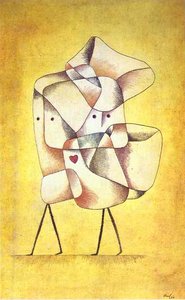
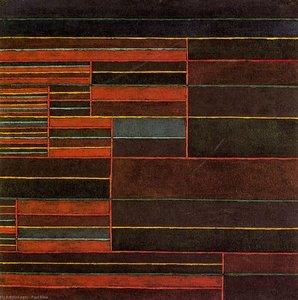
Paul Klee’s work is characterized by a captivating blend of playfulness and profound contemplation. He often employed childlike imagery and whimsical compositions, imbuing them with layers of symbolic meaning. Recurring themes in his art include gardens, landscapes, portraits, and abstract arrangements – each serving as a vehicle for exploring the complexities of human experience. His “Paul Klee Notebooks,” published posthumously, offer invaluable insight into his extensive theoretical investigations into color and design, revealing a meticulous and intellectual approach to artistic creation. He wasn’t merely painting; he was constructing a visual language based on principles of harmony, balance, and emotional resonance. Hamamet, Siblings, and En la corriente seis umbrales are just a few examples showcasing his mastery of color and form. Paul Klee died on June 29, 1940, in Muralto, Switzerland, leaving behind a legacy that continues to inspire artists and captivate audiences worldwide. He is rightfully regarded as one of the most important figures of 20th-century art, bridging the gap between figurative and abstract expression and solidifying his place as an iconic innovator whose work remains eternally relevant.Museums & Further Exploration
- Zentrum Paul Klee (Bern): Home to the world’s largest collection of Klee's works, offering a comprehensive overview of his artistic journey.
- Museum of Fine Arts Bern: Features significant pieces by Klee alongside masterpieces by Picasso and Hodler.
- Kunstmuseum Bern: Switzerland’s oldest art museum, showcasing a diverse collection including works by Klee and other modern masters.
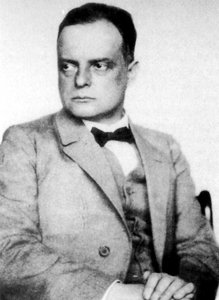
Paul Klee
1879 - 1940 , Switzerland
Quick Facts
- Artistic Movement Or Style: Expressionism, Cubism, Surrealism
- Artists Or Movements Influenced By This Artist: ['Modern art']
- Artists Who Influenced This Artist: ['Wassily Kandinsky']
- Date Of Birth: 1879-12-18
- Date Of Death: 1940-06-29
- Full Name: Paul Klee
- Nationality: Swiss-German
- Notable Artworks:
- Hamamet
- Siblings
- En la corriente seis umbrales
- Place Of Birth: Münchenbuchsee, Switzerland

