 Preview
 Send
Send Share
Share
 Details

 Download
 Similars
 X-Ray
X-Ray Diaporama
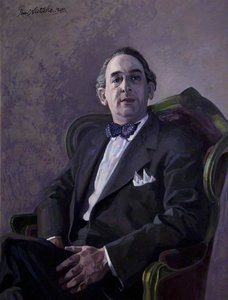
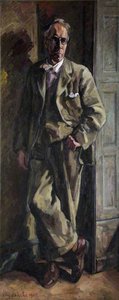
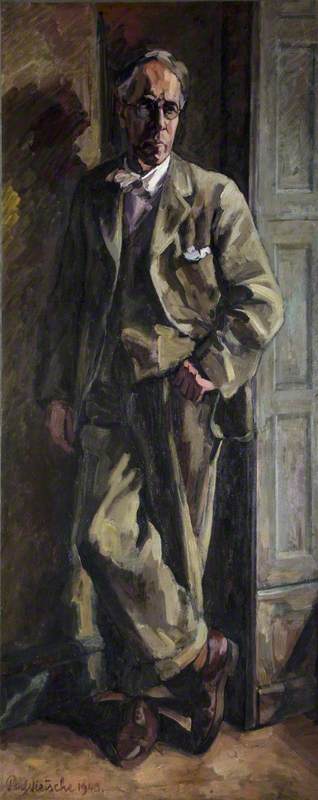
James Humbert Craig (1878–1944)
 1940
1940 188.0 x 86.0 cm
 Read More
Hand Made Oil Reproduction
Hand-painted oil on canvas in your size and frame, made to order by our artists. ( Buy Print Buy Image)




































Pick from our preset sizes that match the artwork's original proportions.

You may enter your own dimensions to fit a specific frame or space. If your selected size does not match the original image's proportions, we will either crop the artwork or extend the painting with additional hand-painted elements. A digital mockup will be sent for your approval before production begins.
Please note that the on-screen preview does not reflect the actual cropping or extension. Only the mockup will accurately show the final composition.
While custom sizes are available, we recommend selecting a dimension from the predefined list to preserve the original proportions.
After order, ArtsDot.com team will email client for instructions and provide a mockup preview
Worldwide Delivery () in 3/4 weeks instead of standard 5 weeks. (24 August). No compromise on quality.

Free Worldwide Express Shipping

High-Quality Linen Canvas

Full Shipping Insurance

Customs Tax Refund Guarantee

True Color Matching Guarantee

60-Day Return Policy (Defects Only)

100% Money-Back Guarantee

Bulk Discount Offer
 Glass option is only available in size under 110 CM

James Humbert Craig (1878–1944)
Reproduction Medium
Reproduction Size
-


Total Price
$ 263
Related Artworks









Artist Biography
Paul Nietsche: A Pioneer of Cornish Landscape Painting
Paul Felix Franz Nietsche (17 June 1885 – 4 October 1950) was a Ukrainian artist and teacher who emigrated to Ulster in 1936, establishing himself as a prominent figure within Belfast’s artistic community until his death. Born in Kiev, Ukraine, Nietsche's formative years were marked by exposure to German cultural influences—his parents being German—and instilled in him an early passion for art through the encouragement of his mother who famously pawned her brother’s coat to purchase paints for him. This dedication would propel him on a remarkable artistic journey spanning Europe and North America.Early Life and Artistic Training
Nietsche's formal education began at Odessa Imperial Academy of Fine Arts, where he studied under influential teachers like Gennadiy Ladyzhensky and Kiriak Kostandi. These mentors instilled in him foundational principles of classical painting technique and fostered a deep appreciation for artistic expression. Notably, Nietsche’s friendship with Auguste Rodin profoundly impacted his worldview and artistic sensibilities—Rodin's sculptural explorations of emotion and form served as an enduring inspiration throughout Nietsche’s career. He continued his studies at Berlin Academy of Fine Arts before relocating to Paris in 1908, where he immersed himself in the vibrant intellectual atmosphere of the avant-garde movement.Parisian Influences and Artistic Development
Nietsche's Parisian years witnessed a blossoming of creativity and experimentation. He actively participated in artistic circles frequented by prominent figures like Rodin and showcased his work at the Salon of 1912, demonstrating an early willingness to engage with contemporary artistic discourse. Returning to Odessa during World War I, Nietsche remained steadfast in his pursuit of artistic excellence amidst turbulent times. His involvement with Michael O’Brien—a Dubliner who later taught English at Leipzig—proved pivotal, fostering a collaborative spirit and introducing him to the burgeoning Belfast art scene.The Belfast Years: Landscape Painting and Patronage
From 1926 onwards Nietsche resided in Belfast, cultivating relationships with fellow artists like Herbert E Broderick and actively engaging with the Ulster Arts Club. His artistic output during this period centered largely on landscape painting—specifically depictions of Cornwall—where he found solace and inspiration amidst the rugged beauty of the Cornish coastline. He established a studio at 76 Dublin Road, Belfast, becoming a respected teacher and mentor to aspiring artists. Nietsche’s work gained recognition through exhibitions organized by Zoltan Lewinter-Frankl and supported by the Council For the Encouragement of Music and Art, solidifying his position as a significant contributor to Ulster's artistic heritage.Legacy and Recognition
Paul Nietsche died in Belfast in 1950 leaving behind a substantial body of work characterized by meticulous observation and expressive brushwork—a testament to his unwavering commitment to capturing the essence of nature’s grandeur. His paintings continue to resonate with viewers today, embodying the spirit of modernist landscape painting and reflecting the profound influence of Rodin's sculptural vision. Nietsche’s contribution to Belfast’s artistic landscape remains commemorated through exhibitions and scholarly research—a lasting legacy for a visionary artist who transformed Cornish vistas into enduring symbols of beauty and contemplation.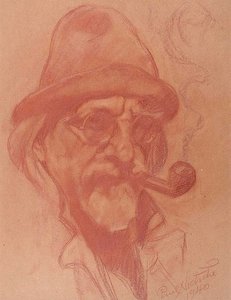
Quick Facts
- Artistic Movement Or Style: Portraiture
- Artists Or Movements Influenced By This Artist: Bauhaus
- Artists Who Influenced This Artist: Auguste Rodin
- Date Of Birth: June 17, 1885
- Date Of Death: October 4, 1950
- Full Name: Paul Felix Franz Nietsche
- Nationality: Ukrainian
- Notable Artworks: ['Frederick Hull & Zoltan Frankl']
- Place Of Birth: Kiev, Ukraine