 Preview
 Send
Send Share
Share
 Details

 Download
 Similars
 X-Ray
X-Ray Diaporama
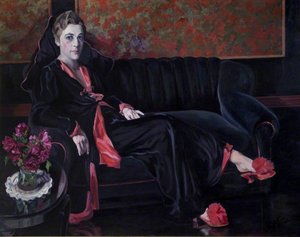
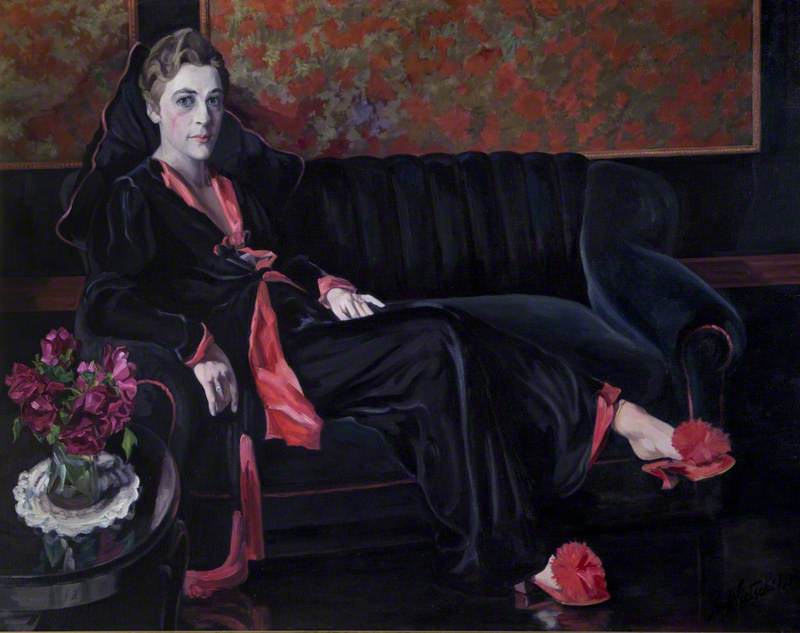
Woman on a Sofa (Dorothy V. Williamson)
 1934
1934 117.0 x 158.0 cm
 Read More
Giclée / Art Print
Museum-quality giclée or canvas print with fast production and flexible finish options. ( Buy Hand Made Painting Buy Image)




































Pick from our preset sizes that match the artwork's original proportions.

You may enter your own dimensions to fit a specific frame or space. If your selected size does not match the original image's proportions, we will either crop the artwork or extend the image with a mirrored or solid-fill edge. A digital mockup will be sent for your approval before production begins.
Please note that the on-screen preview does not reflect the actual cropping or extension. Only the mockup will accurately show the final composition.
While custom sizes are available, we recommend selecting a dimension from the predefined list to preserve the original proportions.
Worldwide Delivery () in 2 weeks instead of standard 4/5 weeks. (25 August)

Free Worldwide Express Shipping

High-Quality Linen Canvas

Full Shipping Insurance

Customs Tax Refund Guarantee

True Color Matching Guarantee

60-Day Return Policy (Defects Only)

100% Money-Back Guarantee

Bulk Discount Offer
 Glass option is only available in size under 110 CM

Woman on a Sofa (Dorothy V. Williamson)
Giclée / Art Print
Reproduction Size
-


Total Price
$ 63
Related Artworks





Artist Biography
A Wanderer’s Vision: The Life and Legacy of Paul Nietsche
The story of Paul Felix Franz Nietsche is one of profound movement, a life shaped by the shifting borders of early twentieth-century Europe and the enduring pursuit of artistic truth. Born in 1885 to German parents in Kiev, Ukraine, Nietschy’s early years were defined by a nomadic spirit that would later manifest in his diverse and expansive body of work. His journey was fueled by a singular, maternal devotion; it is a poignant piece of art history lore that his mother once pawned her brother’s coat simply to afford the paints necessary for his burgeoning talent. This early sacrifice set the stage for a career that would bridge the gap between the classical traditions of Eastern Europe and the avant-garde energy of Western Europe, eventually finding a permanent, soulful home in the landscapes and communities of Ulster.
Nietsche’s formal training was as much a map of Europe as his personal travels. His foundational years were spent at the Odessa Imperial Academy of Fine Arts, where he absorbed the rigorous principles of classical technique under the guidance of masters such as Gennadiy Ladyzhensky and Kiriak Kostandi. However, the thirst for broader horizons led him to the Berlin Academy of Fine Arts and, most significantly, to the luminous streets of Paris in 1908. It was in the French capital that Nietsche’s artistic identity truly began to coalesce. Immersed in the intellectual ferment of the era, he moved within circles that included the legendary sculptor Auguste Rodin. The influence of Rodin—specifically the sculptor's ability to imbue form with raw, visceral emotion—left an indelible mark on Nietsche’s approach to both portraiture and landscape, teaching him that art must capture not just the likeness of a subject, but its very essence.
Mastery of Form and the Belfast Connection
As the tides of history surged through the First World War, Nietsche’s path took him back to Odessa and later to Berlin, yet his artistic development never stagnated. He remained a student of the world, absorbing the stylistic shifts of the Der Sturm era and the evolving nuances of modernism. By the time he emigrated to Ulster in 1936, Nietsche was no longer merely a student of tradition but a seasoned master capable of blending classical precision with a contemporary sensibility. Upon settling in Belfast, he did not merely exist within the community; he became its beating heart. He established himself as a central figure in both the artistic and literary scenes, weaving together a tapestry of connections that included playwrights, writers, and fellow painters.
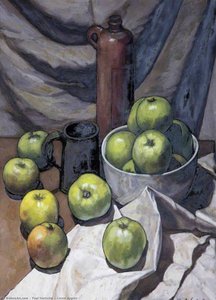
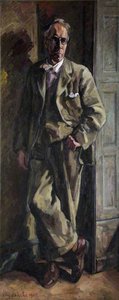
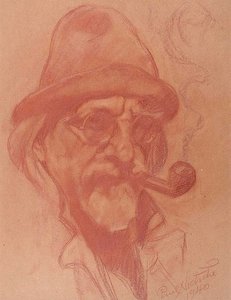
His work during this period reflects a remarkable versatility. While he is celebrated for his evocative landscapes that capture the rugged beauty of the region, his portraiture remains equally profound. In his portraits, one finds a meticulous attention to detail and a psychological depth that honors the distinguished figures of his time, such as Frederick Hull and Zolton Frankl. Whether he was capturing the quiet domesticity of a still life—as seen in the charming Green Apples (1949)—or the sweeping vistas of the countryside, Nietsche’s brushwork possessed a unique, idiosyncratic power. His ability to translate the light and atmosphere of his surroundings into oil paint allowed him to create works that felt both timeless and deeply rooted in a specific moment in history.
An Enduring Artistic Heritage
The significance of Paul Nietsche lies not only in the beauty of his individual canvases but in his role as a cultural bridge. He brought the sophisticated influences of Paris, Berlin, and Odessa to the shores of Ireland, enriching the local tradition with a cosmopolitan perspective. His presence in Belfast fostered a creative ecosystem where artists like Markey Robinson could find inspiration, proving that Nietsche was as much a mentor and catalyst as he was a creator. His life, though marked by the turbulence of war and migration, culminated in a legacy of stability and profound contribution to the Northern Irish art canon.
To look upon a Nietsche painting is to witness a lifetime of observation. His achievements can be summarized through the various lenses of his impact:
- Technical Excellence: A seamless integration of classical academic training with modern expressive freedom.
- Cultural Synthesis: The unique blending of Ukrainian, German, and French influences within an Irish context.
- Community Leadership: His pivotal role in establishing Belfast as a vibrant hub for the arts and literature during the mid-twentieth century.
- Emotional Resonance: An enduring ability to capture the human spirit and the quiet majesty of nature through a deeply personal lens.
Though he passed away in 1950, the echoes of his journey continue to resonate. Paul Nietsche remains a testament to the idea that art knows no borders, and that a life dedicated to the pursuit of beauty can leave an indelible mark on the soul of a nation.
Quick Facts
- Artistic Movement Or Style: Portraiture
- Artists Or Movements Influenced By This Artist: Bauhaus
- Artists Who Influenced This Artist: Auguste Rodin
- Date Of Birth: June 17, 1885
- Date Of Death: October 4, 1950
- Full Name: Paul Felix Franz Nietsche
- Nationality: Ukrainian
- Notable Artworks: ['Frederick Hull & Zoltan Frankl']
- Place Of Birth: Kiev, Ukraine