 Preview
 Send
Send Share
Share
 Details

 Download
 Similars
 X-Ray
X-Ray Diaporama
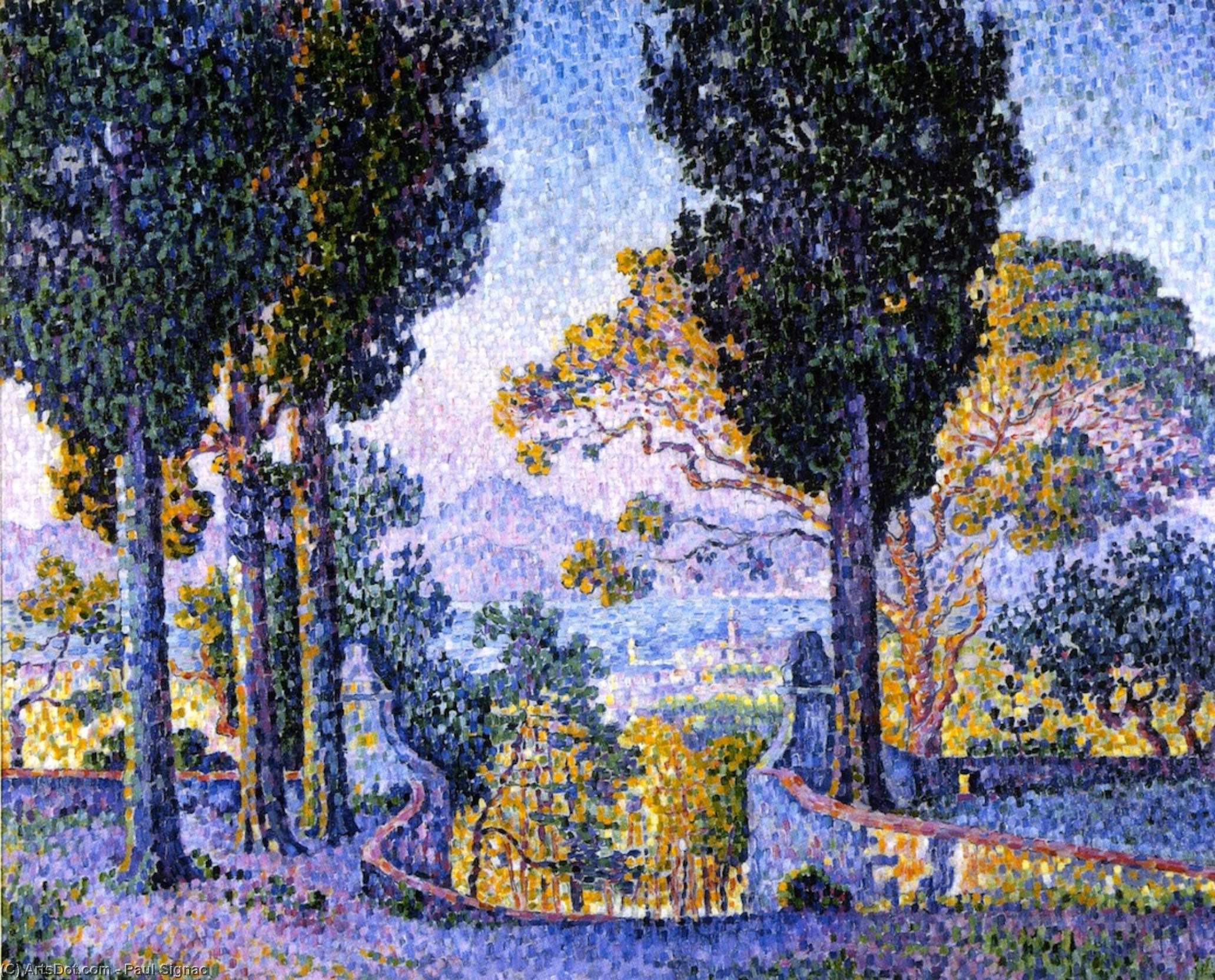
Saint-Anne (Saint-Tropez)
 Oil On Canvas
- WallArt
- Neo-Impressionism
 1905
1905- 19th Century
 73.0 x 92.0 cm
 Read More
Hand Made Oil Reproduction
Hand-painted oil on canvas in your size and frame, made to order by our artists. ( Buy Print Buy Image)




P118B $10

P118H $10

P118W $10

P438Z $10

P508JH $12

P508YH $12

P805H $10

P805Z $10

P919BZ $10

P919G $10

P919XJ $10

P959ZH $10

P968JZ $12

W106C $8

W218G $10

W218JH $8

W218Y $10

W307PJ $10

W316G $10

W316PJ $8

W316Y $10

W398PJ $8

W4111J $10

W500HY $15

W500JH $15

W692G $12

W849H $8

W940BG $15

W953PJ $8




Pick from our preset sizes that match the artwork's original proportions.

You may enter your own dimensions to fit a specific frame or space. If your selected size does not match the original image's proportions, we will either crop the artwork or extend the painting with additional hand-painted elements. A digital mockup will be sent for your approval before production begins.
Please note that the on-screen preview does not reflect the actual cropping or extension. Only the mockup will accurately show the final composition.
While custom sizes are available, we recommend selecting a dimension from the predefined list to preserve the original proportions.
After order, ArtsDot.com team will email client for instructions and provide a mockup preview
Worldwide Delivery () in 3/4 weeks instead of standard 5 weeks. (17 August). No compromise on quality.

Free Worldwide Express Shipping

High-Quality Linen Canvas

Full Shipping Insurance

Customs Tax Refund Guarantee

True Color Matching Guarantee

60-Day Return Policy (Defects Only)

100% Money-Back Guarantee

Bulk Discount Offer
 Glass option is only available in size under 110 CM

Saint-Anne (Saint-Tropez)
Reproduction Medium
Reproduction Size
-


Total Price
$ 263
Artwork Description
A Sunset Reverie in Saint-Tropez
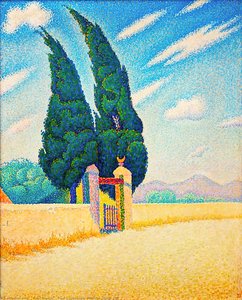
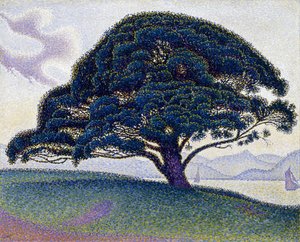
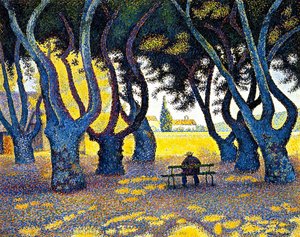
Paul Signac’s depiction of Saint-Anne (Saint-Tropez) transports the viewer to a moment suspended between day and night, a quintessential Mediterranean dream rendered with luminous brushstrokes. This painting is more than just a beautiful landscape; it is an immersion into the very essence of light captured at its most ephemeral—the golden hush of sunset filtering through a coastal forest. One can almost feel the gentle warmth on the skin and hear the distant murmur of the sea mingling with the quiet solitude suggested by the solitary figure positioned near the center. The composition masterfully balances the wild, organic energy of nature against the serene contemplation embodied by the human presence.
The Science and Soul of Neo-Impressionism
To appreciate this work is to understand Signac’s profound commitment to color theory. While the scene evokes the romanticism of Impressionism, it is filtered through the rigorous, almost scientific lens of Neo-Impressionism, particularly Pointillism. Signac was not content merely to record a fleeting visual impression; he sought to systematize the act of seeing itself. Observe closely: the vibrant hues in the sky and the varied greens of the foliage are built up from distinct touches of pure color. This technique forces the viewer's eye to participate actively, allowing complementary colors to blend optically on the retina, creating a luminosity that feels both meticulously planned and miraculously spontaneous. It is a dialogue between scientific structure and emotional outpouring.
Capturing the Mediterranean Light
The choice of setting—Saint-Tropez—is key to the painting's enduring appeal. The background mountains rise majestically under a sky saturated with warm, fading light. This sunset palette, rich in ochres, soft oranges, and deep violets, imbues the entire scene with a sense of nostalgic grandeur. Signac uses this natural drama not just as backdrop, but as an emotional barometer for the piece. The trees, varying from sharp foreground details to hazy distance, create a palpable sense of depth, drawing the eye deep into the tranquil embrace of the Provençal landscape.
Bringing Coastal Tranquility Home
For those seeking to infuse their living space with the spirit of sun-drenched Mediterranean life, this reproduction offers an unparalleled connection to natural beauty. The painting exudes a profound sense of tranquility—a visual balm for the modern soul. Whether placed in a sunlit drawing room or a gallery corner, it serves as a sophisticated focal point that speaks of leisure, artistic dedication, and the enduring magic found where civilization meets untamed nature. It is an invitation to pause, breathe deeply, and simply absorb the glorious, fading light.
Related Artworks
Artist Biography
The Harmonious Vision of Paul Signac
Paul Victor Jules Signac, born in Paris in 1863, emerged as a pivotal figure in the evolution of modern art, inextricably linked to the birth and development of Neo-Impressionism. Initially drawn to architecture, a youthful encounter with Claude Monet’s exhibition ignited within him an enduring passion for painting, setting him on a path that would redefine color theory and artistic expression. Signac wasn't merely a painter; he was a dedicated explorer of light, color, and the very science underpinning visual perception. His early works, though demonstrating Impressionistic leanings, quickly evolved under the profound influence of Georges Seurat, forging a partnership that birthed Pointillism – a technique characterized by the meticulous application of tiny, distinct dots of pure color intended to blend optically in the viewer’s eye. This wasn't simply about aesthetics; it was an attempt to systematize painting, grounding it in scientific principles and challenging conventional artistic norms.A Dialogue with Seurat and the Birth of Neo-Impressionism
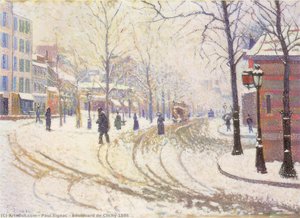
The meeting between Signac and Seurat in 1884 proved transformative for both artists. They shared a fascination with Eugène Delacroix’s writings on color theory, particularly his exploration of complementary contrasts and the emotional impact of hue. Together, they embarked on a rigorous investigation into these principles, translating them into a revolutionary painting technique. Signac wholeheartedly embraced Seurat's vision, abandoning the fleeting brushstrokes of Impressionism for the precise, calculated application of points of color. Boulevard de Clichy (1886) stands as an early testament to this new approach, showcasing Signac’s meticulous style and his commitment to capturing the vibrancy of urban life through a scientific lens. However, their collaboration wasn't merely technical; it was intellectual, fueled by a shared desire to elevate painting to the level of a rigorous science. Signac became a devoted advocate for Seurat’s ideas, tirelessly promoting Neo-Impressionism and defending its principles against criticism. The tragic early death of Seurat in 1891 left Signac as the principal champion of their shared artistic vision, a role he embraced with unwavering dedication.Coastal Reveries and Artistic Independence
Following Seurat’s passing, Signac's artistic journey took on a new dimension, deeply influenced by his profound love for sailing and the allure of the Mediterranean coast. He discovered Saint-Tropez in 1892, establishing a home there that became a haven for artists and a source of endless inspiration. The shimmering waters, sun-drenched harbors, and picturesque coastal towns provided an ideal setting to explore the interplay of light and color. The Red Buoy, Saint-Tropez (1895) exemplifies this period, showcasing his mastery of Pointillism in capturing the vibrant hues and dynamic energy of the sea. His technique evolved, becoming more fluid and expressive while retaining its scientific foundation. He began to experiment with larger brushstrokes and a broader palette, moving beyond strict adherence to Seurat’s precise dotting method. Signac's travels extended beyond France, encompassing Italy, Holland, and even Constantinople, each journey enriching his artistic vocabulary and broadening his perspective.A Patron of the Avant-Garde and Lasting Legacy
Beyond his own artistic pursuits, Signac played a crucial role in fostering the development of modern art through his leadership within the Société des Artistes Indépendants. As president from 1908 until his death in 1935, he championed artistic freedom and provided a platform for emerging talents, including Henri Matisse, André Derain, and other pioneers of Fauvism and Cubism. He was among the first to recognize and support their groundbreaking work, exhibiting controversial pieces that challenged conventional aesthetic norms. Signac’s commitment to inclusivity and his willingness to embrace innovation helped shape the trajectory of 20th-century art. His theoretical writings, notably From Eugène Delacroix to Neo-Impressionism (1899), further solidified his position as a leading intellectual figure in the art world. Paul Signac’s legacy extends far beyond his captivating paintings; he was a visionary artist, a dedicated theorist, and a generous patron who profoundly influenced the course of modern art, leaving an indelible mark on generations of artists to come.Key Dates & Achievements
- 1863: Born in Paris, France.
- 1884: Co-founded the Société des Artistes Indépendants with Georges Seurat.
- 1886: Painted *Boulevard de Clichy*, a key example of early Pointillism.
- 1895: Created *The Red Buoy, Saint-Tropez*, showcasing his mastery of coastal scenes.
- 1899: Published *From Eugène Delacroix to Neo-Impressionism*, a seminal work on color theory.
- 1908 – 1935: Served as President of the Société des Artistes Indépendants, championing avant-garde artists.
- 1935: Passed away in Paris at the age of 72, leaving behind a rich artistic legacy.
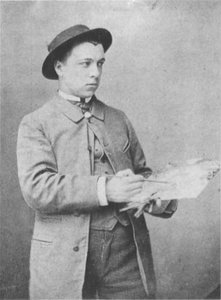
Paul Signac
1863 - 1935 , France
Quick Facts
- Artistic Movement Or Style: Neo-Impressionism, Pointillism
- Artists Or Movements Influenced By This Artist:
- Henri Matisse
- Fauvism
- André Derain
- Artists Who Influenced This Artist:
- Claude Monet
- Georges Seurat
- Date Of Birth: November 11, 1863
- Date Of Death: August 15, 1935
- Full Name: Paul Victor Jules Signac
- Nationality: French
- Notable Artworks:
- Boulevard de Clichy
- The Red Buoy
- La Valleuse
- The Velodrome
- Town Beach, Collioure
- Place Of Birth: Paris, France
Related Articles

Cézanne's Masterpieces: 25 Iconic Artworks to Transform Your Space
Journey through 25 iconic artworks by Paul Cézanne – a master of Impressionism and Post-Impressionism. Explore his landscapes, still lifes, and the stories behind these timeless masterpieces. Discover museum-quality reproductions & curated decor at ArtsDot.com.
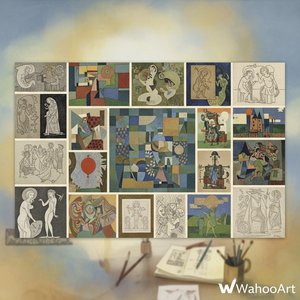
Paul Klee's Masterpieces: Explore 25 Iconic Paintings & Prints | ArtsDot
Journey through Paul Klee's 25 most iconic paintings & prints. Explore his abstract style, Bauhaus influence, and vibrant color palettes. Find museum-quality art reproductions & decor ideas at ArtsDot.com. Discover all masterpieces online.

Beyond the Horizon: 10 Landscape Masterpieces for Your Home Decor
Journey through 10 breathtaking landscape paintings by Monet, Van Gogh & more! Explore iconic artworks, artistic techniques & find inspiration for your home decor. Museum-quality reproductions at ArtsDot.com. Discover all masterpieces on ArtsDot.com

Hokusai's Masterpieces: 25 Iconic Prints & Paintings for Art Lovers | ArtsDot
Journey through Katsushika Hokusai’s 25 most iconic artworks, including *The Great Wave*. Explore the ukiyo-e master's history, style & timeless Japanese woodblock prints. Find museum-quality reproductions for your home at ArtsDot.com.

Impressionistic Landscapes: 10 Masterpieces That Changed Art & Decor
Journey into the heart of Impressionism! Explore 10 masterpieces by Monet, Renoir & Degas that revolutionized landscape art. Discover their stories, techniques & find museum-quality reproductions to elevate your home decor on ArtsDot.com.