

 Preview
 Send
Send Share
Share
 Details

 Download
 Similars
 X-Ray
X-Ray Diaporama
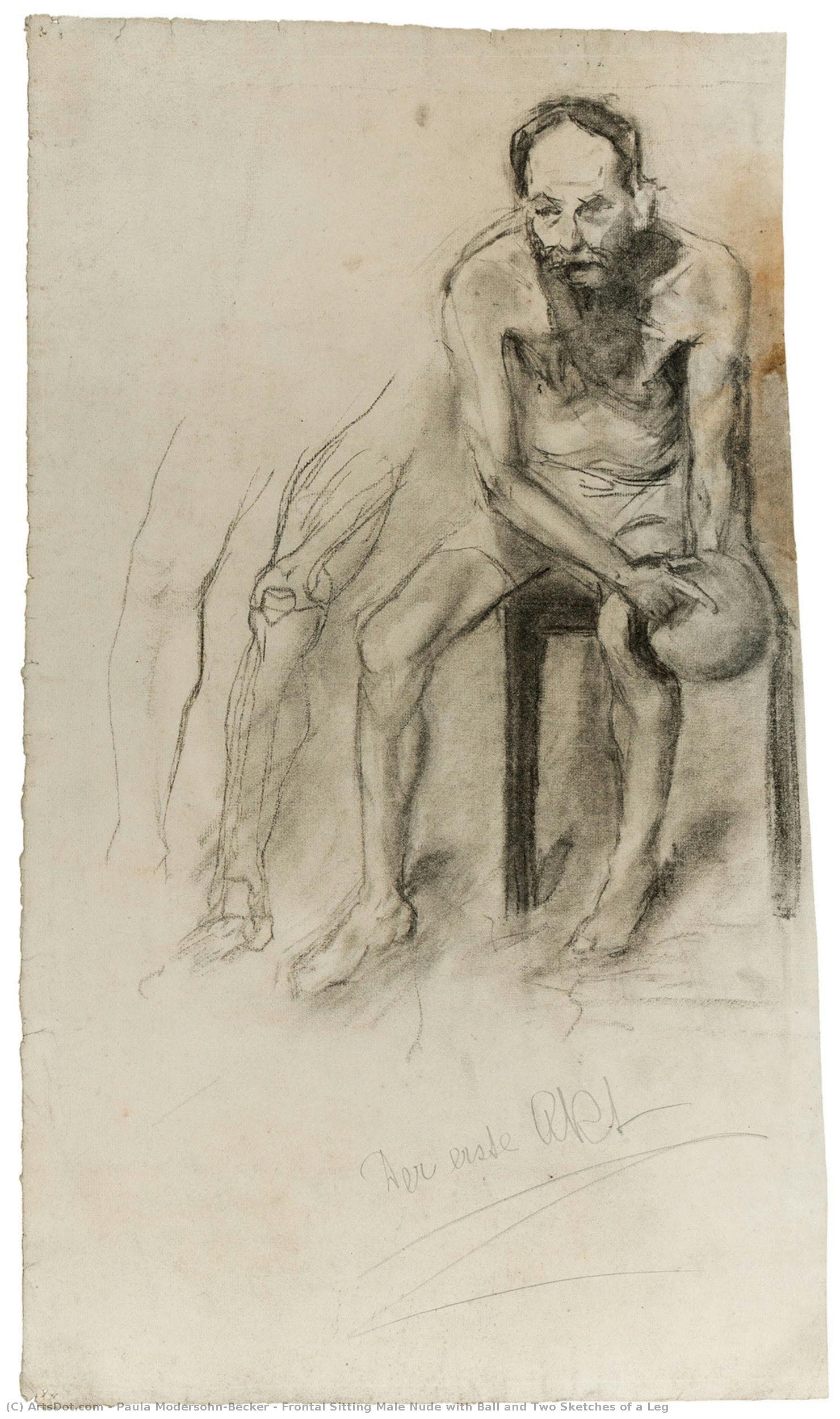
Frontal Sitting Male Nude with Ball and Two Sketches of a Leg


 Read More
Purchase a high-resolution, enhanced digital image, far superior to the online preview.
Each file is meticulously prepared by our in-house specialists using advanced tools and expert manual retouching. We ensure every image has exceptional clarity, precise color accuracy, and fine detail.
The final file is delivered via email within 72 hours, optimized for immediate use in professional, editorial, and print environments. This is the same quality trusted by top-tier design studios, publishers, and galleries.
Digital Image
Download a high-resolution file for personal display, printing, and creative projects. ( Buy Print Buy Hand Made Painting)
Included in Every Digital Image Order
Expert Digital Delivery, Guaranteed
When you choose ArtsDot.com, you're not just getting an image - you're receiving a professionally enhanced digital artwork, crafted with precision and backed by a satisfaction guarantee. Here's everything that comes with your order, automatically:

Fast Email Delivery
Your high-resolution digital image file will be emailed to you within 72 hours of ordering - ready for immediate use.

AI-Enhanced Digital File
Your artwork is professionally optimized using advanced AI tools and manual editing, ensuring maximum detail, clarity, and color accuracy.

Free Lifetime Re-Delivery
Accidentally deleted or lost your file? No worries - we'll resend it to you anytime, free of charge.

No Import Fees - Ever
Enjoy your artwork instantly with zero customs, duties, or delivery fees - digital downloads are always tax-free.

Color Accuracy Guarantee
We ensure your digital image reflects the original colors as closely as possible using professional tools and color management.

60-Day Satisfaction Guarantee
If you're not satisfied with your digital image, we'll revise it or refund 100% within 60 days - no questions asked.

100% Money-Back Guarantee
Not satisfied? Get a full refund within 60 days of receiving your digital file - no questions asked.

Bulk Order Discounts
Buy 3 images, save 10% - Buy 5, save 15% - Buy 10+, save 20%. Great for creative projects, galleries, and agencies.
A Quiet Revolution: Exploring Paula Modersohn-Becker’s “Frontal Sitting Male Nude with Ball and Two Sketches of a Leg”
Paula Modersohn-Becker’s “Frontal Sitting Male Nude with Ball and Two Sketches of a Leg,” created in 1896, stands as a cornerstone of Expressionist art—a deceptively simple image brimming with profound psychological depth. More than just a depiction of the human form, it embodies a courageous assertion of female artistic vision within a patriarchal society grappling with anxieties about modernity.
The Subject Matter and Style: The artwork portrays a male nude seated on a chair, his hands clasped in front of him. Alongside him are two balls—one positioned centrally and another to the right—a seemingly mundane detail that elevates the piece’s significance. Becker eschewed grand narratives or mythological references; instead, she focused intently on capturing the essence of human experience – vulnerability, contemplation, and perhaps even a hint of unease.
Technique: Executed in charcoal on paper, Modersohn-Becker employed a masterful blend of hatching and crosshatching to achieve remarkable tonal gradation. This technique wasn’t merely about replicating visual reality; it was about conveying emotion through texture and shading. The artist meticulously rendered the contours of the nude figure with painstaking precision, emphasizing musculature and anatomical detail while simultaneously softening edges to create an atmosphere of intimacy and introspection.
Historical Context: Produced during a period of significant social upheaval—the burgeoning Industrial Revolution and the rise of scientific rationalism—Becker’s work represents a deliberate rejection of academic conventions. Expressionist artists sought to express inner feelings rather than objective observation, prioritizing subjective experience over factual representation. Worpswede, where Becker resided, was a haven for avant-garde artists experimenting with new artistic approaches.
Symbolism: The inclusion of the balls is particularly noteworthy. While their precise symbolism remains debated among scholars, they are often interpreted as representing fertility and potential—a subtle nod to anxieties surrounding reproduction in an era marked by urbanization and changing social norms. Furthermore, the sketches flanking the nude figure could symbolize the artist’s creative process itself – capturing fleeting impressions and distilling them into enduring visual forms.
Emotional Impact: “Frontal Sitting Male Nude with Ball and Two Sketches of a Leg” transcends mere aesthetic beauty; it compels viewers to confront uncomfortable truths about human vulnerability. The stillness of the pose, combined with the artist’s masterful use of tonal shading, evokes a palpable sense of melancholy and contemplation. It's an artwork that invites reflection on themes of identity, intimacy, and the complexities of the human condition—a testament to Modersohn-Becker’s unwavering commitment to portraying inner life with uncompromising honesty.
Considerations for Reproduction: High-quality reproductions capture the subtle nuances of charcoal rendering, faithfully conveying the artwork's textural richness and tonal subtleties. Selecting a print on archival paper ensures that future generations can appreciate Modersohn-Becker’s vision for decades to come.
Related Artworks
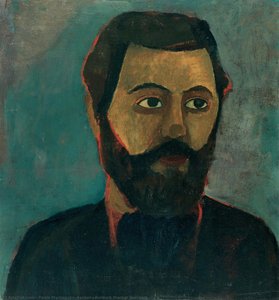
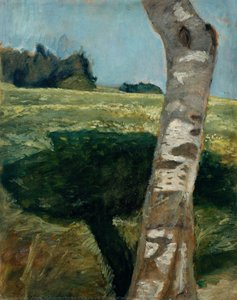
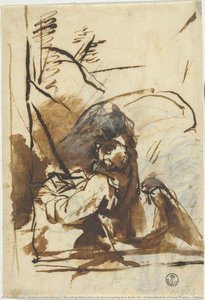
Artist Biography
A Pioneer of Inner Vision: The Life and Art of Paula Modersohn-Becker
Paula Modersohn-Becker, a name that resonates with quiet power in the annals of early modern art, was an artist who dared to look inward. Born Minna Hermine Paula Becker on February 8, 1876, in Dresden, Germany, her life was tragically short – she passed away November 30, 1907, in Worpswede – yet within those three decades, she forged a path of remarkable artistic innovation and personal courage. Her story isn’t one of immediate acclaim or widespread recognition during her lifetime; rather, it's a testament to the enduring strength of an individual voice that challenged conventions and explored the depths of human experience with unflinching honesty. From a relatively privileged upbringing in a family marked by a subtle shadow – her uncle had attempted to assassinate the King of Prussia – Paula’s artistic inclinations were nurtured, though not without societal expectations pressing upon them. She received early training in London and Berlin, but it was the atmosphere of Worpswede, an artists' colony north of Bremen, that truly ignited her creative spirit. There, amidst a community of like-minded individuals, she began to shed the constraints of academic tradition and embark on a journey toward a uniquely personal artistic language.The Path to Expression: Influences and Artistic Development
Modersohn-Becker’s artistic evolution was not linear; it was a process of constant questioning, experimentation, and refinement. Initially influenced by Impressionism, her early landscapes and portraits displayed a sensitivity to light and atmosphere, but she soon felt constrained by its limitations. A pivotal moment came with her travels to Paris in 1899 and subsequent visits in 1903 and 1905. Immersing herself in the vibrant art scene of the French capital, she encountered the works of Paul Cézanne, Paul Gauguin, Vincent van Gogh, and other Post-Impressionist masters. These artists liberated her from the pursuit of mere representation, encouraging her to explore the expressive potential of color, form, and composition. The influence of these painters is evident in her increasingly bold brushwork and simplified forms. However, Modersohn-Becker didn’t simply imitate; she synthesized these influences with her own deeply felt emotions and observations. Her encounters with artists like Emil Nolde and Franz Crumbach within the Worpswede circle further propelled her toward a more emotionally charged and subjective style. She began to focus intently on portraits, particularly those of women and mothers, seeking to capture not just their physical likeness but also their inner lives – their vulnerabilities, strengths, and complexities. She sought to depict the essence of her subjects, moving beyond superficial appearances to reveal the psychological depth beneath.Breaking Boundaries: Self-Portraits and the Exploration of Identity
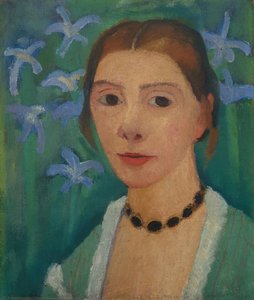
Perhaps the most groundbreaking aspect of Modersohn-Becker’s oeuvre is her series of self-portraits, particularly those depicting herself nude or pregnant. These works were revolutionary for their time, challenging societal norms and artistic conventions that dictated how women should be represented – or rather, *not* represented in such a direct and unflinching manner. She wasn't presenting herself as an object of desire; instead, she was using her own body as a vehicle for exploring themes of identity, femininity, motherhood, and the human condition. Self-Portrait with Necklace, Self-Portrait on Her Sixth Wedding Anniversary, and numerous other self-representations are not merely studies in form and color; they are profound psychological investigations. They reveal a woman grappling with her own sense of self, questioning societal expectations, and asserting her artistic agency. These paintings were daring acts of self-expression, paving the way for future generations of female artists to explore their own identities and experiences through art. Her willingness to confront taboo subjects and challenge conventional notions of beauty cemented her position as a true pioneer. She looked at herself with an honesty rarely seen in portraiture, particularly from a female artist, creating images that were both vulnerable and powerfully self-possessed.Legacy and Lasting Impact
Paula Modersohn-Becker’s tragically short career yielded an astonishing body of work – over 700 paintings and 1,000 drawings. Despite limited recognition during her lifetime, her influence on the development of German Expressionism is now widely acknowledged. She is considered a key figure in bridging the gap between Impressionism and Expressionism, laying the groundwork for artists like Ernst Ludwig Kirchner and Emil Nolde. In 1927, a landmark event solidified her place in art history: the founding of the Paula Modersohn-Becker Museum in Bremen – the first museum dedicated solely to the work of a female artist. This act was not merely a tribute to her artistic achievements; it was a recognition of her significance as a woman artist and a symbol of progress for women in the arts. Her paintings continue to resonate with audiences today, offering timeless insights into the human condition, motherhood, identity, and the search for meaning. Her legacy extends beyond the realm of art history; she remains an inspiration to artists and individuals alike who strive to live authentically and express themselves fearlessly. She was a woman ahead of her time, whose artistic vision continues to challenge and inspire us today.Key Themes in Her Work
- Motherhood: Modersohn-Becker’s depictions of mothers and children are particularly poignant, capturing the complexities of maternal love, vulnerability, and societal expectations.
- Self-Portraiture: Her self-portraits represent a radical act of self-exploration and challenge traditional representations of women in art.
- Identity: The artist grappled with questions of identity throughout her life, exploring themes of femininity, marriage, and artistic independence.
- The Human Condition: Her work often reflects a deep empathy for the human experience, portraying subjects with honesty and psychological depth.
- Spiritual Seeking: A sense of spiritual yearning permeates much of her art, reflecting her search for meaning and connection in a rapidly changing world.
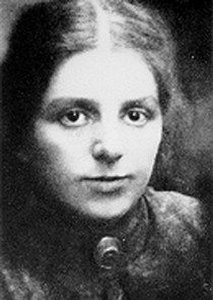
Paula Modersohn-Becker
1876 - 1907 , Germany
Quick Facts
- Artistic Movement Or Style: Expressionism
- Artists Or Movements Influenced By This Artist: ['German Expressionism']
- Artists Who Influenced This Artist:
- Paul Cézanne
- Paul Gauguin
- Vincent van Gogh
- Date Of Birth: February 8, 1876
- Date Of Death: November 30, 1907
- Full Name: Paula Modersohn-Becker
- Nationality: German
- Notable Artworks:
- Self-Portrait with Necklace
- Mother With Baby
- Girl With Tiger Lilies
- Place Of Birth: Dresden, Germany

