 Preview
 Send
Send Share
Share
 Details

 Download
 Similars
 X-Ray
X-Ray Diaporama
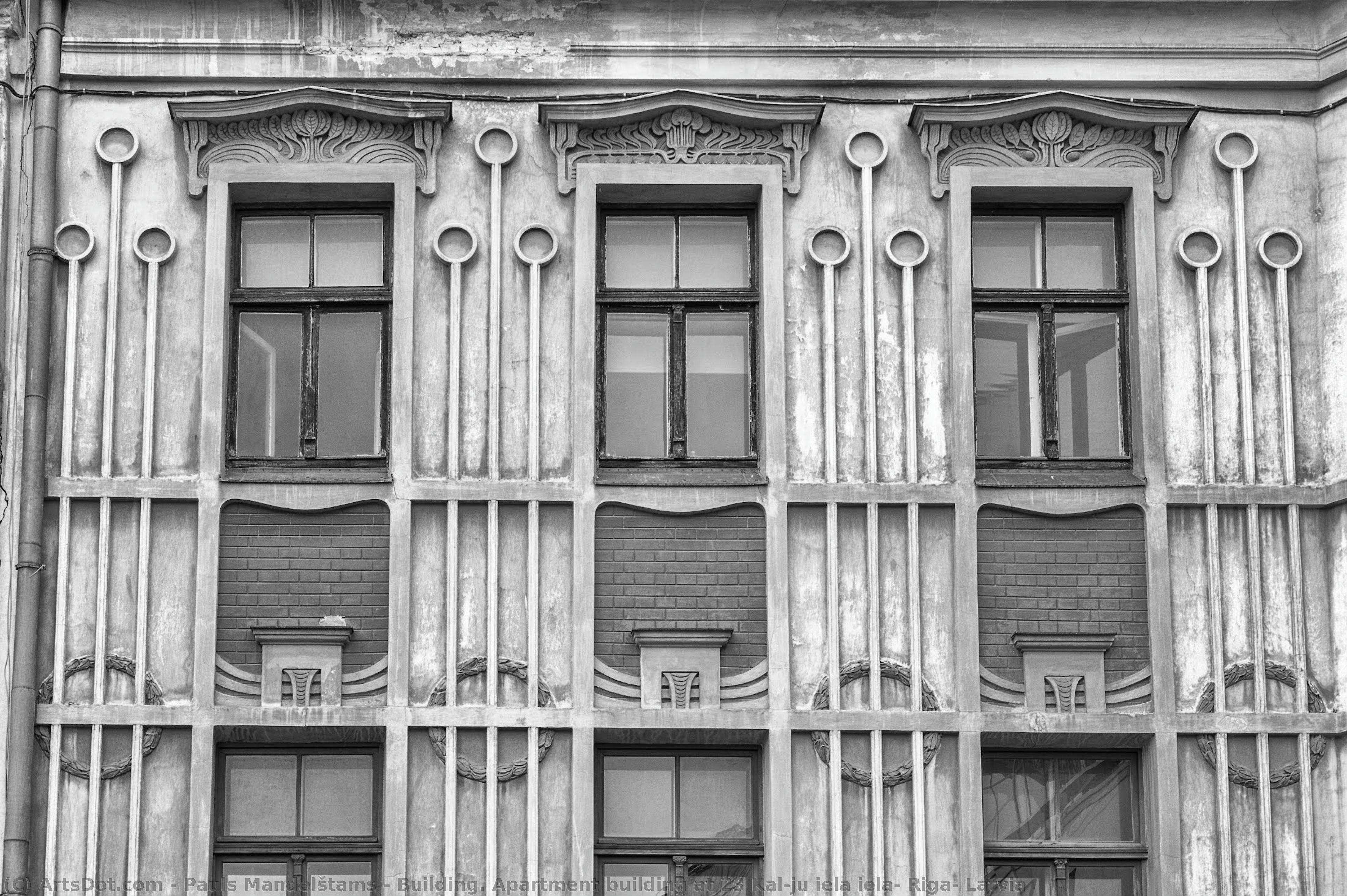
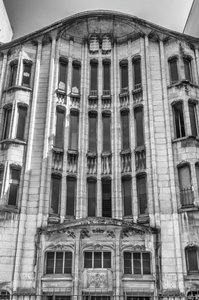
Building. Apartment building at 23 Kalēju iela iela, Riga, Latvia

 Read More
Giclée / Art Print
Museum-quality giclée or canvas print with fast production and flexible finish options. ( Buy Hand Made Painting Buy Image)




































Pick from our preset sizes that match the artwork's original proportions.

You may enter your own dimensions to fit a specific frame or space. If your selected size does not match the original image's proportions, we will either crop the artwork or extend the image with a mirrored or solid-fill edge. A digital mockup will be sent for your approval before production begins.
Please note that the on-screen preview does not reflect the actual cropping or extension. Only the mockup will accurately show the final composition.
While custom sizes are available, we recommend selecting a dimension from the predefined list to preserve the original proportions.
Worldwide Delivery () in 2 weeks instead of standard 4/5 weeks. (28 August)

Free Worldwide Express Shipping

High-Quality Linen Canvas

Full Shipping Insurance

Customs Tax Refund Guarantee

True Color Matching Guarantee

60-Day Return Policy (Defects Only)

100% Money-Back Guarantee

Bulk Discount Offer
 Glass option is only available in size under 110 CM

Building. Apartment building at 23 Kalēju iela iela, Riga, Latvia
Giclée / Art Print
Reproduction Size
-


Total Price
$ 63
Related Artworks






Artist Biography
A Life Etched in Riga’s Stone: The Story of Pauls Mandelštams
Pauls Mandelštams, born Fayvush Mandelstamm on September 19th, 1872, in the Kovno Governorate – a region now part of Lithuania but then within the Russian Empire – was an architect whose legacy is inextricably linked to the cityscape of Riga. His life, though tragically cut short by the horrors of the Holocaust in 1941, unfolded as a testament to artistic vision and resilience amidst shifting political tides. Mandelštams wasn’t merely a builder of structures; he was a chronicler of his time, translating the evolving aesthetic sensibilities of the late 19th and early 20th centuries into the very fabric of Latvia's capital. His journey began with formal education at the Riga Polytechnic Institute, where he immersed himself in both architecture and civil engineering, laying a solid foundation for a career that would profoundly shape the urban landscape.From Eclecticism to Art Nouveau: A Developing Style
Mandelštams’ early work reflected the prevailing architectural trends of his era – a broad eclectic style drawing from various historical sources. However, he quickly demonstrated an aptitude for innovation and a keen sensitivity to emerging artistic movements. The turn of the century saw Riga embracing the romantic allure of *Jugendstil*, or Art Nouveau, and Mandelštams was at the forefront of this transformation. He wasn’t simply adopting a style; he was interpreting it through his own unique lens, infusing it with a distinctly Baltic character. His designs began to feature flowing lines, organic motifs inspired by nature, and intricate ornamentation that celebrated craftsmanship and beauty. A pivotal moment in his career came with his involvement in the construction of Riga's first electric tram line (1900-1901) and subsequent supervision of the city’s waterworks (1903-1904), projects which showcased both his technical prowess and his growing artistic confidence.A Prolific Creator: Shaping the Face of Riga
Over the course of his career, Pauls Mandelštams is credited with designing over fifty buildings in Riga – a remarkable feat that underscores his dedication and prolific output. These structures weren’t isolated creations but rather formed a cohesive body of work that defined entire streets and neighborhoods. His designs moved through phases, starting with the aforementioned eclectic style, then blossoming into full-fledged Art Nouveau masterpieces, and eventually embracing the streamlined forms of Functionalism in later years. Buildings like the former bank building on Dome Square (now housing Latvian Radio), completed in 1913, stand as testaments to his versatility and skill. The apartment building at 23 Kalēju iela is another prime example, showcasing the delicate ornamentation and elegant proportions characteristic of his Art Nouveau period. He wasn’t confined to grand public buildings; Mandelštams also designed numerous residential structures, contributing significantly to the quality of life for Riga's citizens.A Victim of History: The Tragic End
The shadow of World War II fell heavily upon Latvia, and Pauls Mandelštams, as a Baltic German-Jewish architect, became a target of persecution under Nazi occupation. In 1941, he was tragically shot in the Riga Central Prison – a devastating loss for the architectural community and a stark reminder of the human cost of intolerance. His death marked not only the end of a brilliant career but also a symbolic severing of a vital link to Riga’s rich cultural heritage.Enduring Legacy: A Lasting Impression on Latvia
Despite his untimely demise, Pauls Mandelštams' legacy continues to resonate throughout Riga today. His buildings stand as enduring monuments to his artistic vision and technical skill, attracting admirers from around the world. He is remembered not only for the beauty of his designs but also for his ability to capture the spirit of a city in transition. The preservation of his work has become a matter of national importance, ensuring that future generations can appreciate the contributions of this remarkable architect. His story serves as a poignant reminder of the power of art to transcend political boundaries and the enduring importance of safeguarding cultural heritage in the face of adversity.- Key Influences: Art Nouveau movement, Functionalism, Baltic German architectural traditions.
- Major Achievements: Design of over 50 buildings in Riga, contribution to the city’s first electric tram line and waterworks system, mastery of diverse architectural styles.
- Historical Significance: Represented a pivotal figure in shaping Riga's skyline during a period of significant artistic and political change. His work embodies the cultural fusion characteristic of Latvia’s history.

pauls mandelštams
1872 - 1941 , Latvia
Quick Facts
- Artistic Movement Or Style: Eclectic, Art Nouveau, Functionalism
- Date Of Birth: 1872
- Date Of Death: 1941
- Full Name: Pauls Mandelštams
- Nationality: Baltic German-Jewish
- Notable Artworks: ['Apartment building at 23 Kaleju iela']
- Place Of Birth: Riga, Latvia