

 Preview
 Send
Send Share
Share
 Details

 Download
 Similars
 X-Ray
X-Ray Diaporama
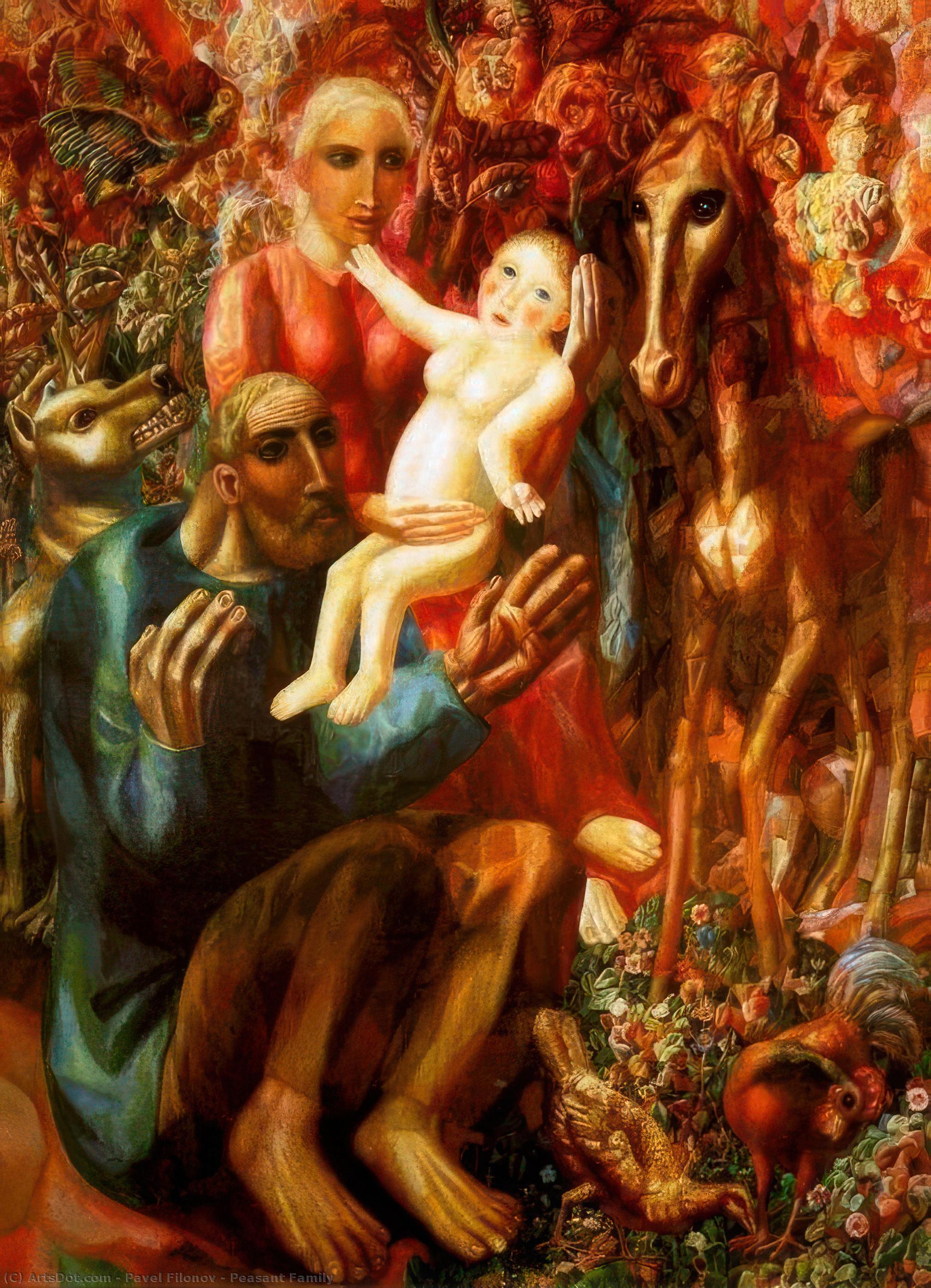
Peasant Family
 Oil On Canvas
- WallArt
- Analytical Realism
 1910
1910- Modern
 159.0 x 128.0 cm
 State Russian Museum
 Read More
Purchase a high-resolution, enhanced digital image, far superior to the online preview.
Each file is meticulously prepared by our in-house specialists using advanced tools and expert manual retouching. We ensure every image has exceptional clarity, precise color accuracy, and fine detail.
The final file is delivered via email within 72 hours, optimized for immediate use in professional, editorial, and print environments. This is the same quality trusted by top-tier design studios, publishers, and galleries.
Digital Image
Download a high-resolution file for personal display, printing, and creative projects. ( Buy Print Buy Hand Made Painting)
Included in Every Digital Image Order
Expert Digital Delivery, Guaranteed
When you choose ArtsDot.com, you're not just getting an image - you're receiving a professionally enhanced digital artwork, crafted with precision and backed by a satisfaction guarantee. Here's everything that comes with your order, automatically:

Fast Email Delivery
Your high-resolution digital image file will be emailed to you within 72 hours of ordering - ready for immediate use.

AI-Enhanced Digital File
Your artwork is professionally optimized using advanced AI tools and manual editing, ensuring maximum detail, clarity, and color accuracy.

Free Lifetime Re-Delivery
Accidentally deleted or lost your file? No worries - we'll resend it to you anytime, free of charge.

No Import Fees - Ever
Enjoy your artwork instantly with zero customs, duties, or delivery fees - digital downloads are always tax-free.

Color Accuracy Guarantee
We ensure your digital image reflects the original colors as closely as possible using professional tools and color management.

60-Day Satisfaction Guarantee
If you're not satisfied with your digital image, we'll revise it or refund 100% within 60 days - no questions asked.

100% Money-Back Guarantee
Not satisfied? Get a full refund within 60 days of receiving your digital file - no questions asked.

Bulk Order Discounts
Buy 3 images, save 10% - Buy 5, save 15% - Buy 10+, save 20%. Great for creative projects, galleries, and agencies.
Collectible Description
A Vision of Flight and Faith: Exploring Pavel Filonov’s Masterpiece
Created in 1910, this powerfully evocative painting by Russian avant-garde artist Pavel Filonov transcends a simple depiction of the biblical “Flight into Egypt.” It's a deeply layered work brimming with symbolic weight, emotional intensity, and a unique artistic vision that bridges the gap between traditional religious iconography and the burgeoning modernist movements of the early 20th century. This artwork offers not just aesthetic beauty but a profound meditation on vulnerability, protection, and unwavering faith.
Decoding Analytical Realism & Filonov’s Style
Filonov was a key figure in developing “Analytical Realism,” a style he termed "anti-Cubism." Unlike the fragmented geometric forms of Cubism, Analytical Realism sought to represent an object's inner essence – its ‘soul’ – through meticulous detail and layered construction. This is strikingly evident here; the composition isn’t about realistic representation but rather a feverish attempt to convey the *feeling* of flight, anxiety, and divine protection. The densely packed arrangement, vibrant color palette, and distorted forms all contribute to this emotionally charged effect. His technique involved building up images from countless tiny brushstrokes, creating a textured surface that seems to pulse with life.
The Narrative & Symbolic Language
At the heart of the painting lies the Holy Family – Joseph, Mary, and the infant Jesus – depicted during their desperate escape from Herod’s decree. Joseph, grounded and protective, forms the compositional base, his diagonal pose conveying both strength and urgency. Mary cradles a serene yet apprehensive Jesus, whose direct gaze engages the viewer with an unsettling innocence. Surrounding them is a menagerie of animals—a horse, donkey, sheep, rooster, and stag—each carrying symbolic meaning. The donkey represents humility; the horse, nobility; the sheep, innocence; the stag, often associated with Christ as a spiritual leader; and the rooster, vigilance and resurrection. These aren’t mere background elements but active participants in this sacred journey.
Color, Composition & Emotional Resonance
The painting's color palette is dominated by warm tones – reds, oranges, yellows, and browns – evoking heat, passion, and a sense of impending danger. Cooler blues and greens are subtly interwoven, providing contrast but never diminishing the overall intensity. The compressed composition, with little empty space, creates a feeling of claustrophobia and urgency, mirroring the family’s precarious situation. Diagonal lines throughout—in Joseph's posture, the horse’s neck, and overhead branches—generate movement and heighten the dramatic tension. Ultimately, the artwork evokes a complex emotional landscape: anxiety, vulnerability, hope, and unwavering faith.
A Piece of History for Your Space
Pavel Filonov’s “Peasant Family” is more than just a painting; it's a window into a pivotal moment in art history and a powerful expression of enduring human themes. A reproduction of this masterpiece will bring a unique blend of historical significance, artistic innovation, and emotional depth to any interior space – from the sophisticated collector’s gallery to the discerning homeowner seeking a statement piece that sparks conversation and contemplation.
Related Artworks

Artist Biography
A Life Dedicated to Analytical Realism
Pavel Nikolayevich Filonov, born in Moscow in 1883, remains a profoundly compelling and often enigmatic figure within the landscape of Russian avant-garde art. His life wasn’t merely a chronicle of artistic creation but a philosophical quest—a relentless pursuit to dissect and reveal the very essence of reality through his unique method of Analytical Realism. Unlike many contemporaries who sought innovation through abstraction or geometric simplification, Filonov delved deeper, believing every object possessed an “inner life,” a hidden soul waiting to be unveiled through meticulous analysis. This wasn’t simply about *what* things looked like, but *how* they existed at their most fundamental level—a concept that would define his entire artistic trajectory. His early years were marked by hardship and loss, orphaned young and finding himself drawn to the burgeoning art scene of St. Petersburg, a city that would become both his muse and his crucible. He initially pursued formal training but quickly found the established norms of Russian realism stifling, yearning for an approach that went beyond mere surface appearances.The Genesis of Analytical Realism
Filonov’s artistic journey was deeply intertwined with intellectual currents of the time. The rigorous logic of Bertrand Russell, the epistemological inquiries of G.E. Moore, and the linguistic philosophy of Ludwig Wittgenstein all resonated profoundly with his developing principles. He experimented extensively, absorbing influences but ultimately forging his own path, culminating in the formulation of Analytical Realism. This wasn’t a sudden revelation but a gradual distillation of ideas, a painstaking process of refining his vision until it crystallized into a coherent artistic philosophy. He reacted against what he perceived as the superficiality of Cubism, acknowledging its attempt to break down forms but believing it stopped short of truly capturing an object's inherent energy and dynamism. He posited that every entity—animate or inanimate—was composed of fundamental elements: lines, surfaces, colors, and forms. By analyzing these components, one could reveal the “inner life” or "soul" of the subject. This involved a process of deconstruction and reconstruction, breaking down objects into their constituent parts and reassembling them in a way that conveyed their underlying structure and essence. His canvases became vibrant ecosystems of fragmented shapes, bold lines, and intense colors—a visual representation of this analytical process. It wasn’t about depicting reality as it appeared but as it fundamentally *was*.Key Works and Artistic Style
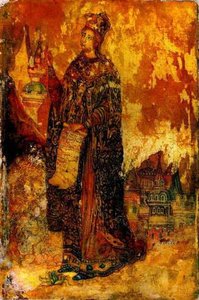
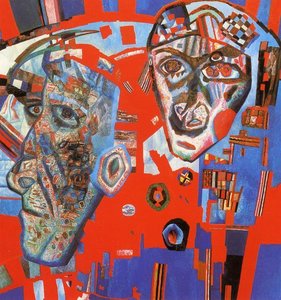
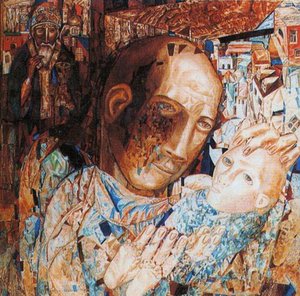
Filonov's artistic output, though relatively small in number, is remarkably diverse and consistently compelling. Early works like St. Catherine (1910) demonstrate his burgeoning mastery of color and composition while hinting at the abstract lens through which he would soon view religious themes. Man with a Cross (1913) further explores spiritual symbolism, interwoven with his analytical approach to form. Later pieces, such as Faces (1940), exemplify his mature style—abstract compositions resembling masks or fragmented visages, rendered with expressive brushwork that conveys movement and emotional depth. Mother (1916) stands out as a powerful expressionist work, brimming with intimacy and turmoil, showcasing vibrant colors and symbolic layers. Perhaps one of his most groundbreaking achievements is Two Heads (1925), a masterpiece of Analytical Realism characterized by geometric abstraction and complex symbolism. A defining characteristic of Filonov’s style is its dense layering of forms—a technique he employed to create depth, complexity, and a sense of pulsating energy within his compositions. He would build up his canvases with multiple layers of paint, meticulously crafting intricate patterns that seemed to vibrate with life. This meticulous process wasn't merely technical; it was integral to revealing the hidden energies he believed resided within all things.Legacy and Enduring Influence
Despite facing periods of obscurity and suppression during the Stalinist era—a time when avant-garde art was often viewed with suspicion—Pavel Filonov’s contributions to art history are now widely recognized. He is rightfully considered a pivotal figure in Russian avant-garde art, a pioneer who dared to challenge conventional notions of representation. His unique artistic vision and philosophical approach continue to inspire artists today, prompting them to explore the boundaries between perception and reality. His work has been exhibited at prestigious institutions like the Tretyakov Gallery, ensuring his legacy endures as a testament to the power of analytical thought and its potential for innovative artistic expression. Filonov’s art is not merely something to be looked at; it's an invitation to see the world anew—to look beyond the surface and delve into the hidden depths of existence.- Movement: Analytical Realism
- Born: Moscow, Russia (1883)
- Died: 1941

Pavel Filonov
1883 - 1941 , Russia
Quick Facts
- Artistic Movement Or Style: Analytical Realism
- Artists Or Movements Influenced By This Artist:
- Suprematism
- Expressionism
- Artists Who Influenced This Artist:
- Bertrand Russell
- G.E. Moore
- Ludwig Wittgenstein
- Date Of Birth: January 8, 1883
- Date Of Death: December 3, 1941
- Full Name: Pavel Nikolayevich Filonov
- Nationality: Russian
- Notable Artworks:
- Two Heads
- Faces
- Mother
- St. Catherine
- Place Of Birth: Moscow, Russia

