 Send
Send Share
Share
 Details

 Download
 Similars
 Diaporama
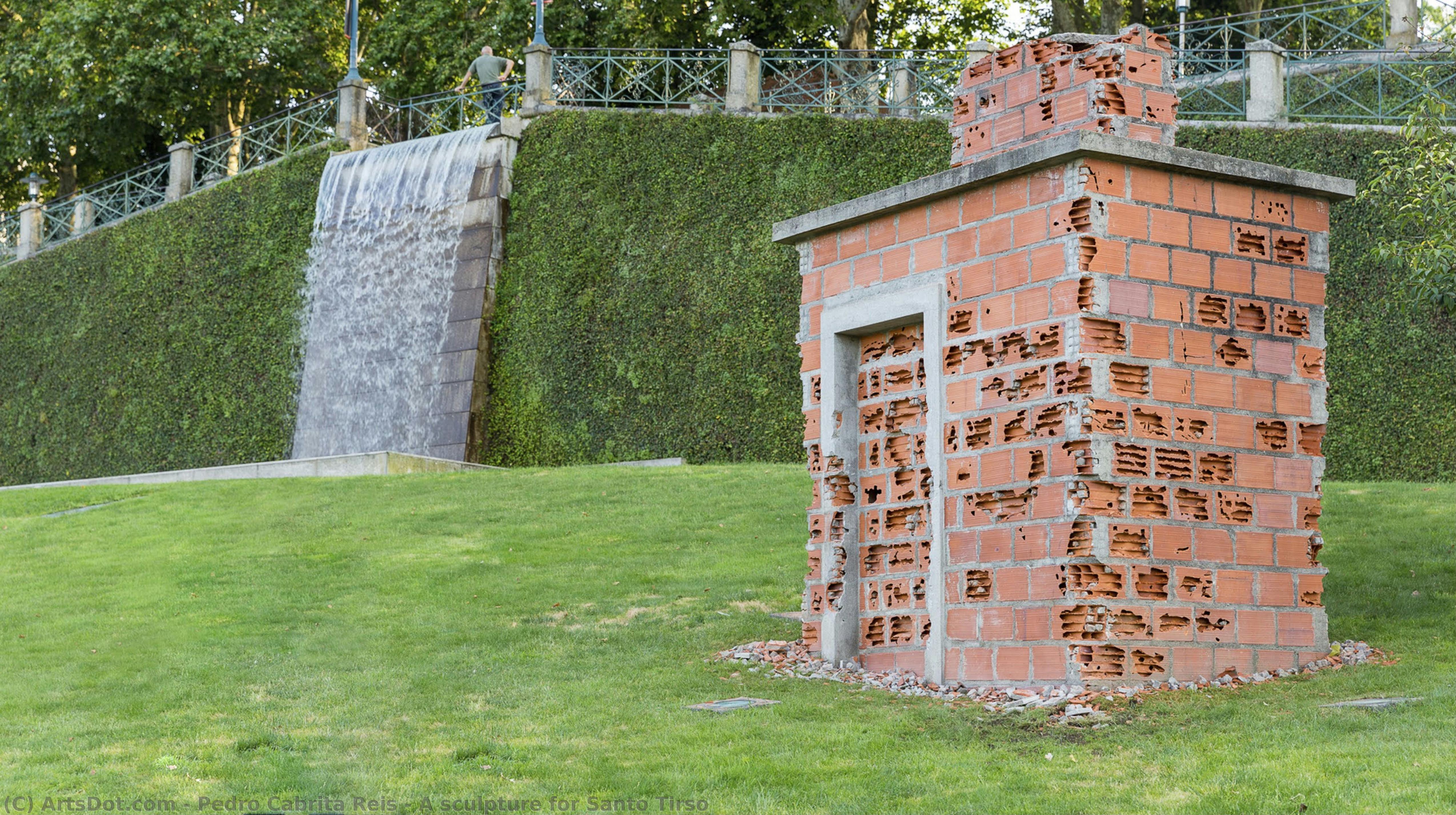
A sculpture for Santo Tirso
 Sculpture
- Sculpture
- Contemporary Art
 2001
2001- Contemporary
 350.0 x 275.0 cm
 Rede Portuguesa de Arte Contemporânea a Norte
 Read More
Hand Made Oil Reproduction
Hand-painted oil on canvas in your size and frame, made to order by our artists. ( Buy Print Buy Image)




































Pick from our preset sizes that match the artwork's original proportions.

You may enter your own dimensions to fit a specific frame or space. If your selected size does not match the original image's proportions, we will either crop the artwork or extend the painting with additional hand-painted elements. A digital mockup will be sent for your approval before production begins.
Please note that the on-screen preview does not reflect the actual cropping or extension. Only the mockup will accurately show the final composition.
While custom sizes are available, we recommend selecting a dimension from the predefined list to preserve the original proportions.
After order, ArtsDot.com team will email client for instructions and provide a mockup preview
Worldwide Delivery () in 3/4 weeks instead of standard 5 weeks. (20 August). No compromise on quality.

Free Worldwide Express Shipping

High-Quality Linen Canvas

Full Shipping Insurance

Customs Tax Refund Guarantee

True Color Matching Guarantee

60-Day Return Policy (Defects Only)

100% Money-Back Guarantee

Bulk Discount Offer
 Glass option is only available in size under 110 CM

A sculpture for Santo Tirso
Reproduction Medium
Reproduction Size
-


Total Price
$ 263
Artwork Description
A Dialogue with Space and Materiality
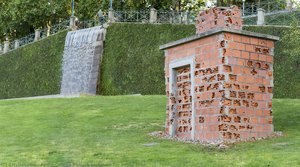
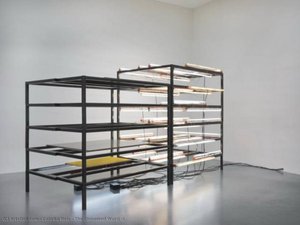
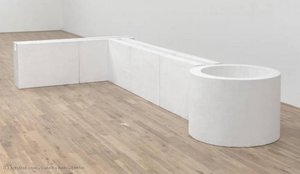
In the evocative work A sculpture for Santo Tirso, the renowned Portuguese contemporary artist Pedro Cabrita Reis invites us into a profound meditation on architecture, memory, and the boundaries of the inhabited world. Created in 2001, this monumental piece transcends the traditional definition of sculpture, functioning instead as an intervention within the landscape itself. The work presents a large-scale brick structure that commands attention through its raw, tactile presence. At first glance, the viewer is met with a composition that blurs the line between man-made construction and organic garden elements, where the rugged texture of the bricks meets the quiet stillness of a park setting. The inclusion of a small chimney atop the structure adds a touch of domestic intimacy to an otherwise imposing form, suggesting a ghostly presence of habitation or a memory of a hearth long since cooled.
The artist’s mastery lies in his ability to manipulate the viewer's perception of space. By utilizing brick—a material deeply rooted in the history of construction and urban development—Cabrita Reis anchors the piece in a sense of permanence and weight. Yet, there is an inherent fragility in how the structure interacts with its surroundings. The presence of benches placed near the composition invites a physical engagement; they are not merely accessories but essential components that transform the artwork into a destination. These seating areas encourage the observer to linger, to sit, and to contemplate the interplay between the solid, unyielding brickwork and the ephemeral nature of the light and air that move around it.
The Poetics of Memory and Presence
To understand this sculpture is to delve into the conceptual depth that defines Cabrita Reis’s career. His practice has always been a cartography of space, where every material choice serves as a vessel for historical and personal narrative. In A sculpture for Santo Tirso, the brickwork acts as a metaphor for the layers of time that accumulate in any given place. The structure feels like an archaeological fragment, a remnant of a forgotten architectural era brought into the contemporary light. This sense of "presence through absence" is a hallmark of his style, creating an emotional resonance that speaks to the universal human experience of loss, reconstruction, and the enduring nature of our environments.
For the discerning collector or interior designer, this piece offers a unique opportunity to introduce a sense of structural drama and intellectual depth into a space. As a high-quality reproduction, it brings the rugged, earthy tones and the monumental scale of Cabrita Reis’s vision into the home or gallery setting. The artwork does not merely decorate a wall; it establishes a focal point of contemplation, evoking the quiet majesty of a public garden and the profound stillness of a sculptural monument. It is an ideal selection for those who appreciate contemporary art that challenges the boundaries between the internal psyche and the external world, offering a sophisticated blend of architectural strength and poetic vulnerability.
Related Artworks


Artist Biography
A Cartography of Space and Memory: The World of Pedro Cabrita Reis
Born in Lisbon, Portugal, in 1956, Pedro Cabrita Reis has emerged as a pivotal figure in contemporary art, not merely representing his nation’s artistic landscape but actively shaping its dialogue with the international stage. His formative years spent within the historical and cultural richness of Lisbon deeply inform his practice, imbuing it with a sensitivity to place, memory, and the often-fragile relationship between interior and exterior worlds. Even before fully establishing himself as an artist, Cabrita Reis demonstrated a commitment to fostering critical discourse around art, founding and directing the influential magazine *Arte Opinião* from 1978 to 1982—a platform that provided vital space for discussion during a period of significant social and political change. This early engagement with the theoretical underpinnings of artistic creation foreshadowed the conceptual depth that would come to characterize his own work.The Language of Found Objects and Fleeting Light
Cabrita Reis’s artistic vocabulary is remarkably diverse, encompassing painting, sculpture, photography, and drawing, yet a unifying thread runs through all facets of his practice: an exploration of space as both physical reality and psychological construct. He doesn't simply occupy space; he dissects it, reconfigures it, and imbues it with layers of meaning. A defining characteristic is his masterful use of industrial materials—steel bars, salvaged windows, door frames—elements often overlooked or discarded, yet within Cabrita Reis’s hands, they are transformed into poignant symbols of memory, transition, and the passage of time. These aren't merely aesthetic choices; they represent a deliberate engagement with the materiality of existence, a grounding in the tangible world that anchors his more conceptual explorations. Equally crucial is his innovative use of light, particularly fluorescent strip lighting. This isn’t simply illumination; it’s an active agent within his compositions, dividing space, defining boundaries, and casting shadows that dance and shift, creating an ephemeral quality that underscores the fleeting nature of perception. The interplay between these found objects and artificial light generates a unique visual language—one that is both starkly minimalist and profoundly evocative.International Recognition and Landmark Exhibitions
Cabrita Reis’s career trajectory has been marked by increasing international recognition, beginning with his early solo exhibition “25 Desenhos” (25 Drawings) in 1981 at the Sociedade Nacional de Belas Artes. However, it was his participation in Documenta IX in Kassel in 1992 that truly propelled him onto the global art scene. This pivotal moment was followed by further invitations to prestigious platforms such as Documenta XIV in 2017 and numerous appearances at the Venice Biennale—representing Portugal in 1995, 2003, and participating in Aperto in 1997. His inclusion in both the 21st and 24th São Paulo Biennales solidified his standing as a significant voice within contemporary art. Landmark installations like “The Leaning Paintings #5,” with its delicate balance of glass plates, neon lights, and wood, exemplify his ability to create spatial effects that are simultaneously architectural and deeply personal. Similarly, “It is never about balance #2,” featuring a monumental metal beam, explores themes of time, fragility, and the inherent instability of existence. These works aren’t simply objects; they are environments—immersive experiences that invite contemplation and challenge conventional notions of space and form.Public Interventions and Enduring Legacy
Beyond the confines of galleries and museums, Cabrita Reis has consistently sought to engage with the public sphere through site-specific installations. His interventions at Central Tejo in Lisbon (2018) and Palácio in Porto (2005) demonstrate his ability to respond sensitively to existing architectural contexts, transforming industrial spaces into sites of artistic reflection. This commitment to public art underscores his belief that art should be accessible and relevant to a wider audience. His work is now held in esteemed collections worldwide, including the Gulbenkian Museum, Tate Modern, and Museu Berardo—a testament to its enduring quality and significance. Pedro Cabrita Reis stands as a leading figure in contemporary Portuguese art, an artist whose innovative use of materials, exploration of light and space, and conceptual depth have not only enriched Portugal’s artistic heritage but also resonated with audiences globally. He continues to push boundaries, experimenting with new approaches while remaining steadfastly committed to exploring the fundamental questions that lie at the heart of human perception and experience—questions about memory, place, and the very nature of reality itself.
Pedro Cabrita Reis
1956 - , Portugal
Quick Facts
- Artistic Movement Or Style: Conceptual art, Installation
- Artists Or Movements Influenced By This Artist: ['Contemporary Portuguese Art']
- Artists Who Influenced This Artist:
- Architectural theory
- Conceptual art
- Date Of Birth: September 5, 1956
- Full Name: Pedro Cabrita Reis
- Nationality: Portuguese
- Notable Artworks:
- À propos des lieux d’origine #1
- H. Suite (XII)
- H. Suite (XI)
- The Leaning Paintings #5
- It is never about balance #2
- Place Of Birth: Lisbon, Portugal
Related Articles

Bronze Sculptures That Defined Art History | ArtsDot
Journey through art history with our Top 10 bronze sculptures! Explore masterpieces by Rodin, Michelangelo & more. Discover stories behind iconic statues and find museum-quality reproductions for your home decor at ArtsDot.com.

The Enduring Form: Exploring Themes & Techniques in Sculpture Across Historical Periods
Explore the rich history of sculpture from ancient masterpieces to contemporary innovations. Discover key techniques, influential artists & investment potential for discerning art collectors.

Bronze Age to Modern Masters: 10 Sculptures That Redefined Art | ArtsDot
Journey through art history with 10 legendary bronze sculptures – from Michelangelo's David to Rodin’s Thinker. Explore the stories, techniques & timeless beauty of these masterpieces. Find museum-quality reproductions & elevate your home decor on ArtsDot.com.
The Enduring Form: Sculpture Across History, Technique & Emotional Resonance
Explore the rich history of sculpture with ArtsDot. Discover key techniques, influential artists & investment potential for discerning collectors. Expert insights into valuing and collecting timeless masterpieces.

Crimson Threads of Narrative: Exploring Symbolism & Representation in Artworks Featuring the Red Dress
Explore the rich symbolism of the red dress in art history! From ancient power displays to iconic portraits like Cézanne’s 'Madame Cezanne', discover the cultural and artistic significance behind this captivating color. Expert analysis & insights.