 Preview
 Send
Send Share
Share
 Details

 Download
 Similars
 X-Ray
X-Ray Diaporama
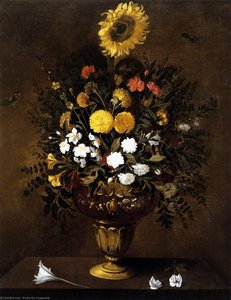
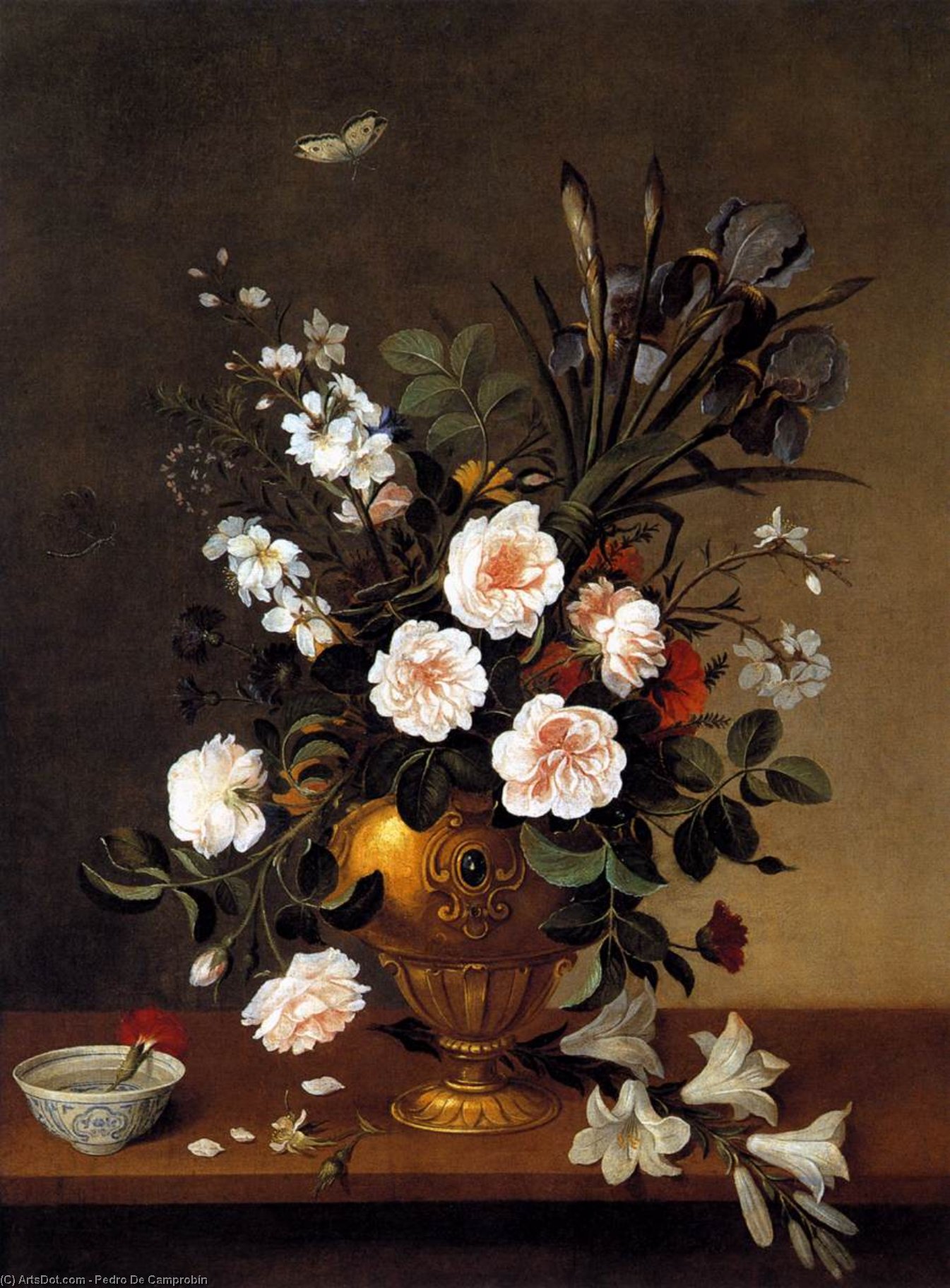
Vase of Flowers
 Oil On Canvas
- WallArt
- Baroque Mannerism
 1663
1663 77.0 x 58.0 cm
 Museo del Prado
 Read More
Hand Made Oil Reproduction
Hand-painted oil on canvas in your size and frame, made to order by our artists. ( Buy Print Buy Image)




P118B $10

P118H $10

P118W $10

P438Z $10

P508JH $12

P508YH $12

P805H $10

P805Z $10

P919BZ $10

P919G $10

P919XJ $10

P959ZH $10

P968JZ $12

W106C $8

W218G $10

W218JH $8

W218Y $10

W307PJ $10

W316G $10

W316PJ $8

W316Y $10

W398PJ $8

W4111J $10

W500HY $15

W500JH $15

W692G $12

W849H $8

W940BG $15

W953PJ $8




Pick from our preset sizes that match the artwork's original proportions.

You may enter your own dimensions to fit a specific frame or space. If your selected size does not match the original image's proportions, we will either crop the artwork or extend the painting with additional hand-painted elements. A digital mockup will be sent for your approval before production begins.
Please note that the on-screen preview does not reflect the actual cropping or extension. Only the mockup will accurately show the final composition.
While custom sizes are available, we recommend selecting a dimension from the predefined list to preserve the original proportions.
After order, ArtsDot.com team will email client for instructions and provide a mockup preview
Worldwide Delivery () in 3/4 weeks instead of standard 5 weeks. (21 August). No compromise on quality.

Free Worldwide Express Shipping

High-Quality Linen Canvas

Full Shipping Insurance

Customs Tax Refund Guarantee

True Color Matching Guarantee

60-Day Return Policy (Defects Only)

100% Money-Back Guarantee

Bulk Discount Offer
 Glass option is only available in size under 110 CM

Vase of Flowers
Reproduction Medium
Reproduction Size
-


Total Price
$ 263
Artwork Description
A Shadowed Masterpiece: Unveiling Pedro de Camprobin’s ‘Vase of Flowers’
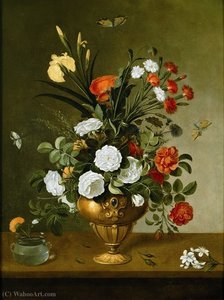
Pedro de Camprobin's “Vase of Flowers,” painted in 1663, is more than just a still life; it’s a carefully constructed meditation on beauty, mortality, and the fleeting nature of time – a hallmark of the Spanish Baroque. Housed within the esteemed Museo del Prado in Madrid, this oil-on-canvas work offers a rare glimpse into the oeuvre of an artist often relegated to the shadows of his more celebrated contemporaries. Camprobin’s life remains somewhat enigmatic, yet his art speaks volumes about his deep understanding of light, color, and the evocative power of everyday objects.
Born in Almagro, Castile, in 1605, Camprobin's artistic journey was profoundly shaped by the legacy of El Greco. His apprenticeship with Luis Tristán de Escamilla, a staunch advocate for El Greco’s dramatic style, instilled within him a masterful command of tenebrism – the striking contrast between light and dark that defines much of Caravaggio’s work. This technique isn't merely an aesthetic choice; it serves to heighten the drama and emotional intensity of the scene, drawing the viewer’s eye directly to the luminous flowers and creating a palpable sense of depth within the composition.
The Language of Flowers: Symbolism and Arrangement
The painting’s central focus is undeniably the opulent vase overflowing with an astonishing array of blossoms. Roses, both white and red, dominate the arrangement, their velvety petals rendered with meticulous detail – a testament to Camprobin's dedication to capturing the textures of natural forms. Interspersed amongst these regal blooms are poppies, likely contributing a touch of vibrant scarlet, and other delicate flowers that add layers of complexity to the composition. Beyond mere botanical representation, however, each flower carries symbolic weight. Roses traditionally represent love and beauty, while poppies often symbolize sleep, death, or remembrance – elements subtly interwoven within the painting’s narrative.
The inclusion of a small, empty white bowl positioned before the vase introduces an element of melancholy and transience. It suggests that even the most beautiful arrangements are destined to fade, mirroring the ephemeral nature of life itself. The scattered petals on the tabletop further reinforce this theme, hinting at the inevitable decay that follows beauty’s peak. The careful placement of these elements within a dark background amplifies their brilliance, creating a visual dialogue between permanence and fleetingness.
Technique and Composition: A Baroque Masterclass
Camprobin's skill as a painter is evident in his masterful manipulation of chiaroscuro – the dramatic interplay of light and shadow. The source of illumination appears to originate from above, casting soft shadows beneath the vase and bowl, enhancing the three-dimensionality of the objects and creating a sense of atmospheric depth. The composition itself is carefully balanced, with the vase occupying a central position and the bowl subtly offset to the right, guiding the viewer’s eye across the image in a deliberate and engaging manner.
Noticeably, Camprobin's attention to detail extends beyond mere representation; he captures the *essence* of each flower – its form, texture, and color. The reflective surface of the vase adds another layer of visual interest, mirroring the surrounding space and further enhancing the sense of depth. This meticulous approach is characteristic of the Baroque period, where artists sought to create works that were not only beautiful but also intellectually stimulating.
A Legacy in Reproduction: Bringing ‘Vase of Flowers’ Home
“Vase of Flowers” stands as a poignant reminder of the beauty and fragility of life. ArtsDot offers exquisite, hand-painted reproductions of this captivating masterpiece, allowing art lovers to experience its evocative power firsthand. Whether adorning a grand salon or adding a touch of timeless elegance to a smaller space, our reproductions faithfully capture the original’s rich colors, intricate details, and profound emotional resonance. Explore the collection at ArtsDot to discover your perfect piece of Baroque artistry.
For further exploration, we encourage you to visit the Museo del Prado’s website at here, and delve deeper into the world of Pedro de Camprobin. You can also find related works by similar artists such as Juan Bautista De Espinosa at ArtsDot.com.
Related Artworks





Artist Biography
Pedro de Camprobin: A Shadowed Light of Spanish Mannerism
Pedro de Camprobin (1605 – 1674) remains a figure shrouded in artistic mystery, yet his paintings—primarily religious compositions imbued with Caravaggisti fervor—offer glimpses into the vibrant heart of 17th-century Spain. Born in Almagro, Castile, Camprobin’s formative years coincided with the flourishing Mannerist movement spearheaded by El Greco, whose dramatic chiaroscuro and expressive distortions profoundly impacted his artistic vision. While biographical details are scarce, evidence suggests he honed his craft under Luis Tristán de Escamilla, a fellow Toledo painter who championed El Greco's style—a connection that undeniably shaped Camprobin’s distinctive aesthetic.- Early Training & Influences: Camprobin’s apprenticeship with Tristán solidified his grasp of tenebrism, the technique popularized by Caravaggio, characterized by stark contrasts between light and dark. This stylistic choice wasn't merely fashionable; it reflected a broader artistic preoccupation with conveying spiritual intensity through dramatic visual effects.
- Notable Works: Camprobin’s oeuvre is marked by several significant commissions, most notably the Santa Eulalia Chapel altarpiece in Burgos Cathedral—a monumental undertaking that exemplifies his mastery of composition and tonal gradation. His paintings are notable for their meticulous detail and psychological depth, capturing not just visual likeness but also conveying profound emotion.
- The Vase of Flowers & Beyond: Among Camprobin’s celebrated works is “Vase of Flowers,” a captivating still life that showcases his ability to render textures with remarkable accuracy and imbue inanimate objects with symbolic resonance. Similarly, "Camprobin - bodegon" exemplifies the Baroque tradition's fascination with capturing everyday scenes within an artistic framework.
Burgos Chapel Altarpiece: A Pinnacle of Mannerist Drama
The Santa Eulalia Chapel altarpiece in Burgos Cathedral represents Camprobin’s crowning achievement—a monumental undertaking that cemented his reputation as one of Spain's foremost Mannerist artists. Executed with painstaking precision and imbued with a masterful understanding of tonal modulation, the chapel’s centerpiece depicts Saint Eulalia receiving communion, bathed in an ethereal glow emanating from above. The composition is deliberately unsettling, reflecting the psychological complexities inherent in portraying spiritual devotion—a characteristic trait of Camprobin's artistic approach.Caravaggisti Influence: Mastering Dramatic Light and Shadow
Camprobin’s stylistic choices – particularly his embrace of tenebrism – bear unmistakable traces of Caravaggio’s influence. Like Caravaggio, Camprobin sought to evoke emotion through stark contrasts between light and dark, prioritizing expressive realism over idealized beauty. This technique is evident throughout his paintings, where figures are positioned within zones of intense illumination against backgrounds plunged into darkness—a deliberate strategy designed to heighten visual drama and convey spiritual fervor.Legacy & Historical Significance
Pedro de Camprobin’s contribution to Spanish Baroque art extends beyond individual masterpieces; he embodies the spirit of a generation grappling with religious upheaval and artistic innovation. His paintings continue to inspire admiration for their technical brilliance and emotional depth—a testament to his enduring legacy as a pivotal figure in the history of Spanish Mannerism. Further research into Camprobin’s life and work promises to illuminate new facets of this enigmatic artist's contribution to the artistic landscape of 17th-century Spain.
pedro de camprobín
1605 - 1674 , Spain
Quick Facts
- Artistic Movement Or Style: Mannerist
- Artists Or Movements Influenced By This Artist: Francisco de Zurbarán
- Artists Who Influenced This Artist: Luis Tristán de Escamilla
- Date Of Birth: 1605
- Full Name: Pedro de Camprobin
- Nationality: Spanish
- Notable Artworks:
- The Mar
- Vase of Flowers
- Place Of Birth: Almagro, Spain