 Preview
 Send
Send Share
Share
 Details

 Download
 Similars
 X-Ray
X-Ray Diaporama
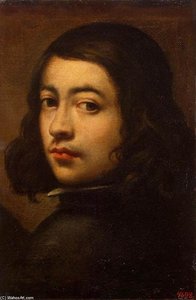
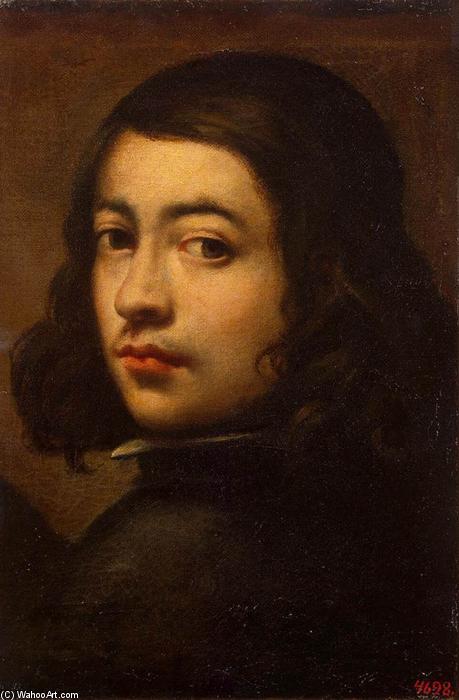
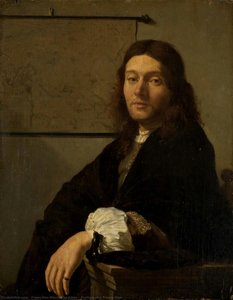
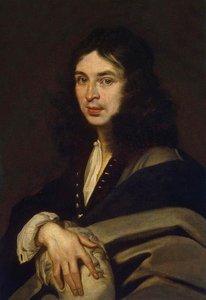
Portrait of a Man
 1655
1655 43.0 x 29.0 cm
 Hermitage Museum
 Read More
Hand Made Oil Reproduction
Hand-painted oil on canvas in your size and frame, made to order by our artists. ( Buy Print Buy Image)




































Pick from our preset sizes that match the artwork's original proportions.

You may enter your own dimensions to fit a specific frame or space. If your selected size does not match the original image's proportions, we will either crop the artwork or extend the painting with additional hand-painted elements. A digital mockup will be sent for your approval before production begins.
Please note that the on-screen preview does not reflect the actual cropping or extension. Only the mockup will accurately show the final composition.
While custom sizes are available, we recommend selecting a dimension from the predefined list to preserve the original proportions.
After order, ArtsDot.com team will email client for instructions and provide a mockup preview
Worldwide Delivery () in 3/4 weeks instead of standard 5 weeks. (17 August). No compromise on quality.

Free Worldwide Express Shipping

High-Quality Linen Canvas

Full Shipping Insurance

Customs Tax Refund Guarantee

True Color Matching Guarantee

60-Day Return Policy (Defects Only)

100% Money-Back Guarantee

Bulk Discount Offer
 Glass option is only available in size under 110 CM

Portrait of a Man
Reproduction Medium
Reproduction Size
-


Total Price
$ 263
Artwork Description
Artistic Technique and Style
The use of light and shadow in the painting is remarkable, highlighting the contours of the face and hair, and adding depth and dimension to the portrait. The dark background serves to draw attention to the subject's face, emphasizing their features and expression. The artist's skillful handling of color and composition creates a sense of balance and harmony, making the painting a true masterpiece of Baroque art.- The painting's style is reminiscent of other notable works from the same period, such as those by Domenico Robusti and Barthel Bruyn The Elder.
- For more information on similar paintings, visit Pedro De Moya's Portrait of a Man and Barthel Bruyn The Elder's Portrait of a Man with Three Sons.
The Portrait of a Man by Pedro De Moya is a testament to the artist's skill and craftsmanship, and its beauty and elegance continue to inspire art lovers to this day. Whether you are an art historian, collector, or simply someone who appreciates the beauty of art, this painting is sure to captivate and intrigue.
Related Artworks
Artist Biography
The Soul of the Spanish Baroque: The Life and Legacy of Pedro de Moyá
In the golden age of the Spanish Baroque, few artists captured the profound intersection of spiritual ecstasy and human drama as poignantly as Pedro de Moyá. Born in the historic city of Granada in 1610, Moyá emerged from a landscape steeped in religious fervor and artistic innovation. While the biographical shadows surrounding his early years remain somewhat elusive, his presence in the annals of art history is unmistakable. His journey was not merely that of a studio painter, but one shaped by the vast, turbulent currents of 17th-century Europe. Trained under the esteemed Juan del Castillo in Seville, Moyá inherited the foundational principles of the Sevillian school—a tradition defined by its meticulous attention to detail and an expressive, emotive use of color that would become the heartbeat of his later masterpieces.
Moyá’s life was marked by a unique duality, blending the discipline of a soldier with the sensitivity of a master painter. His service in the Spanish armies stationed in Flanders provided him with more than just a reprieve from the easel; it offered a window into the broader European artistic dialogue. Traveling through the Low Countries and eventually reaching the bustling streets of London, Moyá was exposed to the burgeoning influences of Northern realism and English portraiture. This cosmopolitan exposure breathed a new dimension into his work, allowing him to infuse the rigid structures of Spanish religious iconography with a more nuanced, international sensibility. When he finally returned to the sun-drenched landscapes of Seville and Granada following his discharge in 1641, he did so not just as a returning veteran, but as an artist enriched by the diverse visual languages of a continent in flux.
A Mastery of Light and Devotion
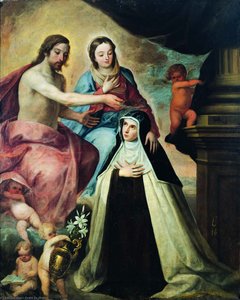
The true brilliance of Moyá lies in his command over chiaroscuro, the dramatic interplay of light and shadow that serves as the emotional engine of Baroque art. He possessed an uncanny ability to use darkness not merely as a void, but as a weight—a heavy, atmospheric presence from which divine light could emerge with startling clarity. In his religious compositions, such as the evocative Vision of St. Maria Magdalena di Piti, this technique transcends mere decoration; it becomes a theological tool, guiding the viewer’s eye toward moments of spiritual revelation and profound sanctity.
His oeuvre is characterized by several defining artistic pillars:
- Emotional Intensity: Moyá moved beyond static iconography to depict the palpable human emotions—fear, rapture, and contemplation—inherent in biblical narratives.
- Dynamic Composition: Utilizing the tension between light and dark, he created scenes that feel as though they are caught in a moment of perpetual motion.
- Portraiture and Presence: Beyond his sacred works, his secular portraits, such as the 1655 Portrait of a Man now held in the Hermitage Museum, demonstrate an exquisite ability to capture the dignity and psychological depth of his subjects through subtle facial contours and sophisticated light.
Historical Significance and Enduring Influence
Though Pedro de Moyá passed away in 1660, leaving behind a legacy that continues to resonate within the halls of great museums, his impact on the trajectory of Spanish art remains profound. He served as a vital link between the traditional Sevillian masters and the next generation of innovators. It is noted that even later artists, such as the talented Pedro Atanasio Bocanegra, looked toward Moyá’s mastery of color and light as a standard of excellence to be emulated. His ability to synthesize the grit of military life with the ethereal beauty of religious mysticism allowed him to create a body of work that feels both grounded in human reality and elevated by divine aspiration.
Today, when we gaze upon his canvases, we do not merely see relics of the 17th century; we witness the enduring power of the Baroque spirit. Moyá’s work remains a testament to an era where art was the primary vessel for exploring the mysteries of faith and the complexities of the human soul, ensuring his place as a true master of the Spanish Golden Age.
pedro de moya
1610 - 1660 , Spain
Quick Facts
- Artistic Movement Or Style: Baroque Art
- Artists Or Movements Influenced By This Artist: ['Seville Painting']
- Artists Who Influenced This Artist: ['Juan del Castillo']
- Date Of Birth: 1610 Granada Spain
- Date Of Death: 1674?
- Full Name: Pedro de Moyá
- Nationality: Spanish
- Notable Artworks:
- Portrait of a Man
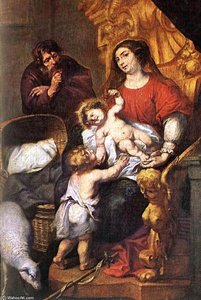
- Holy Family
- Vision of St Maria Magdalena di Pazzi
- Place Of Birth: Granada Spain