 Preview
 Send
Send Share
Share
 Details

 Download
 Similars
 X-Ray
X-Ray Diaporama
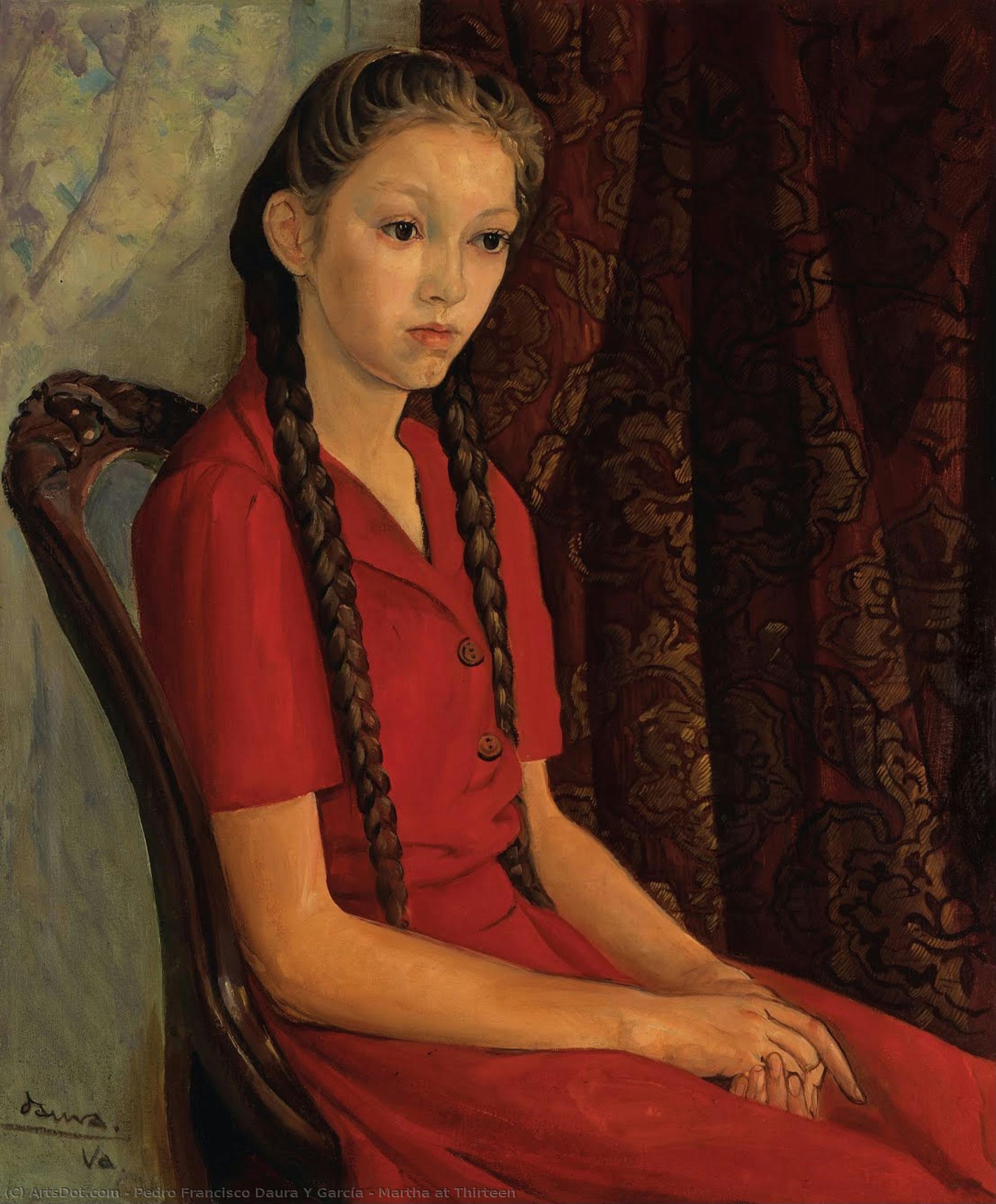
Martha at Thirteen


 Read More
Hand Made Oil Reproduction
Hand-painted oil on canvas in your size and frame, made to order by our artists. ( Buy Print Buy Image)




P118B $10

P118H $10

P118W $10

P438Z $10

P508JH $12

P508YH $12

P805H $10

P805Z $10

P919BZ $10

P919G $10

P919XJ $10

P959ZH $10

P968JZ $12

W106C $8

W218G $10

W218JH $8

W218Y $10

W307PJ $10

W316G $10

W316PJ $8

W316Y $10

W398PJ $8

W4111J $10

W500HY $15

W500JH $15

W692G $12

W849H $8

W940BG $15

W953PJ $8




Pick from our preset sizes that match the artwork's original proportions.

You may enter your own dimensions to fit a specific frame or space. If your selected size does not match the original image's proportions, we will either crop the artwork or extend the painting with additional hand-painted elements. A digital mockup will be sent for your approval before production begins.
Please note that the on-screen preview does not reflect the actual cropping or extension. Only the mockup will accurately show the final composition.
While custom sizes are available, we recommend selecting a dimension from the predefined list to preserve the original proportions.
After order, ArtsDot.com team will email client for instructions and provide a mockup preview
Worldwide Delivery () in 3/4 weeks instead of standard 5 weeks. (17 August). No compromise on quality.

Free Worldwide Express Shipping

High-Quality Linen Canvas

Full Shipping Insurance

Customs Tax Refund Guarantee

True Color Matching Guarantee

60-Day Return Policy (Defects Only)

100% Money-Back Guarantee

Bulk Discount Offer
 Glass option is only available in size under 110 CM

Martha at Thirteen
Reproduction Medium
Reproduction Size
-


Total Price
$ 263
Artwork Description
A Moment Frozen in Time: The Soul of Martha at Thirteen
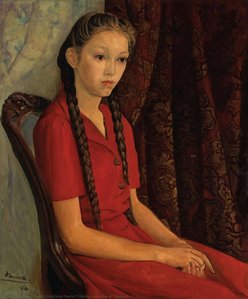
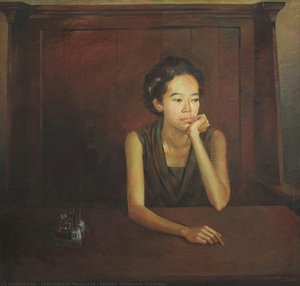
In the quiet, contemplative depths of Pedro Francisco Daura y García’s 1944 masterpiece, Martha at Thirteen, we encounter more than just a portrait; we enter a private sanctuary of adolescence. The painting captures a young girl, her long hair cascading around her, draped in a vibrant red dress that serves as the emotional heartbeat of the composition. As she sits poised upon her chair, her gaze drifts away from the viewer, lost in a world of internal reflection. This distant look suggests a threshold moment—the delicate transition from childhood innocence to the complex awareness of youth. The presence of subtle secondary figures and a solitary handbag resting on the ground adds layers of narrative mystery, hinting at a larger, lived-in reality that exists just beyond the frame of this intimate encounter.
The technique employed by Daura reflects his profound mastery of both form and atmosphere. Moving between the realms of representation and the burgeoning abstractions of his era, he utilizes light and texture to breathe life into the fabric of the red dress and the soft contours of the girl's face. The brushwork, while controlled, possesses an organic vitality that allows the background—a suggestion of curtains or a weathered wall—to recede, pushing the subject toward the viewer with an almost tactile presence. This careful manipulation of depth ensures that the eye is constantly drawn back to the subject’s expression, making the painting a study in psychological nuance.
A Legacy of Catalan Modernism
To understand the gravity of Martha at Thirteen, one must look toward the rich artistic lineage of its creator. Born in Minorca and trained in the prestigious halls of Barcelona’s La Llotja Academy, Daura was a pivotal figure in the Cercle et Carré movement. His ability to bridge the gap between classical aesthetics and the avant-garde movements of Paris allowed him to infuse his portraits with a modern sensibility that remains strikingly relevant today. This piece, painted during the mid-1940s, carries the weight of a world in transition, mirroring the subject's own journey through the stages of life.
For the discerning collector or interior designer, this artwork offers an unparalleled opportunity to introduce a sense of historical depth and quiet elegance into a space. The striking contrast of the crimson dress against more muted surroundings makes it a commanding focal point for a sophisticated gallery wall or a serene study. As a high-quality reproduction, it preserves the delicate emotional resonance and the masterful strokes of Daura’s hand, allowing the timeless beauty of Catalan modernism to grace contemporary homes with an aura of intellectual and aesthetic distinction.
Related Artworks
Artist Biography
The Visionary Synthesis of Pierre Daura
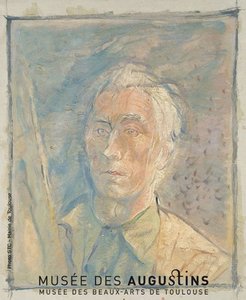
Born in the sun-drenched landscape of Minorca, Spain, on February 21, 1896, Pedro Francisco Daura y García—known more widely by his French name, Pierre Daura—was an artist whose life and work served as a profound bridge between the classical traditions of Europe and the burgeoning abstractions of the modern era. His journey began in the vibrant cultural heart of Barcelona, where he studied at the prestigious La Llotja Academy of Fine Arts. It was here, under the tutelage of masters such as José Ruiz y Blasco, that Daura developed a rigorous technical foundation. This early training instilled in him a deep respect for the structural integrity of form and the nuanced play of light, elements that would remain foundational even as his style drifted toward the avant-garde.
The trajectory of Daura’s life was irrevocably altered by his move to Paris in 1914. Immersed in the intellectual ferment of the French capital, he worked as an assistant to the Post-Impressionist Émile Bernard, absorbing the stylistic shifts that were redefining Western art. This period of immersion led him to become a vital participant in one of the most significant movements of the early 20th century: the Cercle et Carré (Circle and Square) collective. Alongside luminaries such as Wassily Kandinsky, Jean Arp, and Piet Mondrian, Daura explored the possibilities of geometric abstraction. His involvement with this group was not merely a stylistic choice but a philosophical commitment to finding order and rhythm through mathematical precision and structural harmony.
A Tapestry of Movement and Memory
Daura’s artistic evolution is characterized by a remarkable ability to weave together disparate influences, ranging from the meticulous observation of nature to the intellectual rigors of abstraction. His work often reflects a fascination with the concept of petite perceptions—the idea that the smallest sensory details contribute to a larger, unified consciousness. This philosophical depth allowed him to create landscapes and still lifes that felt both grounded in reality and elevated by a subtle, geometric underlying structure. Whether through the vibrant colors of his early experiments or the more muted, evocative tones of his later years, Daura’s hand was always guided by an attempt to capture the essence of his subject rather than just its surface appearance.
The turbulence of the 20th century left an indelible mark on his oeuvre. During the Spanish Civil War, Daura demonstrated a profound commitment to his roots, joining the Republican militia to fight against General Francisco Franco’s forces. This period of conflict introduced a raw, visceral dimension to his work, as he documented the human cost of war through poignant scenes and portraits. Following the hardships of the war and the subsequent move to France, Daura eventually found himself in the United States in 1939. Settling in the Blue Ridge Mountains of Virginia, his art underwent a new transformation, blending his European modernist sensibilities with the rugged, pastoral beauty of American regionalism.
Legacy and Enduring Significance
The legacy of Pierre Daura is one of resilience and synthesis. His ability to navigate between the worlds of Post-Impressionism and Abstract Expressionism allowed him to create a body of work that remains timelessly relevant. His later years in Virginia saw him capturing the quiet dignity of farm life and the sweeping vistas of the Appalachians, proving that his mastery of light and texture was as effective in the American landscape as it had been in the Mediterranean or the streets of Paris.
Today, Daura is celebrated not only as a pivotal figure in Catalan art history but as a truly international modernist. His contributions are preserved in significant collections, most notably through the Daura Center at the Georgia Museum of Art, which holds an extensive archive of his life and work. Through his paintings, sculptures, and prints, Daura continues to invite viewers into a world where the boundaries between the seen and the felt are beautifully blurred, reminding us of the enduring power of art to find harmony amidst chaos.
pedro francisco daura y garcía
1896 - 1976 , Spain
Quick Facts
- Artistic Movement Or Style: Post-Impressionism, Abstract Art
- Artists Or Movements Influenced By This Artist: ['Cercle et Carré']
- Artists Who Influenced This Artist:
- José Ruiz y Blasco
- Émile Bernard
- Date Of Birth: February 21, 1896
- Full Name: Pedro Francisco Daura y García
- Nationality: Spanish
- Notable Artworks:
- Untitled (Green Apples)
- Simple Truths: Still Life Paintings by Pierre Daura
- Place Of Birth: Minorca, Spain
Related Articles

Crimson Threads of Narrative: Exploring Symbolism & Representation in Artworks Featuring the Red Dress
Explore the rich symbolism of the red dress in art history! From ancient power displays to iconic portraits like Cézanne’s 'Madame Cezanne', discover the cultural and artistic significance behind this captivating color. Expert analysis & insights.
Sandstone & Sunlight: 10 Masterpieces of Earth-Toned Art |
Journey through 10 iconic paintings bathed in 'sand' tones – from Van Gogh to Monet. Explore the stories, techniques & warm palettes of these timeless masterpieces. Find museum-quality art reproductions at and bring classic beauty home.
Earthy Hues & Masterpieces: Top 10 Paintings with 'Mushroom' Tones |
Explore 10 iconic paintings with captivating 'mushroom' tones! Discover Van Gogh, Monet & Rembrandt’s masterpieces—earthy palettes, rich history & artistic techniques. Find museum-quality art reproductions and curated decor ideas at
Putty Tones & Masterpieces: 10 Famous Paintings for Elegant Home Decor
Explore 10 famous paintings bathed in soothing 'putty' tones – from Monet to Van Gogh. Discover the stories, techniques & timeless beauty of these masterpieces. Find museum-quality art reproductions for your home at .
Earthy Hues & Masterpieces: Top 10 Paintings Dominated by Clay Tones |
Explore 10 iconic paintings dominated by rich clay tones – from Rembrandt's warmth to Van Gogh’s earthy landscapes. Discover art history, techniques & find museum-quality reproductions at . Explore the full collection online!