 Preview
 Send
Send Share
Share
 Details

 Download
 Similars
 X-Ray
X-Ray Diaporama
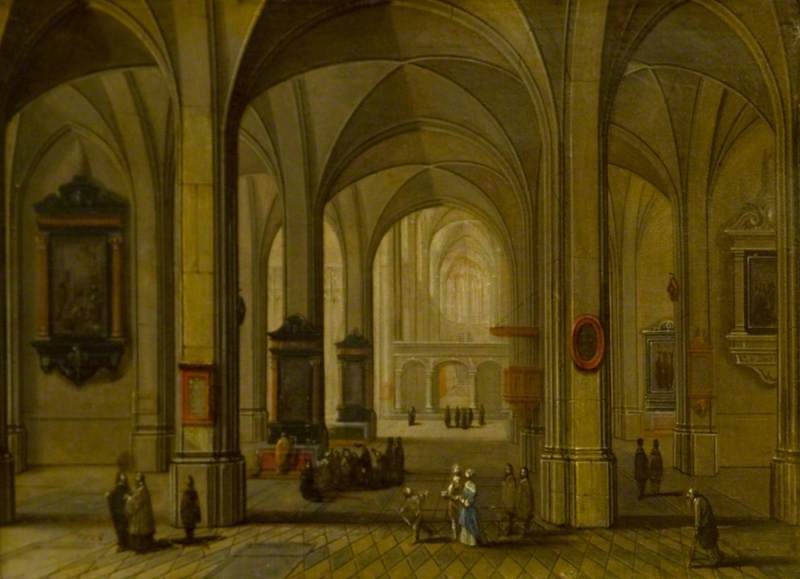
Interior of a Church
 Oil On Canvas
- WallArt
- Baroque
 9.0 x 14.0 cm
 The National Trust For Scotland
 Read More
Giclée / Art Print
Museum-quality giclée or canvas print with fast production and flexible finish options. ( Buy Hand Made Painting Buy Image)




P118B $10

P118H $10

P118W $10

P438Z $10

P508JH $12

P508YH $12

P805H $10

P805Z $10

P919BZ $10

P919G $10

P919XJ $10

P959ZH $10

P968JZ $12

W106C $8

W218G $10

W218JH $8

W218Y $10

W307PJ $10

W316G $10

W316PJ $8

W316Y $10

W398PJ $8

W4111J $10

W500HY $15

W500JH $15

W692G $12

W849H $8

W940BG $15

W953PJ $8




Pick from our preset sizes that match the artwork's original proportions.

You may enter your own dimensions to fit a specific frame or space. If your selected size does not match the original image's proportions, we will either crop the artwork or extend the image with a mirrored or solid-fill edge. A digital mockup will be sent for your approval before production begins.
Please note that the on-screen preview does not reflect the actual cropping or extension. Only the mockup will accurately show the final composition.
While custom sizes are available, we recommend selecting a dimension from the predefined list to preserve the original proportions.
Worldwide Delivery () in 2 weeks instead of standard 4/5 weeks. (23 August)

Free Worldwide Express Shipping

High-Quality Linen Canvas

Full Shipping Insurance

Customs Tax Refund Guarantee

True Color Matching Guarantee

60-Day Return Policy (Defects Only)

100% Money-Back Guarantee

Bulk Discount Offer
 Glass option is only available in size under 110 CM

Interior of a Church
Giclée / Art Print
Reproduction Size
-


Total Price
$ 63
Collectible Description
Interior of a Church by Peeter The Younger Neeffs
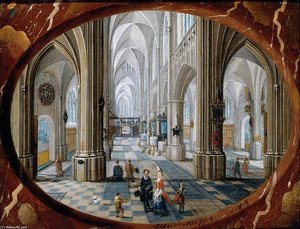
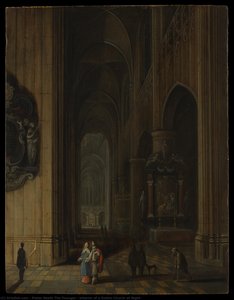
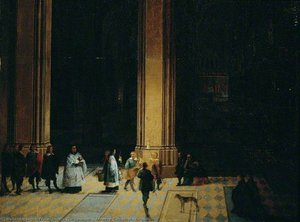
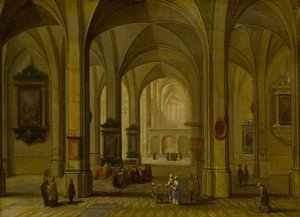
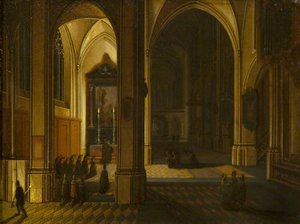
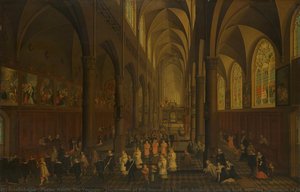
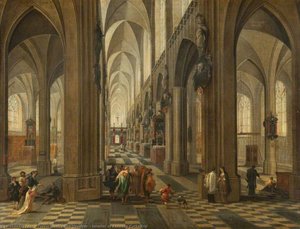
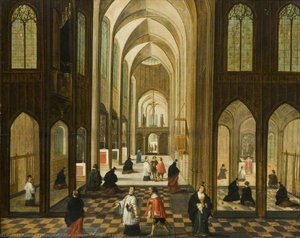
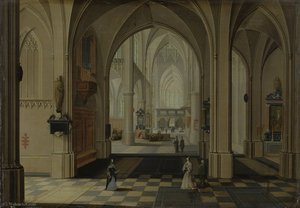
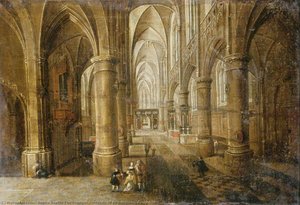
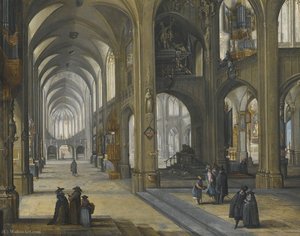
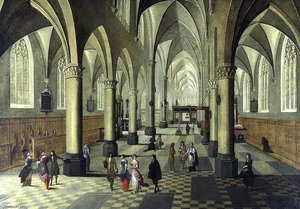
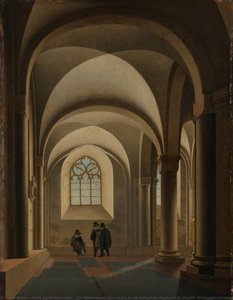
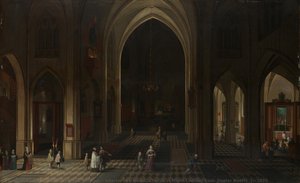
The world of art holds treasures that transcend time, transporting us into moments of profound beauty and contemplation. Among these enduring masterpieces is “Interior of a Church” by Peeter The Younger Neeffs, a painting that encapsulates the majesty and spiritual solace found within sacred spaces. Executed in 1650s Antwerp on copper – now housed at The National Trust For Scotland – this artwork isn’t merely an image; it's a window into the artistic sensibilities of its era and a testament to Neeffs’ unparalleled skill as a Baroque painter.A Symphony of Light and Architecture
Neeffs’ genius lay in his ability to translate architectural grandeur onto canvas with breathtaking realism. The composition immediately draws the viewer upwards, dominated by soaring arched ceilings and a colossal dome – hallmarks of the opulent churches prevalent during the Baroque period. These architectural elements aren't simply depicted; they are imbued with an ethereal luminescence achieved through masterful use of chiaroscuro—the dramatic interplay between light and shadow—a technique perfected by artists like Rembrandt and Caravaggio. The diffused lighting casts gentle hues across the walls, highlighting intricate carvings and emphasizing the solemn atmosphere of devotion.Detailed Observation: Figures Amidst Sacred Space
Scattered throughout the scene are figures – worshippers engaged in prayer – adding a human dimension to the monumental architecture. Neeffs meticulously rendered each individual with remarkable accuracy, capturing subtle expressions and gestures that convey emotion and reverence. Notably, a prominent clock positioned on one wall serves as a poignant reminder of time’s passage within this sacred sanctuary, reinforcing the painting's thematic exploration of faith and mortality. The artist’s careful attention to detail extends beyond mere representation; it aims to evoke a visceral response in the viewer, inviting them to experience the contemplative spirit of the church interior.Symbolism Rooted in Baroque Tradition
The artwork resonates deeply with the symbolic language characteristic of Baroque art. The grandeur of the building symbolizes divine authority and spiritual aspiration, while the figures embody humanity’s yearning for transcendence. Furthermore, the use of gold leaf – a common embellishment during this period – adds to the painting's opulent aesthetic and underscores its association with holiness and wealth. These visual cues contribute to a narrative that speaks to universal themes of faith, piety, and artistic excellence.Technical Mastery: Oil on Copper – A Legacy of Flemish Craftsmanship
Neeffs’ technique—oil paint applied onto copper—was considered cutting-edge for its time. This medium allowed for exceptional luminosity and tonal range, enabling him to achieve the desired dramatic effect with remarkable precision. Visible brushstrokes contribute to a textured surface that conveys both solidity and depth, capturing the materiality of the architectural elements and the human figures alike. The color palette is dominated by warm browns and golds—colors frequently employed in religious iconography—creating an environment of warmth and solemnity. A similar masterpiece can be found on ArtsDot.com where you can explore David Baudringhien’s portrait paintings, including “Portrait of a Man.”- Artist: Peeter The Younger Neeffs
- Date: Unknown
- Medium: Oil on Copper
- Location: The National Trust For Scotland (Brodick, United Kingdom)
Discover More Like This
Interested in exploring similar Baroque masterpieces? Visit ArtsDot.com to discover David Baudringhien’s captivating portraiture and immerse yourself in the artistic heritage of Flanders.
Related Artworks

Artist Biography
Peeter the Younger Neeffs: A Flemish Master of Light and Shadow
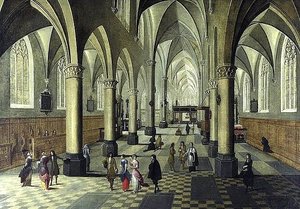
Peeter the Younger Neeffs, a name perhaps less familiar than his contemporaries Rubens or Van Dyck, nevertheless stands as a significant figure in 17th-century Flemish art. Born in Antwerp in 1620 and tragically passing away around 1675, Neeffs carved out a distinctive niche for himself primarily through the captivating depiction of church interiors – spaces imbued with both grandeur and an intimate sense of spirituality. While biographical details remain somewhat sparse, his artwork speaks volumes about his skill, meticulousness, and profound understanding of light, composition, and the human experience within sacred settings.
Neeffs’ early life is shrouded in a degree of obscurity. He was the younger son of Pieter Neefs the Elder, a highly respected architectural painter already established in Antwerp. This familial connection undoubtedly played a crucial role in shaping his artistic trajectory, providing him with an apprenticeship within his father's workshop and exposure to a rich tradition of depicting religious spaces. Unlike his father, who often focused on grand, sweeping compositions, Neeffs developed a particular fascination with the subtle nuances of light and shadow within these interiors – a technique that would become the hallmark of his style.
The Art of the Interior: A Unique Vision
Neeffs’ primary subject matter revolved around the architectural interiors of churches, particularly those of Antwerp Cathedral. However, he didn't simply replicate existing structures; rather, he created imagined spaces—a blend of realism and artistic license—that captured a profound sense of atmosphere and emotion. These weren’t mere technical exercises in perspective; they were carefully constructed narratives, often depicting religious processions or ceremonies unfolding within the dimly lit nave. His compositions frequently feature a deep recession into space, achieved through masterful use of linear perspective, drawing the viewer's eye towards an unseen vanishing point.
A defining characteristic of Neeffs’ work is his manipulation of light. He expertly employed chiaroscuro – the dramatic contrast between light and dark – to create a sense of depth, volume, and drama. He frequently depicted interiors bathed in a soft, ethereal glow, sometimes emanating from unseen windows or stained glass, while other times utilizing stark contrasts to highlight specific figures or architectural details. This skillful use of light wasn’t merely decorative; it served to heighten the spiritual significance of the scene and evoke a sense of reverence.
Collaboration and Influences
Neeffs' artistic practice was deeply intertwined with collaboration. He frequently worked alongside other prominent Antwerp painters, notably his father, Pieter Neefs the Elder, as well as Frans Francken III, David Teniers the Younger, and Bonaventura Peeters the Elder. These collaborations allowed him to expand his repertoire and refine his technique. The close stylistic similarities between his work and that of his father have sometimes created challenges in attributing individual works definitively, highlighting the complexities of artistic lineages within the Neefs family.
While influenced by the architectural paintings of Hendrik van Steenwijck the Elder – particularly his nocturnal church interiors – Neeffs developed a unique style characterized by its meticulous detail and psychological depth. The influence of Dutch Golden Age painters is also evident in his use of color and composition, though he retained a distinctly Flemish sensibility.
Notable Works and Legacy
Among Neeffs’ most celebrated works are “Interior of a Church” (Victoria & Albert Museum), which exemplifies his mastery of light and perspective; "The Interior of the Dominican Church, Antwerp, Looking East, with the Procession of the Holy Sacrament" (Musée du Louvre), showcasing his ability to capture the dynamism of religious ceremony; and “Saint Eustace,” a powerful depiction of the saint’s encounter with the stag. These paintings demonstrate not only his technical skill but also his capacity to imbue these architectural settings with profound emotional resonance.
Today, Peeter the Younger Neeffs' works are treasured possessions within prestigious museums such as the Prado Museum in Madrid and the National Gallery in London. His legacy endures as a testament to the enduring appeal of depicting sacred spaces—a genre that continues to inspire artists and captivate viewers with its evocative beauty and spiritual depth.
For further information about Peeter the Younger Neeffs’ life and artwork, please visit https://ArtsDot.com/@/peeter the younger neeffs and explore examples of his paintings at /en/art/show/art-d3cl2x-en/.
peeter the younger neeffs
1620 - 1675 , Belgium
Quick Facts
- Artistic Movement Or Style: Baroque
- Artists Or Movements Influenced By This Artist: ['Jan van Huchtenburgh']
- Artists Who Influenced This Artist:
- Peter Paul Rubens
- Anthony van Dyck
- Date Of Birth: 1620 Antwerp, Belgium
- Date Of Death: 1675
- Full Name: Peeter the Younger Neeffs
- Nationality: Flemish
- Notable Artworks:
- Still life with flowers
- Portrait of a young woman
- The lute player
- Saint Eustace
- Place Of Birth: Antwerp, Belgium
Related Articles

Baroque Drama: Bringing Opulence & Emotion into Contemporary Interiors
Explore the opulent world of Baroque interior design! Discover key elements, modern applications & how to bring dramatic elegance into your home with 's authentic reproductions.

Oil on Canvas: A Historical & Technical Exploration of a Timeless Artistic Medium
Explore the rich history & enduring techniques of oil painting on canvas. Discover the science behind its longevity, conservation practices, and contemporary relevance. Expert insights for art enthusiasts.
Embrace the Drama: A Guide to Baroque Dynamism and Chiaroscuro for Sophisticated Modern Interiors
Discover how to transform your home with the dramatic elegance of Baroque art. Learn to master chiaroscuro, integrate bold oil reproductions, and use light and shadow to create a luxurious, high-impact modern interior with expert design guidance.

The Visceral Stage: Exploring Dramatic Narratives & Emotional Intensity in Baroque Art
Explore the dramatic world of Baroque art! Discover iconic masters like Caravaggio & Rembrandt, their techniques, and the movement's lasting impact. Expert insights for collectors & enthusiasts at ArtsDot.

The Dramatic Flourish: Exploring the Baroque Movement's Enduring Legacy in Art History
Explore the dramatic world of Baroque art! Discover iconic artists like Caravaggio & Rubens, defining techniques, and its lasting impact on art history. Expert insights for collectors & enthusiasts at ArtsDot.