

 Preview
 Send
Send Share
Share
 Details

 Download
 Similars
 X-Ray
X-Ray Diaporama
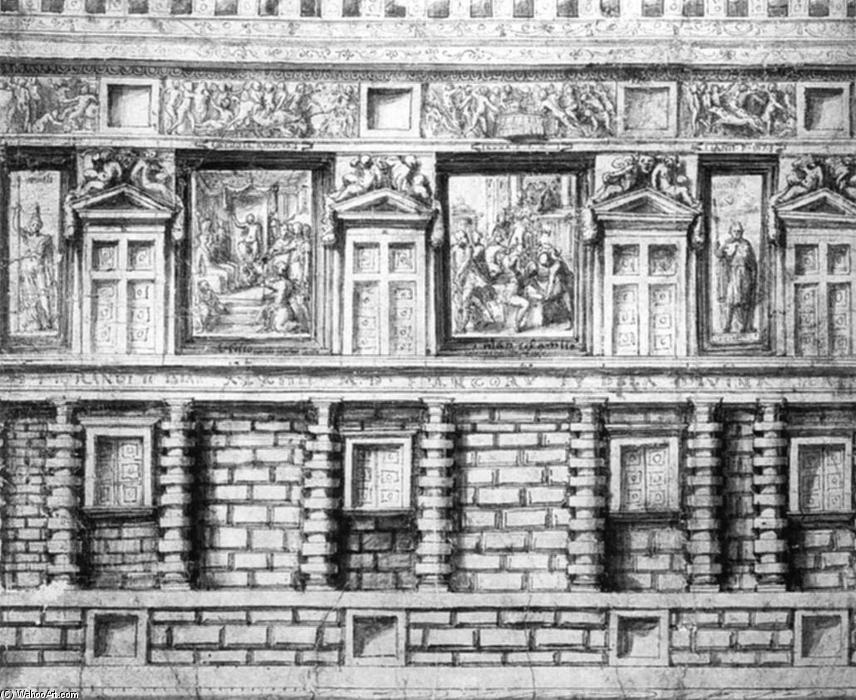
North Façade of the Villa Doria
 Acrylic On Canvas
- WallArt
- Mannerist Style
 1532
1532 294.0 x 362.0 cm
 Rijksmuseum
 Read More
Purchase a high-resolution, enhanced digital image, far superior to the online preview.
Each file is meticulously prepared by our in-house specialists using advanced tools and expert manual retouching. We ensure every image has exceptional clarity, precise color accuracy, and fine detail.
The final file is delivered via email within 72 hours, optimized for immediate use in professional, editorial, and print environments. This is the same quality trusted by top-tier design studios, publishers, and galleries.
Digital Image
Download a high-resolution file for personal display, printing, and creative projects. ( Buy Print Buy Hand Made Painting)
Included in Every Digital Image Order
Expert Digital Delivery, Guaranteed
When you choose ArtsDot.com, you're not just getting an image - you're receiving a professionally enhanced digital artwork, crafted with precision and backed by a satisfaction guarantee. Here's everything that comes with your order, automatically:

Fast Email Delivery
Your high-resolution digital image file will be emailed to you within 72 hours of ordering - ready for immediate use.

AI-Enhanced Digital File
Your artwork is professionally optimized using advanced AI tools and manual editing, ensuring maximum detail, clarity, and color accuracy.

Free Lifetime Re-Delivery
Accidentally deleted or lost your file? No worries - we'll resend it to you anytime, free of charge.

No Import Fees - Ever
Enjoy your artwork instantly with zero customs, duties, or delivery fees - digital downloads are always tax-free.

Color Accuracy Guarantee
We ensure your digital image reflects the original colors as closely as possible using professional tools and color management.

60-Day Satisfaction Guarantee
If you're not satisfied with your digital image, we'll revise it or refund 100% within 60 days - no questions asked.

100% Money-Back Guarantee
Not satisfied? Get a full refund within 60 days of receiving your digital file - no questions asked.

Bulk Order Discounts
Buy 3 images, save 10% - Buy 5, save 15% - Buy 10+, save 20%. Great for creative projects, galleries, and agencies.
A Silent Masterpiece: Perino del Vaga’s Architectural Vision
Perino del Vaga, a name often whispered in hushed reverence amongst connoisseurs of Mannerist art, remains an artist whose prolific output belies his elusive biographical footprint. Yet, his monumental frescoes adorning Genoa and Pistoia stand as undeniable proof of his unparalleled skill—a testament to his mastery of decorative illusionism that cemented his place as one of the era’s most celebrated decorators. But it is this drawing – “North Façade of the Villa Doria” – that offers a glimpse into the mind of a true innovator, capturing not just stone and pigment but also the very essence of Renaissance grandeur. Executed in meticulous ink on paper in 1532, this artwork resides proudly at the Rijksmuseum in Amsterdam, awaiting those who wish to immerse themselves in its captivating beauty.The Architectural Blueprint: Style and Technique
“North Façade of the Villa Doria” exemplifies the stylistic hallmarks of Mannerism—a deliberate rejection of the harmonious balance championed by Leonardo da Vinci and Michelangelo. Instead, del Vaga embraced asymmetry, exaggerated perspective, and a heightened sense of theatricality, prioritizing expressive gesture over anatomical accuracy. The drawing’s technique is equally remarkable: executed with painstaking detail using ink on paper, it showcases a masterful understanding of tonal gradation and hatching—skills honed during his formative years under Ridolfo Ghirlandaio – a student who absorbed the humanist ideals prevalent in Florence. These techniques allowed del Vaga to convey not merely the appearance of the villa but its very spirit, capturing the interplay of light and shadow with breathtaking precision.A Window into Renaissance Patronage and Artistic Innovation
The Villa Doria Pamphili, commissioned by Admiral Andrea Doria, represents a pinnacle of aristocratic ambition during the sixteenth century—a symbol of wealth, power, and refined taste. Del Vaga’s drawing served as an invaluable guide for architects and builders alike, ensuring that the villa’s façade adhered to the highest standards of classical design. However, “North Façade” transcends its practical function; it embodies a broader artistic preoccupation with capturing idealized beauty—a characteristic trait of Mannerist art. Observe the columns adorned with Corinthian capitals, the pediment framing the central doorway, and the frieze depicting intricate floral motifs – each element meticulously rendered to convey elegance and sophistication.Symbolism Beyond Decoration: Figures Engaged in Activity
Beyond its formal architectural merits, the drawing is replete with symbolic significance. The statues flanking the façade—representing figures engaged in various activities—suggest a humanist concern for virtue and civic duty. These sculptures are not merely decorative embellishments but embodiments of noble ideals, reflecting the Renaissance fascination with classical mythology and philosophy. Furthermore, the windows themselves are adorned with stylized figures, hinting at the villa’s inhabitants' engagement with the wider world – mirroring the intellectual ferment of the time.A Legacy of Illusion: Emotional Impact and Artistic Influence
“North Façade of the Villa Doria” stands as a testament to Perino del Vaga’s artistic genius—a masterpiece that continues to inspire awe and admiration centuries later. Its meticulous detail, masterful technique, and profound symbolic resonance encapsulate the spirit of Mannerist art, demonstrating its ability to elevate decorative illusionism into an instrument of intellectual and emotional expression. Like many other artworks from this period, it invites contemplation on beauty, order, and human aspiration—a timeless reminder of the enduring power of artistic vision.Related Artworks

Artist Biography
The Wandering Spirit of the Florentine Renaissance
Pietro Buonaccorsi, known to history through the evocative moniker Perino del Vaga, remains one of the most captivating figures of the transition from the High Renaissance to the intricate complexities of Mannerism. Born in Florence around 1501 into a lineage of artistic talent, his very name—Vaga, meaning wandering or idle—suggests a restless creative energy that would eventually carry him far beyond the borders of his native Tuscany. While his early years were rooted in the humanist traditions of Florence, his artistic soul was forged through a series of profound encounters and migrations that allowed him to weave together the disparate threads of Italian art into a singular, decorative brilliance.
His formative training began under the watchful eye of Ridolfo Ghirlandaio, where he mastered the foundational principles of Florentine clarity and anatomical precision. Yet, it was an encounter with a mysterious mentor, often referred to simply as il Vaga, that truly ignited his fascination with the theatrical and the illusionistic. This early mentorship instilled in him a lifelong devotion to the art of decoration, teaching him how to manipulate space and light to transform flat surfaces into windows of infinite depth. As he matured, Perino’s work began to reflect a sophisticated understanding of quadratura, the technique of using architectural perspective to deceive the eye, a skill that would later make him indispensable to the great patrons of Italy.
A Journey Through Power and Patronage
The trajectory of Perino’s career is a map of the most influential courts of the sixteenth century. His early successes in Florence, working on prestigious commissions for the Medici family, established him as a master of aristocratic grandeur. His ability to decorate the monumental spaces of the Palazzo Vecchio and design intricate tapestries demonstrated a versatility that caught the attention of the Roman elite. By approximately 1530, Perino had relocated to Rome, a move that would redefine his artistic destiny. In the shadow of the Vatican, he found a powerful protector in Cardinal Alessandro Farnese III, whose patronage allowed Perino to engage with the most ambitious architectural and decorative projects of the age.
During his Roman period, Perino became a vital contributor to the visual identity of the Papal court. His hand can be seen embellishing the magnificent Palazzo Farnese and contributing to the monumental task of decorating St. Peter’s Basilica. In these sacred and secular halls, he applied the principles of Mannerism—elongated forms, complex poses, and a vibrant, sometimes jarring color palette—to create environments that were as much about emotional impact as they were about religious devotion. His work during this era represents a bridge between the balanced harmony of the previous century and the expressive, often restless energy of the burgeoning Mannerist movement.
Legacy of the Master Decorator
Beyond the walls of Rome, Perino’s influence stretched into the maritime strength of Genoa and the historic centers of Pistoia. His frescoes in these cities serve as enduring testaments to his ability to command large-scale narratives. Whether depicting the celestial grace of a Madonna with Child or the dramatic tension found in works like The Fall of the Giants, Perino possessed a unique talent for blending the monumental with the delicate. His mastery of perspective, inspired by the architectural innovations of Andrea Palladio and the muscular dynamism of Michelangelo, allowed him to create spaces that felt both physically imposing and spiritually transcendent.
The historical significance of Perino del Vaga lies in his role as a primary architect of the Mannerist aesthetic. He did not merely paint figures; he designed atmospheres. His ability to integrate painting with architecture, creating seamless transitions between reality and illusion, left an indelible mark on the decorative arts of Europe. Though his life was cut short in 1547, the legacy of his wandering brush remains visible in the grand palaces and sacred basilicas of Italy, reminding us of a master who could turn stone and plaster into living, breathing drama.
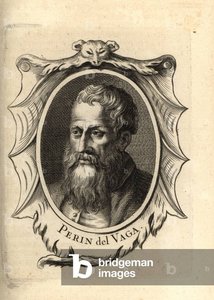
perino del vaga (piero buonaccorsi)
1501 - 1547 , Italy
Quick Facts
- Artistic Movement Or Style: Mannerist Painting
- Artists Who Influenced This Artist:
- Andrea Doria
- Ridolfo Ghirlandaio
- Date Of Birth: Florence, Italy (1501)
- Date Of Death: October 19, 1547
- Full Name: Piero Buonaccorsi
- Nationality: Italian
- Notable Artworks:
- Madonna with Child
- North Façade of the Villa Doria
- Adoration of the Child
- Place Of Birth: Florence

