 Preview
 Send
Send Share
Share
 Details

 Download
 Similars
 X-Ray
X-Ray Diaporama
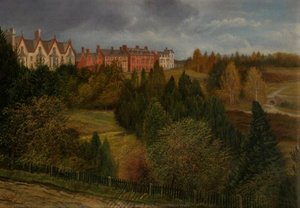
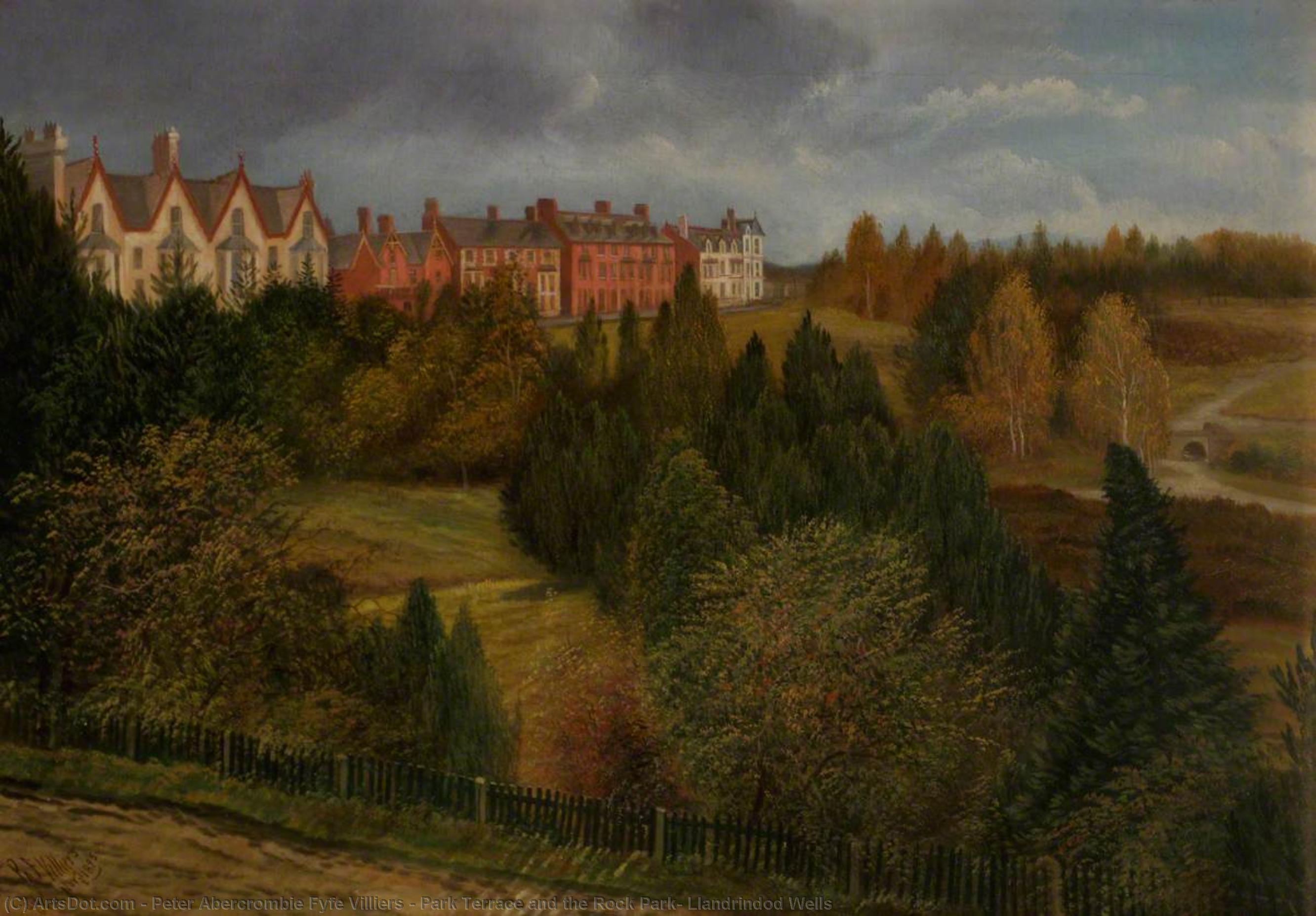
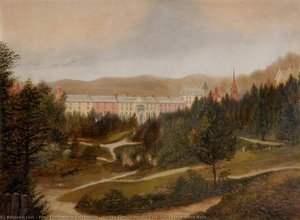
Park Terrace and the Rock Park, Llandrindod Wells
 60.0 x 120.0 cm
 Read More
Hand Made Oil Reproduction
Hand-painted oil on canvas in your size and frame, made to order by our artists. ( Buy Print Buy Image)




































Pick from our preset sizes that match the artwork's original proportions.

You may enter your own dimensions to fit a specific frame or space. If your selected size does not match the original image's proportions, we will either crop the artwork or extend the painting with additional hand-painted elements. A digital mockup will be sent for your approval before production begins.
Please note that the on-screen preview does not reflect the actual cropping or extension. Only the mockup will accurately show the final composition.
While custom sizes are available, we recommend selecting a dimension from the predefined list to preserve the original proportions.
After order, ArtsDot.com team will email client for instructions and provide a mockup preview
Worldwide Delivery () in 3/4 weeks instead of standard 5 weeks. (1 September). No compromise on quality.

Free Worldwide Express Shipping

High-Quality Linen Canvas

Full Shipping Insurance

Customs Tax Refund Guarantee

True Color Matching Guarantee

60-Day Return Policy (Defects Only)

100% Money-Back Guarantee

Bulk Discount Offer
 Glass option is only available in size under 110 CM

Park Terrace and the Rock Park, Llandrindod Wells
Reproduction Medium
Reproduction Size
-


Total Price
$ 263
Related Artworks








Artist Biography
A Visionary of the Welsh Landscape: The Life and Art of Peter Abercrombie Fyfe Villiers
In the quiet, rolling expanses of the late Victorian era, few artists captured the atmospheric soul of the Welsh countryside with as much tender precision as Peter Abercrombi Fyfe Villiers. Active primarily between 1883 and 1889, Villiers emerged not merely as a painter of scenery, but as a chronicler of light and topography. His work serves as a window into a bygone era of Radnorshire and Powys, offering a serene, almost meditative glimpse into the landscapes that defined his existence. While his recorded output may be more modest than the giants of his age, the profound sense of place within his canvases ensures his enduring relevance to those who seek the true essence of the Welsh spirit.
The origins of Villiers’s artistic perspective are deeply intertwined with his professional life and his intimate connection to the land. Born in Llanfyllydd, Monmouthshire, his early years were shaped by the academic rigors of Shrewsbury School. However, it was his subsequent career as the Surveyor to Powys County Hall that provided the essential foundation for his creative evolution. This role granted him an unparalleled vantage point; as a surveyor, he possessed a keen eye for geological formations and topographical accuracy, which he seamlessly translated into his aesthetic pursuits. His fascination with the structural beauty of the earth was not merely scientific but deeply poetic, allowing him to document the Welsh landscape with both technical mastery and emotional depth.
Technique and the Tonal Impressionist Spirit
Villiers’s artistic language was defined by a sophisticated approach to tonal Impressionism. Eschewing the aggressive, thick brushstrokes often associated with more radical movements of his time, he instead embraced a delicate subtlety. He sought to capture the ephemeral qualities of the atmosphere—the way mist clings to a valley or how the first light of dawn softens the rugged edges of a hill. His palette was masterfully restrained, relying heavily on earthy, grounded tones such as ochre, sienna, and umber. This choice of color allowed him to create a sense of profound stillness, inviting the viewer to linger within the quietude of his scenes.
His mastery of atmospheric perspective was perhaps his greatest technical achievement. By utilizing muted blues and greys to render distant horizons, he achieved an illusion of immense depth, making the Welsh hills appear to recede infinitely into the haze. This technique suggests a profound influence from masters such as Frederic Church and Jules Bastien-Lepage, blending the grandeur of landscape painting with a soft, naturalistic intimacy. Through these subtle gradations of color, Villiers could evoke the specific moods of twilight or the heavy, damp air of a Welsh morning, imbuing his landscapes with a living, breathing quality.
A Legacy Carved in Stone and Soil
The significance of Villiers’s work lies in its ability to act as a historical and emotional archive of the region. His paintings are more than mere representations; they are portraits of a landscape that has since undergone much change. Through his eyes, we encounter the architectural and natural landmarks of Radnorshire in their most pristine states. Some of his most evocative contributions to the art world include:
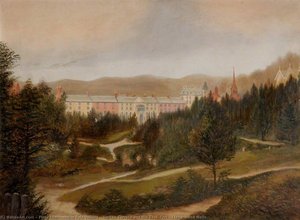
- Norton Terrace & Rock Park: A captivating study of Llandrindod Wells that captures the serene charm of a Victorian town scene.
- The Hall, Abbey Cwm Hir: A poignant depiction of historical architecture nestled within the natural beauty of the valley.
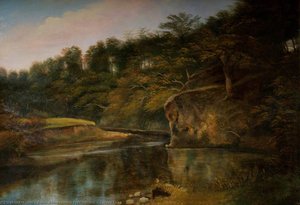
- Lovers Leap: A work that exemplifies his ability to blend dramatic topography with romantic atmosphere.
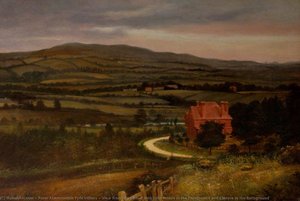
- View from Ithan Road: An intimate look at the rural landscape, featuring Lynn House and the distant backdrop of Llanyre.
Ultimately, Peter Abercrombie Fyfe Villiers remains a vital figure for anyone studying the intersection of topography and fine art. His legacy is found in the way he bridged the gap between the surveyor’s precision and the painter’s passion. He did not just observe the Welsh landscape; he understood its bones and its breath, leaving behind a collection of works that continue to resonate with a sense of timeless, tranquil beauty.
Quick Facts
- Artistic Movement Or Style: Victorian Landscape Art
- Full Name: Peter Abercrombie Fyfe Villiers
- Nationality: Welsh
- Notable Artworks:
- Lovers Leap
- Park Terrace and the Rock Park
- Norton Terrace and the Rock Park
- Place Of Birth: Wales