 Preview
 Send
Send Share
Share
 Details

 Download
 Similars
 X-Ray
X-Ray Diaporama
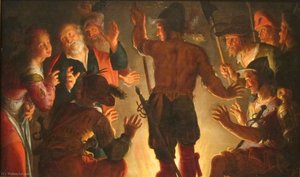
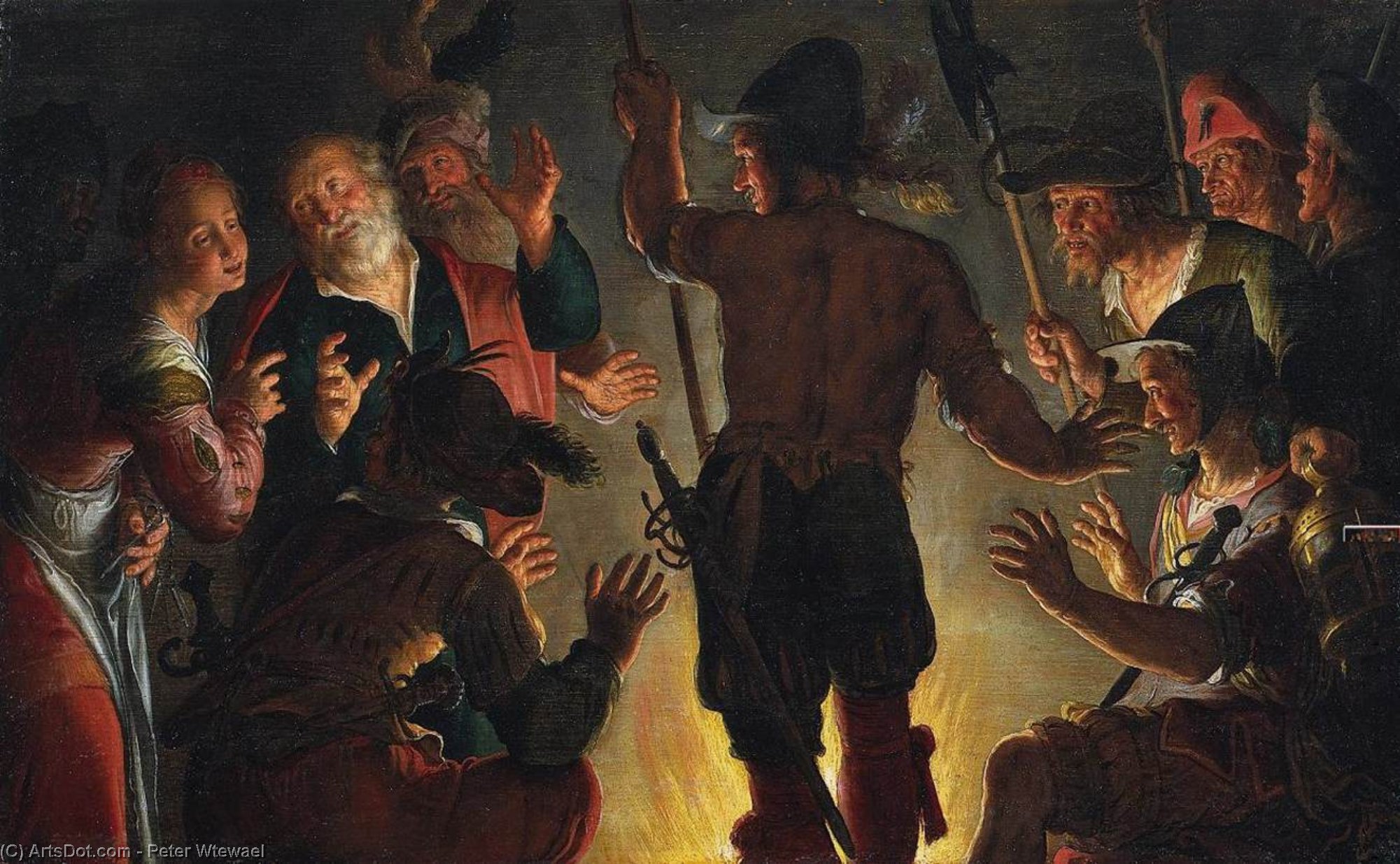
Denial of Peter
 Oil On Panel
- Baroque
 1625
1625- Early Modern
 28.0 x 46.0 cm
 Cleveland Museum of Art
 Read More
Hand Made Oil Reproduction
Hand-painted oil on canvas in your size and frame, made to order by our artists. ( Buy Print Buy Image)




P118B $10

P118H $10

P118W $10

P438Z $10

P508JH $12

P508YH $12

P805H $10

P805Z $10

P919BZ $10

P919G $10

P919XJ $10

P959ZH $10

P968JZ $12

W106C $8

W218G $10

W218JH $8

W218Y $10

W307PJ $10

W316G $10

W316PJ $8

W316Y $10

W398PJ $8

W4111J $10

W500HY $15

W500JH $15

W692G $12

W849H $8

W940BG $15

W953PJ $8




Pick from our preset sizes that match the artwork's original proportions.

You may enter your own dimensions to fit a specific frame or space. If your selected size does not match the original image's proportions, we will either crop the artwork or extend the painting with additional hand-painted elements. A digital mockup will be sent for your approval before production begins.
Please note that the on-screen preview does not reflect the actual cropping or extension. Only the mockup will accurately show the final composition.
While custom sizes are available, we recommend selecting a dimension from the predefined list to preserve the original proportions.
After order, ArtsDot.com team will email client for instructions and provide a mockup preview
Worldwide Delivery () in 3/4 weeks instead of standard 5 weeks. (17 August). No compromise on quality.

Free Worldwide Express Shipping

High-Quality Linen Canvas

Full Shipping Insurance

Customs Tax Refund Guarantee

True Color Matching Guarantee

60-Day Return Policy (Defects Only)

100% Money-Back Guarantee

Bulk Discount Offer
 Glass option is only available in size under 110 CM

Denial of Peter
Reproduction Medium
Reproduction Size
-


Total Price
$ 263
Artwork Description
The Drama of Betrayal: Exploring Peter Wtewael's Denial of Peter
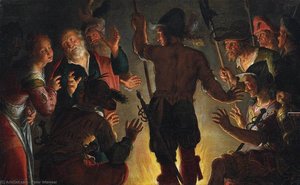
To stand before Peter Wtewael’s Denial of Peter is to be plunged immediately into the raw, visceral heart of human conflict and spiritual crisis. This oil on panel painting, executed in 1625, is far more than a mere depiction of a biblical event; it is a masterclass in Baroque drama, capturing that agonizing instant when denial becomes a physical blow. The scene pulses with unspoken tension—the moment the apostle Peter, cornered and vulnerable, faces the accusation from Roman soldiers. Wtewael does not shy away from the brutality inherent in the narrative, presenting it with an unflinching gaze that forces the modern viewer to confront themes of loyalty, fear, and ultimate redemption.
Mastery of Baroque Light and Shadow
Technically, this work is a profound testament to Wtewael’s command over light. He channels the dramatic intensity associated with Caravaggio's tenebrism, using deep, velvety shadows not merely as background filler, but as active participants in the drama itself. The illumination seems to originate from an unseen, harsh source, spotlighting the central figures—Peter and the aggressive soldier. This stark chiaroscuro effect carves out every muscle tension, every bead of sweat, and every flicker of despair on the faces surrounding the core conflict. It is this masterful manipulation of light that gives the composition its incredible depth, pulling the eye inexorably toward the point of impact.
Compositional Tension and Emotional Resonance
The arrangement of figures within the 28 x 46 cm panel is nothing short of theatrical. Peter’s posture, struck and recoiling, speaks volumes about his emotional collapse. Contrasting this vulnerability is the soldier's rigid, aggressive stance, embodying institutional power. Yet, it is the surrounding onlookers—their varied expressions ranging from shock to detached observation—that build the narrative tapestry. Wtewael populates the space with humanity, ensuring that every peripheral figure contributes a note of dismay or judgment, amplifying the profound sense of isolation felt by Peter at this pivotal moment.
A Timeless Study in Human Frailty
For the collector or admirer of art history, Denial of Peter offers more than just aesthetic pleasure; it provides a deep meditation on human frailty. Wtewael, while celebrated for his domestic scenes, proves here that he could elevate historical narrative to epic proportions. The painting resonates because its themes—the pressure of circumstance forcing a man to deny his deepest convictions—are eternally relevant. Owning a reproduction of this piece allows one to bring home not just the image of 17th-century Dutch mastery, but a palpable echo of profound human struggle and dramatic consequence.
Related Artworks
Artist Biography
A Master of Light and Domestic Drama
In the vibrant tapestry of the Dutch Golden Age, few names evoke the intimate tension of a flickering candlelit room quite like Peter Wtewael. Born in Utrecht in 1596, Wtewael was an artist shaped by a profound lineage of creativity; he was the son of the esteemed painter and engraver Joachim Wtewael and the brother of Johan Wtewael. This familial immersion in the arts provided him with more than just technical training—it offered a window into the very soul of Netherlandish visual storytelling. Though his active period as a painter was relatively brief, spanning roughly between 1624 and 1630, the impact of his brushwork remains etched in the history of the Baroque era.
Wtewael’s artistic identity was deeply forged by the revolutionary influence of Caravaggio. He became a dedicated follower of this dramatic style, embracing the technique of tenebrism to transform ordinary subjects into profound psychological studies. By utilizing stark contrasts between deep, swallowing shadows and piercing highlights, he breathed life into his canvases. This mastery of chiaroscroll allowed him to elevate the mundane—a simple kitchen gathering or a piece of fruit—into something monumental and spiritually resonant. His ability to manipulate light created an immersive atmosphere where the viewer feels less like an observer and more like a silent participant in the scene.
The Intimacy of the Kitchen and the Grandeur of Myth
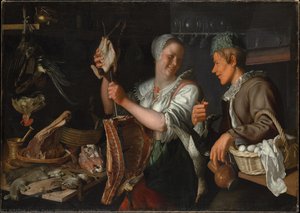
While many of his contemporaries sought the vastness of landscapes, Wtewael found infinite complexity within the confines of domestic interiors. He became a pioneer of the kitchen scene, a genre that allowed him to showcase an extraordinary command of texture and detail. In these works, one can almost feel the cold roughness of stone walls or the glistening, succulent surfaces of meat and pewter. However, beneath this surface-level realism lay a layer of complex symbolism and even risqué humor. His depictions of domestic life often featured subtle visual jokes and erotic undertones, where the abundance of foodstuffs served as an allegory for the pleasures of the flesh, blending the sensual with the everyday.
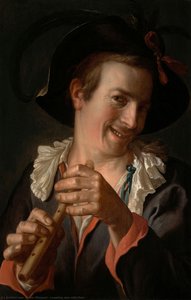
Beyond the kitchen, Wtewael’s imagination soared into the realm of the mythological and the biblical. He possessed a rare ability to weave complex narratives through gesture and expression, as seen in masterpieces like The Denial of Peter. In these compositions, the dramatic lighting does more than illuminate; it underscores themes of human vulnerability, doubt, and faith. Whether he was painting a jester with a flute or a sacred biblical moment, his work remained anchored in a meticulous observation of the human condition, making him a singular voice in the Utrecht school of painters.
Legacy and Artistic Significance
The true measure of Peter Wtewael’s significance lies in his ability to bridge the gap between the gritty realism of genre painting and the high drama of mythological storytelling. Though his known oeuvre is relatively small—consisting of a handful of signed works and several attributed pieces—each canvas serves as a testament to his technical prowess and emotional depth. His influence can be traced through the evolution of Dutch genre painting, particularly in how he utilized light to imbue domesticity with a sense of the extraordinary.
Today, his contributions are preserved in some of the world's most prestigious institutions, including The Metropolitan Museum of Art, where his kitchen scenes continue to captivate scholars and art lovers alike. Wtewael remains a vital figure for anyone seeking to understand the transformative power of the Baroque period, reminding us that even in the smallest, most shadowed corner of a room, there is a universe of drama waiting to be discovered.
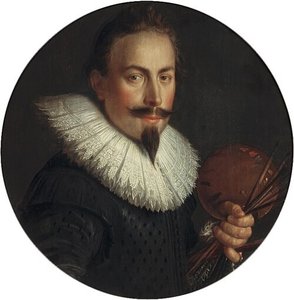
Peter Wtewael
1596 - 1660 , Netherlands
Quick Facts
- Artistic Movement Or Style: Caravaggesque
- Artists Or Movements Influenced By This Artist: ['Baroque']
- Artists Who Influenced This Artist: ['Joachim Wtewael']
- Date Of Birth: Utrecht, Netherlands (1596)
- Date Of Death: 1660
- Full Name: Peter Wtewael
- Nationality: Dutch
- Notable Artworks:
- Denial of Peter
- The Denial of Peter
- Place Of Birth: Utrecht
Related Articles

Dutch Baroque Masters: 10 Paintings That Shaped an Era | ArtsDot
Journey through the Golden Age with our guide to the Top 10 Dutch Baroque masterpieces! Explore iconic paintings by Rembrandt, Vermeer & Frans Hals. Find museum-quality art reproductions and elevate your home decor at ArtsDot.com.

Golden Age Reflections: Dutch Baroque Painting & Cultural Innovation
Explore the Dutch Golden Age of painting! Discover key artists like Vermeer & ter Borch, their innovative techniques, and the rich cultural context behind these Baroque masterpieces. Learn about collecting & appreciating this iconic art period.

Giclée Prints: Archival Quality & Aesthetic Nuances for the Discerning Collector
Explore the world of giclée prints with ArtsDot. Learn about archival quality, aesthetic nuances & investment potential. Expert guidance for discerning art collectors seeking museum-quality reproductions and lasting value.

Baroque Masterpieces: 10 Paintings That Defined an Era |
Journey through the drama & grandeur of Baroque art! Explore 10 masterpieces by Caravaggio, Rembrandt, Rubens & more. Discover stunning oil paintings, rich colors & timeless stories. Find museum-quality reproductions at .

The Enduring Legacy of Fine Art Prints: Technique, History & Aesthetic Impact
Explore the rich history & techniques of fine art prints. Discover investment potential, assess authenticity, and learn how to preserve your collection with expert guidance. Trusted insights for discerning collectors.